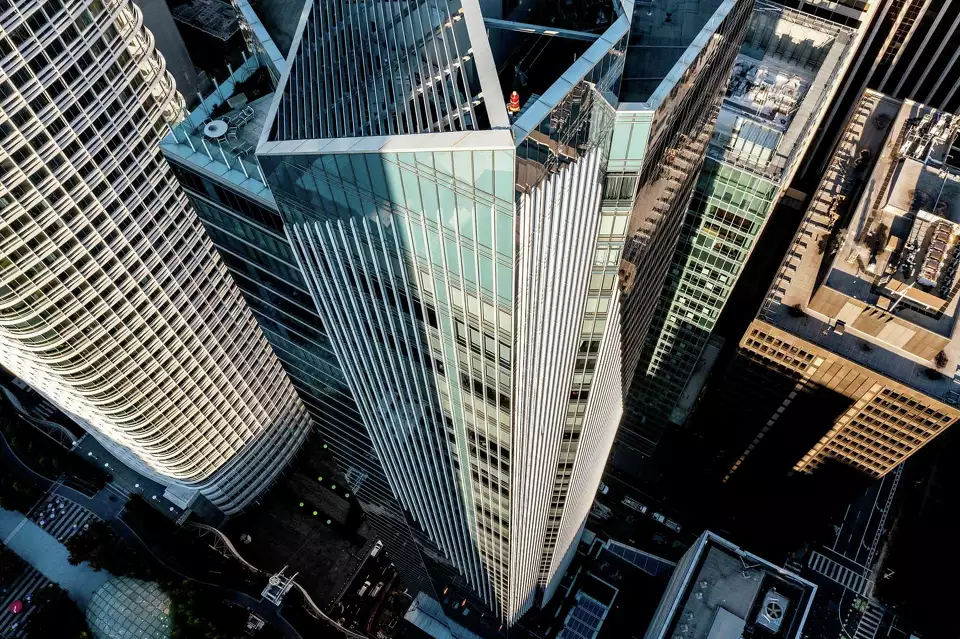
Millennium Tower San Francisco is leaning at a rate of 3 inches per year

The 645-foot-tall Millennium Tower San Francisco will continue to tilt at a rate of three inches per year.
It has already sunk between 17 and 18 inches into the ground.
The Millennium Tower has a fair share of famous residents including sports figures Joe Montana and Giants player Hunter Pence.
Millennium Tower San Francisco is one of the most impressive residential buildings in the city.
It now tilts more than two feet north and west and continues to tilt at a rate of three inches per year as it sinks into the ground.
In fact, it has already dropped between 17 and 18 inches, and if the problem is not resolved,
The building may eventually lean by 40 inches,
which is the maximum it needs to function and most likely for the elevators and plumbing to work.

Millennium Tower San Francisco is located in San Francisco’s Financial District at Fremont and Mission Streets.
Next to the Salesforce Transit Center and the bus station,
A 58-story tower with a height of 645 feet, it is the tallest residential building in the city.
It first appeared to great fanfare in 2009, and in a paradox that defies possibility,
Data show that about 10 inches of the total tilt of 26 inches occurred last year after work to stop the sinking.
An investigation report showed that excavation logs show a gap of one to four days between excavation and plaster installation.
Meanwhile, North Carolina Bay Area reported: “While Millennium Tower San Francisco repair officials ignored the problem to authorities,
“Such a delay in grouting could well explain the relatively rapid settlement and tilting that occurred during the pile installation in August,” some outside experts say.

Nothing impacts a building’s performance and appearance like a building’s veneer,
and here the distinctive and visually striking blue glass curtains complement the elegant and sophisticated design of this luxury high-rise residential building.
Millennium Tower San Francisco is the tallest luxury residential building in San Francisco.
It is the tallest residential building west of the Mississippi River,
and the fourth tallest building in the San Francisco skyline.
Curtain for urban dwellings
Millennium Tower San Francisco located at 301 Mission Street in San Francisco is a 60-story residential tower utilizing a custom modular curtain wall with four-sided structural glazing units.
Blue insulated glass units within the aluminum frame provide views of the bay.
They minimize solar heat gain and were selected with acoustic performance in mind.
Some glass units have operable vents to allow ventilation.
The use of vertical glass and metal fins helps create visual texture along the long facades.

It was designed by renowned architect Glenn Rescalvo of Handel Architects.
The curtain wall design and construction program was demanding in every respect;
Performance, budget, and schedule were all overriding concerns.
Enclos provided the developer and construction team with the benefit of a sophisticated global supply chain,
Ensuring abundant capacity and high quality of over 300,000 square feet of custom uniform curtain wall, all with optimum economy.

The curtain wall was shipped from Asia in 8,600 completed units,
with the glass panels glazed into frames assembled from extruded aluminum.
The glass is structurally glazed on all four sides using high-performance silicone that requires no mechanical snapping of the glass to the frame.
This technology accommodates a continuous outer glass surface without any visible framing parts.
The system also includes operable windows integrated into the curtain units.

Leaning more towards the west
Despite initial progress in the first phase of the so-called reform earlier this year,
The sunken, leaning Millennium Tower San Francisco in San Francisco now leans more westward than ever before.
The tower is currently leaning more than 29 inches at the northwest corner of Fremont and Mission streets.
A lot of extra mileage occurs during the excavation needed to prepare to support the tower on the sides.
But earlier this year, repair engineers saw signs of progress when the building was partially supported by six sunken piles along the base of its north side along Mission Street.

While the tower appears to be stable on the mission side,
new observation data on the surface shows that the tower is now leaning half an inch to the west than it was before it was supported on the north side.
Veteran geotechnical engineer Bob Pike,
who has long questioned the $100 million plan to repair the troubled tower, said:
“In terms of remedial work, it’s just a mess, you’re spending all this money, but you still have an uncertain long-term outcome.”
Last January, repair engineer Ron Hamburger pointed to surface monitoring data as reflecting early success.
With some of the tower’s western tilt reversed after some of the tower’s loads were transferred on piles along Mission Street to the northwest corner.
محاضر / محاضر أول في هندسة المناظر الطبيعية – مع تخصص في التخطيط أو الزراعة
But in recent weeks, the data available on the surface reflects a loss of improvement and a worsening trend.
As a result, the tower is now leaning about a half inch further west than it did before it was first supported along the Mission.

Hamburger pointed out in a statement that surface data is subject to weather fluctuations.
He also cited organization-based data as more reliable.
Foundation-based monitoring data fluctuated less when the tower was partially moved into six piles in January.
It now appears that the tower is leaning ever more westward, but only by a quarter of an inch.