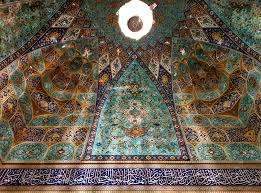
Mosque and Madrasa of Sultan Hassan

Architectural Genius of the Mosque and Madrasa of Sultan Hassan
The Mosque and Madrasa of Sultan Hassan stands as one of the greatest masterpieces in the history of Islamic architecture. Built in the fourteenth century in the heart of historic Cairo, the structure remains a testament to bold engineering, refined artistry, and a deep understanding of space. Its architectural brilliance continues to inspire scholars and architects around the world, revealing how advanced medieval craftsmanship truly was.
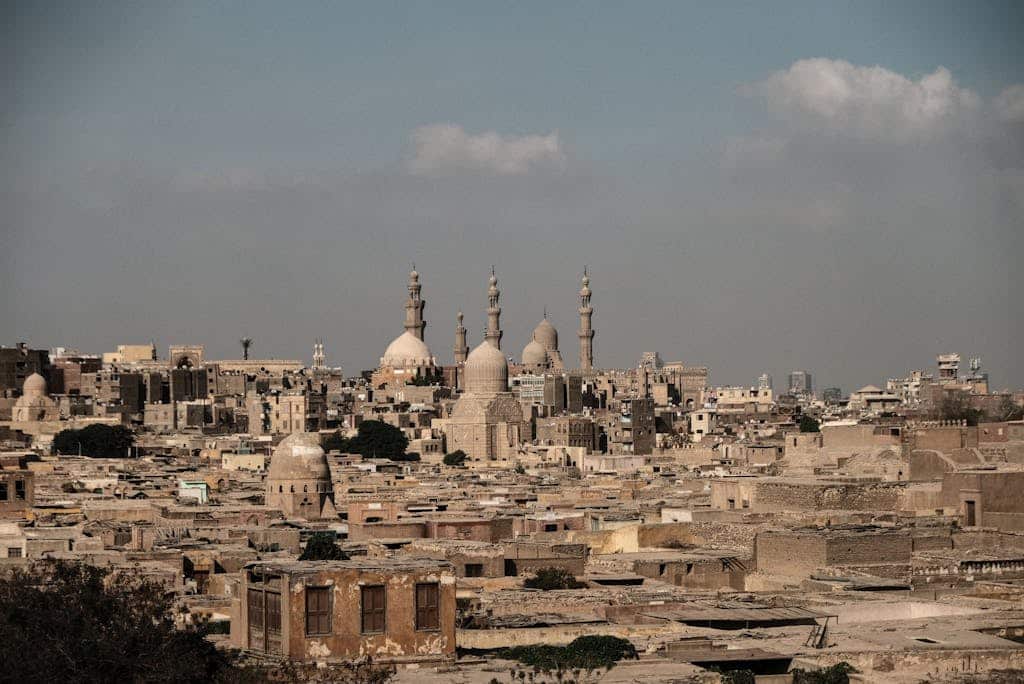
A Monumental Structure that Reflects Power
The first thing that captivates any visitor is the building’s sheer scale. Its massive façade stretches for tens of meters, rising to heights that were rarely achieved in the Mamluk era. This monumental presence was designed to reflect the authority and prestige of the sultan, yet the architects managed to preserve harmony and elegance despite the enormity of the structure.
The smart use of vertical layering guides the eye upward in a natural and comfortable way, creating an impression of power without overwhelming the viewer. This balance between grandeur and visual comfort is one of the most remarkable achievements of its designers.
A Gateway Designed with Purpose
The entrance of Sultan Hassan’s complex is considered one of the most magnificent in Islamic architecture. Its towering height and refined decorations resemble the gateways of mighty fortresses. The architects used a subtle bent-axis approach, allowing the visitor to walk through a slightly angled passage. This clever design creates a sense of anticipation, enhances privacy, and protects the interior from strong winds.
It reflects a deep understanding not only of aesthetics but also of functionality and environmental adaptation.
The Courtyard and the Mastery of Light
Stepping into the courtyard feels like entering an architectural theatre. The open space is perfectly proportioned, with a large ablution fountain at its center. The marble floor is intricately patterned, reflecting the high level of craftsmanship characteristic of Mamluk design.
What truly sets this courtyard apart is the way light is handled. High openings and decorative windows allow soft, diffused light to illuminate the courtyard throughout the day. The architects studied the movement of the sun and crafted the window patterns in a way that ensures pleasant illumination without excessive heat. This natural lighting strategy is centuries ahead of modern sustainable design concepts.

The Grand Iwan That Defies Its Time
The largest iwan, the qibla iwan, is one of the most extraordinary architectural achievements of its era. Its immense height and spaciousness demonstrate immense courage and mastery. The wooden ceiling, the stucco decorations, and the meticulously carved mihrab all display an exceptional level of artistry.
One of the most fascinating features is the natural acoustics of the space. The shape of the iwan, along with the angled walls, allows sound to travel clearly from the imam to the furthest corners without any mechanical amplification. This reveals a deep understanding of geometry and sound behavior long before acoustic science was formally developed.
Four Schools in One Masterpiece
The complex includes four madrasas, each dedicated to one of the four Islamic legal schools. Each madrasa is equipped with its own iwan, study areas, and unique methods of ventilation and illumination. The placement of these four iwans around the central courtyard creates an educational environment that is both functional and harmonious.
This innovative layout demonstrates one of the earliest examples of integrating education and worship into a single coherent architectural composition.

Craftsmanship and Materials of Exceptional Quality
The builders used massive stone blocks sourced from various regions. Their alignment is so precise that the walls appear seamless, as if they were carved from a single piece of stone. Marble inlays, carved woodwork, and metal details reflect the extraordinary talents of Cairo’s craftsmen in the Mamluk era.
The construction technology of the time was astonishingly advanced. Despite its enormous size and towering domes, the building has remained stable for over six centuries, showing no significant structural failure. This durability speaks to the genius of its engineers and the precision of their calculations.

Hidden Engineering Innovations
One of the greatest achievements of the Sultan Hassan complex is the invisible engineering behind its stability. The architects used a system of internal buttresses and carefully distributed load paths to balance the enormous weight of the structure. Many modern engineers study this building to understand how Mamluk builders mastered load distribution without access to modern tools or technology.
Why the Building Is Still a School of Architecture
The Mosque and Madrasa of Sultan Hassan is much more than a historical monument. It is a living school of architecture. Modern architects learn from it how to shape spaces, control light, adapt buildings to the environment, and harmonize beauty with practical needs. The building also serves as a visual identity for Cairo, proving that architecture is a cultural message as much as it is a physical structure.
Its pioneering concepts continue to influence contemporary design, making it one of the most valuable architectural texts ever created in stone.
ArchUp Insight
At ArchUp, we look deeper into architectural masterpieces that shaped the visual and cultural identity of cities across the world. The Mosque and Madrasa of Sultan Hassan stands out as an exceptional example of Mamluk engineering, where monumental scale meets precise craftsmanship and thoughtful spatial organization. This landmark continues to inspire architects with its innovative use of light, acoustics, and structural balance, proving that historical architecture still holds valuable lessons for contemporary design. Through insights like this, ArchUp remains committed to highlighting influential works that enrich architectural understanding and spark new creative perspectives.
Aggregation Links
To analyze the brilliance of this complex, explore Research on Mamluk Architecture and ancient Construction techniques, and delve into the secrets of acoustic Design and the properties of [Building Materials](Building Materials) that preserved the mosque’s grandeur.