Nano Banana: The AI Image Editing Model and Its Impact on Architecture

What is “Nano Banana”?
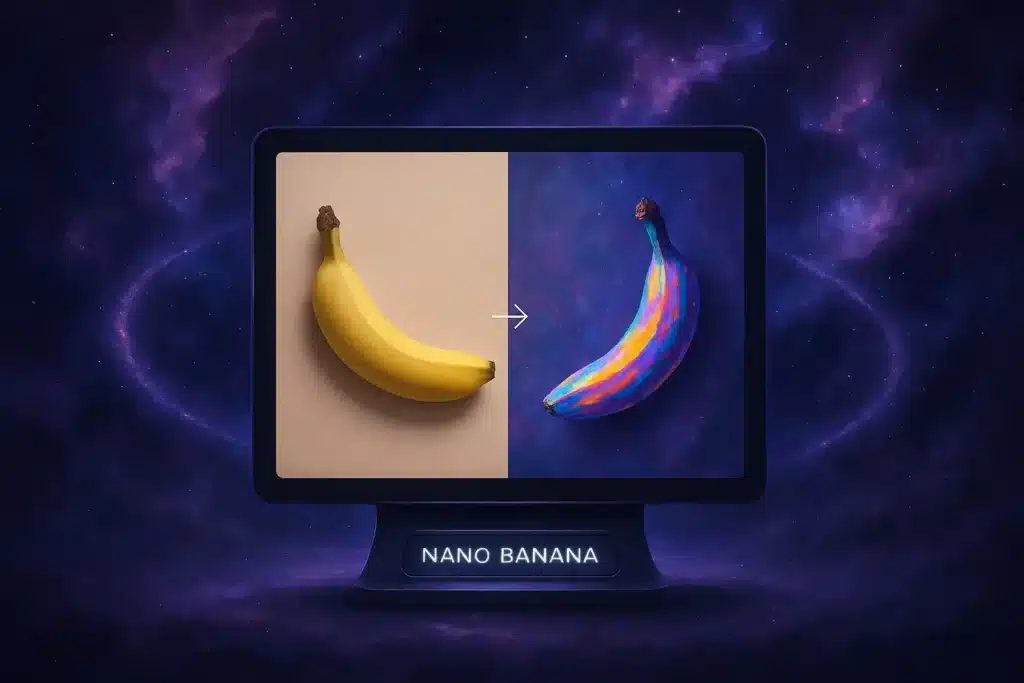
“Nano Banana” is the codename given by Google DeepMind to the Gemini 2.5 Flash Image model within the Gemini app. This model enables ultra-fast image editing while preserving realistic details and is currently considered one of the most advanced AI-powered image editing tools, according to outlets like TechRadar and El País.

Key Technical Features
- Processing speed: Generates edited images in just 1–2 seconds.
- Visual consistency: Maintains the look of characters and elements when backgrounds, lighting, or environments are changed.
- Smart image blending: Combines two images into one realistic scene (e.g., a person inside a designed space, or mixing materials in a façade).
- Multi-turn editing: Enables step-by-step changes painting a wall, adding furniture, adjusting materials without losing the accuracy of other elements.
- Quality enhancement: Removes noise, colorizes old images, edits clothing, and adjusts lighting or special effects.
Why Architects Should Care
1. Speeding Up Design Visualizations
Instead of spending long hours with heavy software, architects can instantly test changes to façades, materials, lighting, or interior furniture with a single prompt.
2. Multiple Options for Clients
Quickly generate different proposals for façades or finishes, giving clients more perspectives and accelerating decision-making.
3. Reviving Old Materials
Archived project images or hand-drawn sketches can be enhanced and colorized, making them suitable for presentations and marketing.
4. Supporting Competitions and Investor Presentations
Produce fast concept boards before developing full 3D models, improving project acceptance chances while saving time.
5. Strengthening Social Media Presence
Easily create eye-catching visuals for architectural firms’ digital platforms before/after comparisons, mood boards, or material inspiration without requiring a full graphic design team.
Challenges and Notes
- The tool does not replace precise modeling software like Revit or AutoCAD but serves as a complementary visualization aid.
- It may occasionally produce errors in scale or architectural details, requiring professional review before final presentation.
- Watermarks (visible and invisible) raise questions about copyright and must be considered in official use.
Conclusion
“Nano Banana” marks a significant step in AI-assisted image editing, offering architects faster, more versatile ways to create visual concepts while saving time and effort. However, it should remain a supportive tool, balanced with traditional architectural workflows, to ensure design accuracy and technical reliability.
✦ ArchUp Editorial Insight
This article examines Nano Banana within Google’s Gemini as an advanced AI-driven image editing model. The visuals reveal swift processing of fine details while preserving human identity and spatial context, with balanced tones and convincing light distribution. Yet the absence of precise dimensional control raises questions about its suitability for rigorously measured architectural plans. The ease of watermark removal also invites dialogue on visual integrity and authorship. Nevertheless, the tool expands rapid visualization possibilities, enabling architects to iterate early design options and communicate alternative scenarios efficiently within conceptual phases.
Explore the Latest Architecture Exhibitions & Conferences
ArchUp offers daily updates on top global architectural exhibitions, design conferences, and professional art and design forums.
Follow key architecture competitions, check official results, and stay informed through the latest architectural news worldwide.
ArchUp is your encyclopedic hub for discovering events and design-driven opportunities across the globe.