

National Gallery Announces Shortlist for Major Expansion Project

The National Gallery in London has revealed six shortlisted architectural teams for the design of a major expansion extending into the St. Vincent House site. Officials describe the development as one of the most significant transformations in the institution’s 200-year history. The competition, launched in September 2025, attracted 65 submissions from international practices, reflecting broad global interest in shaping the Gallery’s next phase.
A Strategic Plan to Accommodate Growth
The shortlisted proposals will contribute to the design of a new wing intended to support the Gallery’s growing collection and increasing visitor numbers while also reshaping the public realm between Leicester Square and Trafalgar Square.

The shortlisted teams are Farshid Moussavi Architecture, working with Piercy & Company, presents a concept shaped by an analytical understanding of the site. Foster + Partners brings its long-established design methodology to the competition. From Japan, Kengo Kuma and Associates, collaborating with BDP and MICA, offer a proposal focused on material expression and spatial integration.
The team led by Renzo Piano Building Workshop (RPBW), with William Matthews Associates and Adamson Associates, introduces a design informed by their experience in cultural projects. Selldorf Architects, working with Purcell, contribute an approach centered on clarity and architectural continuity. Meanwhile, Studio Seilern Architects, together with Donald Insall Associates, Vista Building Safety, and Ralph Appelbaum Associates, present a scheme that balances heritage considerations with contemporary functional needs.
The final selection of the winning team is expected by April 2026.
Narrative Profile of the Shortlisted Teams
The six shortlisted teams bring diverse architectural perspectives. Farshid Moussavi Architecture, partnering with Piercy & Company, offers a concept emphasizing cultural and contextual responsiveness. Foster + Partners presents a design approach aligned with its established focus on innovation and minimalism. From Japan, Kengo Kuma and Associates, working with BDP and MICA, introduce a vision centered on material sensitivity and integration with the surrounding environment.

Meanwhile, Renzo Piano Building Workshop (RPBW), collaborating with William Matthews Associates and Adamson Associates, is recognized for its well-established expertise in light-driven architecture and refined spatial design. Selldorf Architects, working with Purcell, focus on adapting historical buildings with precision and clarity. The final team, Studio Seilern Architects, supported by Donald Insall Associates, Vista Building Safety, and Ralph Appelbaum Associates, adopts an approach balancing heritage conservation with contemporary architectural needs.
Project Domani: The Largest Redevelopment Since 1824
The expansion is part of Project Domani, a master plan introduced after the Gallery’s bicentenary. It is positioned as the largest redevelopment since the institution’s founding in 1824. The project includes converting St. Vincent House, acquired nearly 30 years ago, from its current hotel and office functions into a new cultural facility. The broader plan aims to redefine the surrounding public areas and enhance the Gallery’s integration within London’s cultural district.
Design Priorities and Future Vision
According to the National Gallery, the new wing will be designed to meet contemporary expectations in sustainability, accessibility, and curatorial flexibility. The development is intended to support evolving exhibition formats, educational initiatives, research programs, and long-term cultural partnerships, contributing to the Gallery’s long-range strategic plans.

Independent Jury Leading the Selection
The competition jury is chaired by John Booth, Chair of the Board of Trustees. The panel includes artist Céline Condorelli, Director Sir Gabriele Finaldi, Sir John Kingman, Dame Diane Lees, David Marks, and architect Lady Patty Hopkins, a RIBA Gold Medal recipient. The selected design will aim to balance the institution’s historical significance with its evolving functional needs.
Context of Broader Architectural Developments
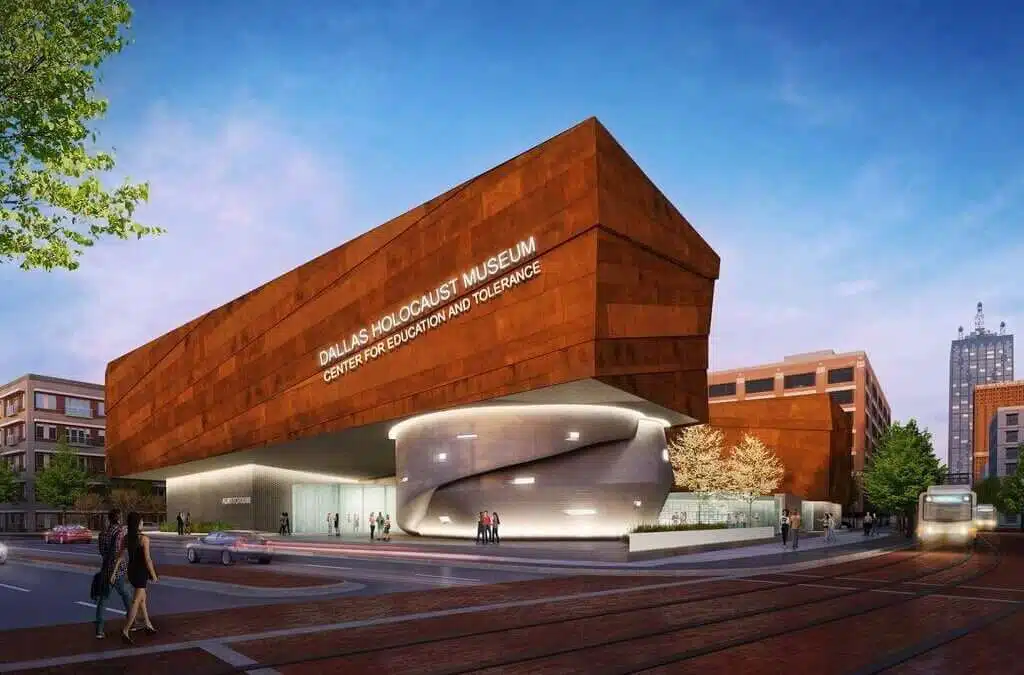
The announcement follows renovation work on the Sainsbury Wing by Selldorf Architects, Purcell, and Vogt. It also aligns with wider discussions in global cities regarding the preservation, adaptation, and future of major architectural landmarks, including developments in Dallas and Paris.
Project Data
Architect / Design Firm:
- Farshid Moussavi Architecture, in collaboration with Piercy & Company
- Foster + Partners
- Kengo Kuma and Associates, in collaboration with BDP and MICA
- Renzo Piano Building Workshop (RPBW), in collaboration with William Matthews Associates and Adamson Associates
- Selldorf Architects, in collaboration with Purcell
- Studio Seilern Architects, in collaboration with Donald Insall Associates, Vista Building Safety, and Ralph Appelbaum Associates
- Note: The winning team is expected to be selected by April 2026.
Critical Conclusion
The selection of this diverse group of firms confirms the complexity of the expansion challenge within historically significant architectural landmarks. The expansion process is, at its core, a critical act, requiring architects to propose solutions capable of merging respect for Historical Reference with the demands of the twenty-first century. The true success of the project will not be measured solely by the quality of the new spaces’ Interior Design, but by the expansion wing’s ability to seamlessly integrate with the identity of both the Gallery and its urban context, ensuring that these Constructions become a benchmark in the Architectural Adaptation of cultural buildings.




ArchUp: Competitive & Economic Analysis of the National Gallery London Expansion Project
This article examines the Dominany project for the expansion of the National Gallery in London as a case study in design competitions for major cultural institutions. To enhance its archival value, we present the following key technical and economic data:
The competition attracted 65 global architectural practices, narrowed down to six teams including: Fujimoto Mousavi (with Percy & Company), Foster + Partners, Kengo Kuma (with BDP and Mica), Renzo Piano (with William Matthews Associates), Seldorff Architects (with Purcell), and Studio Selern Architects (with Donald Insel Associates). The estimated project value is £250 million, with an expansion area of up to 15,000 m² within the St. Vincent House building.
The project is strategically located on a cultural axis connecting Leicester Square to Trafalgar Square, involving the refurbishment of a historic building acquired by the Gallery in 1995. Design requirements include achieving BREEAM Outstanding sustainability standards, increasing exhibition capacity by 40%, and improving accessibility to accommodate projected visitor growth from 6 to 8 million annually.
In terms of the timeline, the winning team will be announced in April 2026, with construction commencing in 2028 and an expected opening in 2032. The project will represent the largest expansion since the Gallery’s founding in 1824, preserving 85% of the existing structure while adding flexible exhibition spaces that allow 70% of the areas to be adapted for multiple uses.
Related Link: Please refer to this article for a comparison of expansion strategies for major global museums:
Museum Expansion: Between Architectural Preservation and Functional Innovation
https://archup.net/amazons-museum-maz/