New Energy Research Laboratory at the University of Pennsylvania

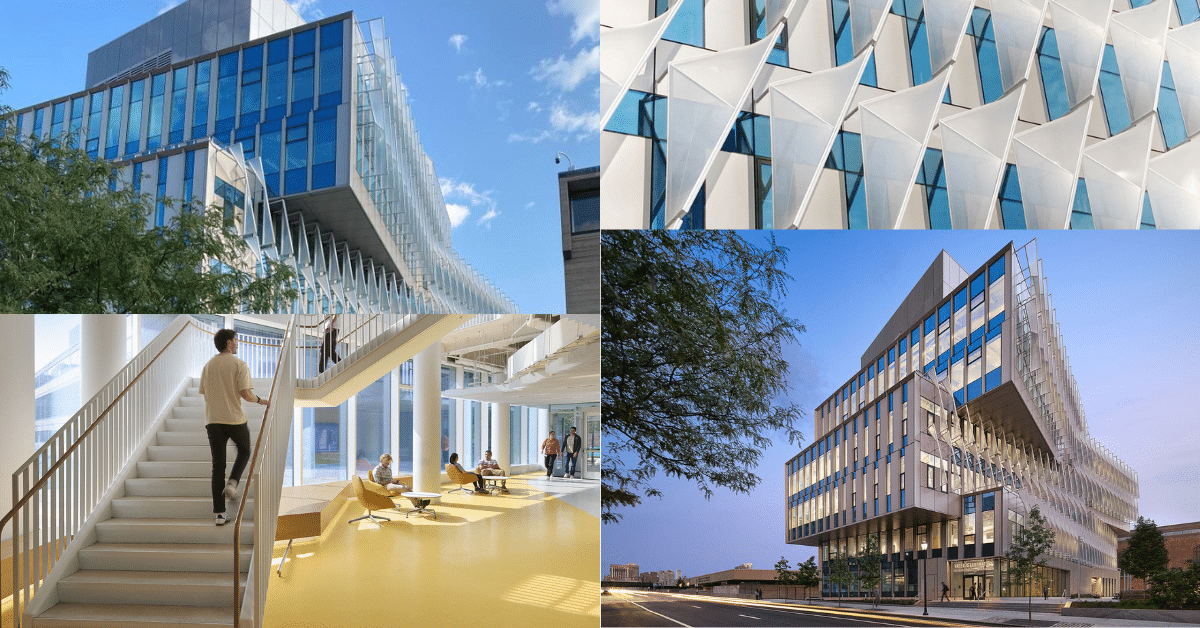
The University of Pennsylvania has inaugurated a new research building dedicated to energy science and technology, marking a striking architectural addition to the eastern edge of its campus. The seven-story structure is conceived as an open hub for collaboration, blending environmental performance with a clear architectural identity.
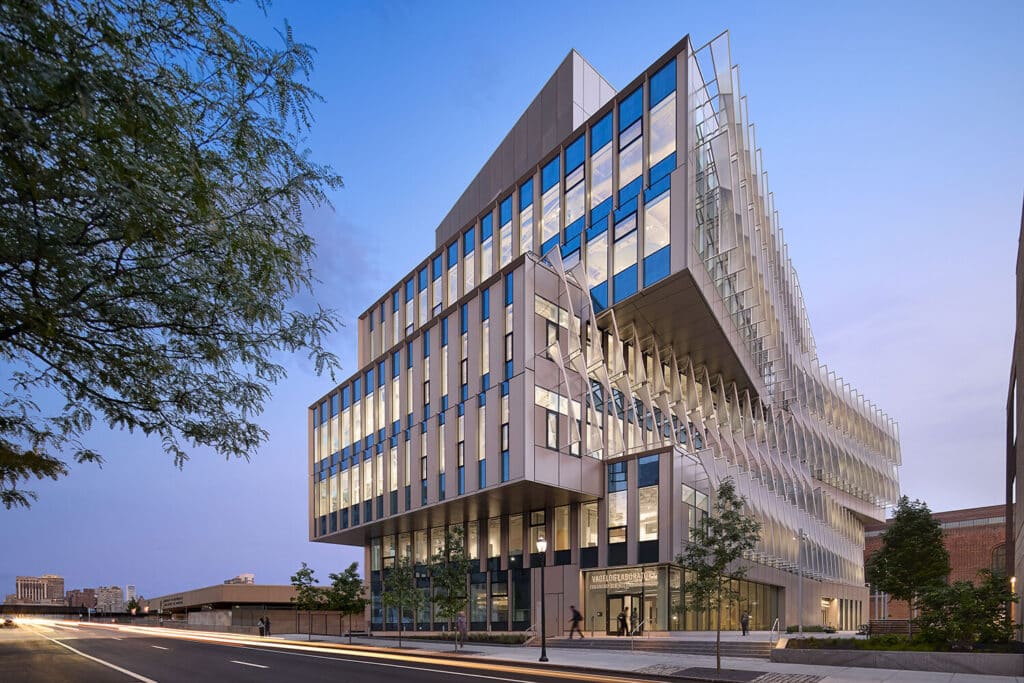
A Facade that Breathes Light
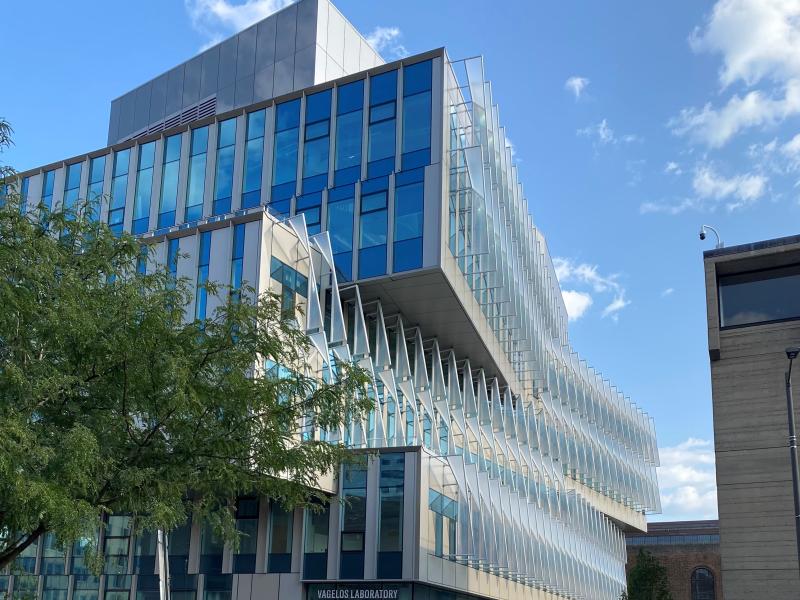
The exterior design employs a high-performance glass envelope that enables natural ventilation and thermal comfort. Its defining element is a series of double-curved lightweight sunshades, filtering daylight deep into the interiors while reducing the need for mechanical cooling. These sculptural elements give the building a contemporary character where function and expression converge.
Interior Designed for Collaboration
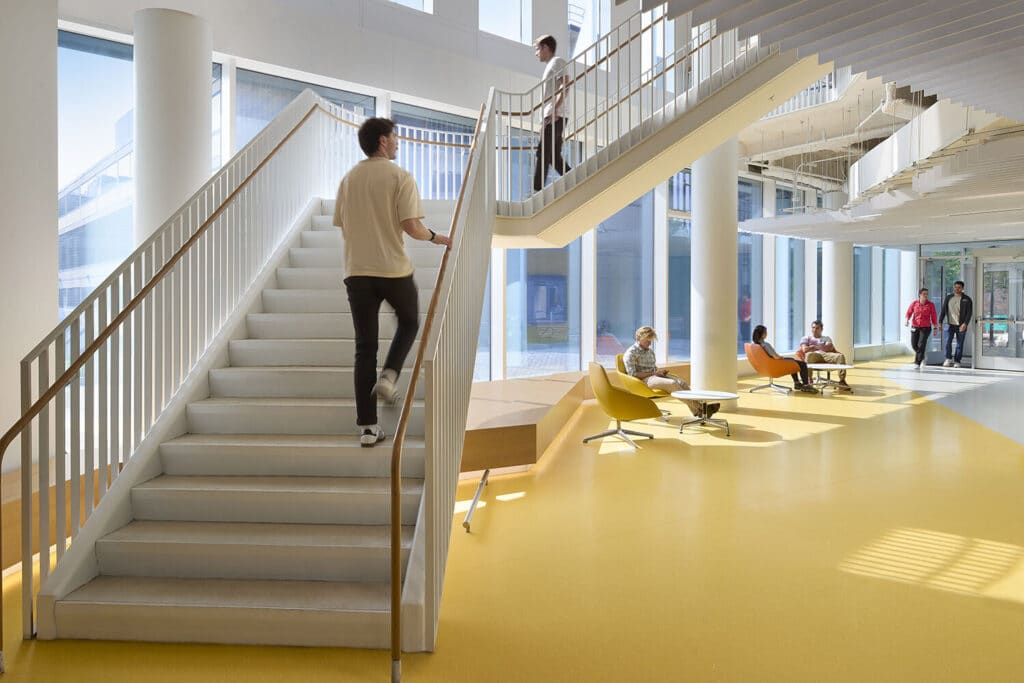
Spanning a generous floor area, the building accommodates advanced laboratories interwoven with writing zones, offices, and meeting spaces. The interior layout makes use of terraces, open staircases, and shared lounges, fostering interaction across disciplines. Student-focused amenities further establish the building as a gathering point for academic life.

Advanced Environmental Strategies
The project demonstrates how sustainability can be fully integrated into architecture. Energy recovery and radiant heating-and-cooling systems minimize energy demand, while natural ventilation is possible for a significant portion of the year. Landscaped courtyards and bio-retention pathways enhance stormwater management, embedding the building in a wider green urban network.
A New Architectural Presence on Campus
The laboratory also serves as a gateway, linking major campus streets and creating new public spaces for students and visitors. By merging technical solutions with thoughtful design, the building stands as a landmark of sustainable architecture supporting both research and community life.
✦ ArchUp Editorial Insight
The article reviews a new laboratory at the University of Pennsylvania, where images reveal a clear glass facade combined with lightweight curved sunshades, balancing transparency and shade. Inside, open layouts link laboratories with social areas through terraces and cascading stairs, fostering collaborative spatial dynamics. Yet the question remains: does this composition fully integrate with the wider campus context, or does it stand apart as an isolated architectural object? Despite such concerns, the project highlights a strong precedent for embedding environmental design strategies within a contemporary architectural language.
Explore the Latest Architecture Exhibitions & Conferences
ArchUp offers daily updates on top global architectural exhibitions, design conferences, and professional art and design forums.
Follow key architecture competitions, check official results, and stay informed through the latest architectural news worldwide.
ArchUp is your encyclopedic hub for discovering events and design-driven opportunities across the globe.