
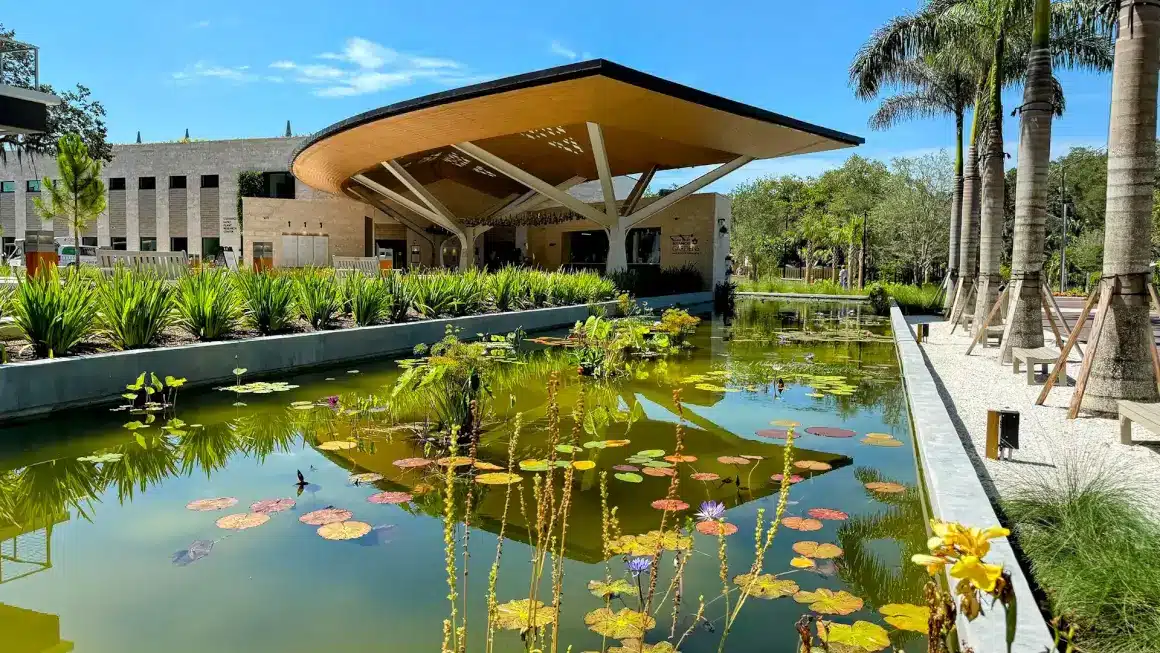
Sarasota Gardens: Global Leadership Towards the First Net-Positive Energy Botanical Garden

The historic campus faced major problems. Its infrastructure was old. The constant flood threat also impacted the site. Furthermore, the location struggled with rising visitor numbers. Today, the institution solved these issues with an ambitious plan. The goal was beyond simple renewal. They sought to set a new global standard. This site is now the world’s first net-positive energy botanical garden. The project offers a practical model for integrated preservation and architectural innovation.
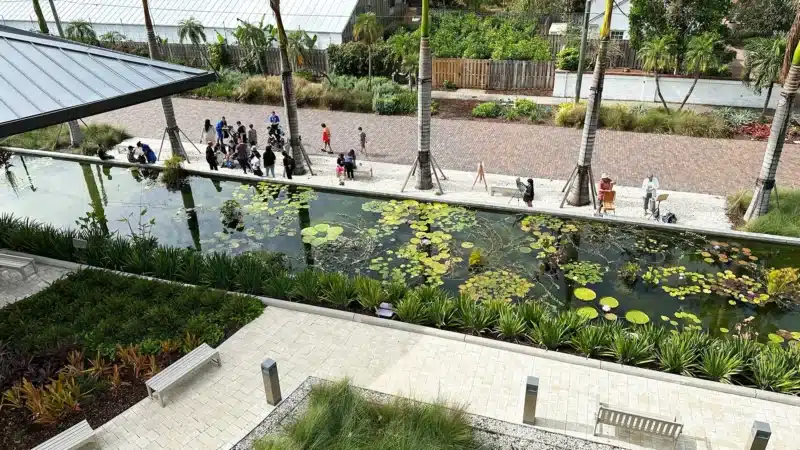
Crossing Palm Avenue: The New Visitor Paths
The visitor experience begins with a radical change in campus movement. An organized arrival replaced the inefficient surface parking area. The old division Palm Avenue caused is gone. The street became a wide pedestrian promenade. This walkway unified the previously separate areas. Native Florida landscapes immediately welcome visitors. These gardens drain stormwater specifically. They include the Oak Hammock Garden, the Glades Garden, and the Bay Lily Pond. This design strengthens the site’s ecological function. The walk feels like a journey into the local ecosystem before reaching the core collections.
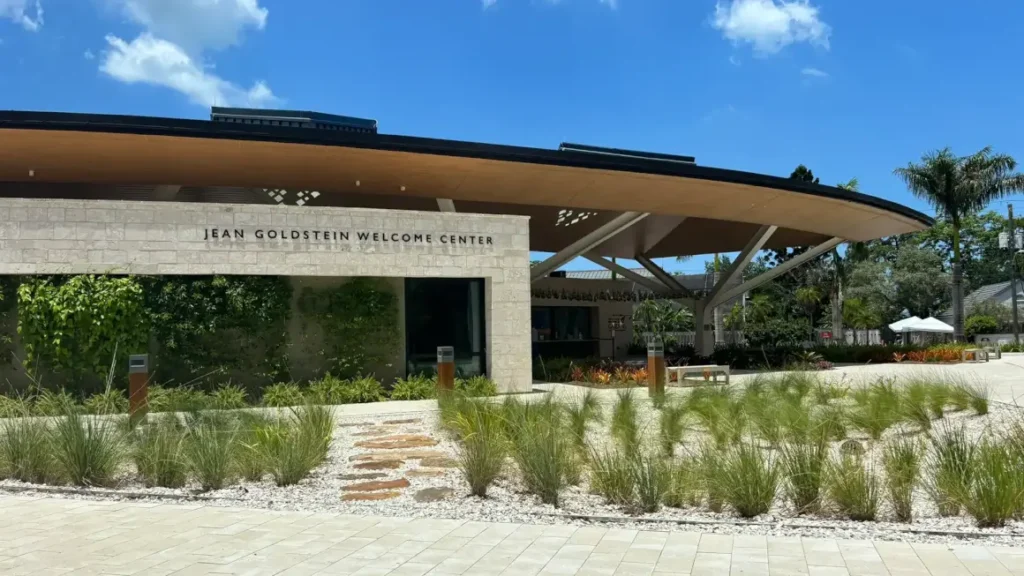
The Innovation Roof: From Parking to Power Station
Efficient space allocation was a very bold move. The team built the Living Energy Arrival Facility (LEAF). It sits atop previously wasted space. It is a structured parking deck, but it does much more. A massive solar array installation crowns the deck. This structure generates power for the entire campus.
- Solar Array Area: 50,000 square feet.
- Increase in Open Green Space: 30%.
This large renewable energy ratio solidified the project’s status. It is now a net-positive energy botanical garden. This success confirms the project’s main priority. The focus shifted from vehicle convenience to scientific research and conservation.
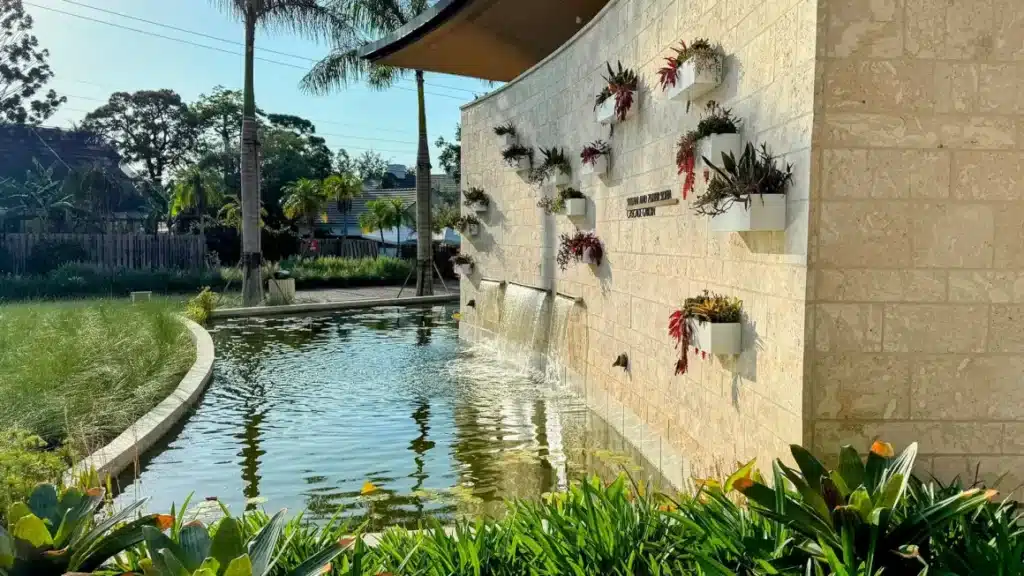
Materials and Technologies: A Shield Against Climate
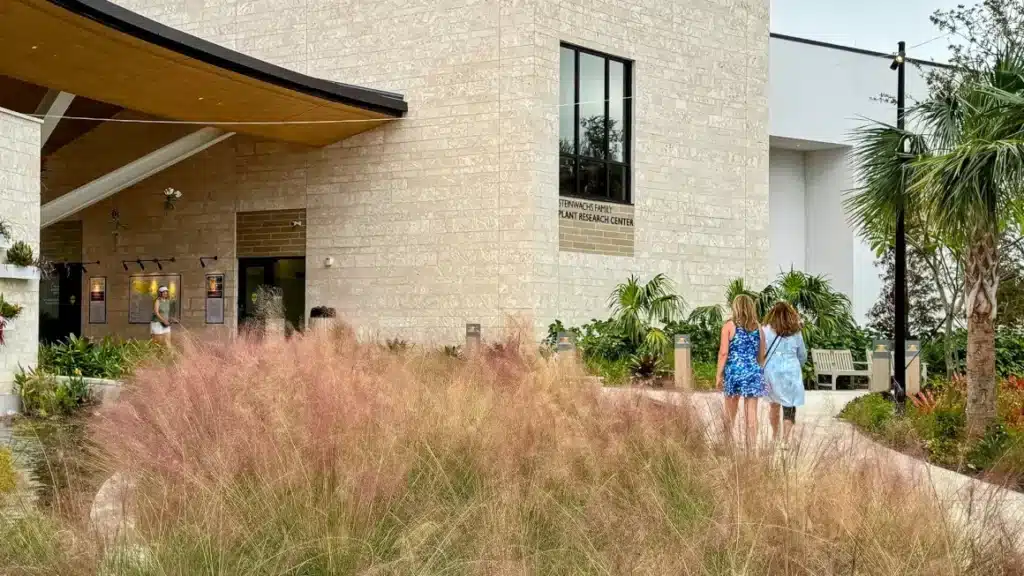
The Sarasota Bay location presented a historic weakness. The site faced exposure to flooding and storm risks. Highly resilient new facilities were vital to protect the research. This reinforced design appears in the Plant Research Center. It is also visible in the Welcome Center and the hurricane-resilient Conservatory Houses.
The construction strategies and materials include the following:
The project achieved Net-Positive Energy status thanks to a massive 50,000 square foot solar array. This array generates 1.2 MW and produces a 15% surplus that is exported to the grid.
Climatic Resilience:
- Construction: Design is resistant to Category 5 winds.
- Protection: Facilities fully withstood Hurricanes Idalia and Milton, safeguarding 20,000 rare botanical specimens.
- Water: Stormwater is managed by bio-engineered systems, capturing 3 million gallons annually.
Urban Planning:
- Open green spaces increased by 30%.
- The central pedestrian axis (15-meter width) transformed Palm Avenue, boosting visitor capacity to 500,000 annual visitors.
Advancing Research and Conservation: The Global Role of the Site
The project enhances the institution’s global mission. This involves epiphytic plant research. The new Plant Research Center connects to the Welcome Center. This offers greater visibility into the institution’s work. It highlights their research on air plant biodiversity.
These improvements did more than fix internal problems. The team set a global standard to be followed. The project blends advanced technology and environmental resilience. It also enhances the cultural experience. It preserves unique botanical collections. This establishes the site as a net-positive energy botanical garden. It is a key contributor to global environmental documentation.
✦ ArchUp Editorial Insight
The Sarasota Botanical Gardens Project redefines green architecture
by integrating energy infrastructure into a multifunctional arrival building
. Visually, the massive solar array crowning the LEAF facility presents a huge technical roof. It replaces surface parking and frees up space for ecological design
that links the Research Center to the Conservatories. Critically, the design approach presents a challenge; instead of being a completely closed loop system, the project operates as an added layer of climate protection. This raises questions about the balance between technology and deep ecological integration. Nevertheless, achieving net-positive energy status and high operational resilience during hurricanes sets an irreversible standard for major cultural projects worldwide.




ArchUp: Energy and Structural Analysis of Sarasota Gardens
This article examines the renovation project of Sarasota Botanical Gardens in Florida as a case study in net-positive energy architecture. To enhance its archival value, we would like to present the following key technical and environmental data:
The energy system utilizes a 50,000 square foot (4,645 m²) photovoltaic array installed above the parking facility, generating 1.2 MW of solar power. The project achieves 115% net positive energy, with 15% surplus energy exported to the local grid, exceeding its operational needs of 850,000 kWh annually.
The structural and climatic performance features hurricane-resistant design (resisting Category 5 winds) for new buildings and greenhouses, with biological stormwater management systems capturing 3 million gallons (11.36 million liters) annually. Open green spaces increased by 30% through natural drainage gardens like Bai Lily Pond.
In terms of functional efficiency, the central promenade (15-meter width) transforms Palm Avenue into a pedestrian pathway connecting botanical campus zones, increasing capacity to 500,000 annual visitors. The facilities withstood Hurricanes Idalia and Milton with complete protection of rare botanical collections comprising 20,000 specimens.
Related Link: Please review this article for a comparison of net-positive energy building models:
Net-Positive Energy Buildings: From Theory to Practical Application
https://archup.net/house-renovation-and-energy-efficiency/