New communication system raises safety standards at JFK’s New Terminal One

The New Terminal One project at John F. Kennedy International Airport in New York has introduced an advanced wireless communication system. It is designed to safeguard workers across the vast construction site. This step comes during the first phase of development, covering nearly 1.8 million square feet. More than 3,000 workers are engaged in building the new arrivals and departures halls along with 14 new gates.
The airport’s largest terminal
When completed in 2030, New Terminal One will become the largest passenger terminal at JFK. It will span 2.6 million square feet and house 23 gates. The facility is expected to redefine the airport’s architectural scale and organization. Moreover, it will accommodate the growing flow of international travellers through New York.
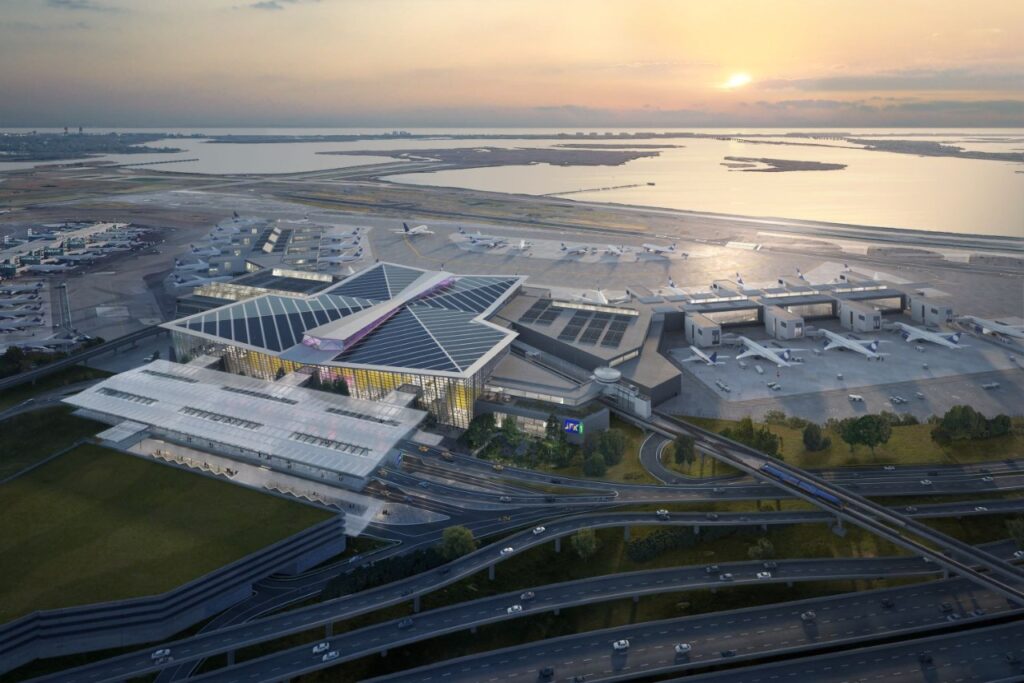
A complex architectural environment
The sheer size of the site and the scope of architectural work pose daily challenges for safety management. The new system relies on mobile communication towers distributed throughout the project. This enables rapid alerts through visual signals, audio warnings, and instant messaging. The technology was introduced to meet the needs of such a massive architectural development. Conventional alarms are insufficient to cover expansive construction areas, both indoors and outdoors.
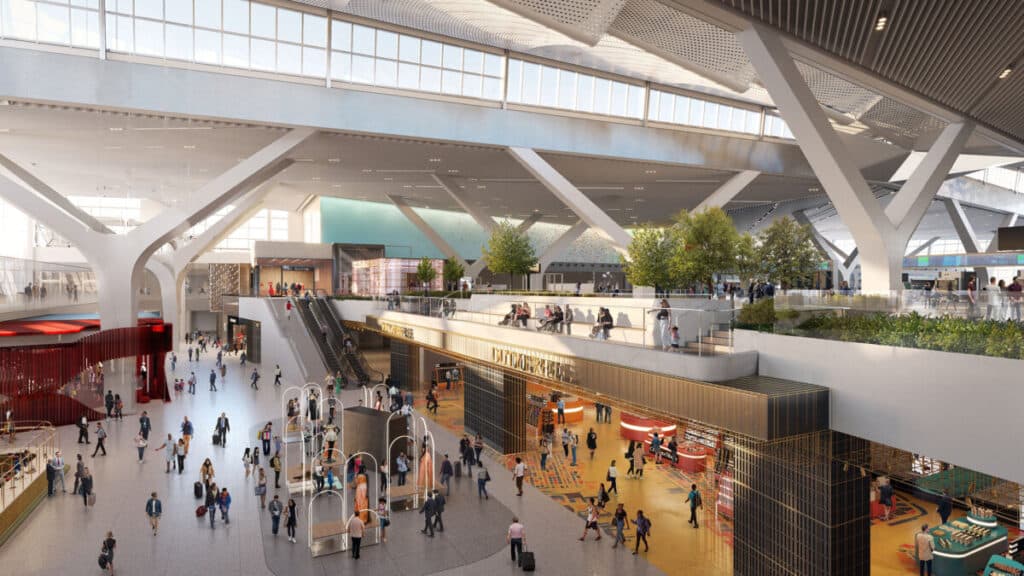
Towards new standards in major projects
Implementing this system in a project of such scale marks a shift in how large construction environments are managed. This is particularly so in airports, where passenger areas, infrastructure, and advanced technical systems converge. It is expected to reduce risks and improve working conditions within this significant U.S. airport transformation. The development is described as one of the most significant in U.S. airport infrastructure.
✦ ArchUp Editorial Insight
The article highlights the New Terminal One at JFK as a major shift in New York’s infrastructural landscape. The visuals suggest expansive glass façades and structural clarity, emphasizing transparency and scale. Yet, questions remain about how the spatial dynamics will translate into a meaningful passenger experience. This is particularly regarding cultural identity and contextual relevance. While the narrative focuses more on safety innovation than architectural expression, the project nonetheless signifies a forward-looking strategy in organizing passenger flows. It offers a benchmark for future airport design and shapes global discourse on large-scale terminal architecture.
Explore the Latest Architecture Exhibitions & Conferences
ArchUp offers daily updates on top global architectural exhibitions, design conferences, and professional art and design forums.
Follow key architecture competitions, check official results, and stay informed through the latest architectural news worldwide.
ArchUp is your encyclopedic hub for discovering events and design-driven opportunities across the globe.