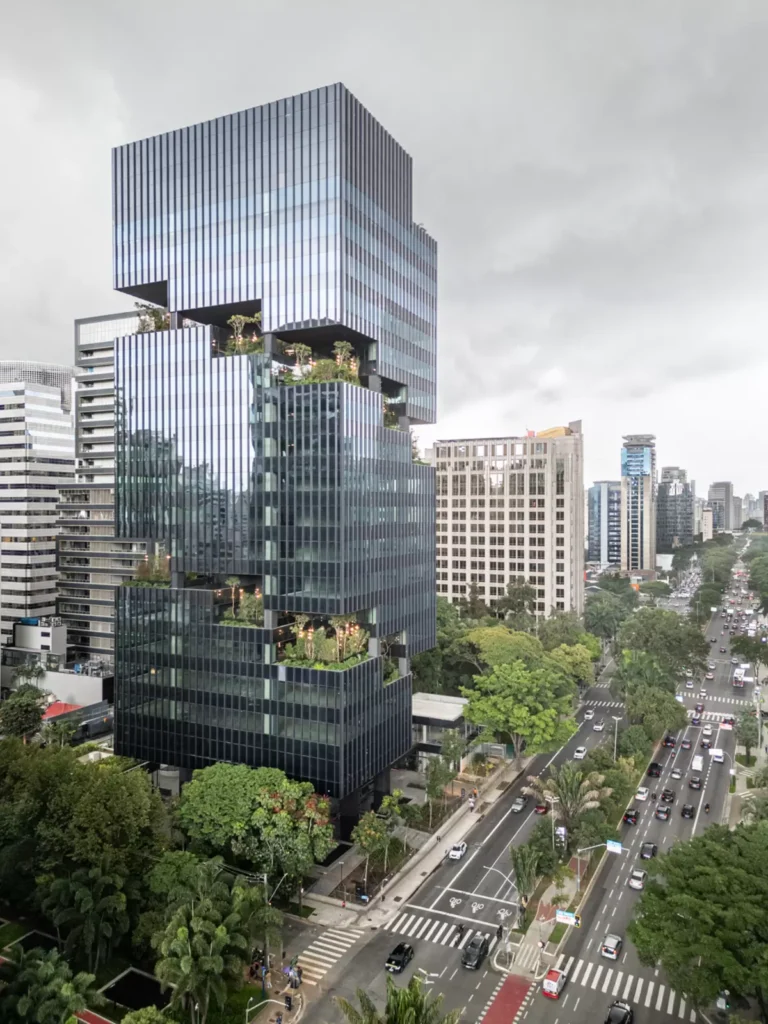
Norman Foster: The Architect Who Bridged Social Vision and Innovative Spirit

Introduction: The Engineer Who Shaped the Face of Modernity
From a modest workshop to leading a global architectural empire, the career of Lord Norman Foster is a human epic of passion and determination. His role has extended beyond constructing buildings to formulating a vision for a brighter future, where beauty meets function, and cutting-edge technology converges with an authentic human dimension. Foster is classified as one of the most prominent figures in shaping the features of contemporary cities worldwide.
The Foster Empire: Global Reach and a Unified Vision
Today, Foster + Partners owns a operational network of 20 offices spread across 12 countries worldwide, directly employing over 2,500 engineers, designers, and professionals from various specialties. This massive scale is not merely an indicator of commercial success but evidence that Foster’s vision can transcend geographical and cultural boundaries to provide global architectural solutions.
A Storied Career: From Nobility to the Cockpit
Foster has received global recognition, exemplified by winning numerous prestigious international architectural awards. He was also granted a life peerage in 1990, a title reflecting his significant influence on the British cultural scene (before he resigned from the House of Lords in 2010 due to moving his primary residence to Switzerland). Foster’s personality is not limited to engineering; his boundless curiosity led him to obtain a pilot’s license, broadening his perception of space, perspective, and the relationship between masses in their context.

Design Philosophy: Architecture as a Social Agenda
At the heart of every Foster project lies a firm conviction that architecture is not an aesthetic luxury but a tool for social change. Foster explains this philosophy: “Design is really a social agenda. It exists to improve our quality of life, physically and spiritually. It is about concepts of beauty, comfort, and working sustainably with nature to create resilient communities.” Through this vision, the architect’s role transitions from a builder of structures to a creator of communities and a guardian of sustainability.

Timeless Icons: Projects That Redefined Their Cities
Foster’s theoretical philosophy is embodied in tangible projects that have become part of the cultural identity of their cities:
· The Millennium Bridge (London, 2000): Upon its opening, this bridge was not merely a crossing; it was an architectural statement. It was the first pedestrian-only bridge to cross the River Thames in 100 years. Its unique design, featuring a shallow suspension system with compressed cables, was not arbitrary; it was intentionally designed to provide an uninterrupted view of St. Paul’s Cathedral, transforming the daily commute into an aesthetic experience.
· The Reichstag Building (Berlin): The renovation of this historic building was not just a restoration process but a profound political and cultural act. The design sought to address Germany’s divided past through the symbolism of the transparent glass dome, expressing the openness of democracy and the people’s oversight of power, turning the wounds of the past into hope for the future.
· The Venice Water Gate: This project addresses the challenges of the floating city using high-performance, lightweight materials inspired by racing car technology, such as the Porsche 917. This project demonstrates how advanced technology can serve a sensitive historical environment without compromising innovation, ushering in a new era for Venice’s infrastructure.
.png)
A Future Vision: Drawing Inspiration from the Past to Build Tomorrow
Although Foster’s designs are described as high-tech, their roots are deeply embedded in history. Foster understands that understanding the past is the key to inventing the future. He says: “We question and challenge, and innovate wherever possible. We try to make a change for the better, but we are always aware of the historical dimension.” He cites the resilience of cities in crises, stating: “Cities that go through crises always recover stronger,” recalling how disasters like the Lisbon earthquake or the Great Fire of London led to the birth of new and more robust urban concepts.
.png)
✦ Archup Editorial Insight
The article discusses Norman Foster’s philosophical and social vision, translated through his projects that integrate high technology with a historical dimension to serve society and create resilient communities. Foster’s methodology shows a focus on structural and aesthetic solutions that can sometimes overshadow the scaled human dimension, where the priority for iconic form and technology can create architectural entities separate from their surrounding urban fabric, as seen in the Millennium Bridge, which creates a visual relationship with a historical landmark but separates the user from the direct experience of the street and the river. Furthermore, its heavy reliance on high-tech materials and techniques may raise questions about their generalizability and long-term economic sustainability in less affluent urban contexts. However, the projects’ ability to provoke an architectural and social dialogue about the role of infrastructure and the arts in shaping a city’s identity remains the most prominent feature of his contributions.
Brought to you by the ArchUp Editorial Team
Inspiration starts here. Dive deeper into Architecture, Interior Design, Research, Cities, Design, and cutting-edge Projectson ArchUp.