National Training Center Proposals Reinterpret the Traditional Norwegian Longhouse

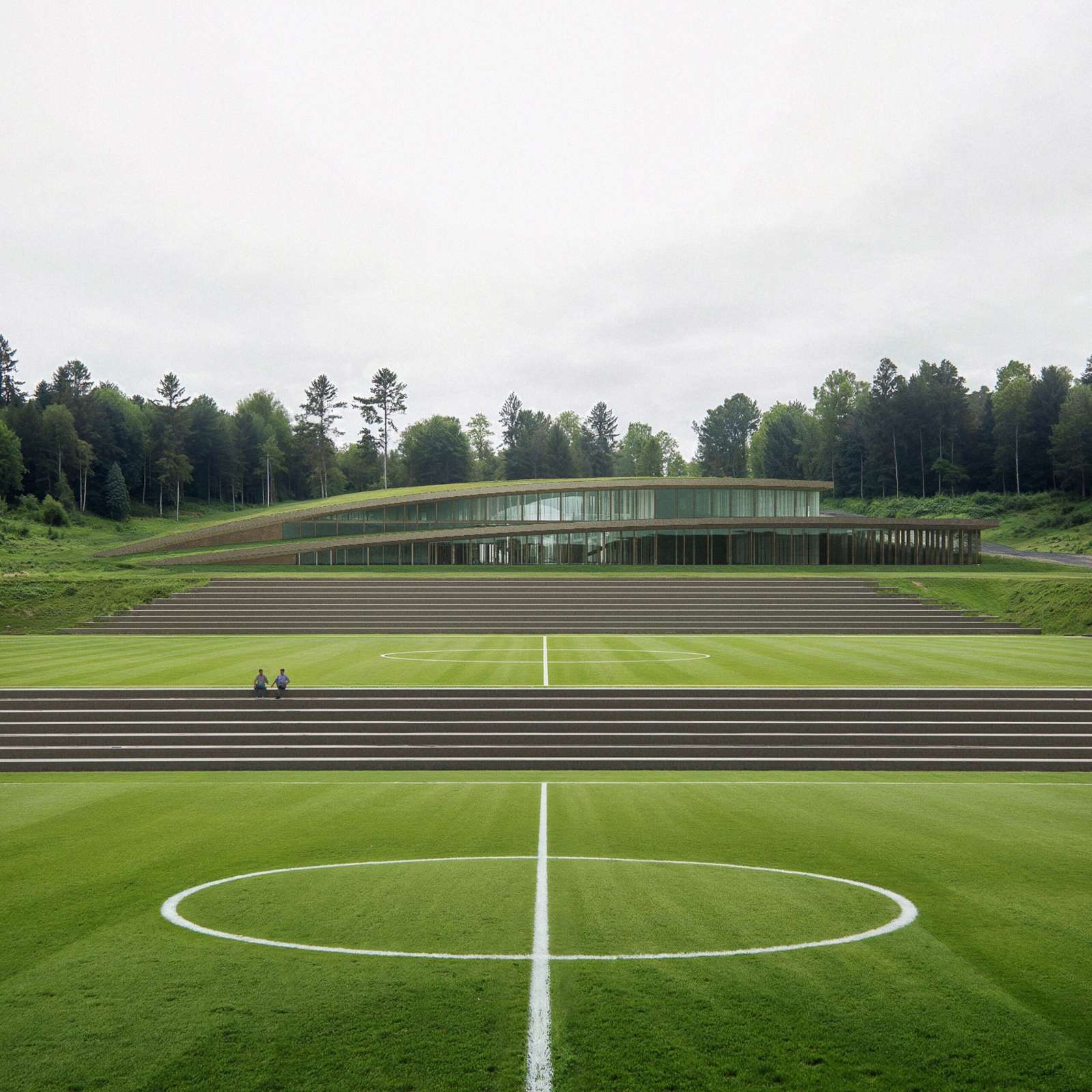
Norway plans to establish a new national football training ground that merges elite performance facilities with community-focused spaces. The design draws on historical communal structures to create a unified home for athletes and administrators. This approach seeks to strengthen the link between professional sports and the public through a shared architectural identity.
The project provides a comprehensive architecture for player development by gathering diverse functions into a single location. The program includes advanced training areas, offices for sport associations, a sports-focused high school, and shared workspaces. By placing these different groups under one roof, the scheme encourages daily interaction and professional collaboration.
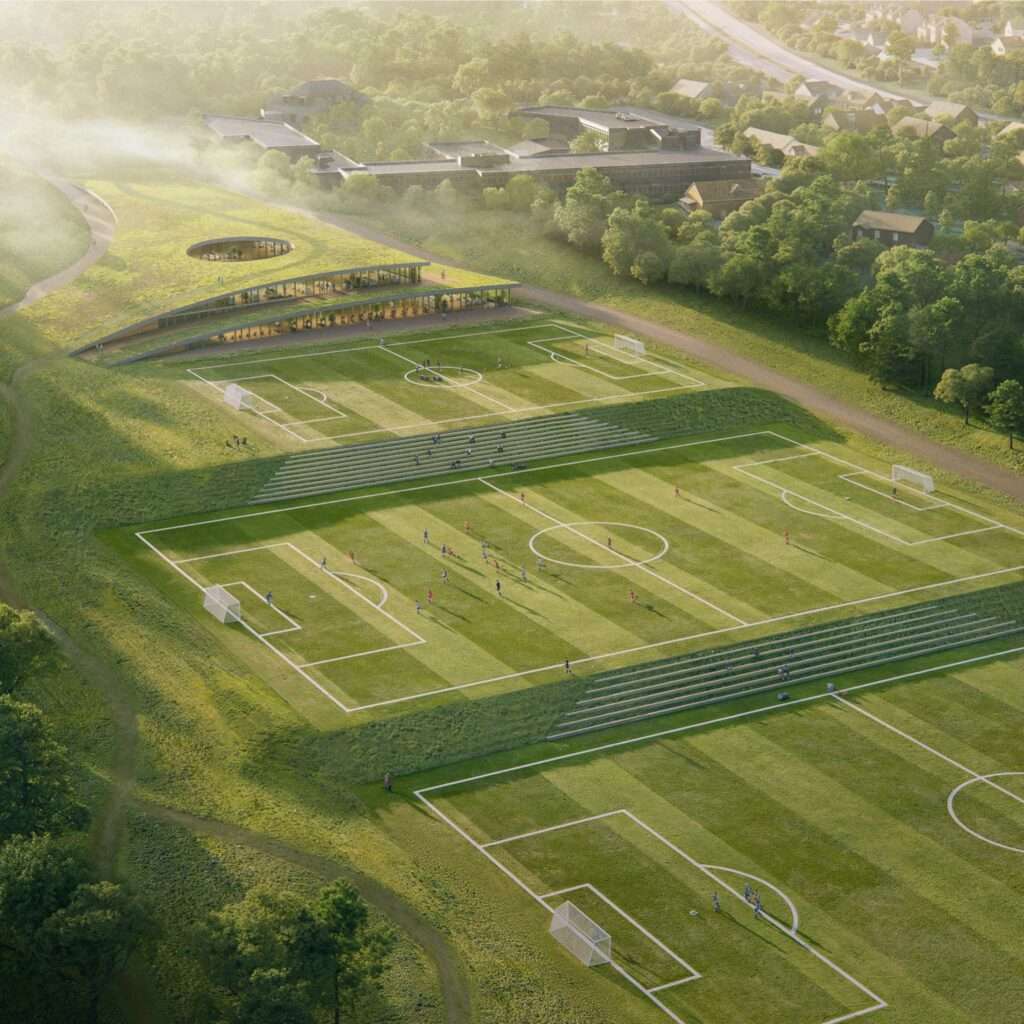
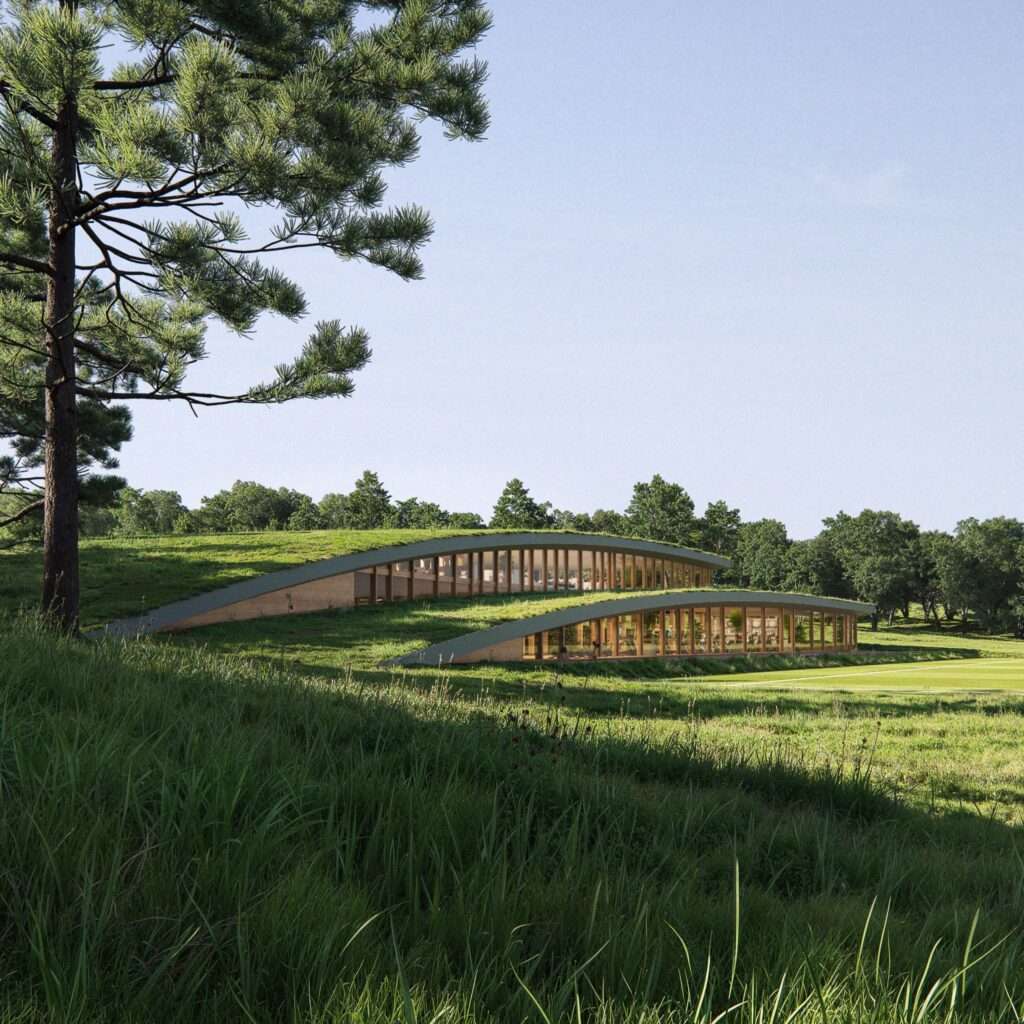
The design team looked to the traditional Norwegian longhouse—a central gathering space used by Viking communities—to inform the building’s logic. This historical reference provides a framework for unity and openness. The resulting structures use soft, curved forms that help the large-scale volumes blend into the natural landscape.
Integrating Elite Performance and Public Access
The proposal moves away from the isolated nature of traditional sports campuses. Instead, it positions the facility as an inclusive landmark that welcomes the wider community. This strategy reflects Nordic values of shared progress and transparency in building design. The team believes that a thoughtful physical environment can create the necessary conditions for excellence to thrive.
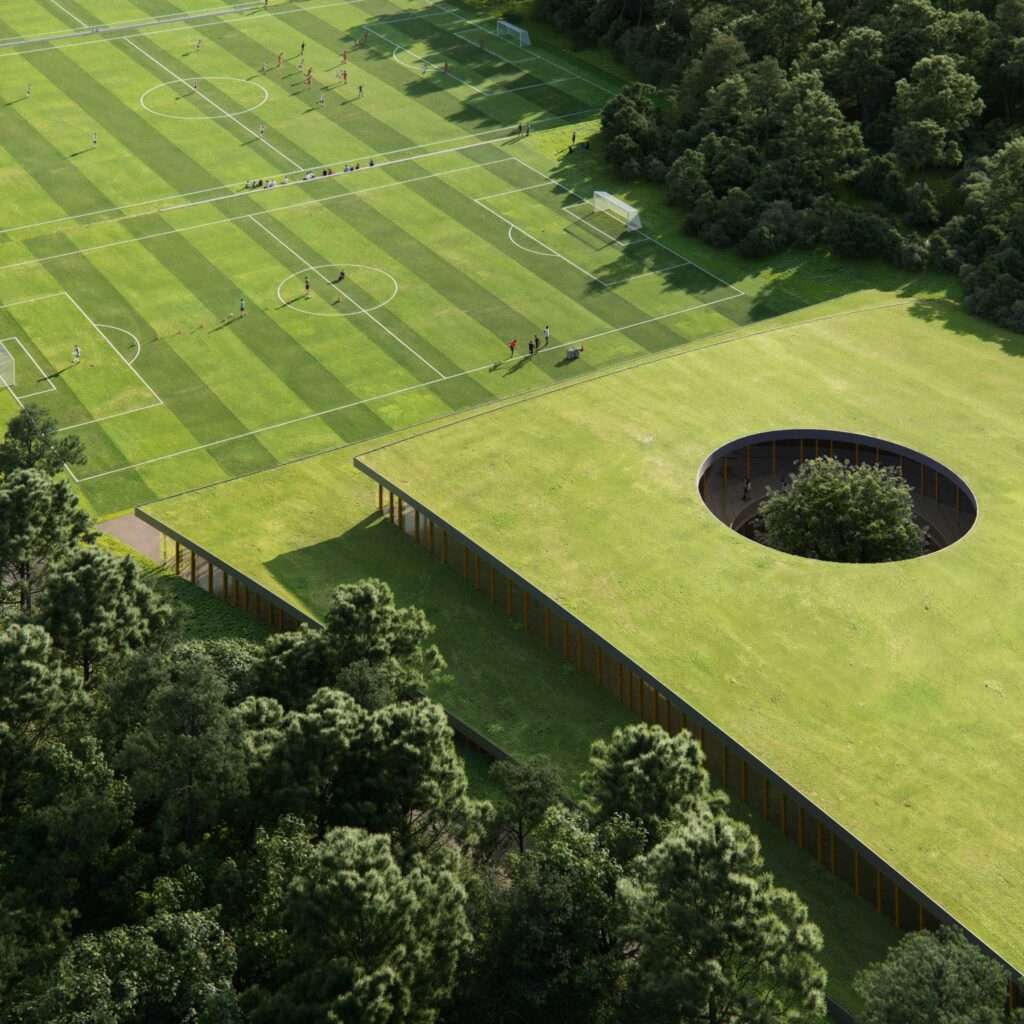
A central concept of the intervention is “togetherness,” which dictates the flow between the high school and the professional training zones. The layout ensures that young talent remains physically connected to the elite level of the sport. This spatial hierarchy supports long-term growth by making the path to success visible and accessible within the campus.

The fluid geometry of the envelope—the outer shell of the building—echoes the movement found in football. These organic lines reduce the visual mass of the administrative and educational blocks. The team emphasizes that while construction cannot produce a great player, it provides the structural support needed for a national team to succeed.
Typological Evolution and Communal Strategy
The project utilizes the longhouse typology as a strategic tool for programmatic density. By reviving a historical communal form, the design avoids the fragmented appearance of typical suburban sports complexes. The use of a single, expressive roofline creates a clear sense of place while sheltering a complex mix of educational and athletic functions. This structural choice prioritizes the collective experience over individual departmental silos. The curved geometry serves as a site-specific response that mitigates the scale of the facility against the Norwegian horizon. Ultimately, the project demonstrates how traditional spatial arrangements can solve modern logistical challenges in professional sports infrastructure, ensuring that high-performance requirements do not compromise the public realm.
✦ ArchUp Editorial Insight
The proposal for the Norwegian National Team’s training ground offers a sophisticated reinterpretation of the longhouse, utilizing historical communal architecture to ground modern high-performance demands. By consolidating a sports high school, administrative offices, and elite pitches under a singular, fluid envelope, the team creates a programmatic synergy that elevates the campus above mere utility. The curved forms successfully negotiate the transition between the built environment and the natural landscape, prioritizing regional identity. However, the romanticized narrative of the longhouse risks obscuring the inherent tension between elite exclusivity and public transparency. While the design promises openness, the operational reality of professional sports often mandates high-security perimeters and restricted access. This project must carefully manage these physical thresholds to ensure the promised “togetherness” remains a spatial reality rather than just a symbolic gesture within the construction logic.
Project Team: Schmidt Hammer Lassen Architects. Location: Ski, Norway.
Project Notes: The Norwegian Football Association (NFF) commissioned these design proposals for a new national training center. Visualizations provided by Ramka.co.