London Museum Prepares for Opening in Restored Victorian Market

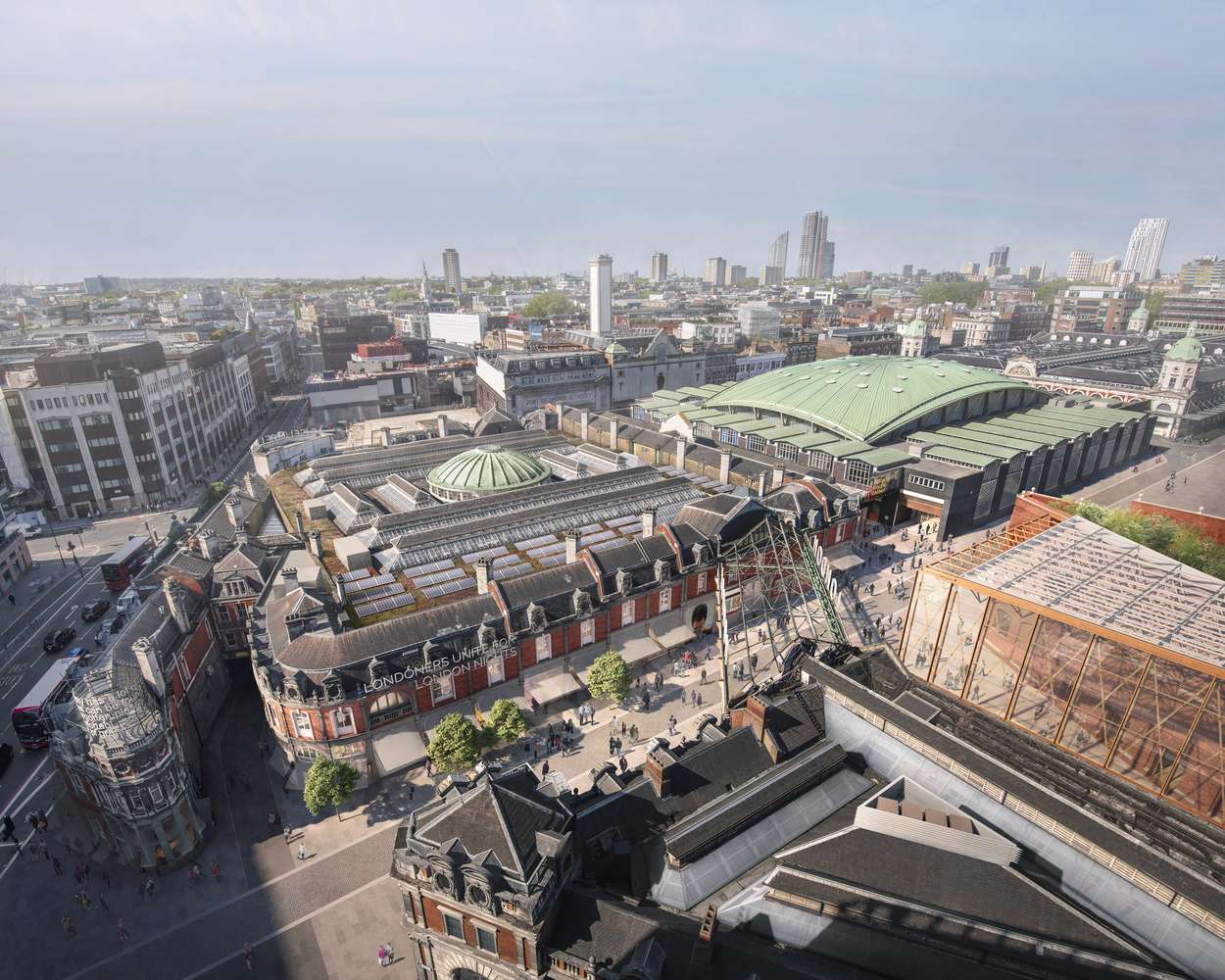
The London Museum will officially open its new permanent galleries in Smithfield on November 28, 2026. This relocation moves the institution from its former site at London Wall into the historic General Market, a Victorian landmark that has sat disused for over thirty years. The project transforms a derelict trading hub into a 21st-century cultural destination that integrates local history with modern architecture.
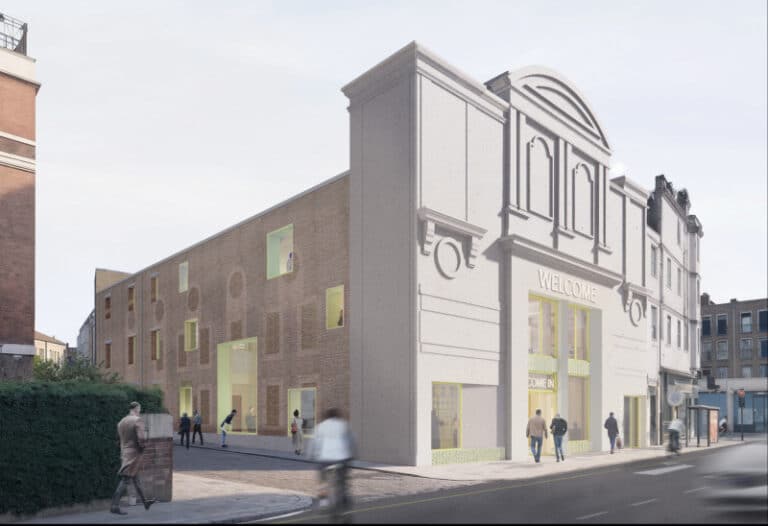
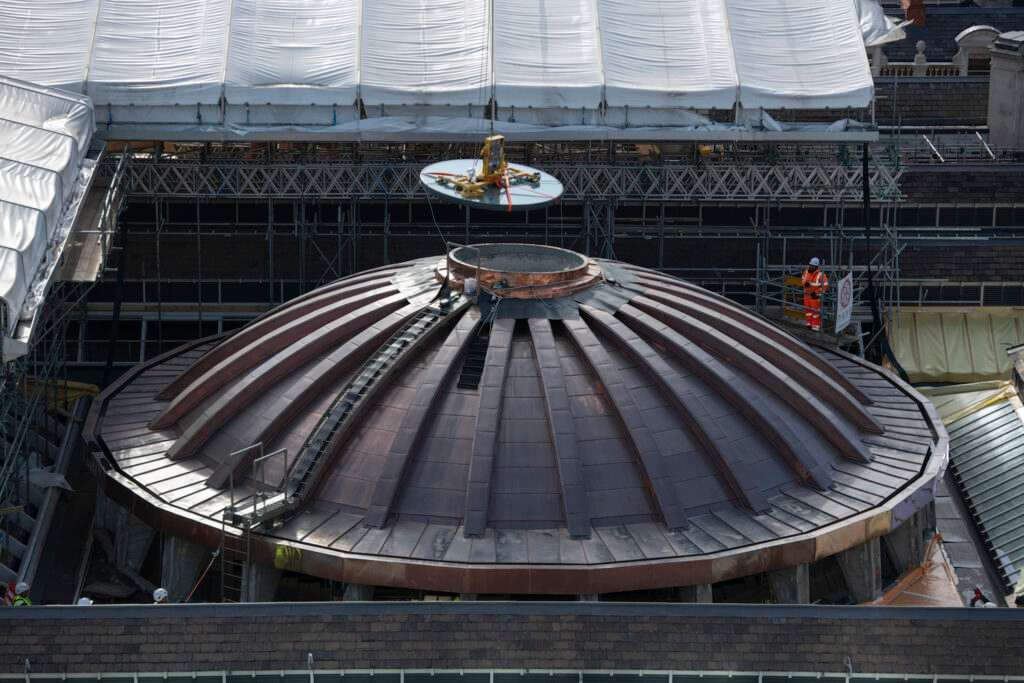
The intervention restores the 1883 market building, originally designed by the architect of Tower Bridge. The team employed over 70 different trades to revive the structure, including coppersmiths, stonemasons, and blacksmiths. These craftspeople restored the decorative ironwork and the historic shopfronts that form the building’s perimeter, ensuring the heritage of the working market remains visible within the new museum.
Circulation Sequence and Subterranean Discoveries
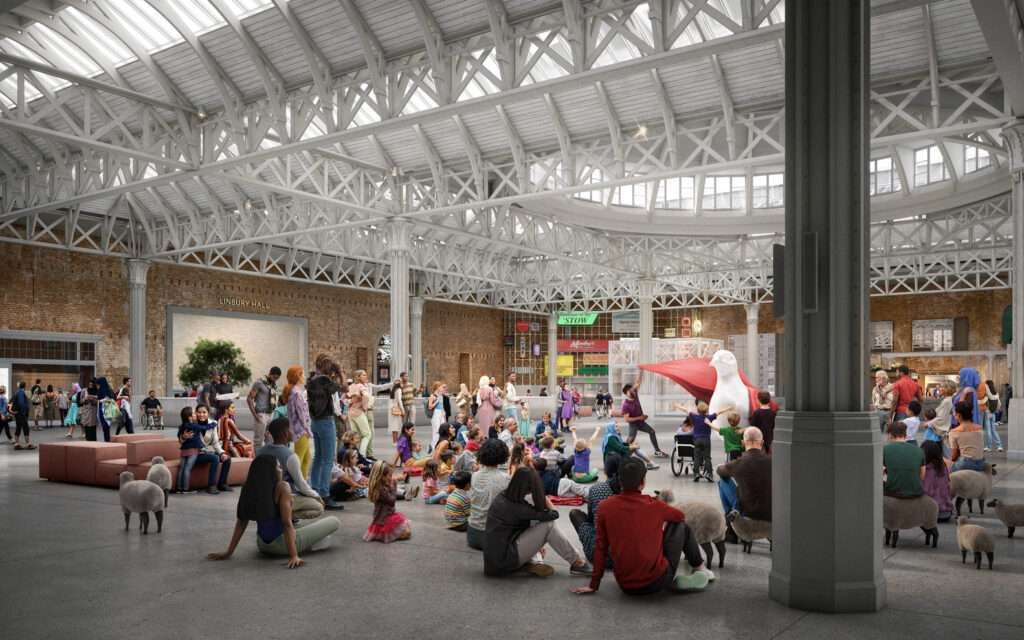
The design organizes the visitor experience into three interconnected spatial zones. Guests enter through “Real Time,” a covered former street that serves as the main entrance hall. This lead-in space connects to “Our Time,” a central hub located beneath the market’s restored dome. This area functions as a social space for events, dining, and large-scale installations that represent the city’s diverse culture.
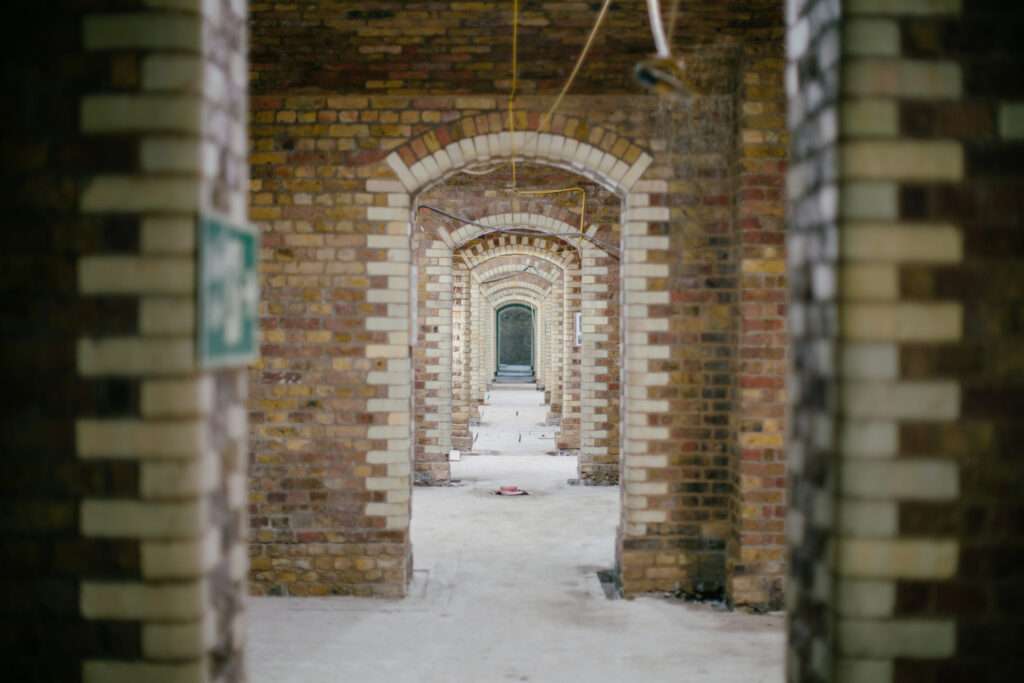
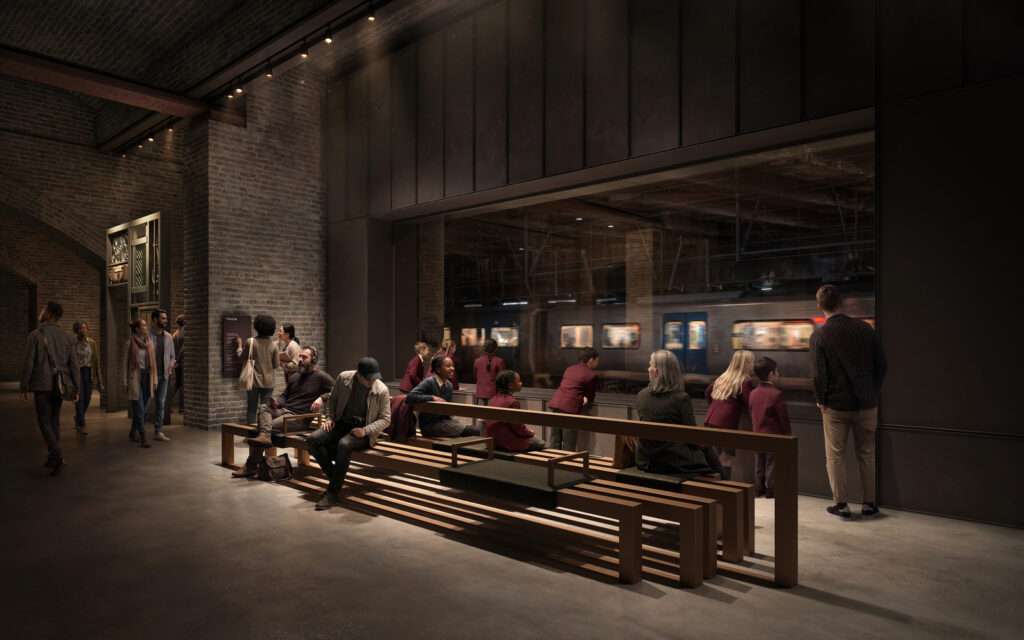
Below the surface, the project reveals 800 square meters of historic vaults. This lower level, titled “Past Time,” houses the permanent galleries at the same elevation as the city’s original Roman streets. The design maintains a direct connection to active urban infrastructure by including a six-meter viewing window. Through this glass, visitors can watch live Thameslink trains pass through the galleries, physically linking the museum to the city’s transport network.
Technical Integration and Sustainability Measures
The renovation pairs heritage conservation with modern construction standards to improve environmental performance. The team integrated renewable geothermal energy systems and used an eco-concrete mix to reduce the project’s carbon footprint. Additionally, a rainwater harvesting system powers the building’s plumbing, demonstrating how Victorian infrastructure can adapt to contemporary sustainability requirements.
This relocation follows the closure of the museum’s previous brutalist landmark, which faced demolition approval in 2024. By moving to Smithfield, the institution occupies a site surrounded by 600 listed buildings and nearly a millennium of trading history. The project secures the future of the General Market while providing a permanent home for an archaeological archive that ranges from Roman writing tablets to contemporary street art.
Spatial Logic and Programmatic Intelligence
The project employs a clear vertical hierarchy to resolve the tension between public social life and quiet historical study. By placing the “social space” at grade within the market’s original footprint, the design utilizes the existing rhythmic volume of the Victorian hall to handle high-traffic activities and events. The transition to the “Past Time” galleries below ground uses the heavy, enclosed nature of the historic vaults to create a controlled environment for sensitive archaeological artifacts. This strategy respects the building’s structural bones while carving out a new circulation sequence. The inclusion of the train viewing window acts as a critical programmatic bridge, reminding the visitor that the museum sits within a living, moving urban fabric rather than an isolated vault.
✦ArchUp Editorial Insight
The relocation of the museum to the Smithfield General Market represents a sophisticated exercise in adaptive reuse that prioritizes urban continuity over isolated object-making. By repurposing a defunct Victorian trade hub, the project successfully embeds cultural memory within the existing fabric of the cities. The design utilizes the building’s historic permeability to invite the public into a “social space” that functions as a civic living room. However, this heritage-led strategy presents an inherent contradiction regarding architectural preservation. While the team celebrates the salvation of the Victorian market, the relocation necessitated the abandonment and subsequent demolition of the museum’s previous modernist home at London Wall. This trade-off suggests that our current architecture culture finds it easier to value 19th-century masonry over 20th-century concrete, even when both structures serve the same civic purpose.
Project Team: Stanton Williams, Asif Khan, Julian Harrap Architects. Location: Smithfield, London, United Kingdom.
Project Notes: The team expects to open the museum on November 28, 2026. The City of London Corporation and the Mayor of London lead the development partnership.