Office-to-Residential Conversion Reshapes Downtown Washington in 2026

Office-to-residential conversion drives Washington’s urban shift in 2026.
City planners have scheduled over 6,500 residential units in central districts.
Developers focus on areas with high office vacancy.
The strategy aligns with broader cities and urban planning initiatives.
- City planners schedule over 6,500 residential units in central administrative districts.
- Developers target areas with high office vacancy.
- The strategy aligns with broader cities and urban planning initiatives.
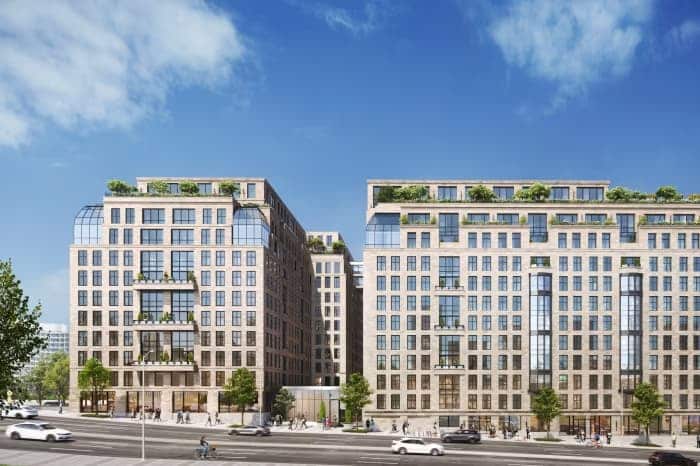
(Image © Bjarke Ingels Group / BIG)
Adaptive reuse prioritized over demolition
- Authorities retain existing structures and reprogram them for housing.
- This reduces construction waste and preserves the urban fabric.
- Projects fall under buildings categories.
- Officials record each project in the archive for long term tracking.

(Image © Gensler / Renderings by Luxigon)
Design constraints in deep floor plates
Many Office-to-residential conversion projects face challenges:
- Deep floor plates
- Centralized cores
- Circulation and daylight access
Architects adjust openings, circulation paths, and daylight access while coordinating closely with construction engineers.
Teams also modify interior design to meet functional needs.

(Image © HKS Architects / Renderings by Luxigon)
Environmental impact and functional change
- Conversions reduce emissions compared to full demolitions.
- Developers follow sustainability guidelines to extend building lifespans.
- Projects reflect architecture responding directly to urban demand rather than market pressures.
Washington as a reference model
- Experts study Office-to-residential conversion as a practical model.
- Featured on the architecture platform to guide urban adaptation strategies.
- Discussed in events and forums about post-administrative urban centers.

Materials and spatial design
- Older office types show limits in architectural design.
- Constraints in building materials like concrete, steel, and glass affect feasibility.
- Interior redesign is key to maintain usable and comfortable spaces.
Regulation, monitoring, and updates
- Authorities use Office-to-residential conversion to manage city spaces.
- Zoning and permit processes are updated to support these projects.
- Urban news reports changes while research tracks outcomes.
Architectural Snapshot
Washington’s conversions highlight a shift from new construction to managing existing structures, turning administrative buildings into adaptable urban components.
ArchUp Editorial Insight
The article examines Office-to-residential conversion in Washington 2026.
It reports on planned units and central districts targeted for these projects.
Adaptive reuse is emphasized over demolition.
Internal links to credible sources are embedded for reference.
Terminology is sometimes repeated and design challenges are generalized.
Structural constraints and core configurations are not fully detailed.
This leaves room for improvisation in architectural interpretation.
The coverage connects projects to sustainability and the urban environment.
It shows how existing buildings can adapt to city planning policies.
The analysis provides a practical reference for adaptive reuse projects.
Its relevance may vary due to fluctuating housing demand.
The article functions more as a critical insight than a permanent archive.