Home » News » Azerbaijan Launches 2026 National Urban Architecture Year

Azerbaijan Launches 2026 National Urban Architecture Year

National Urban Architecture Year: Heydar Aliyev Center in Baku at dusk, symbol of civic design
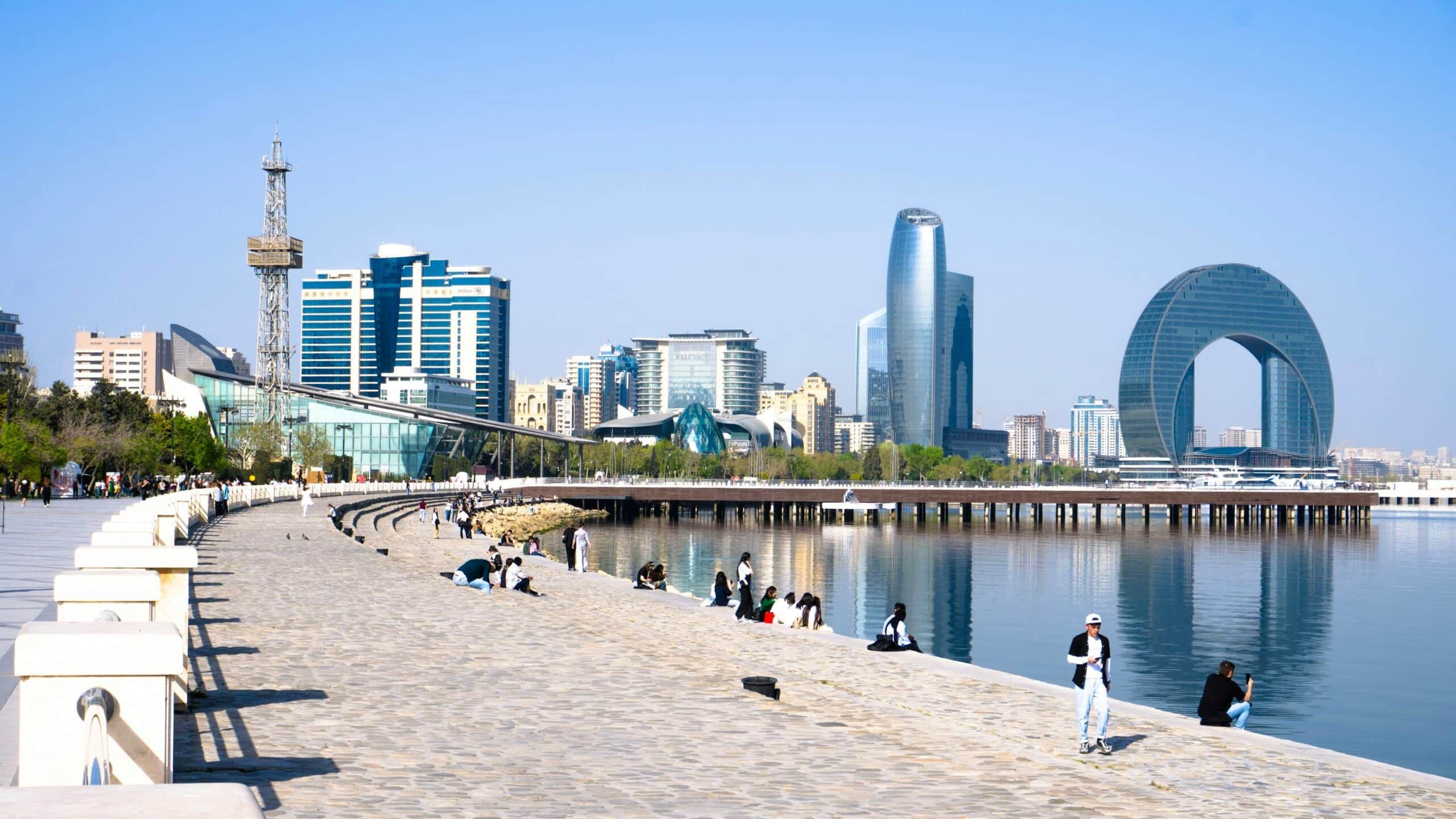
The Baku waterfront serves as a public stage where civic life meets architectural spectacle. The Flame Towers and Crescent building frame views of daily leisure and urban reflection. (Image © Azerbaijani Ministry of Culture / State Committee on Urban Planning and Architecture)

National Urban Architecture Year is now official in Azerbaijan.
President Ilham Aliyev declared 2026 as such.
The move aligns with Baku’s hosting of WUF13 in May.
It frames architecture as policy, not decoration.

Architecture is not decoration. It is governance through space.
State Committee on Urban Planning and Architecture

The decree requires a national action plan within one month.
It covers legislation, urban fabric, and design tools.
All must align with SDG 11 and the New Urban Agenda.
This ties local policy to global cities frameworks.
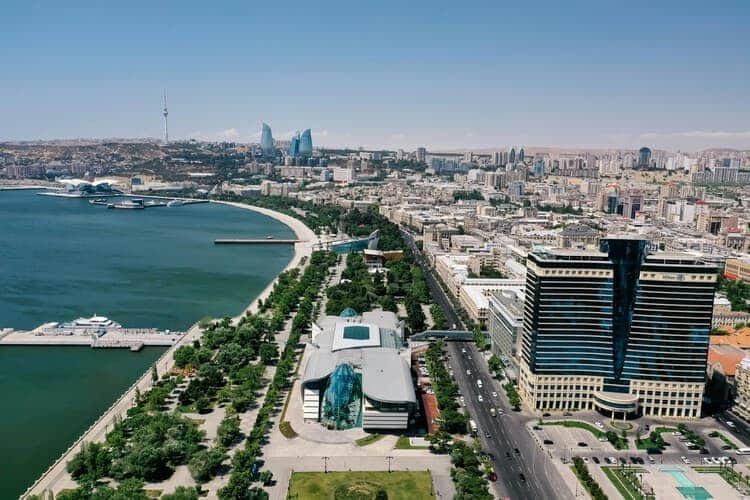
National Urban Architecture Year skyline: Flame Towers and Baku coastline under clear sky
This aerial perspective reveals how Baku’s waterfront integrates monumental architecture with public circulation. The Flame Towers and Heydar Aliyev Center anchor a linear civic spine that channels movement between sea and city.
(Image © Azerbaijani State Committee on Urban Planning and Architecture)

WUF13 Treats Housing as Infrastructure

UN Habitat organizes WUF13 in Baku from May 17 : 22, 2026.
Theme: Housing for All: Safe, Resilient Cities and Communities.
Three billion people live in inadequate housing.
This defines the scope of the National Urban Architecture Year.
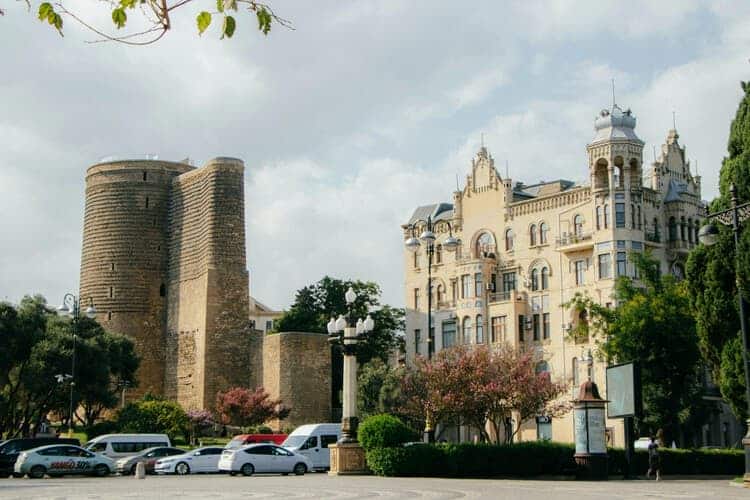
National Urban Architecture Year heritage site: Maiden Tower in Icheri Sheher, Baku
The juxtaposition of the Maiden Tower and adjacent neoclassical architecture illustrates Baku’s layered urban identity a key reference for policy initiatives under the Year of Urban Planning and Architecture.
(Image © Azerbaijani State Committee on Urban Planning and Architecture)

Post-Conflict Zones Become Design Labs

Azerbaijan collaborates with Kyrgyzstan on WUF13 participation.
Both reference reconstruction in Karabakh and East Zangezur.
These are treated as real world urban experiments.
They appear in the public archive.

Rebuilding after conflict demands more than concrete it requires memory, law, and design in equal measure.
Joint Urban Policy Brief, Baku Bishkek Dialogue
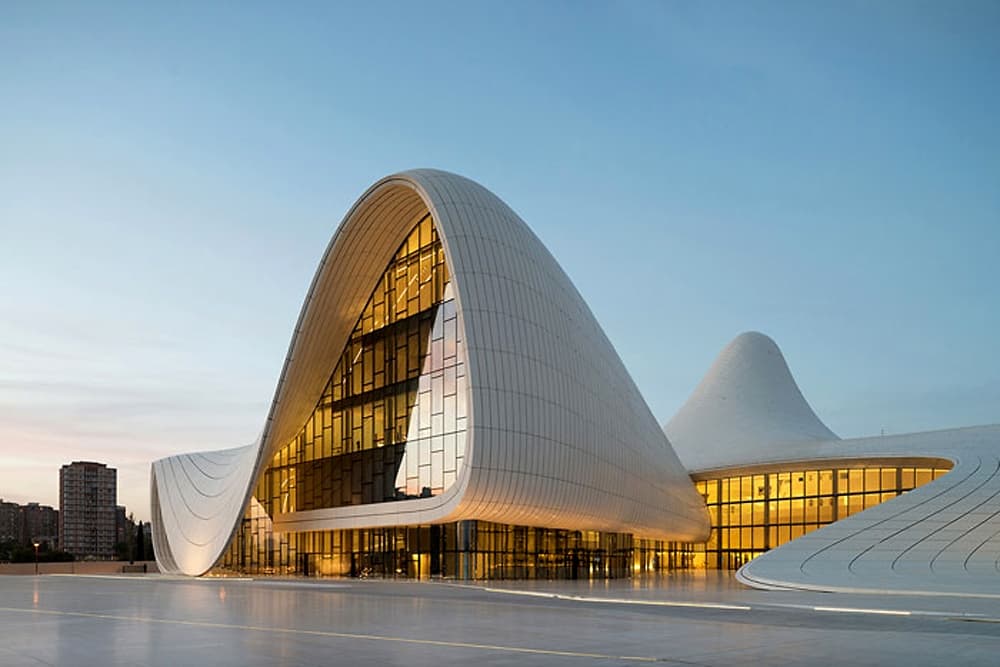
Heydar Aliyev Center in Baku, Azerbaijan, illuminated at dusk — a landmark of fluid architectural form and civic symbolism.
The Heydar Aliyev Center’s sculptural envelope redefines public space in Baku — a focal point for policy discussions under the Year of Urban Planning and Architecture.
(Image © Azerbaijani State Committee on Urban Planning and Architecture)

Heritage Informs Modern Strategy

Azerbaijan’s urban history spans Silk Road to Soviet planning.
UNESCO sites like Icheri Sheher anchor current policy.
They inform new buildings without erasing identity.
This is central to the Year of Urban Planning and Architecture.

The state links local work to global discourse.
Through events, construction, and the architecture platform.
Material choices and spatial justice remain key.
So does alignment with sustainability goals.

Architectural Snapshot
Azerbaijan’s 2026 declaration positions architecture as a sovereign instrument of urban policy using WUF13 to connect local action with global debates on housing, resilience, and urban futures.
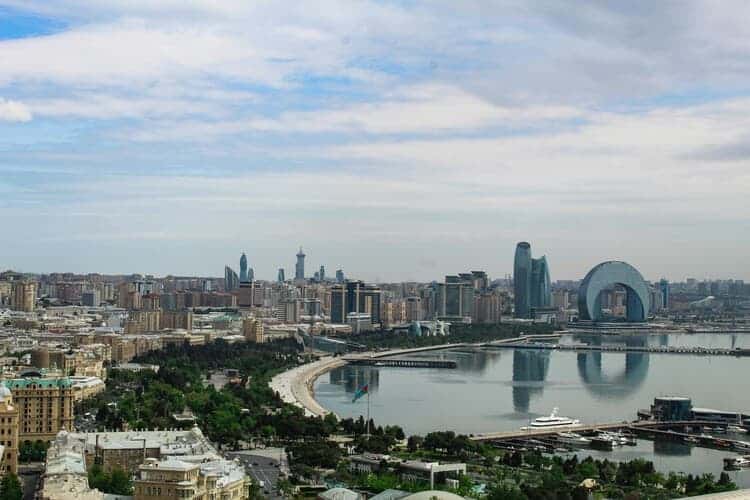
Panoramic view of Baku’s skyline showing the Flame Towers, Crescent building, and coastal boulevard under scattered clouds.
This panoramic view captures Baku’s spatial duality historic districts meet futuristic towers. It serves as a visual anchor for policy debates under the Year of Urban Planning and Architecture.
(Image © Azerbaijani State Committee on Urban Planning and Architecture)

✦ ArchUp Editorial Insight

The announcement reads as spatial statecraft, not cultural policy.
It frames architecture as neutral governance.
Avoids naming who shapes or benefits from these policies.

Global frameworks like SDG 11 are cited without local critique.
Karabakh’s reconstruction is used as urban lab.
That offers rare concrete grounding.

Will this become inclusive design? Or branding?
Transparency not declarations will decide.

Further Reading From ArchUp

  • Spinni is a Classic Drafting Stool With a Twist

    Spin around in Division Twelve’s innovative bent-metal swivel chair, Spinni. Thought up by Thom Fougere, this new version of the…

  • Nocs Design Studio: Making great sounds sound great

    As an artist gradually uncovering the genuine sound that has always been there, like chiseling away at a marble sculpture….

  • The influence of culture on architectural design

    Culture is an essential element of the people-based architectural process, as architect Alvar Aalto stated that: “The ultimate goal of the…

  • Inaba Williams Architects: Mirrored Net-Zero Houses

    In Santa Monica, California, Inaba Williams Architects has unveiled a pair of identical houses characterized by their white stucco exteriors…

  • LG Display Develops Stretchable Screen Capable of Expanding by 50%

    After five years of intensive research and development, LG Display has unveiled a groundbreaking stretchable screen. This innovative prototype, capable…

Leave a Reply

Your email address will not be published. Required fields are marked *