On the Walls of Miami’s Streets

I begin in the middle of a Miami street. As you advance, step by step, a question takes hold: why do these walls rise at varying heights, in a uniform color, yet remain breathtaking in their unintentional innovation? It’s a curious scene: a fragmented visual horizon, composed of blocks, colors, and simple textures, that disrupts the eye’s typical path.
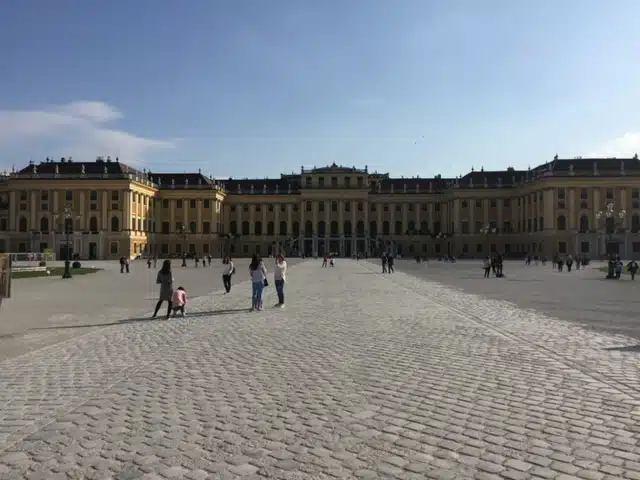
We often overlook such details, but upon pausing, this Miami street holds a different narrative. The two attached photos capture this simple architectural juncture—walls of a single color but with open-ended qualities, varying heights, and details that seem to whisper tales of planning, privacy, and perhaps, patterns of use.
The City as a Constructed Sensorium
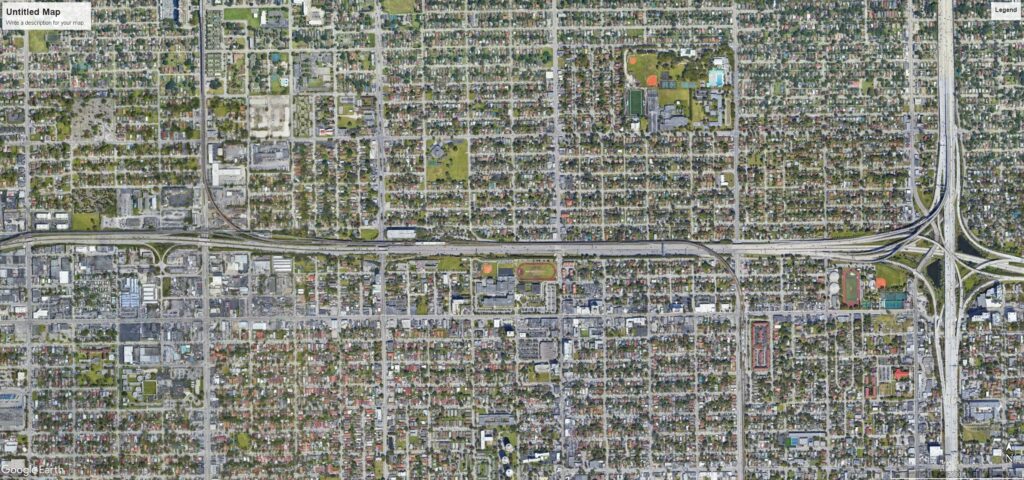
Zooming in on the map, it becomes clear these walls are not random. They are part of compounds, internal residential complexes, or private gardens that share a chromatic unity, with each wall’s height varying according to its context. Some are for privacy, some to mitigate street noise, and others to calibrate the visual spaces between buildings. They are not born of arbitrary design but align with the rules of contemporary spatial planning.
Miami, as some have described it, is not one city but a city of many cities. From the street art of the Wynwood Walls to the curated design of the Miami Design District and the character of MiMo architecture, the variation in the heights of these colored walls is a reflection of this urban and cultural multiplicity [Harvard Graduate School of Design, Wikipedia].
Context in Elevation and Color
Seeing these walls brings to mind MiMo (Miami Modern) structures, where details like “breeze blocks” and curved corners played both an aesthetic and functional role, often with a uniform color that broke the repetitive rhythm of the buildings [Wikipedia]. In Wynwood, the varied wall heights are juxtaposed with massive art murals, proposing new patterns of visual interaction with the street [Architectural Digest, Wikipedia].

The Wall as Respite and Demarcation
These walls contribute to creating “visual blocks” that define the distance between pedestrians and buildings, lining up like rhythms in the public space. A height of two or three meters not only adds a visual barrier but also forms the psychological boundaries of properties. The uniform color, despite its simplicity, unifies these elements and grants the street a moment of visual relaxation amidst the diversity of forms.
Street Art and the Layered Scene
If we venture into the Wynwood Art District, we see how stories are told across massive, colorful murals in an open space. Heights change, colors converge, and the wall becomes articulate within the city [Architectural Digest, Wikipedia, UP MAGAZINE]. Moving to the Miami Design District, walls transform into three-dimensional backdrops, like the “Vortex” installation, which creates a graded visual illusion [2×4, Wikipedia].
From the Apparent to the Social Context
What appears as a disorienting chaos is, in fact, a reflection of the city’s culture of multiplicity—an unconventional geometry. These walls do not exist to define what the city wants to be, but to reflect the disparity between owners, between uses, between the formal and the informal. They tell stories of fragmentation, privacy, and the need for visual order.

A Conclusion Beyond the Photograph
When you walk in Miami, it’s not just the colors that speak, but the wall’s extension, its variation, its height, and its uniform hue. You stand before it and ask: What does this city want from me visually? Does it want to acknowledge my presence, or make you listen to spaces where details disappear? In the end, scenes like this do not need to be explained, but rather to be read with a conscious eye. The issue is not just how we see the walls, but how they push us to ask new questions about the relationship between color, height, and the public realm in Miami.

✦ ArchUp Editorial Insight
This article provides a compelling analysis of the seemingly chaotic urban landscape of Miami, specifically focusing on its fragmented street walls. The author effectively argues that these varying heights and uniform colors are not random but are a deliberate spatial strategy for privacy and visual calibration. By linking these modern walls to historical precedents like MiMo architecture and contemporary street art, the article presents a nuanced understanding of how these elements shape the city’s complex visual and cultural identity.
A deeper architectural critique, however, would have benefited from exploring the socio-economic implications of this design. The article touches on fragmentation and privacy but could more thoroughly investigate whether this emphasis on private, enclosed spaces contributes to a sense of social isolation or urban segregation, which is a critical aspect of contextual relevance. The reliance on visual analysis, while strong, could be complemented by an examination of the material expression and its impact on thermal performance and sustainability in Miami’s climate, moving beyond mere aesthetics.
Nonetheless, the piece successfully challenges the viewer to look beyond the surface, offering a valuable lesson in discerning intent within apparent disorder. It serves as a strong reminder that even the most mundane urban elements can be analyzed to reveal a city’s unique cultural and social narratives.