
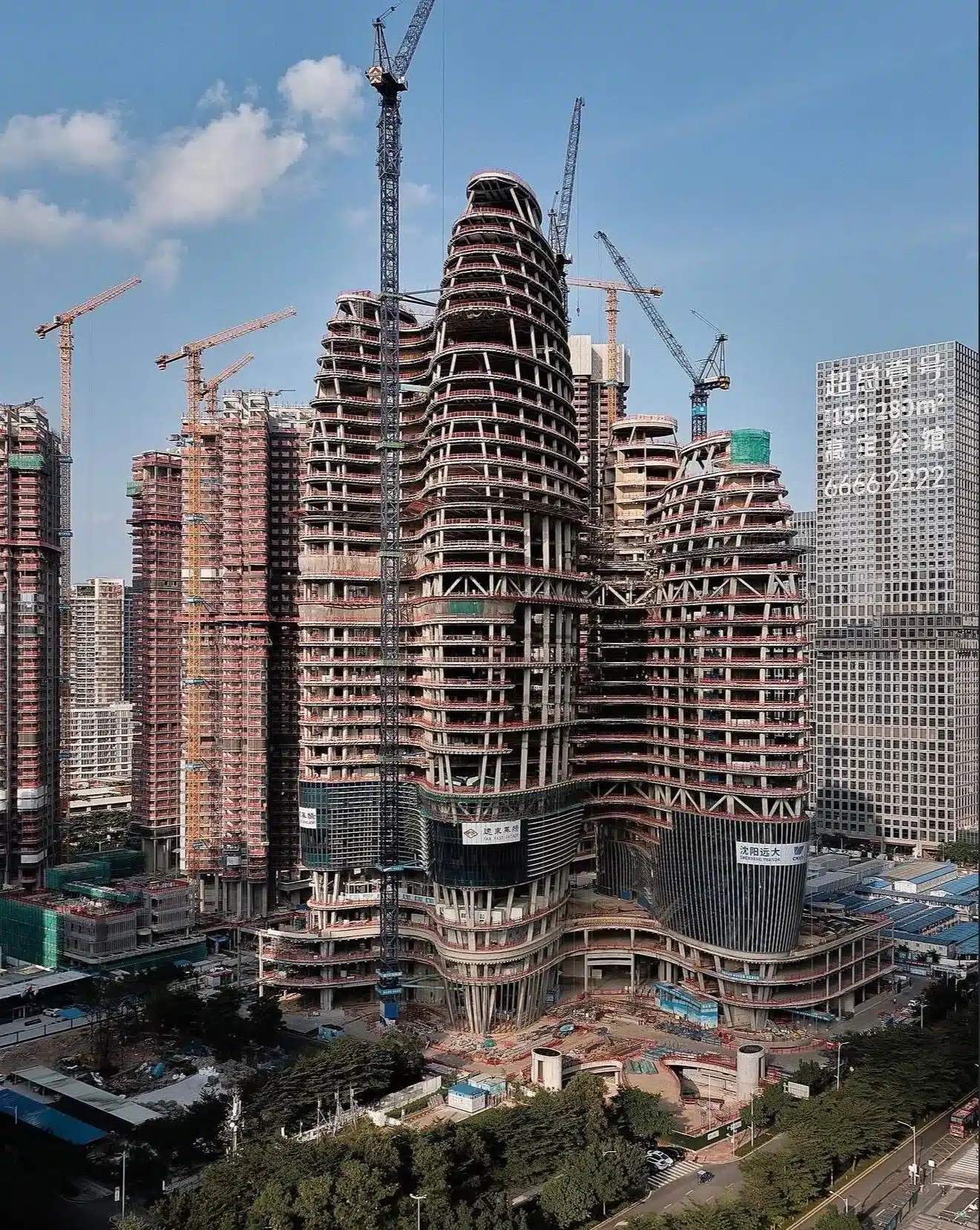
OPPO Headquarters Rises in Shenzhen as a New Urban Workplace

OPPO headquarters in Shenzhen integrates architectural design, urban planning, and workplace functionality. It responds to dense urban conditions through a vertical campus model. This approach prioritizes spatial connectivity and environmental performance core demands in contemporary architectural design.
Design Concept
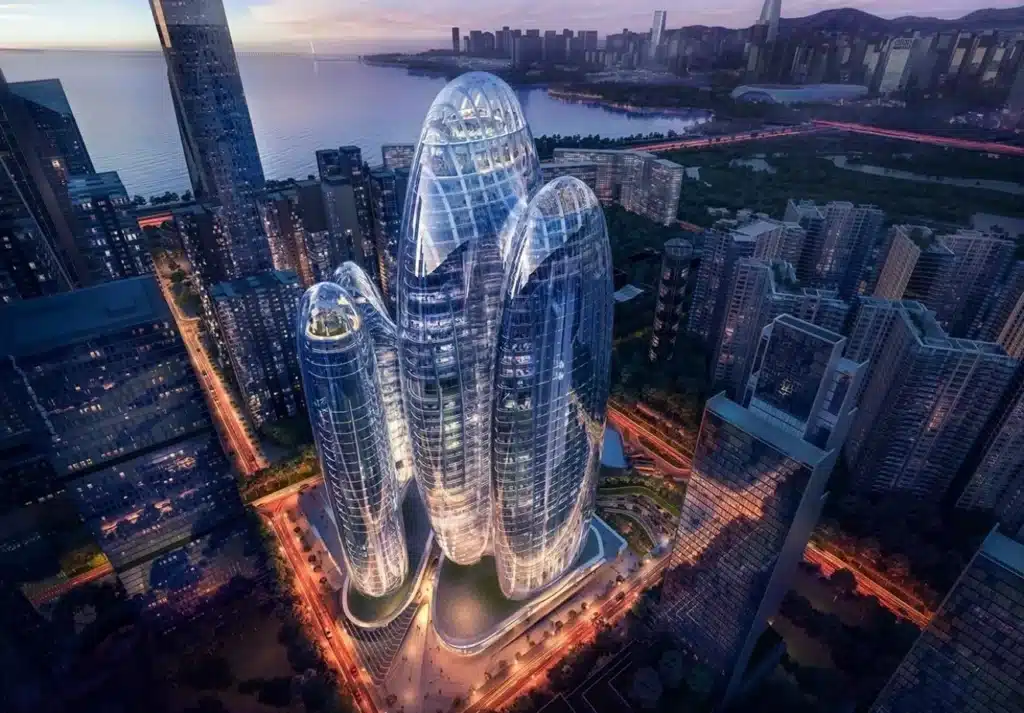
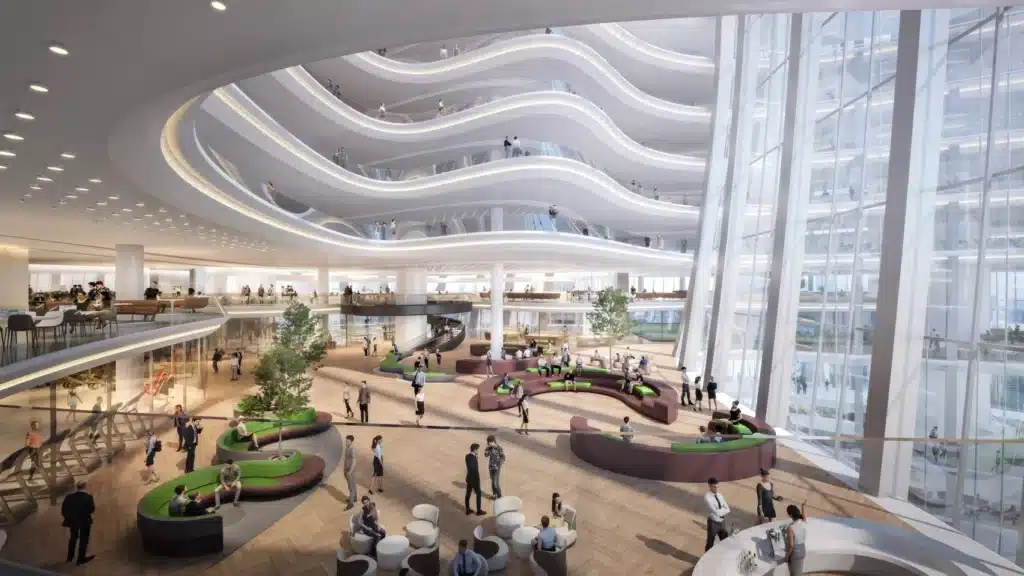
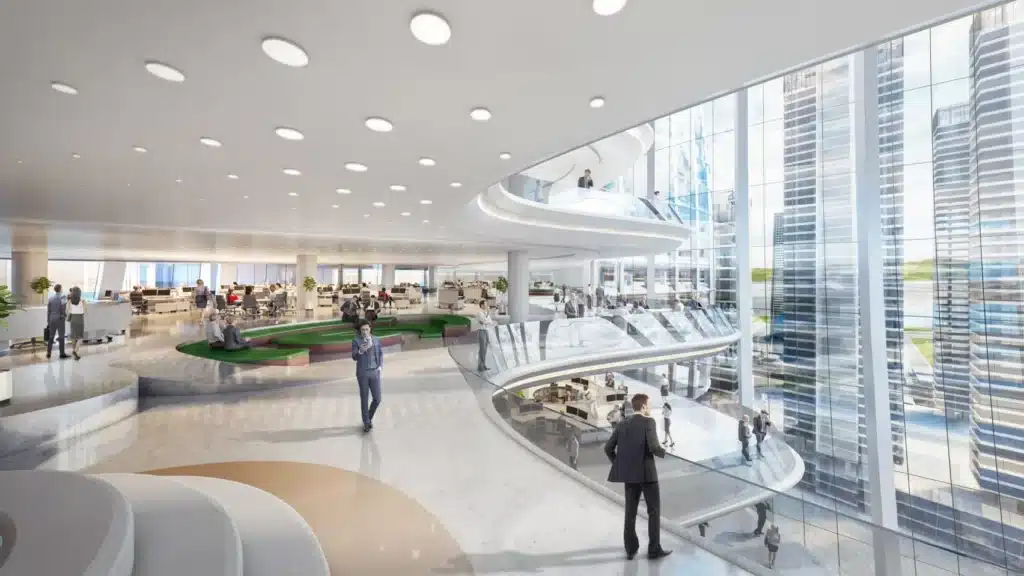
The project comprises four interconnected towers. They rise to approximately 200 meters across 42 floors. A central 20 storey vertical lobby unifies the composition. Two towers contain flexible office spaces. The other two serve as service and circulation cores. This layout enables large, column free floorplates. Natural light penetrates deeply, and views extend across Shenzhen Bay. At ground level, the towers taper inward. This creates a generous public plaza with retail, dining, and an art gallery. A diagonal pedestrian path cuts through the site. It links surrounding streets and the adjacent subway station, strengthening integration into cities.
Materials & Construction
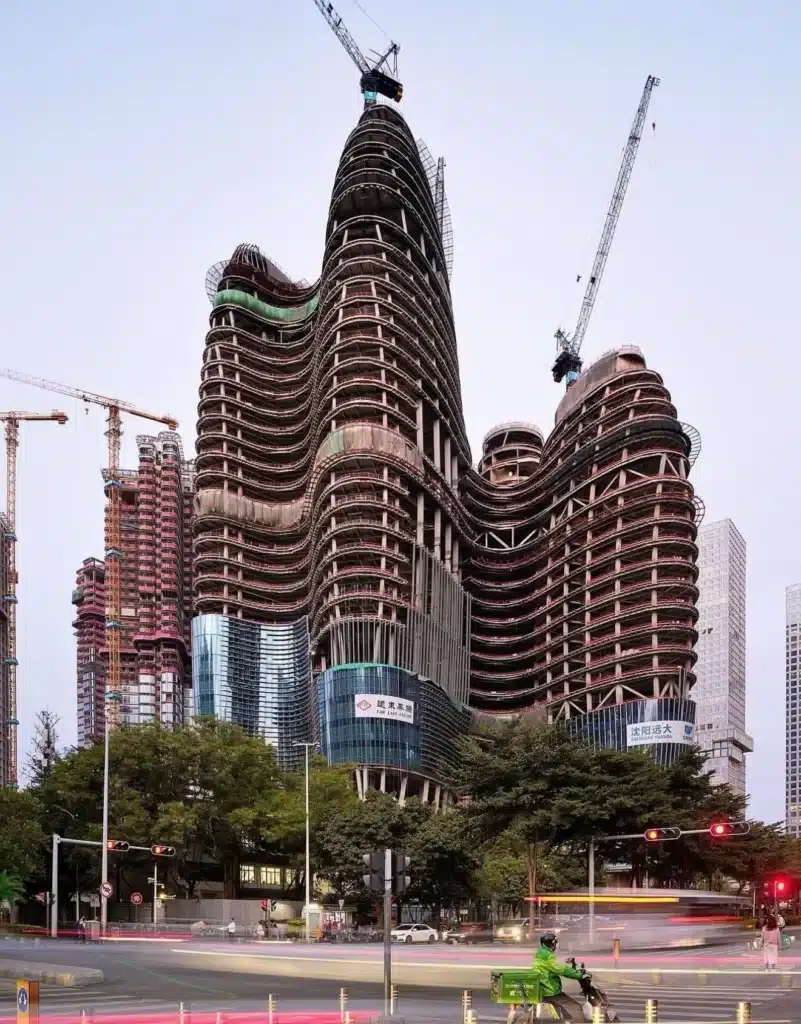
High performance façades regulate internal climate while ensuring transparency. Advanced 3D Building Information Modelling (BIM) guided construction. This improved efficiency and long term operations methods now standard in construction. Materials were selected for function, not form. This aligns with current practices in building materials. OPPO headquarters shows how technical discipline can shape architecture without spectacle.
Sustainability
The building targets LEED Gold certification. It uses integrated energy management systems, natural ventilation, and daylight optimization. These measures reduce campus wide energy use. The strategy reflects institutional shifts documented in sustainability research. Performance drives decisions, not symbolism.
Urban and Civic Impact
OPPO headquarters functions beyond its corporate role. It acts as a semi public urban node. The 10th floor Sky Plaza and rooftop Sky Lab welcome both staff and visitors. OPPO headquarters blurs boundaries between private and civic realms. This duality is increasingly common in modern buildings. As cities grow denser, such hybrid models may become essential.
Architectural Snapshot: Should corporate architecture be required to provide public space in dense urban areas?
A 200-meter, four tower vertical campus in Shenzhen redefines workplace integration through layered circulation, public plazas, and LEED-targeted environmental systems.
ArchUp Editorial Insight
The OPPO headquarters article presents a technically detailed account of a vertical campus in Shenzhen, emphasizing connectivity and sustainability while framing corporate architecture as civic infrastructure. It avoids overt promotion but leans on familiar tropes of blurring boundaries and hybrid models without interrogating their long-term viability or socio spatial consequences. The reliance on LEED certification and BIM reflects industry norms rather than innovation, yet the integration of public circulation paths and ground level openness offers a modest contribution to dense urban contexts. While the piece serves as a competent project record, its uncritical acceptance of corporate led urbanism limits its analytical depth. As cities demand more than performative generosity from private developments, such narratives risk becoming archival footnotes rather than enduring frameworks.





ArchUp: Technical Analysis of the OPPO Headquarters in Shenzhen
This article provides a technical analysis of the OPPO Headquarters in Shenzhen as a case study in multi-tower corporate campus architecture integrated into the urban fabric. To enhance archival value, we present the following key technical and design data:
The headquarters consists of four connected towers rising approximately 200 meters over 42 floors. It combines flexible office spaces in two towers with service and transportation systems in the other two, creating an integrated “vertical campus.” A central 20-story vertical lobby connects the towers, providing wide, column-free floorplates that allow deep penetration of daylight and expansive views of Shenzhen Bay.
The environmental system targets LEED Gold certification through integrated energy management and natural ventilation systems. High-performance glass facades are used for climate control while maintaining visual transparency. The building features semi-public spaces, including a tenth-floor plaza and a rooftop laboratory open to employees and visitors, blurring traditional boundaries between private and public space. At ground level, it creates a generous public plaza with retail, restaurants, and an art gallery, and a diagonal pedestrian walkway connects surrounding streets to a nearby metro station.
In terms of urban integration and impact, the headquarters represents a multifunctional urban node contributing to Shenzhen’s dense fabric. It was designed using Building Information Modeling (BIM) to guide construction and enhance operational efficiency. The project reflects a shift in corporate headquarters architecture from isolated towers toward open urban systems that encourage social interaction and sustainability—a model that may become standard in high-density cities.
Related Link: Please refer to this article for a comparison of other corporate campus projects integrating work with public space:
Al-Nassr Training Complex: Functional Sports Infrastructure Within a University Campus in Riyadh
https://archup.net/al-nassr-training-complex-riyadh-ksu-campus/