New Masterplan Reimagines Paimio Sanatorium as a Wellness and Cultural Destination

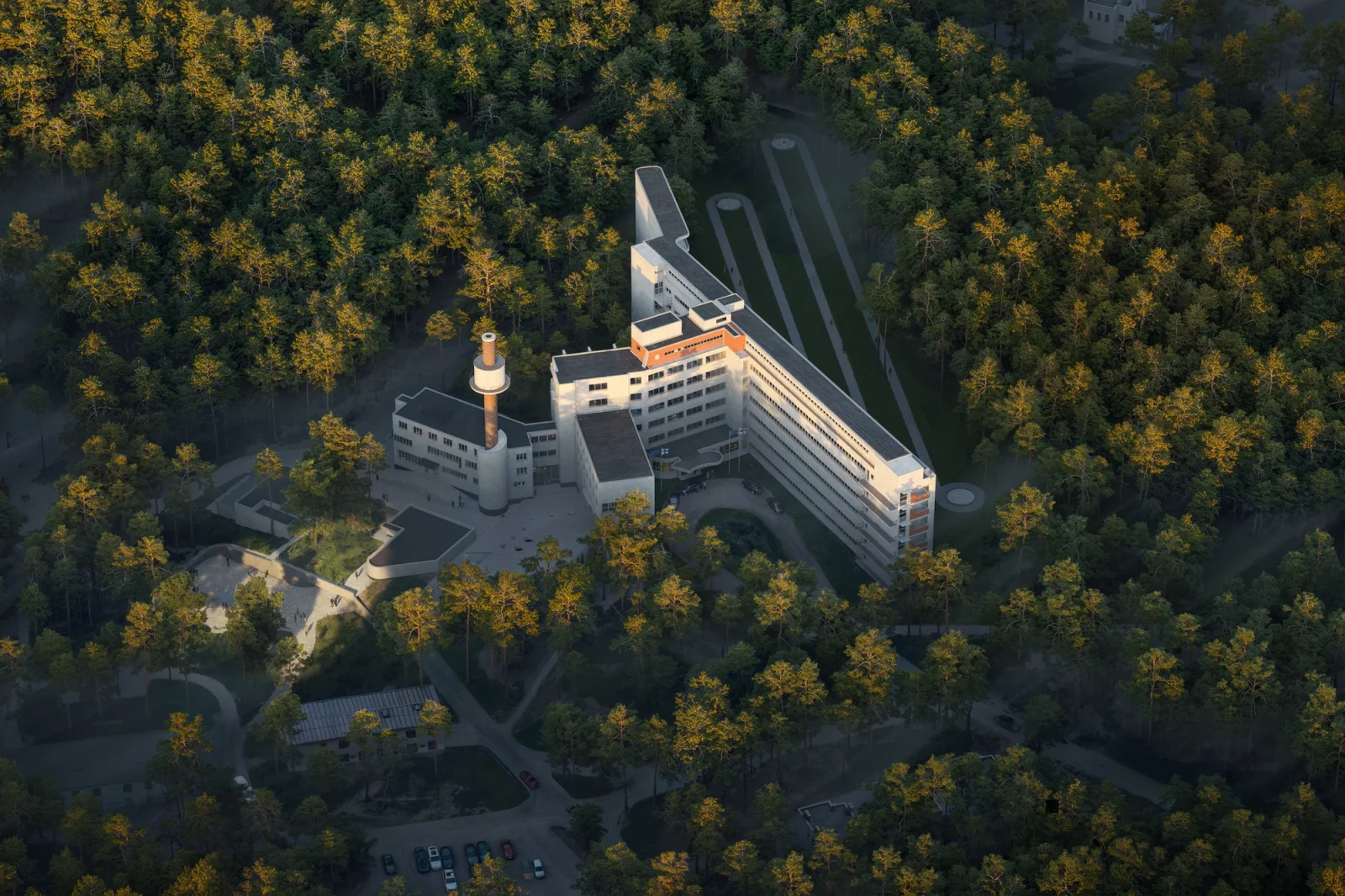
A new masterplan for the historic Paimio Sanatorium in Finland reimagines the former tuberculosis hospital as a contemporary center for wellness, hospitality, and international cultural exchange. The proposal revitalizes the 1933 landmark by focusing on restorative design and environmental connection. By adapting the existing structures for new uses, the project secures the functional future of a foundational modernist site.
The vision positions the former sanatorium as a place for reflection and social dialogue, extending the original design philosophy that architecture should actively serve human health. Completed over 90 years ago, the facility originally functioned as a medical tool where sunlight, fresh air, and access to nature formed the core of the treatment process. The new scheme maintains these values while introducing flexible spaces for conferences, lectures, and public programs.
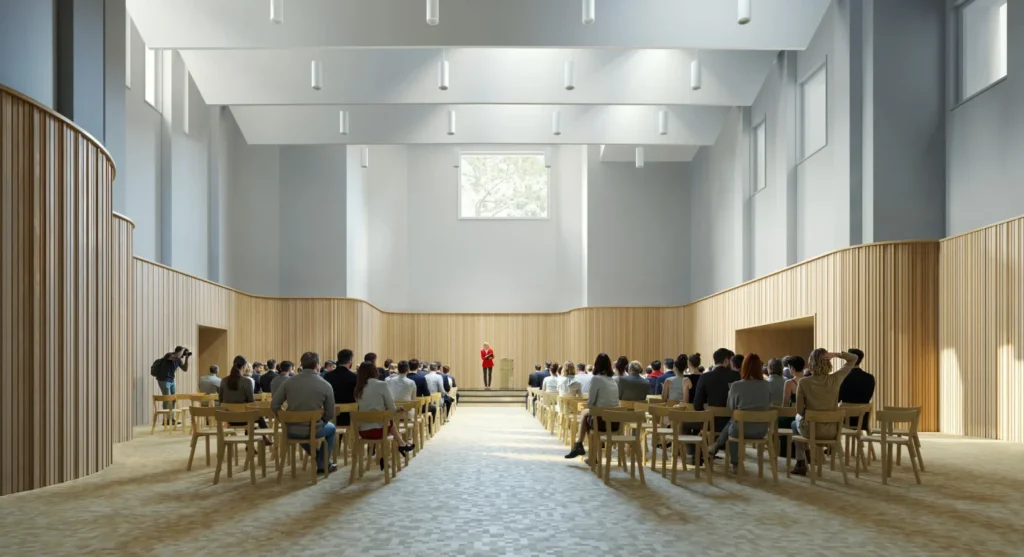
The team focuses on carefully calibrated interventions that respect the heritage of the site. A significant part of the strategy involves transforming the former surgery wing into a flexible auditorium capable of seating 200 people. This new venue includes a separate entrance, allowing cultural events to operate independently from the hospitality functions. Internally, birch slatted walls provide acoustic treatment while referencing the traditional material palette used throughout the original building.
Restoring Landscapes and Reconfiguring Circulation
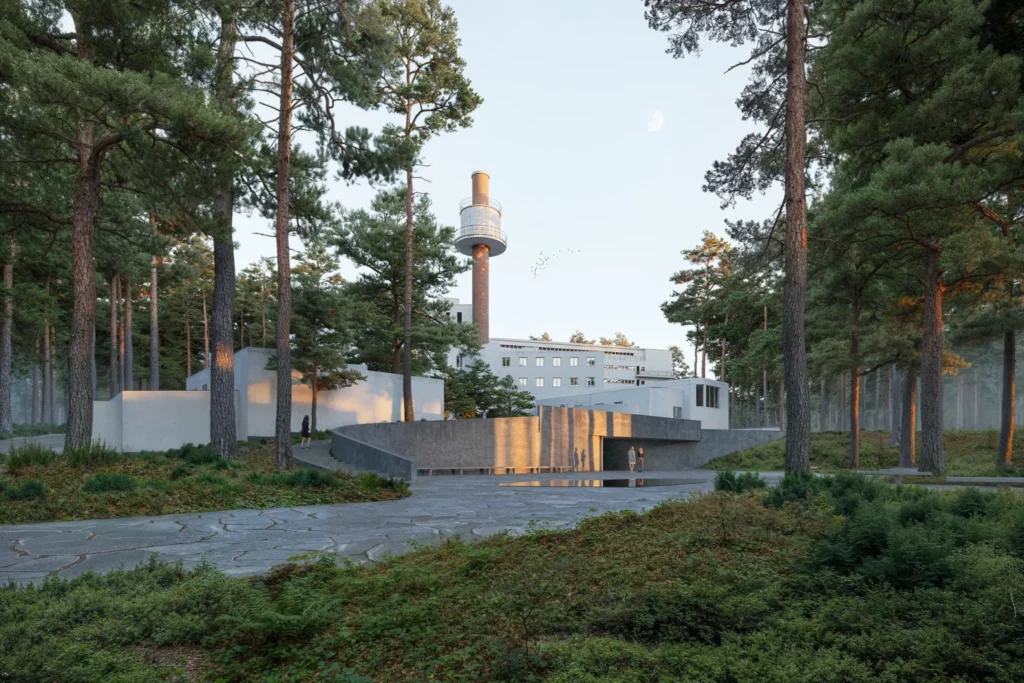
The proposal prioritizes the restoration of the relationship between the built environment and the forest landscape. The plan suggests replacing existing asphalt surfaces with slate paving and new planting to soften the transition between the building and the woodland. By reconfiguring outdoor areas and creating a new entrance along the rear facade, the project reinforces the therapeutic role of the natural environment.
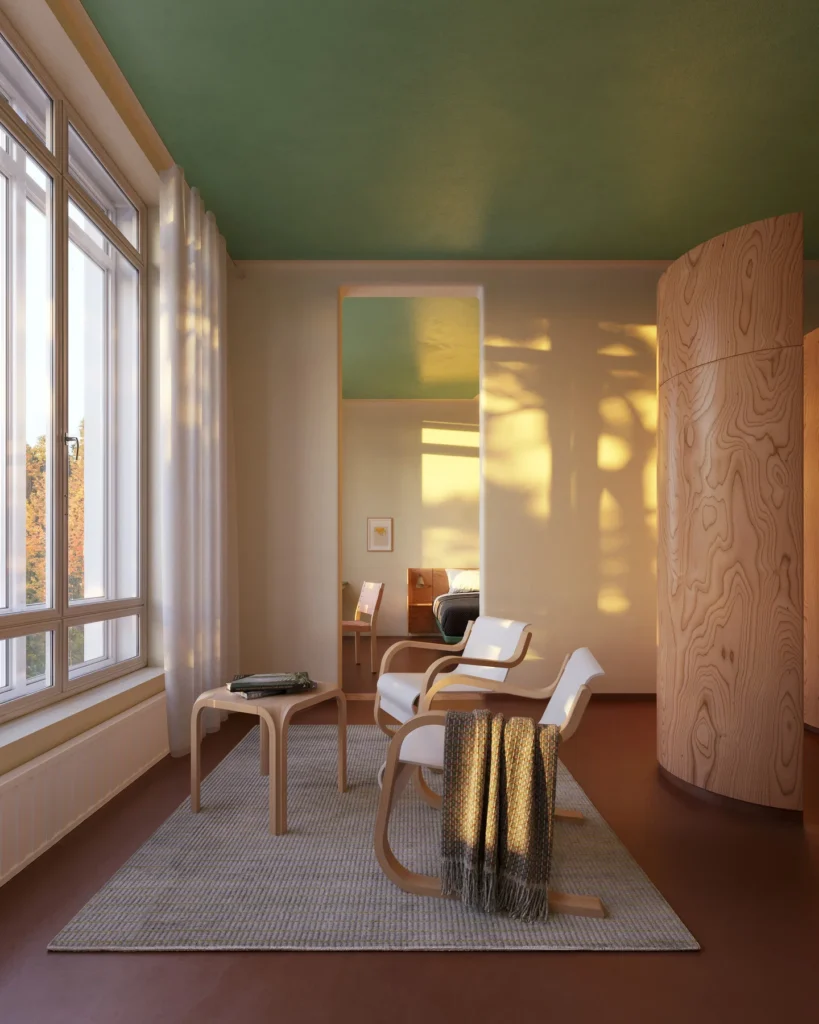
In the former patient wing, the design team envisions a hospitality component that preserves the original room proportions. The plan adapts these spaces into hotel accommodations using modest and reversible changes. New bathroom units appear as freestanding furniture pieces finished in birch veneer, ensuring a clear distinction between the historic walls and the contemporary additions. This approach follows established conservation principles by allowing the original fabric to remain visible and untouched.
Revitalizing Balconies and Expanding Wellness Programs
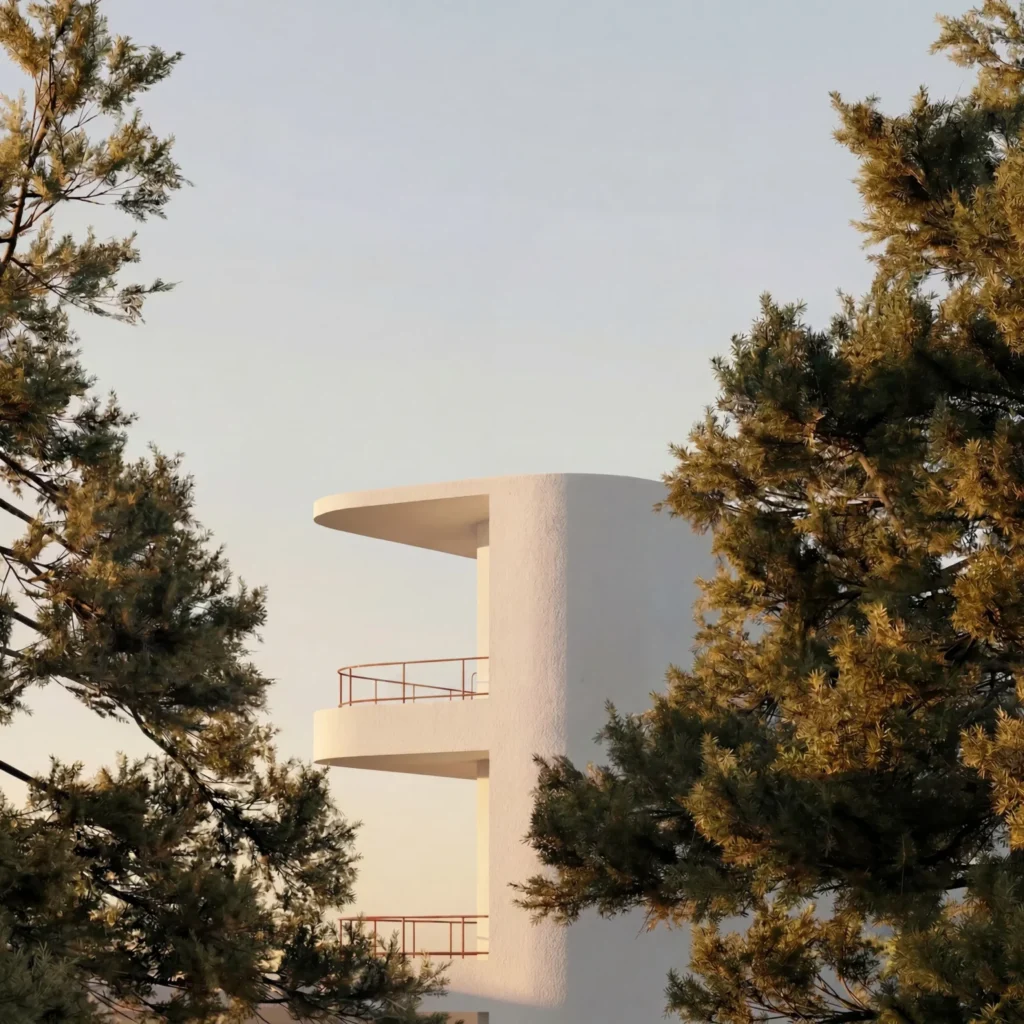
A major architectural restoration involves the iconic sun balconies. The masterplan proposes removing later glass enclosures to reinstate these levels as open-air structures. This move restores a defining visual element of the facade and reconnects visitors with the original intent of the facility: providing direct access to light and air. Below these levels, the team explores the addition of a new spa that links directly to the forest floor.
The project arrives as the site awaits a decision on its inclusion in the UNESCO World Heritage List, expected in July 2026. By treating new additions as distinct layers, the intervention seeks to preserve the authenticity of the landmark while enabling its continued use. The phased approach ensures that the construction and adaptation support the long-term operational health of the foundation.
Spatial Logic and Structural Implications
The project employs a strategy of “architectural acupuncture,” where small-scale, surgical interventions unlock new functional potential across the campus. By inserting freestanding units into the hospitality wing, the design avoids the structural and heritage complications of standard renovation. The spatial sequence prioritizes a transition from public cultural hubs to private restorative zones, mirroring the original hospital hierarchy. This logical separation allows for a diverse program of tourism, research, and wellness to coexist without disrupting the quietude essential to the site. The restoration of the open-air balconies serves as both a technical repair and a programmatic renewal, effectively returning the building to its original status as a living machine for health.
✦ ArchUp Editorial Insight
The project presents a sophisticated model for the adaptive reuse of high-modernist landmarks by aligning historic therapeutic intent with contemporary wellness tourism. This approach successfully avoids the “museumification” of the site, ensuring the building remains a functional participant in the cities and regional economy. By using reversible, freestanding insertions, the design respects the rigid structural grid while providing the necessary amenities for international hospitality. However, a significant tension exists in the transition from a public medical facility to an exclusive wellness destination. While the masterplan secures the building’s physical future, it risks converting a site of egalitarian care into a luxury retreat. This shift highlights a common challenge in architecture: balancing the financial realities of preservation with the original social mission of a public monument.
Project Team: Snøhetta, ALA Architects, Mustonen Architects. Location: Paimio, Finland.
Project Notes: Masterplan revealed June 2026, developed for the Paimio Sanatorium Foundation. Site designed by Aino and Alvar Aalto in 1933.