Bridge Cabin and Steep-Slope Construction

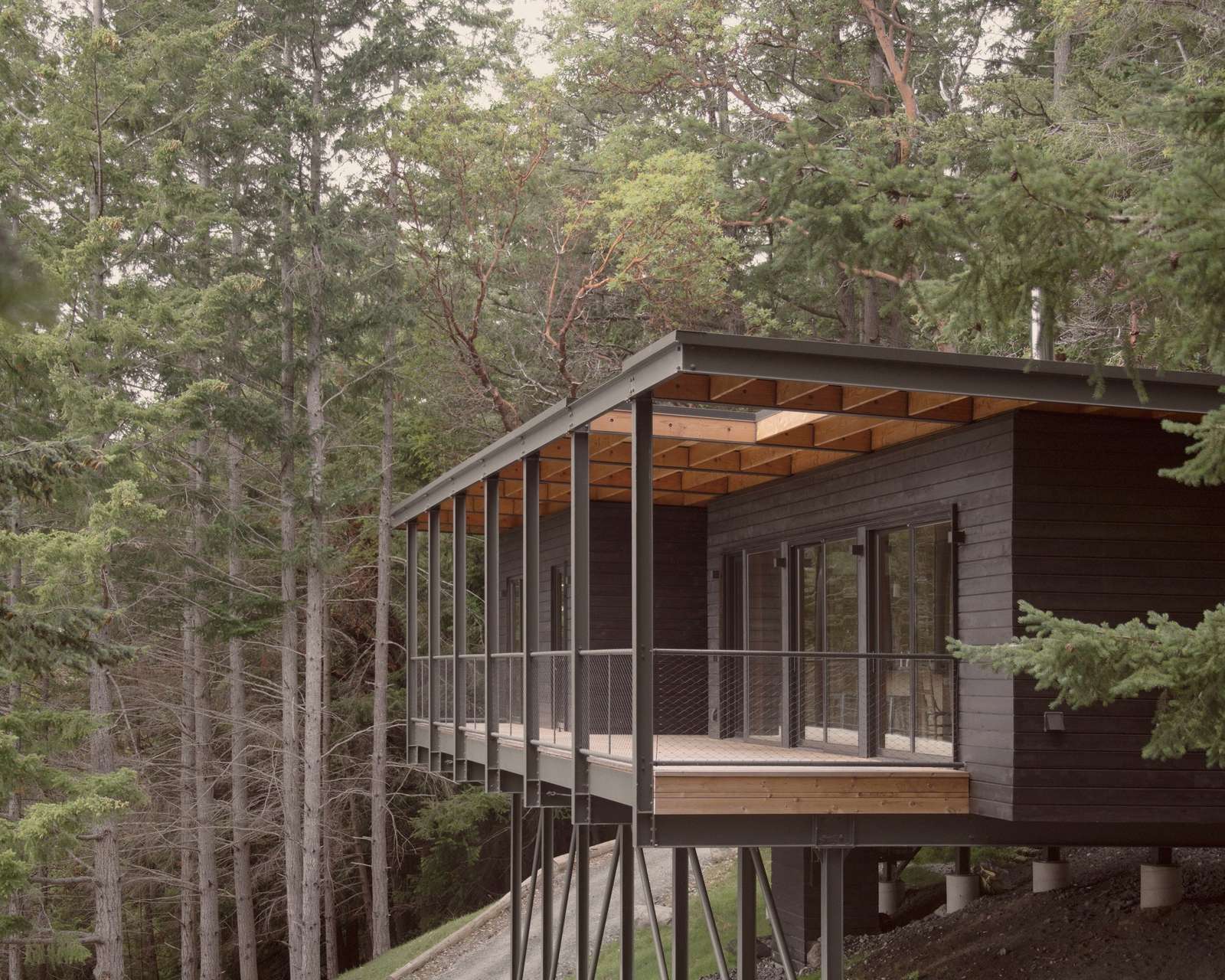
Structural Positioning and Adaptive Flexibility
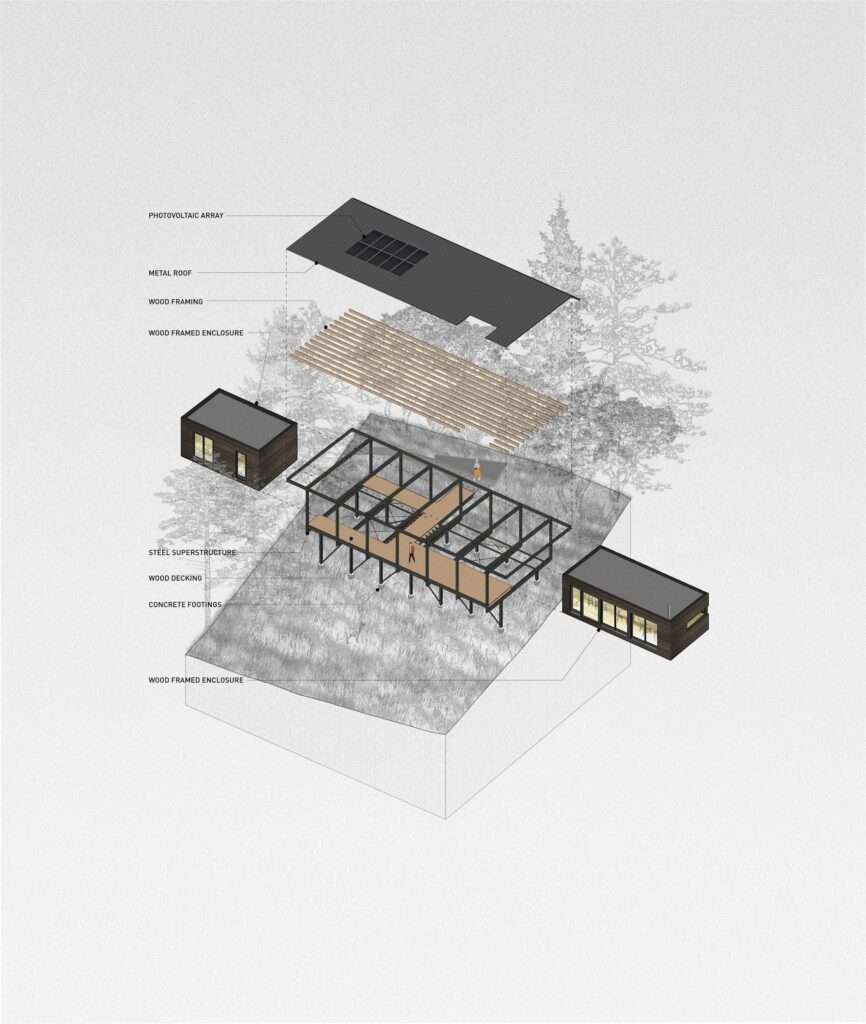
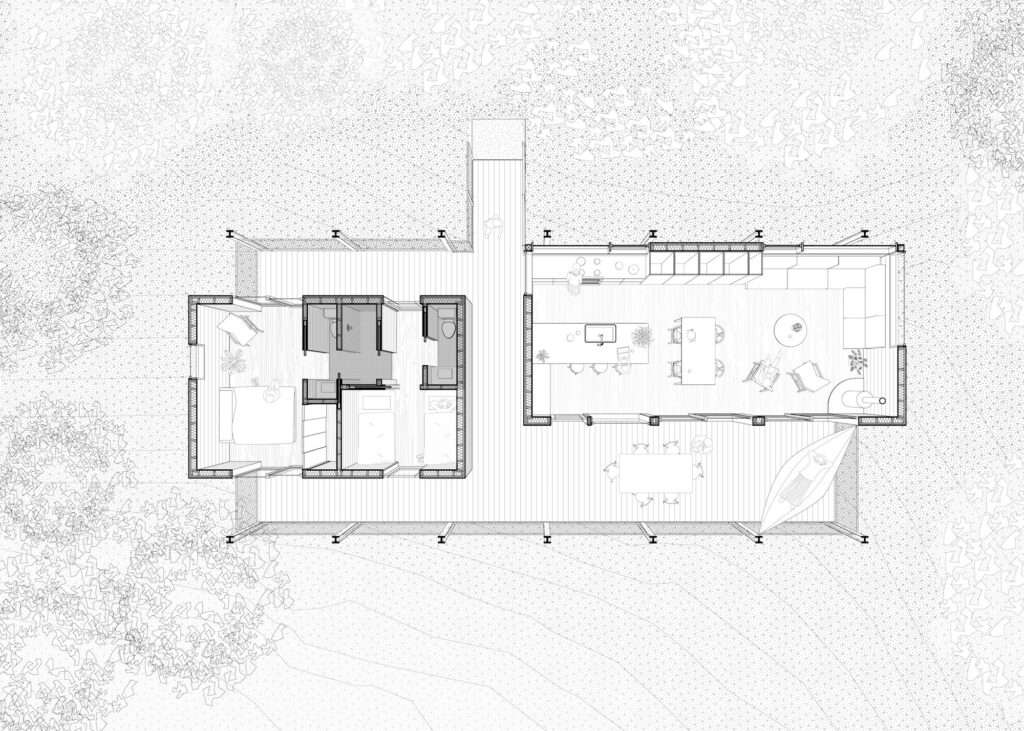
The project reinterprets the principles of Metabolist architecture through the separation of the primary structural framework from modular spatial units, enabling the architectural mass to evolve or be reorganized without affecting the core infrastructure. Conceived as a prototype for exploring construction on remote and steeply sloping terrain, the project suspends living spaces within an independent steel frame that minimizes direct intervention in the natural site. The structural system is based on a long-life superstructure designed for an estimated lifespan of approximately 200 years, while the internal modules can be modified or replaced according to future user requirements.
| Field | Details |
|---|---|
| Architects | Miller Hull Partnership |
| Area | 868 ft² |
| Year | 2024 |
| Photographs | Juan Benavides |
| Manufacturers | Lunawood, Marvin |
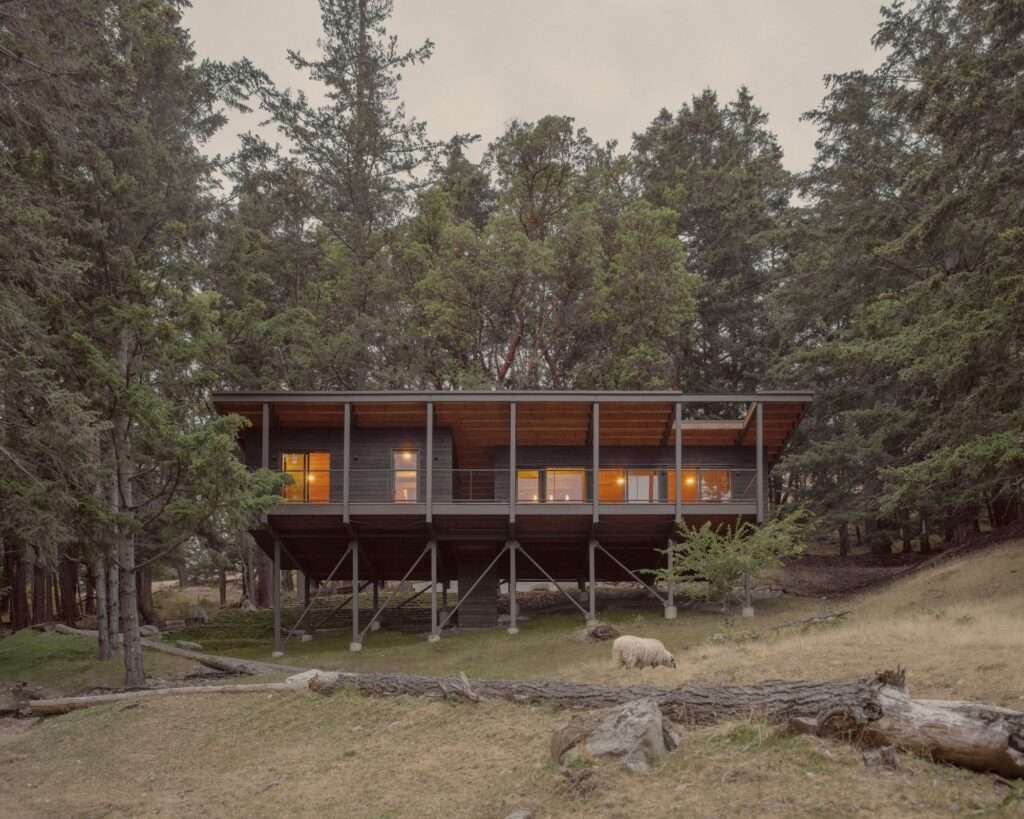
Spatial Experience and Integration with the Site
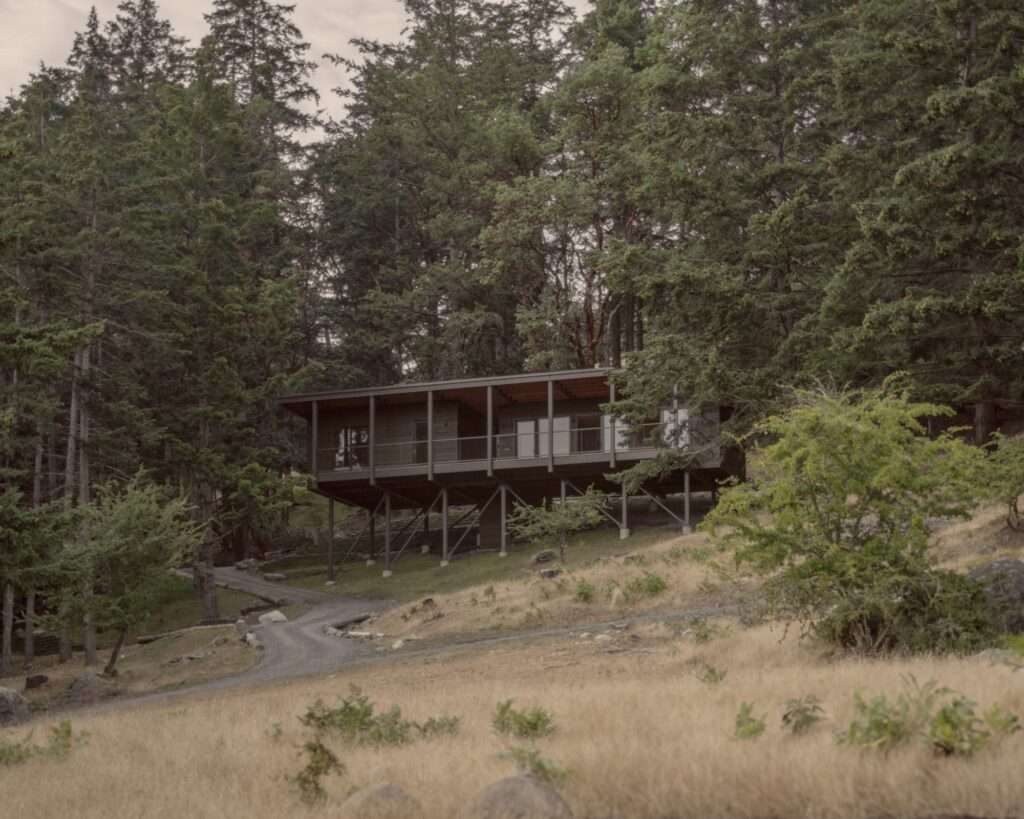
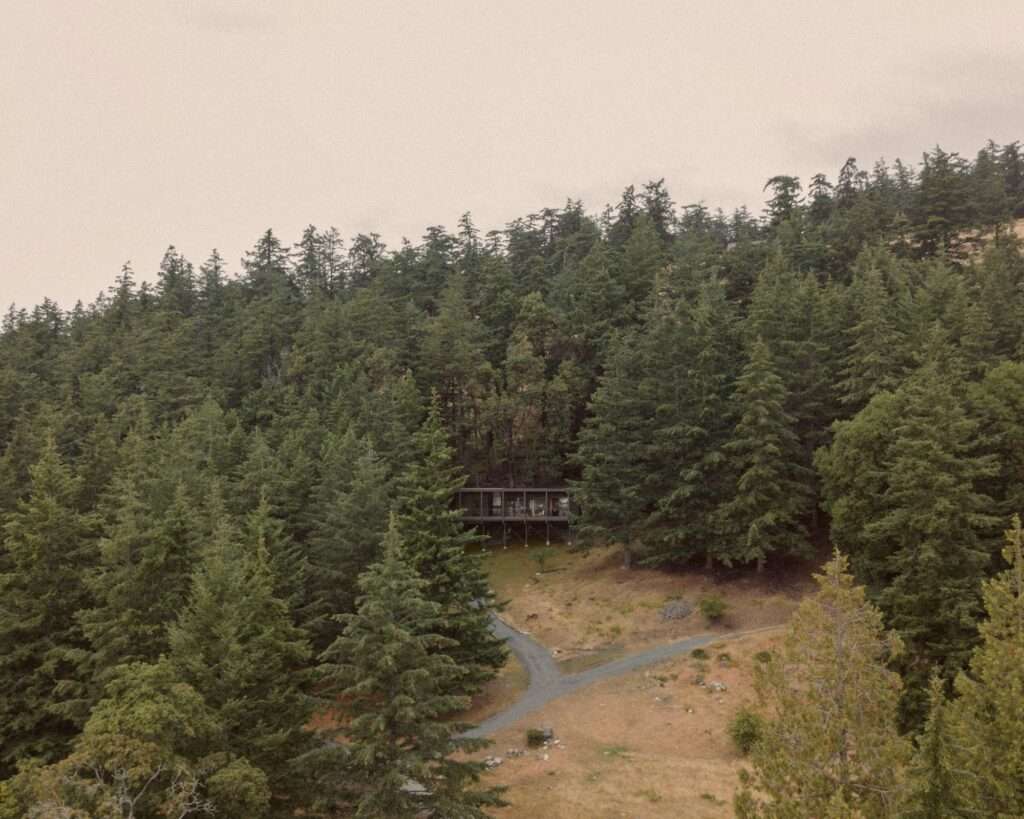
The spatial experience unfolds through a gradual transition from ground level to elevated spaces suspended among the trees, opening panoramic views toward the San Juan Islands to the south and providing a distinct perceptual relationship with the landscape. Elevating the architectural volume preserves the continuity of natural movement beneath the building while enhancing natural ventilation and maximizing southern solar exposure. This approach strengthens the direct relationship between users and the surrounding natural environment, transforming the landscape into an essential component of the daily living experience.
Structural Expression and Topographical Response
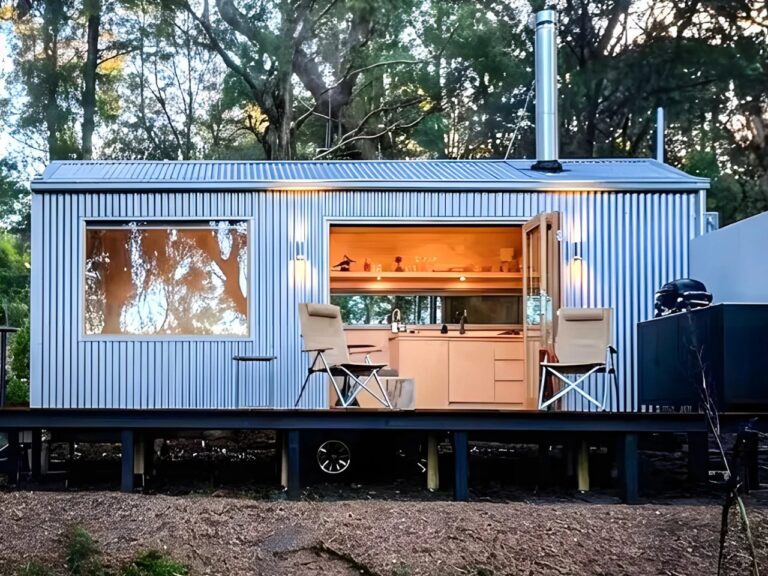
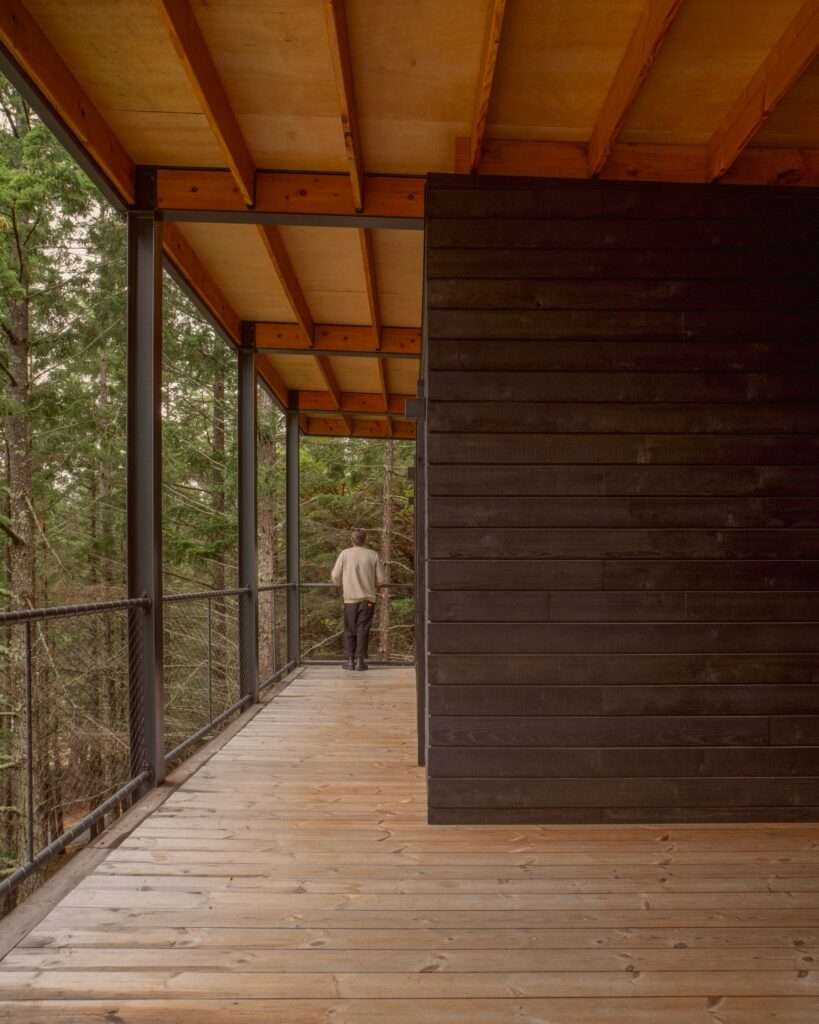
The project addresses the steep slope through a suspended structural system that reduces the need for conventional excavation works. The building mass is elevated above the site by a rhythmic external steel framework. The verticality of the structural elements aligns with the rhythm of the surrounding tree trunks, reducing the visual impact of the building within the forest and reinforcing its integration with the natural environment. This elevation also allows air and light to pass beneath the architectural volume while preserving the site’s natural characteristics.
Consumption Efficiency and Outdoor Spaces
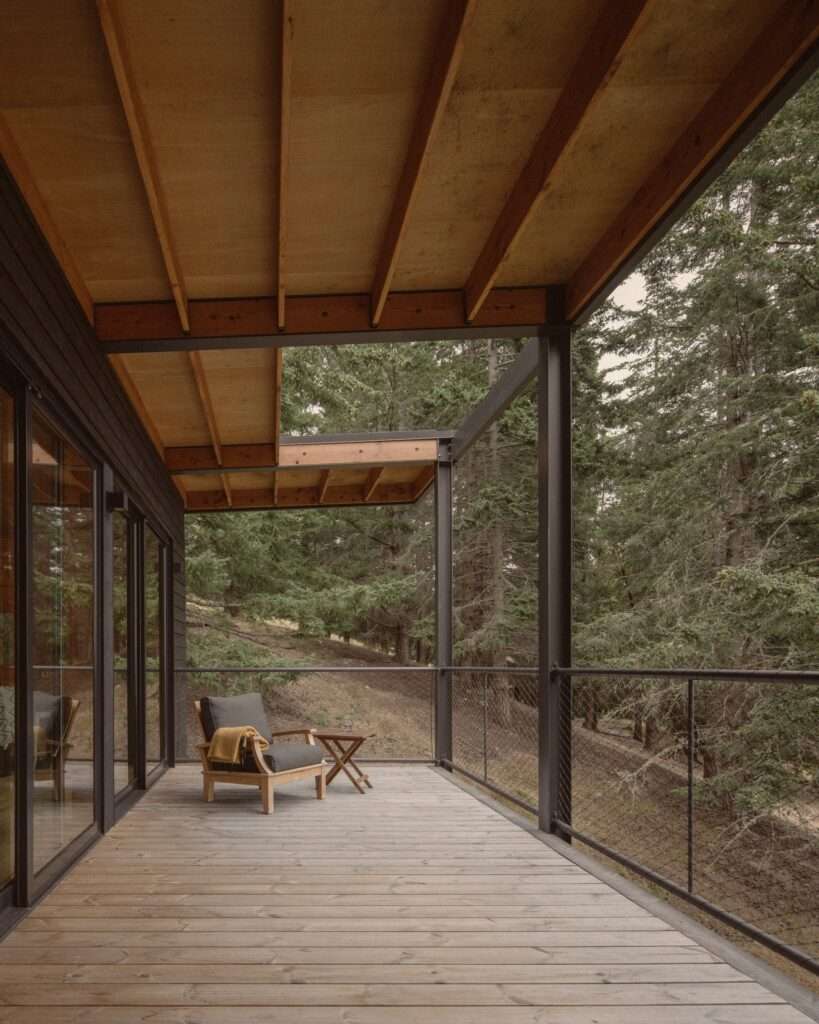
The design minimizes enclosed and conditioned areas, totaling approximately 868 square feet, by shifting portions of daily circulation and activity into outdoor spaces. This distribution reduces energy demand while strengthening the user’s connection to the natural setting. On the southern façade, a deep roof overhang provides protection from direct sunlight and creates year-round usable outdoor areas, functioning as an extension of the interior living spaces.
Sustainable Systems and Future Readiness
Passive environmental strategies are complemented by a 3.6-kilowatt photovoltaic solar array designed to efficiently meet current occupancy requirements. Future expansion scenarios have also been anticipated through the integration of infrastructure capable of supporting additional energy-generation capacity when needed. This allows the building’s performance to evolve alongside changing patterns of use without requiring significant alterations to its structure or architectural language.
✦ ArchUp Editorial Insight
The project revives the ideas of Metabolist architecture through a long-life structural framework that separates the permanent infrastructure from replaceable residential units. Rather than treating sustainability as a collection of added technologies, it positions adaptability as the primary environmental strategy. By suspending the building above a steep forested slope, the design minimizes site disturbance while capitalizing on natural ventilation and solar energy, presenting architecture as an evolving framework capable of change rather than a fixed and completed object.
However, this approach may overestimate the value of future flexibility. The assumption that replaceable modules will guarantee the building’s longevity overlooks the operational costs and logistical challenges associated with maintaining specialized structures in remote locations. While the elevated structural system reduces the immediate impact of construction on the ground, it transfers part of the complexity to future maintenance cycles, revealing the persistent tension between the ambitions of adaptable design and the practical realities of long-term buildings.