Parquinho BoaVista Palhano An Architectural Approach to Play Spaces in Residential Environments


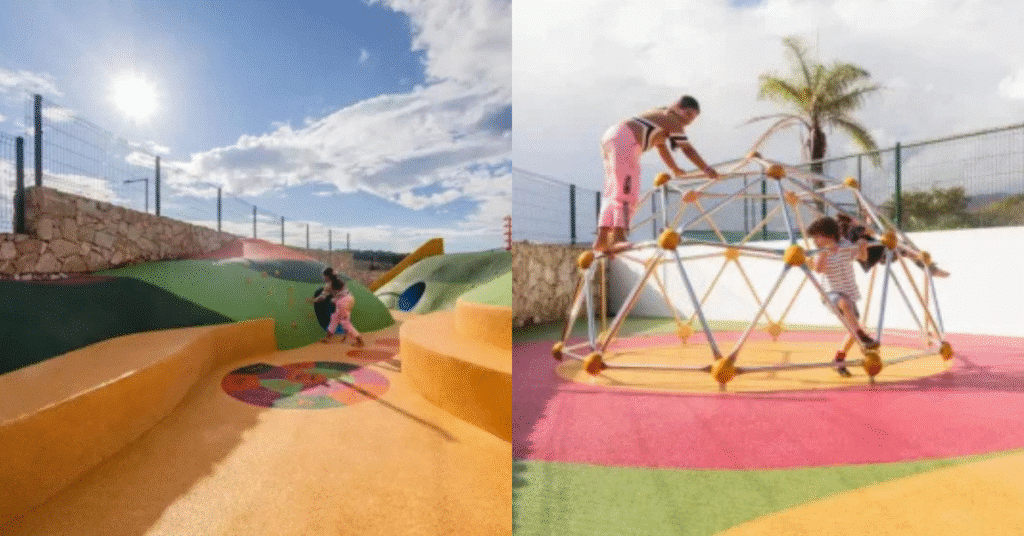
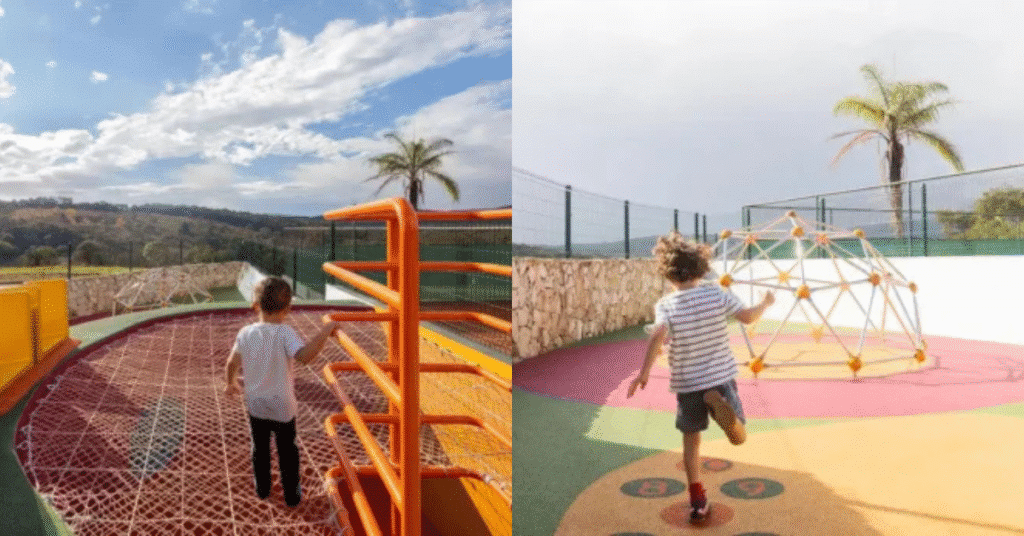
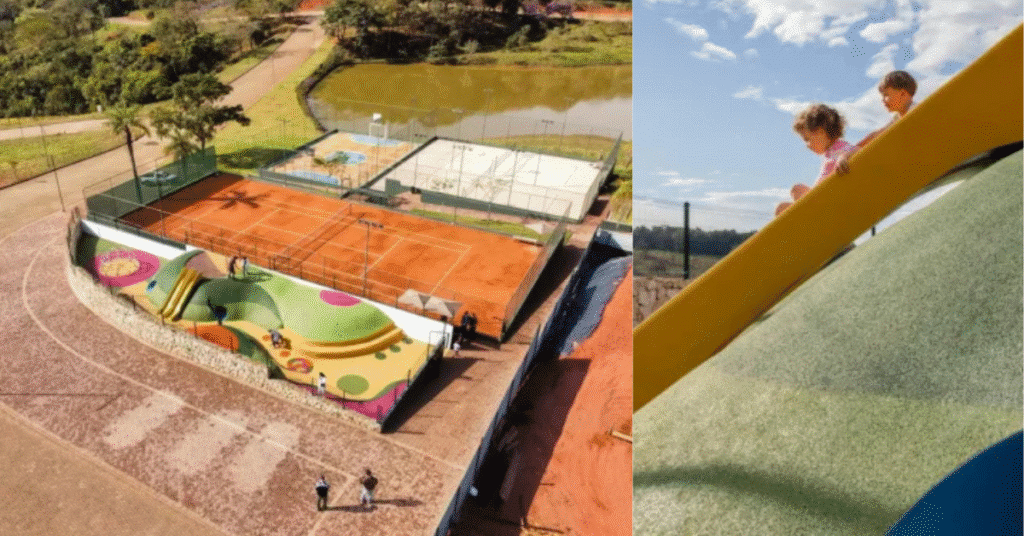
Parquinho BoaVista Palhano is set within a small garden at the entrance of a residential complex, designed to follow the natural topography of the site. The trapezoidal shape of the land, reminiscent of a boat sail, informed the layout of paths and play areas, making the terrain itself an active part of the play experience.
Integration with the Surroundings
The playground is designed to balance safety and visual openness. The ground level is lowered relative to the street, and low stacked stone walls provide protection while maintaining visual connection with the surrounding environment. This approach preserves a consistent material language throughout the space and its integration with the larger complex.
Topography and Spatial Program
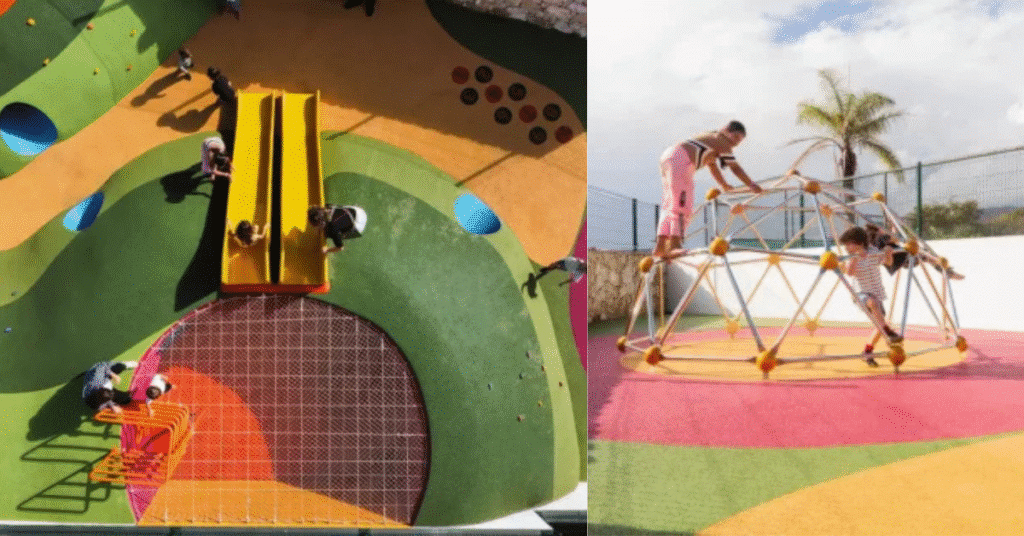
The design employs the concept of active topography, where subtle changes in elevation and gentle slopes become part of the play experience. Paths and zones are arranged to create continuous movement, featuring collective slides, tunnels, climbing elements, and small hiding spaces, offering a rich and varied spatial experience.
Play and Social Spaces
The playground also features a wooden amphitheater, a small stage, and seating areas, enabling adults to engage with children in the space. The layout encourages dynamic interaction among movement, observation, and rest. It demonstrates a clear architectural understanding of how people physically and spatially relate to the environment.
Architectural Approach
The project highlights material honesty and uses natural materials like stone, wood, and metal to support educational and interactive experiences. The design avoids unnecessary decoration, letting the playground function as a versatile space that responds naturally to children’s activities.
Conclusion
Parquinho BoaVista Palhano is more than a playground. It is a cohesive architectural system that integrates topography, materials, and sensory experiences for children and adults. The project shows how a small area can become a space full of architectural and social possibilities. The design integrates play into the overall spatial experience.
✦ ArchUp Editorial Insight
This article presents the Parquinho BoaVista Palhano project as a case study in integrating natural topography into play space design. The visuals highlight a harmonious use of stone and wood, with pathways arranged to encourage movement and exploration. While the design shows clear spatial dynamics, it does not explain how children interact with different play elements within the larger urban context. The project also raises questions about the long-term sustainability of materials and maintenance. Still, it provides a clear architectural reading of collective play and spatial interaction, offering analytical insights for future design strategies. Parquinho BoaVista Palhano engages children directly in the experience and works in harmony with nature, treating the landscape as a silent co-designer.
Explore the Latest Architecture Exhibitions & Conferences
ArchUp offers daily updates on top global architectural exhibitions, design conferences, and professional art and design forums.
Follow key architecture competitions, check official results, and stay informed through the latest architectural news worldwide.
ArchUp is your encyclopedic hub for discovering events and design-driven opportunities across the globe.