

Architectural Expansion of Pastéis de Belém Bakery in Lisbon

In the heart of Lisbon’s historic Belém district, a new spatial extension opens to redefine the dialogue between Portuguese heritage and contemporary design. The expansion of Pastéis de Belém is not just a functional addition. It represents a continuous conversation between craftsmanship and memory, tradition and innovation.
Architectural Language: Balancing Heritage and Modernity
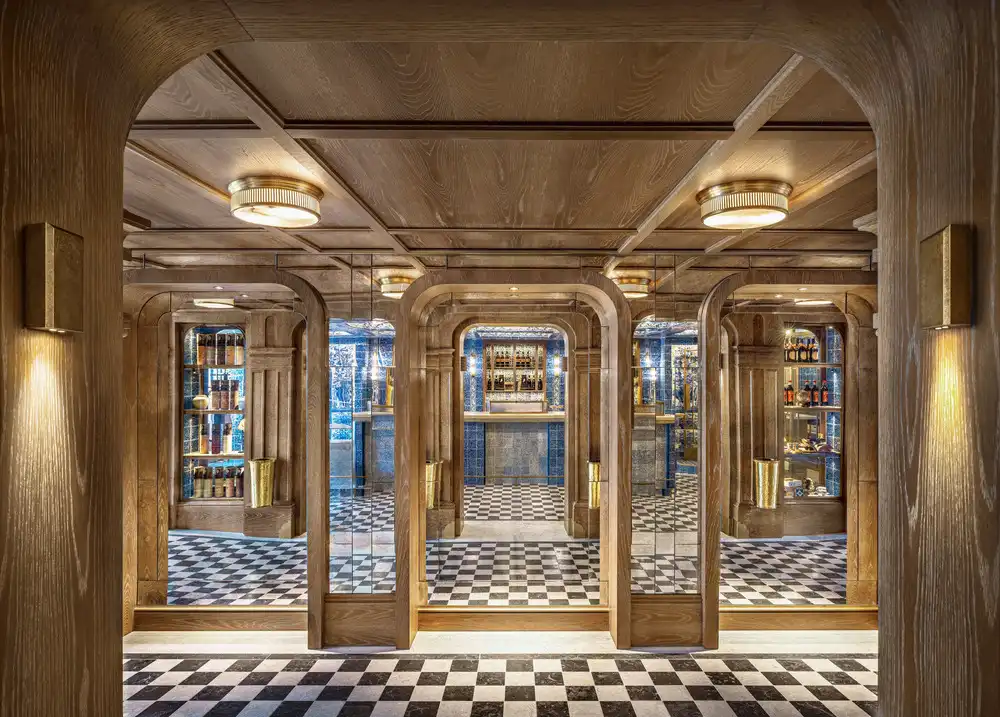
The design grows from a deep understanding of the site’s identity. Instead of copying the past, it reimagines it through a modern lens that emphasizes warmth, clarity, and honesty in materials.
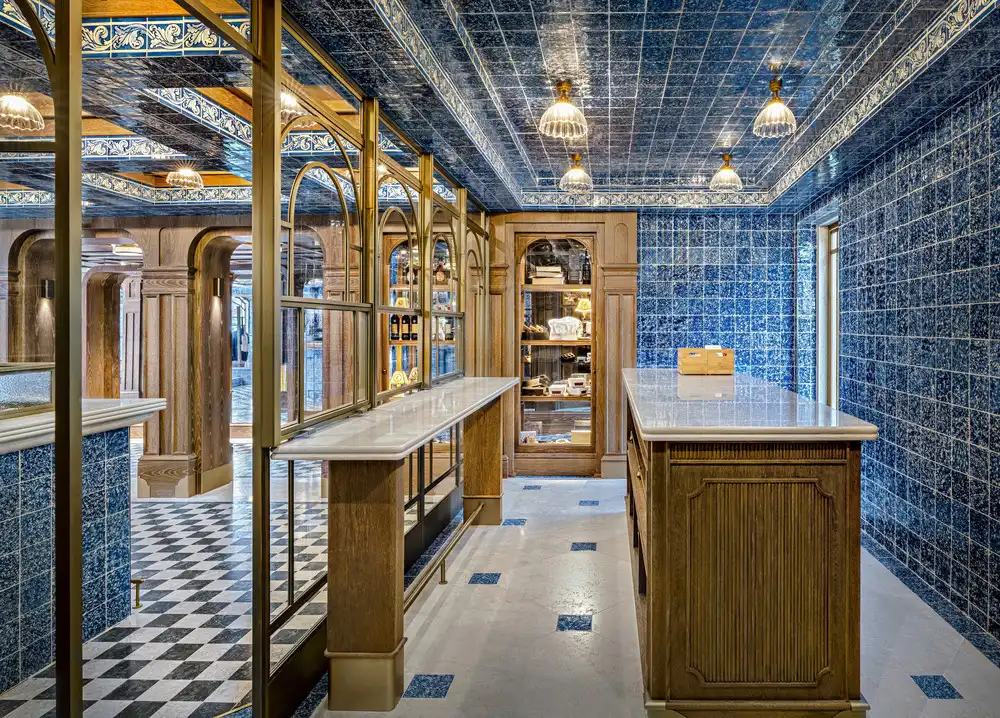
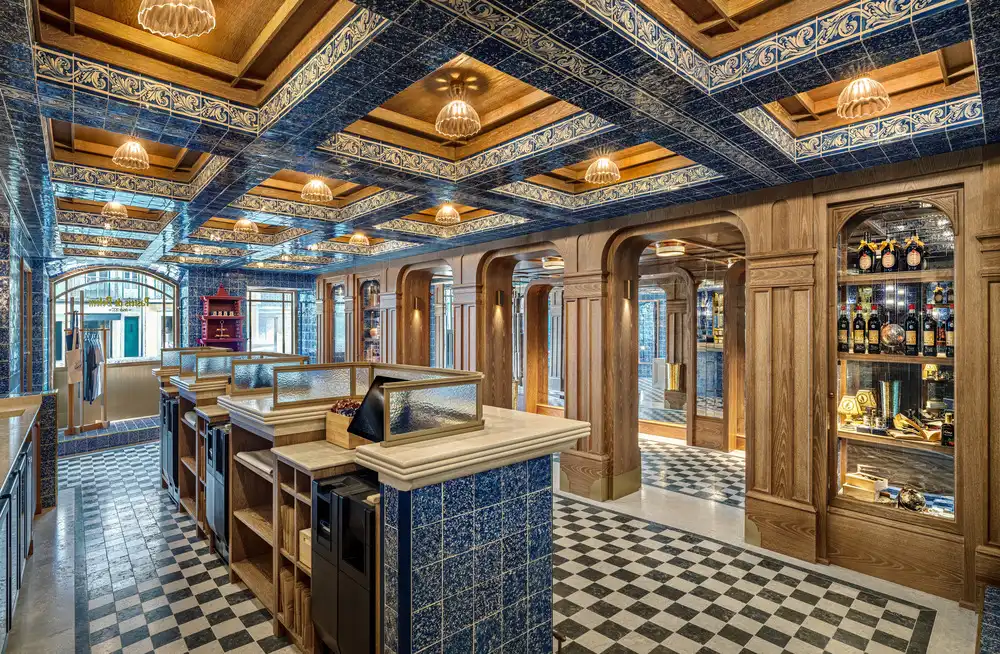
Walls coated with natural lime plaster maintain the tactile essence of traditional craftsmanship. Light oak wood brings softness and balance, blending with Lisbon’s natural daylight. Handmade blue and white tiles recalling the city’s famous azulejos connect the interior to local tradition while keeping the space fresh and contemporary.
Here, materials act as a language of continuity. Each surface communicates the craftsmanship of Portuguese culture while expressing it through a contemporary architectural vocabulary. The expansion is not a reproduction of heritage, but a refined reinterpretation of it.
Conceptual Approach: A Sensory Experience
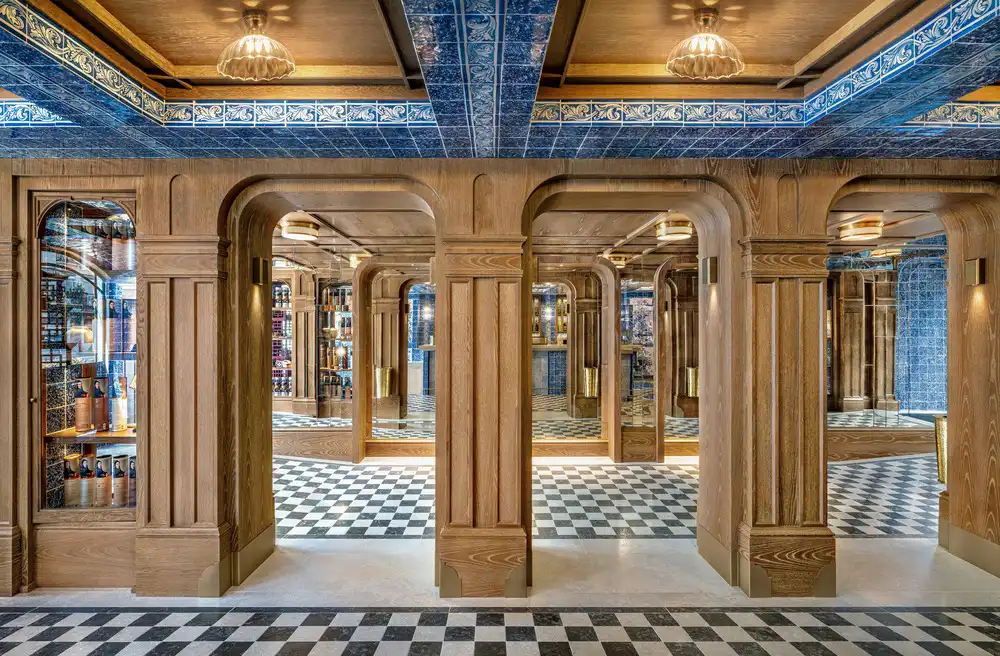
The architectural concept transforms the simple act of buying a pastry into a complete spatial experience. From the entrance, the visitor perceives a smooth and intuitive flow, remaining visually and emotionally connected to the original bakery.
The layout was conceived as an open environment infused with natural light. Illumination plays both a functional and poetic role it recreates the soft golden hue of Lisbon’s afternoon light, turning the interior into a stage where everyday gestures gain architectural significance.
Every handmade detail from the counters to the shelving emphasizes how simplicity can become a form of sophistication, proving that beauty often lies in precision rather than ornament.
Dialogue Between Interior and Urban Context
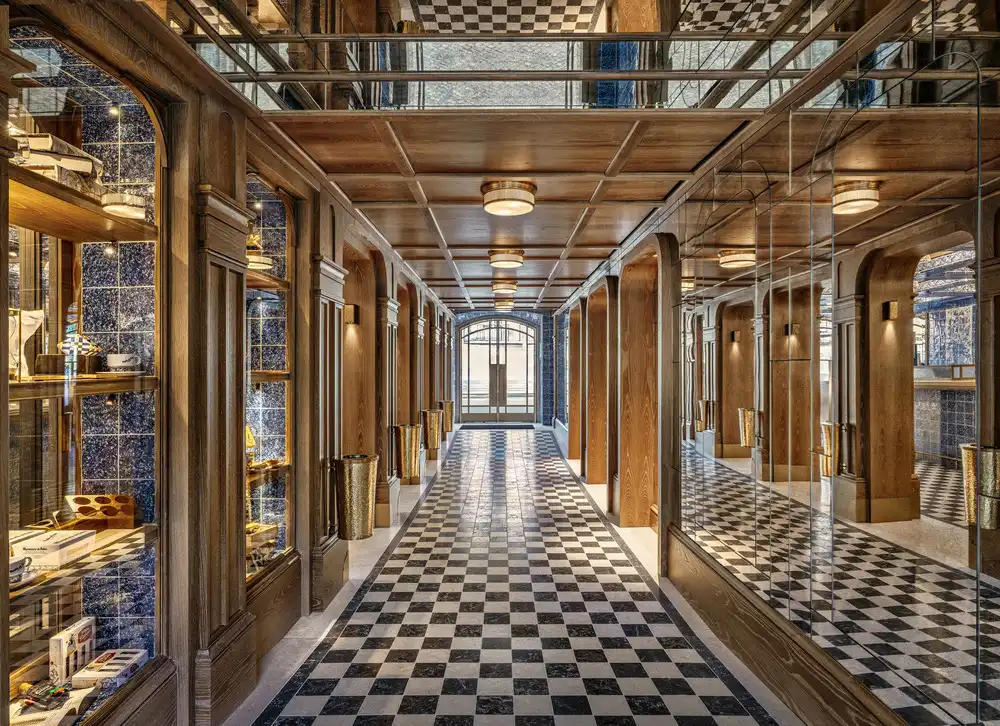
The new space sits beside the original building yet blends naturally with the street. It reflects a core idea in contemporary Portuguese architecture: true beauty comes from harmony, not spectacle. The design balances form, light, and human movement. Transparent openings and muted tones keep a visual link with the surroundings, letting passersby sense the warmth inside. The result is a space that extends the urban fabric with continuity rather than separation.
Design Philosophy
The project redefines the relationship between architectural memory and modern function. Every line, texture, and beam of light embodies a philosophy where design becomes a form of storytelling preserving the soul of the past while granting it new expression.
The expansion is not merely a response to increased visitors, but a translation of cultural values into architectural experience. It shows how history can inhabit the present not as nostalgia, but as a living framework for modern life.
Analytical Summary
| Element | Description |
|---|---|
| Location | Belém district, Lisbon, within a historic urban context |
| Architectural Character | A synthesis of Portuguese tradition and understated modernity |
| Materials | Natural wood, lime plaster, handmade blue-white tiles |
| Design Concept | A sensory spatial journey shaped by light, movement, and warmth |
| Philosophical Approach | Preserving the spirit of place while reinterpreting it through contemporary design |
| Environmental Relation | Visual openness and dialogue with the street and natural light |
| Overall Identity | A conversation between craftsmanship, memory, and modern living |
✦ ArchUp Editorial Insight
The new Pastéis de Belém expansion bakery represents a refined architectural study that redefines how retail space interacts with urban memory. Visually, the design uses soft tones of natural wood and lime plaster to capture Lisbon’s distinctive light, producing a warm and transparent ambiance.
From an analytical perspective, the approach transcends mere restoration, engaging in a thoughtful dialogue with local heritage. Traditional craftsmanship is reinterpreted in a modern, minimal language free of ornamentation. Despite its quiet character, the project reaches a delicate equilibrium between authenticity and innovation, setting a clear model for preserving material heritage through contemporary architectural expression.
Architecture professionals can follow ArchUp’s events section for verified updates on exhibitions, conferences, competitions, and results.


