
Dior Petal Store Opens in Beijing

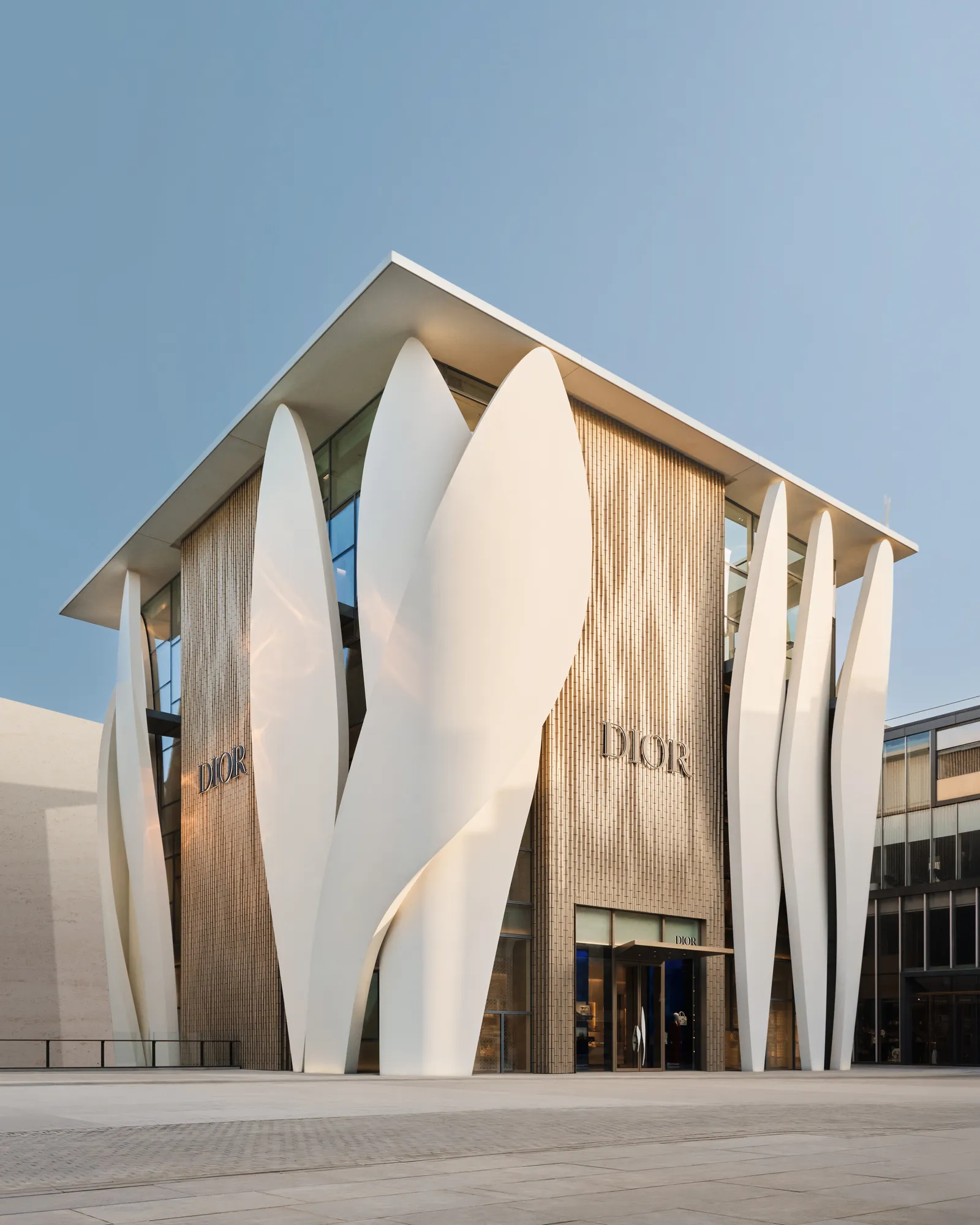
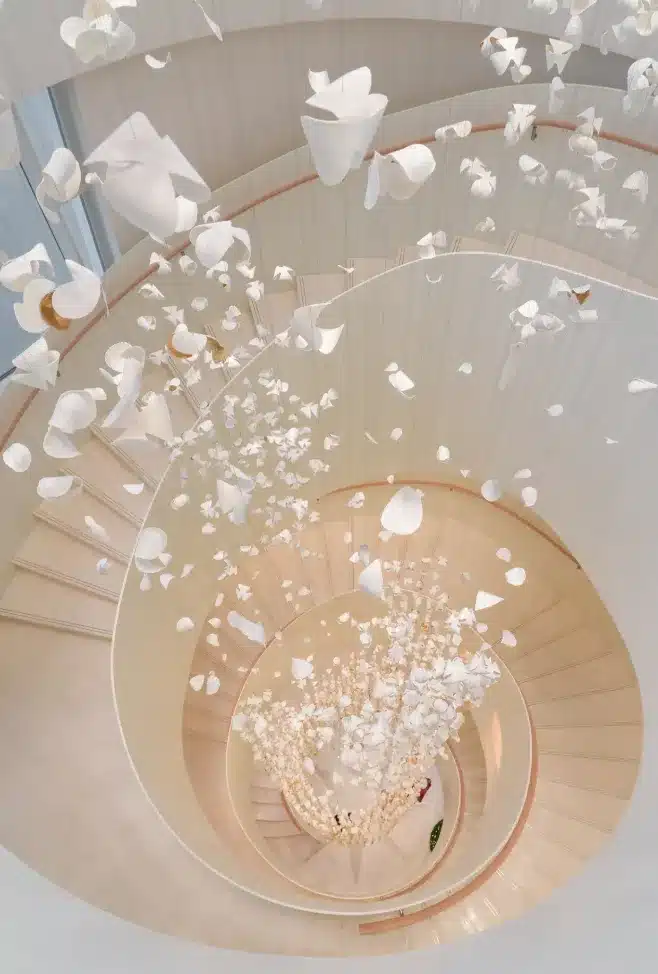
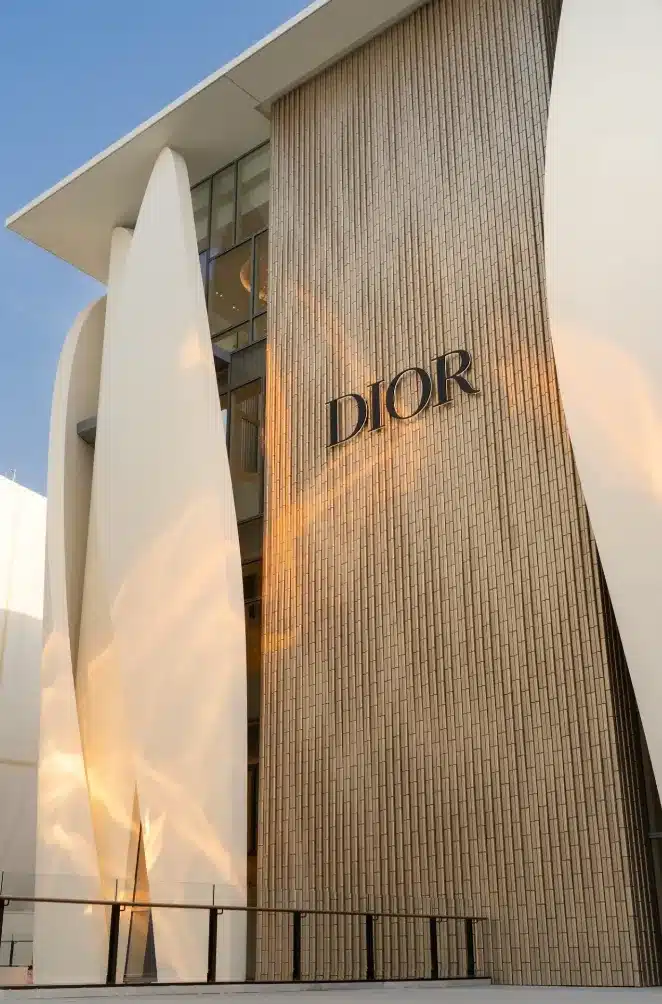
Petal flagship store reinterprets haute couture through architectural form in Beijing’s Sanlitun district. Designed, it features fourteen white resin petals up to 65 feet tall. Inaugurated in December 2025, the freestanding structure continues a design language first seen in Seoul and Geneva buildings. Golden glass tiles reference imperial Chinese color traditions. A spiraling white staircase organizes movement across five floors. The building stands within a Kengo Kuma led development and interacts with light from nearby structures.
Design Concept and Spatial Strategy
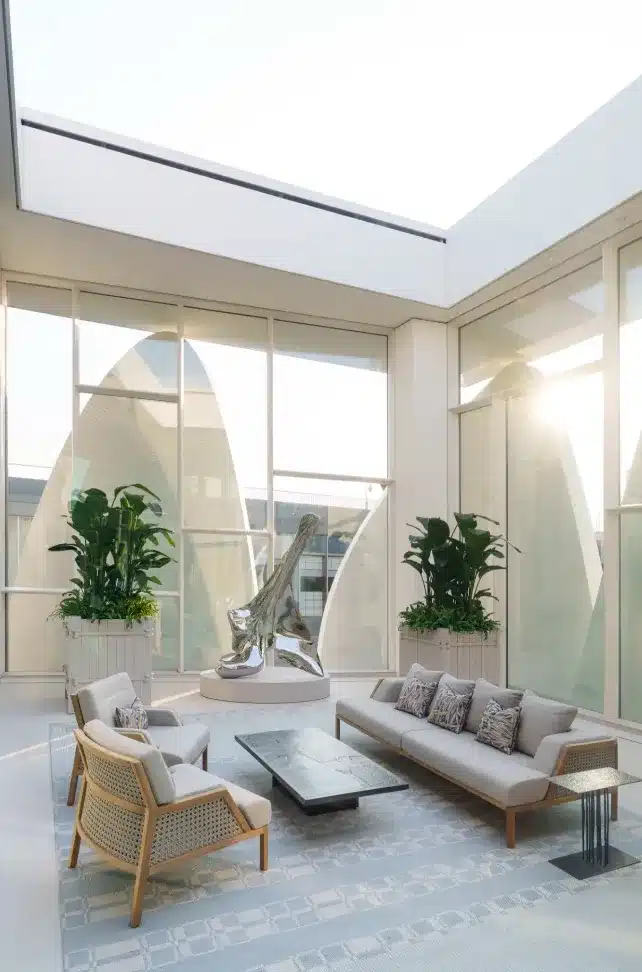
The project uses the petal flagship as a structural and symbolic unit rather than a decorative motif. Ground level hosts China’s first Monsieur Dior restaurant with red themed works by artist Hong Hao. Upper floors display accessories through Parisian travel inspired window scenes. This layered approach reflects shifts in luxury retail toward experiential interior design. Commercial spaces now function as cultural venues. The strategy aligns with global trends in architectural design.
Material Innovation and Construction Process
Each petal flagship required 18 months of fabrication with a Beijing based manufacturer. Lightweight resin shells were backed by steel frames for stability. Hand-assembled golden glass tiles allow variable light transmission. This technique draws from Persian craftsmanship and modern building materials research. Visual balance between towering forms and reflective surfaces posed engineering challenges. Solutions emerged through iterative prototyping during construction. The facade avoids literal ornamentation. Cultural reference is embedded in material behavior.
Urban Integration and Critical Context
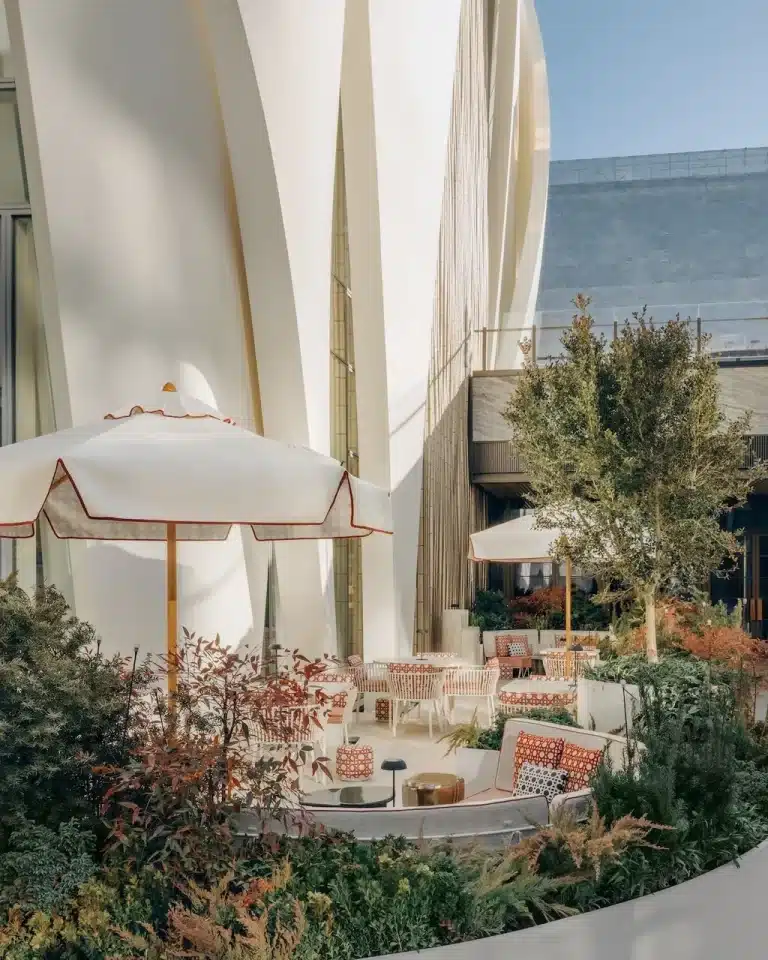
The building engages pedestrians from all sides due to its freestanding position. Located in dense Sanlitun, it contributes to Beijing’s retail skyline without overt monumentality. Yet its exclusivity raises questions about public access. Branded architecture often blurs lines between civic presence and private spectacle. This tension is increasingly debated in global cities. No demolition or expansion plans have been announced.
Does translating fashion into architecture enrich urban space or privatize it under aesthetic guise?
Architectural Snapshot: A five story retail structure in Beijing featuring fourteen 65-foot resin petals and golden glass cladding, designed by Christian de Portzamparc.
ArchUp Editorial Insight
The announcement of Dior’s Beijing flagship frames fashion as architecture, leveraging Christian de Portzamparc’s petal flagship motif across press imagery and spatial sequencing. Structurally, the narrative mirrors luxury retail’s shift toward immersive storytelling rather than functional critique. Yet the reliance on metaphor petals, gold, spiral staircases risks aesthetic self-reference over urban contribution. The façade’s resin-and-glass composition, while technically refined, echoes a broader trend where brand identity supplants public meaning. Still, the integration of a local artist and restaurant offers a rare nod to contextual engagement. Ten years on, the world may still wonder: is this building architecture or branded scenography?



ArchUp: Technical Analysis of the “Dior Petals” Store in Beijing
This article provides a technical analysis of the “Dior Petals” store in Beijing as a case study in luxury retail architecture transforming into an experimental urban landmark. To enhance archival value, we present the following key technical and design data:
The freestanding building comprises 14 structural white resin “petals,” each reaching a height of up to 65 feet (approximately 20 meters). The fabrication of each petal took 18 months in collaboration with a local Beijing factory, utilizing lightweight resin technology supported by an internal steel frame. Hand-applied golden glass tiles on sections of the facade, inspired by traditional imperial Chinese colors, create a changing light effect. The building spans 5 floors, connected by a central white spiral staircase.
The interior design features a precise functional division. The ground floor houses China’s first “Monsieur Dior” restaurant, adorned with works by contemporary Chinese artist Hong Hao. The upper floors are designed as Parisian travel-themed settings for displaying accessories and products. Retail spaces constitute 60% of the building, while cultural experience and hospitality areas make up 40%, reflecting the luxury sector’s shift towards experiential offerings.
In terms of urban integration and performance, the building is located in the bustling Sanlitun commercial district and is designed to be interactive from all sides. The contrast between its sculptural white mass and the surrounding urban environment creates a strong visual landmark. There are no plans for removal or expansion, making it a permanent addition to Beijing’s architectural landscape. However, its exclusive nature raises questions about public accessibility and the role of commercial architecture in shaping civic space.
Related Link: Please refer to this article for a comparison of other architectural projects by luxury brands:
https://archup.net/under-the-brazilian-sun-the-design-challenge-of-the-le-soleil-dete-store-in-27-square-meters/