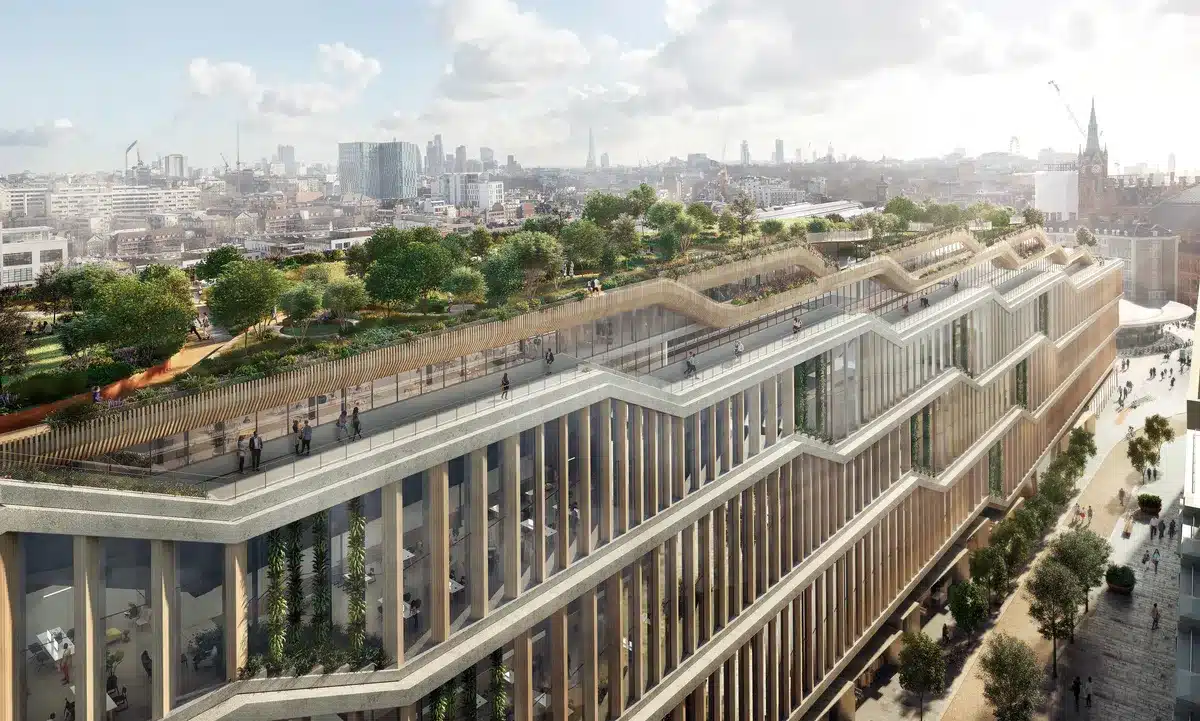
Google’s Platform 37 Opens in London With AI-Focused Public Space

Google will open its King’s Cross office in London this summer. The landmark building features column-free interiors and will house a public AI education center on the ground floor. Platform 37 represents a new approach to workplace architecture in central London.
Innovative Structure Creates Open Workspaces
The building utilizes a hung structural system that eliminates interior columns entirely. This engineering approach allows for flexible workspace configurations across multiple floors. Moreover, triple-height ceilings throughout the building encourage collaboration and spontaneous interactions among occupants.
The rooftop features a panoramic garden with sweeping views across London. Google worked with London Wildlife Trust and Camden Borough to develop dense planting schemes. Therefore, the garden serves dual purposes as employee amenity space and biodiversity habitat. This integration of sustainability measures reflects growing emphasis on environmental considerations in commercial construction.
Ground Floor AI Exchange Opens to Public
The AI Exchange will occupy the ground level with free educational programming and interactive exhibitions. The public space aims to increase understanding of artificial intelligence through cultural events. Platform 37’s name references both King’s Cross station nearby and Move 37, a notable AI play from 2016.
The ground floor design lifts the main building mass two stories above street level. Underneath, smaller timber structures create varied spaces at pedestrian scale. These units will contain shops, hospitality venues, and community facilities. Meanwhile, this approach activates the street level and connects the development to surrounding urban planning frameworks.
Human-Scale Design Elements
The timber pavilions beneath the main structure use building materials that contrast with the larger volumes above. This deliberate shift in scale aims to create more intimate street experiences. The interior design strategy prioritizes flexibility and natural light throughout workspace areas.
First occupants will move into Platform 37 during summer 2025. The project represents significant investment in London’s King’s Cross district, which continues evolving as a technology and innovation hub. However, the building’s impact on local buildings and neighborhood character remains to be seen as the development completes.
A Quick Architectural Snapshot
Platform 37 combines hung structural engineering with rooftop biodiversity gardens in London’s King’s Cross. The column-free architecture features triple-height ceilings and ground-floor timber pavilions. Public AI education spaces open this summer alongside workspace areas. This news marks completion of a major development project.
✦ ArchUp Editorial Insight
Platform 37 reflects a strategic corporate repositioning rather than pure architectural ambition. Google faces increasing pressure to justify physical office investments amid remote work debates. The AI Exchange serves dual purposes. It functions as community engagement and brand rehabilitation for artificial intelligence technology facing public skepticism.
The lifted building mass creating street-level retail follows a familiar formula. Tech companies now must demonstrate neighborhood contribution to secure planning approvals. Camden Borough extracted public amenities in exchange for development rights. Meanwhile, the biodiversity garden addresses ESG reporting requirements that investors increasingly demand.
The column-free workspace design responds to organizational uncertainty. Companies no longer predict headcounts or team configurations five years ahead. Flexibility has become the default requirement for corporate real estate.
This project is the logical outcome of planning negotiation pressures + ESG compliance demands + post-pandemic workplace uncertainty.