Postiljooni Childcare: Integrating Nature into Urban Living

| Element | Details |
|---|---|
| Architects | Verstas Architects |
| Area | 1500 m² |
| Year | 2025 |
| Photographs | Niclas Mäkelä |
| Lead Architects | Ilkka Salminen (Principal Designer), Väinö Nikkilä, Jussi Palva, Riina Palva |
| Category | Educational Architecture, Day Care |
Site and Urban Context
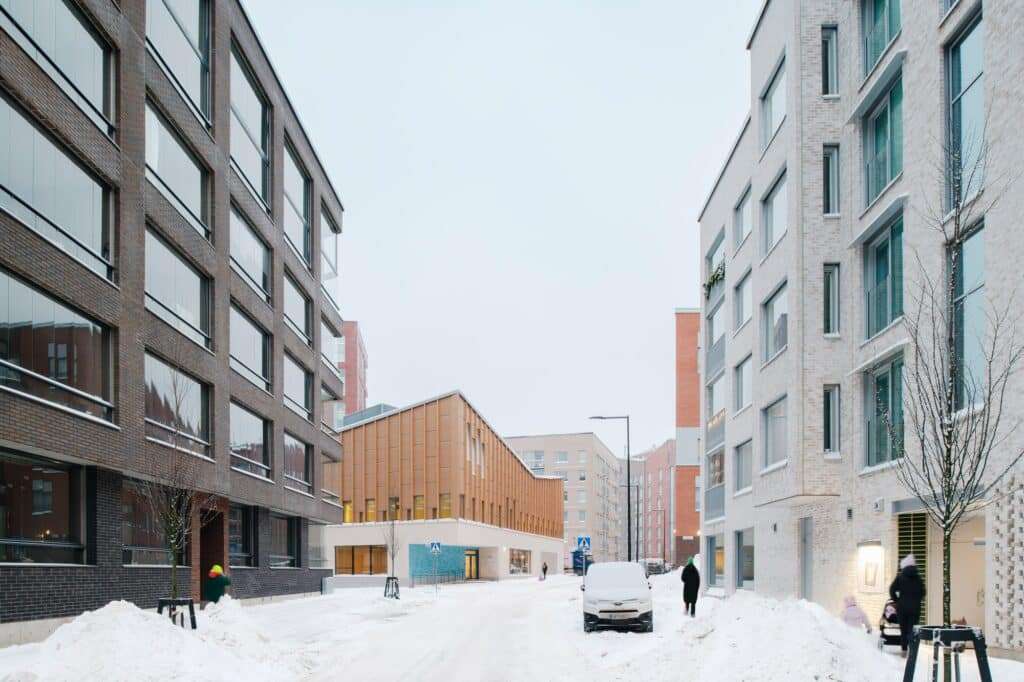
The Postiljooni Childcare Center is located in a modern residential neighborhood developed on the site of a former logistics hub and railway warehouse area. This transformation from an old industrial environment to a residential zone serves as a model for sustainable urban land reuse, while carefully integrating the new structure within the surrounding urban context.
Relationship with the Surrounding Environment
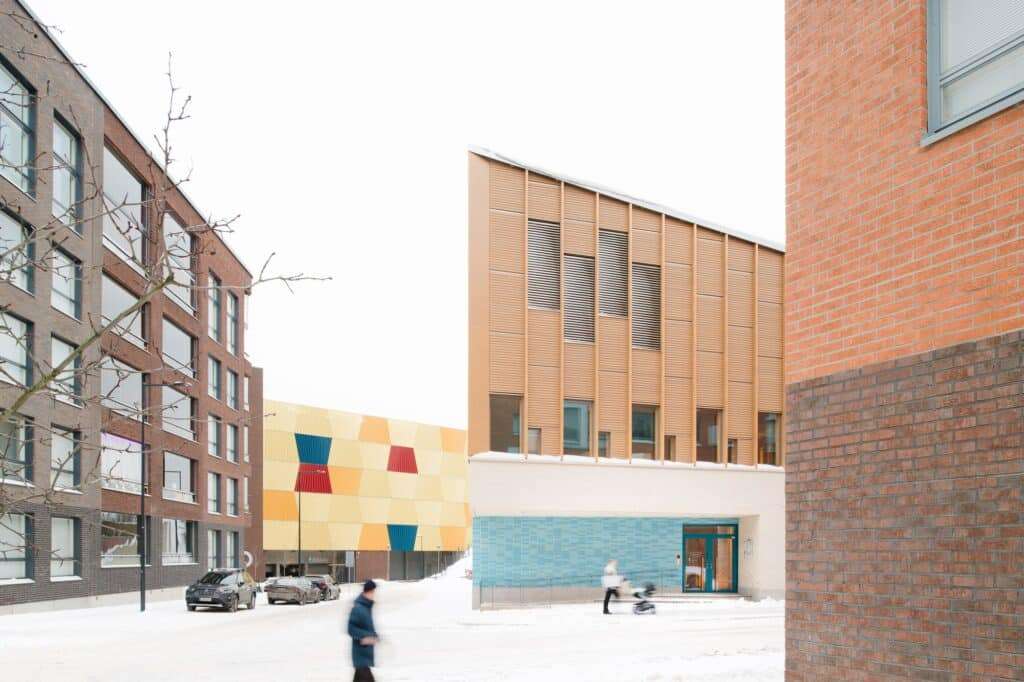
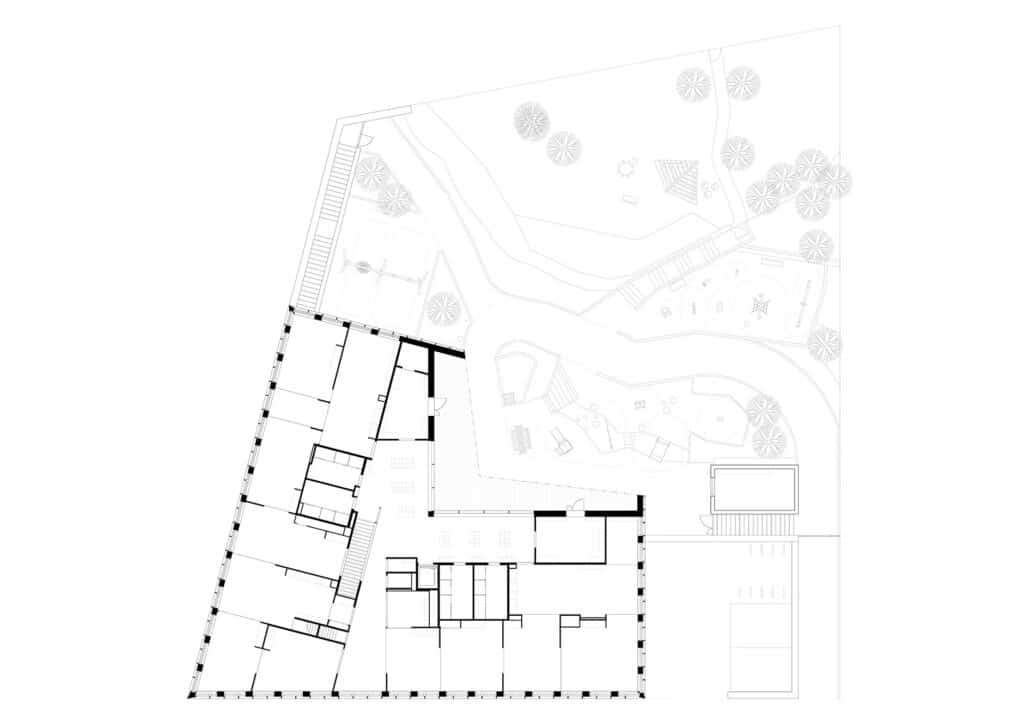
The building occupies a prominent position at the intersection of two main streets, making it a visible part of the neighborhood’s urban fabric. The design aligns with urban axes while preserving the area’s highest natural landmark, known as Kollikallio, and functionally integrating it as part of the children’s playground. This approach demonstrates careful attention to the integration of natural elements with built spaces, creating a balanced spatial experience for both children and visitors.
Building Design and Interaction with the Hills
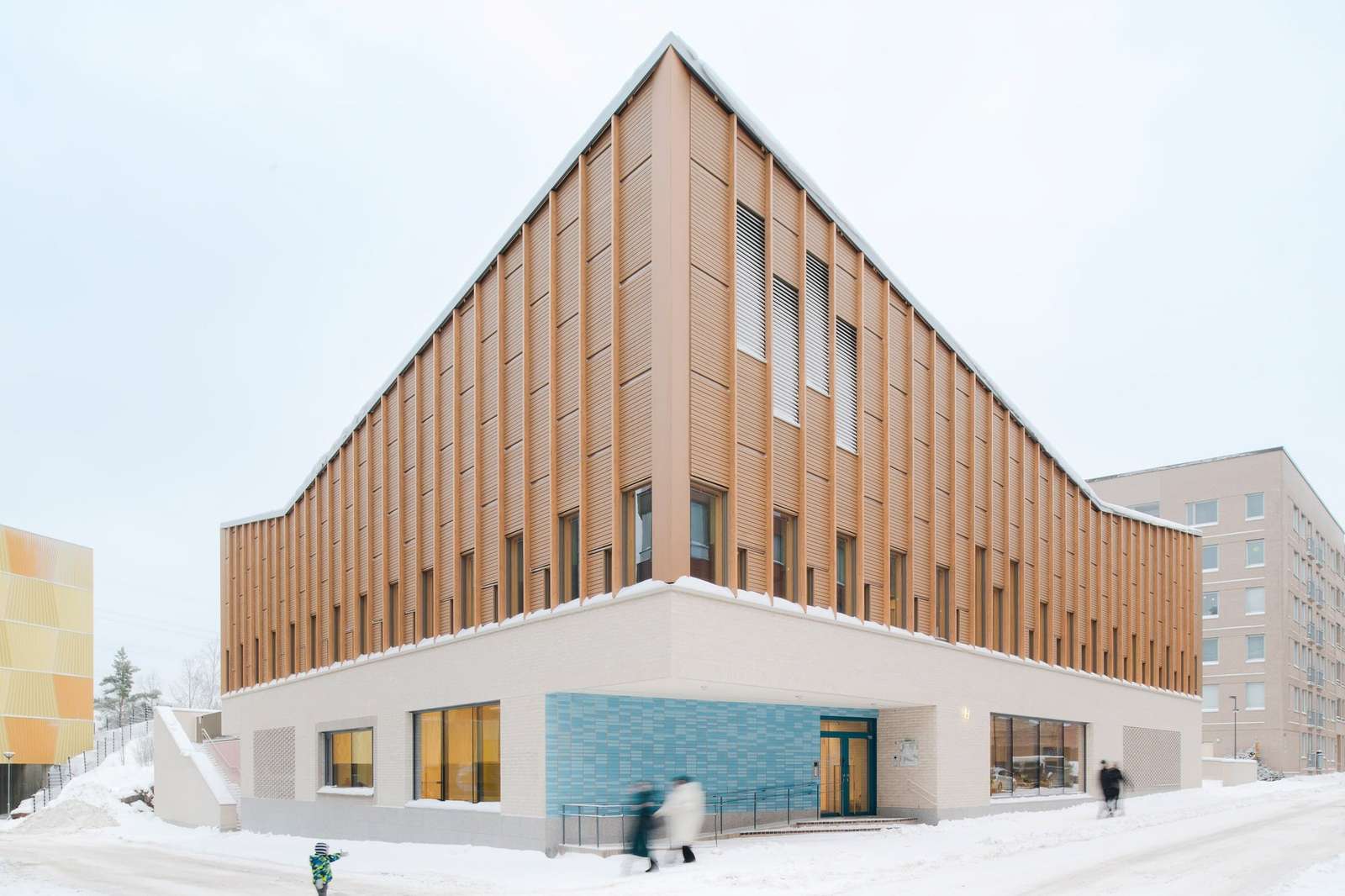
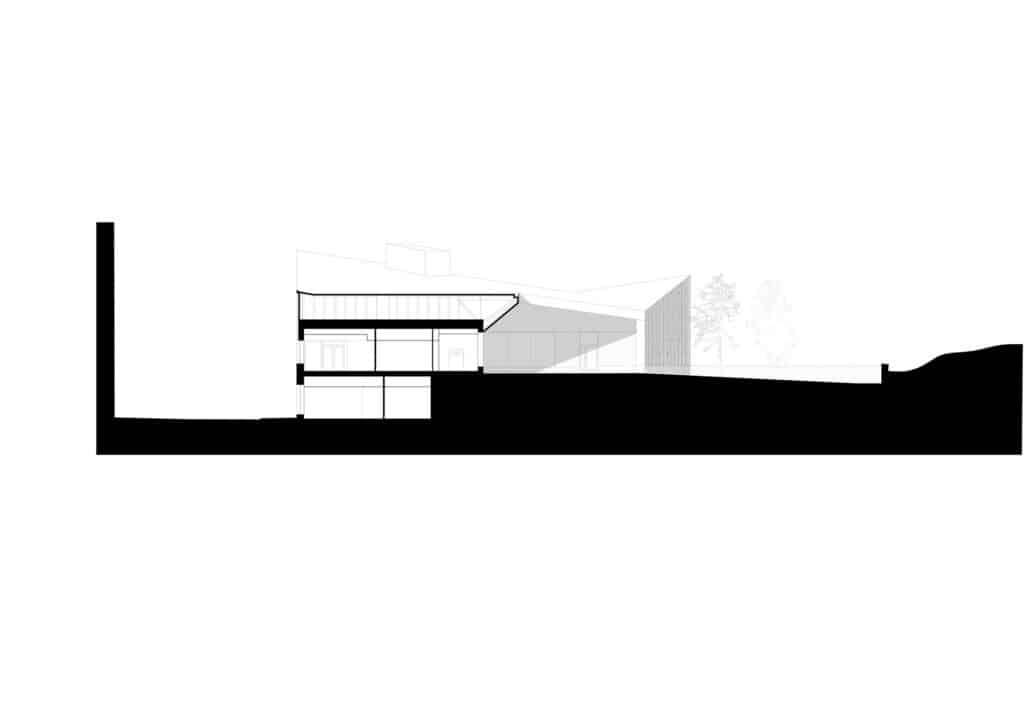
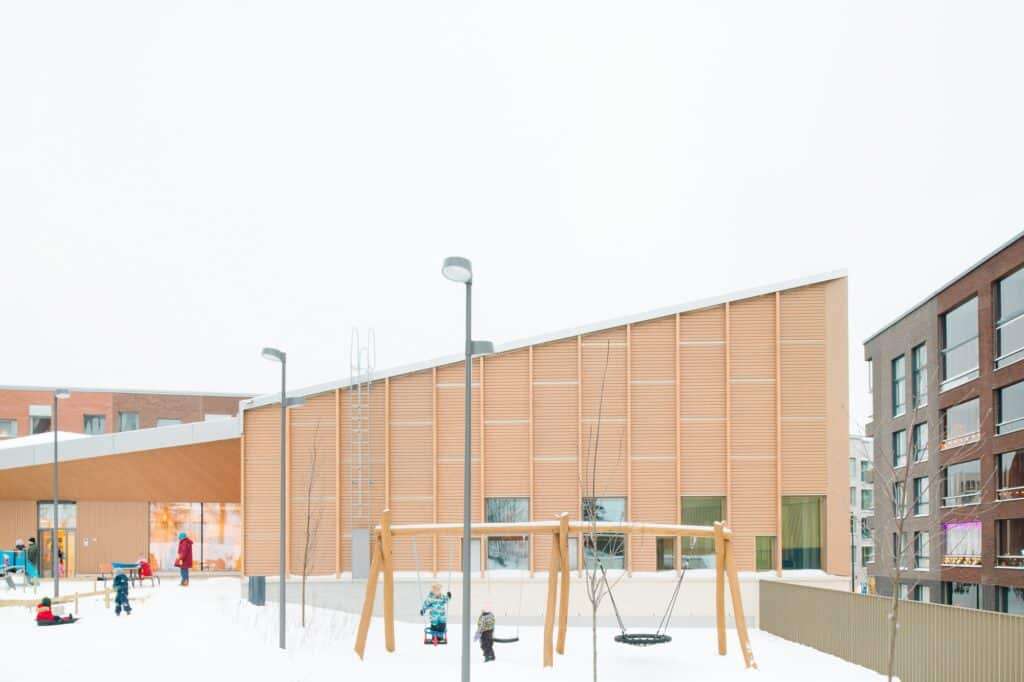
The building is designed in a terraced form that follows the slope of the hill, allowing seamless integration with the natural terrain and creating dynamic movement within the outdoor space. The practical use of shared spaces is concentrated on the stone-clad ground floor, a choice that enhances visual connection with the street through large windows, adding vitality to the surrounding urban scene. In contrast, the children’s areas on the upper floor open directly onto the play yard, reflecting the design’s intention to integrate indoor activities with outdoor spaces in a direct manner.
Contrast Between Mass and Function
The ground floor facade forms a solid horizontal stone base, providing visual and functional stability to the building. Above this foundation, the upper portion appears lighter and clad in timber, with a rhythmic arrangement of windows and vertical wooden slats, creating a balance between solidity and lightness while adding an aesthetic layer to the facade.
Rich Architectural Details
The sloped roof surfaces emphasize the clarity of the building’s angles, while the main entrance is sheltered under an inward-curving canopy, adding a dynamic dimension and a comfortable entry experience. Recesses in the stone base, framed with colored glazed bricks and sculpted stonework, introduce a decorative element that links material and function, enriching the visual experience for visitors.
Intimacy and Connection with Outdoor Space
On the side facing the play yard, the building takes on a more intimate scale, enhancing the sense of safety and comfort for children. The wide sculptural canopy protects the children’s entrances while providing an outdoor area that is climatically suitable for play, reflecting the design’s attention to the micro-environment and its impact on user experience. From an aerial perspective, the folded roof surfaces become what can be called the building’s fifth facade, expanding the concept of the facade and adding a new visual dimension from above.
Interior Material and Color Palette
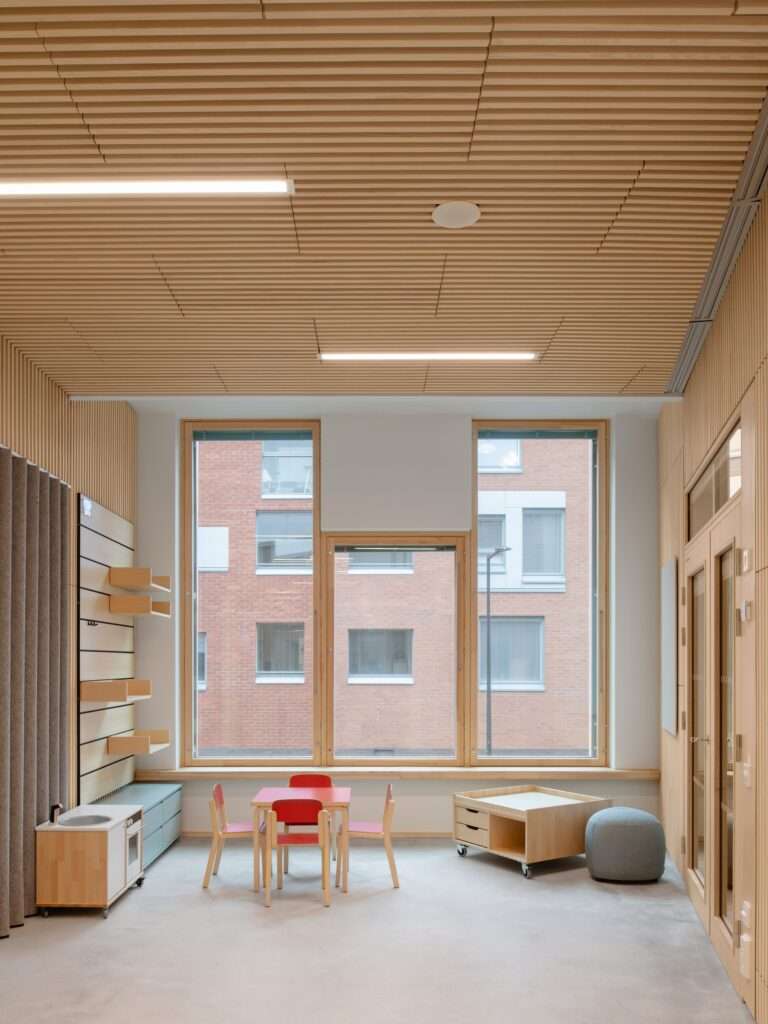
The interior materials and colors focus on creating a harmonious and comfortable atmosphere for daily activities. Light ash wood and concrete surfaces, along with carefully selected colors, provide a calm backdrop that allows children to concentrate on play and learning, while maintaining visual balance and psychological comfort.
Interior Layout and Visual Connectivity
In-situ cast concrete walls form the main frame of the staircase connecting the building’s levels, while the lower portion of the timber-clad stair extends into a small platform facing the multipurpose space, enhancing flexible and multifunctional use of the areas. In addition, glass walls and doors between rooms create extended sightlines, opening the entrance area and lobby toward the play yard through large windows. Meanwhile, the rhythmic windows contribute a consistent character to the interior, seamlessly linking the interior and exterior design.
✦ ArchUp Editorial Insight
The emergence of the Postiljooni Childcare Center reflects the repurposing of underutilized industrial land toward residential-supportive infrastructure, driven by municipal planning incentives and risk-adjusted investment cycles focused on mixed-use redevelopment. The building’s form was shaped by regulatory frictions, including compliance with playground safety standards, structural requirements for the site’s slope, and labor cost constraints, resulting in a terraced spatial output that aligns with the terrain and balances with the surrounding residential units.
The ground floor serves as a horizontal base for high-use services, while a lighter upper portion manages the movement of young occupants safely. The distribution of windows and materials functions more as a tool for mitigating risk, supervision, and harnessing natural light than as an aesthetic expression. In short, the building represents an organized compromise between capital investment, regulatory frameworks, and user density, making the systemic logic explicit while concealing the architectural intent. Learn more about architectural research and architecture competitions for similar projects.