Oratory Chapel in Santiago Reuses Existing Structure

Reuse of the Previous Building as a Constructive Context
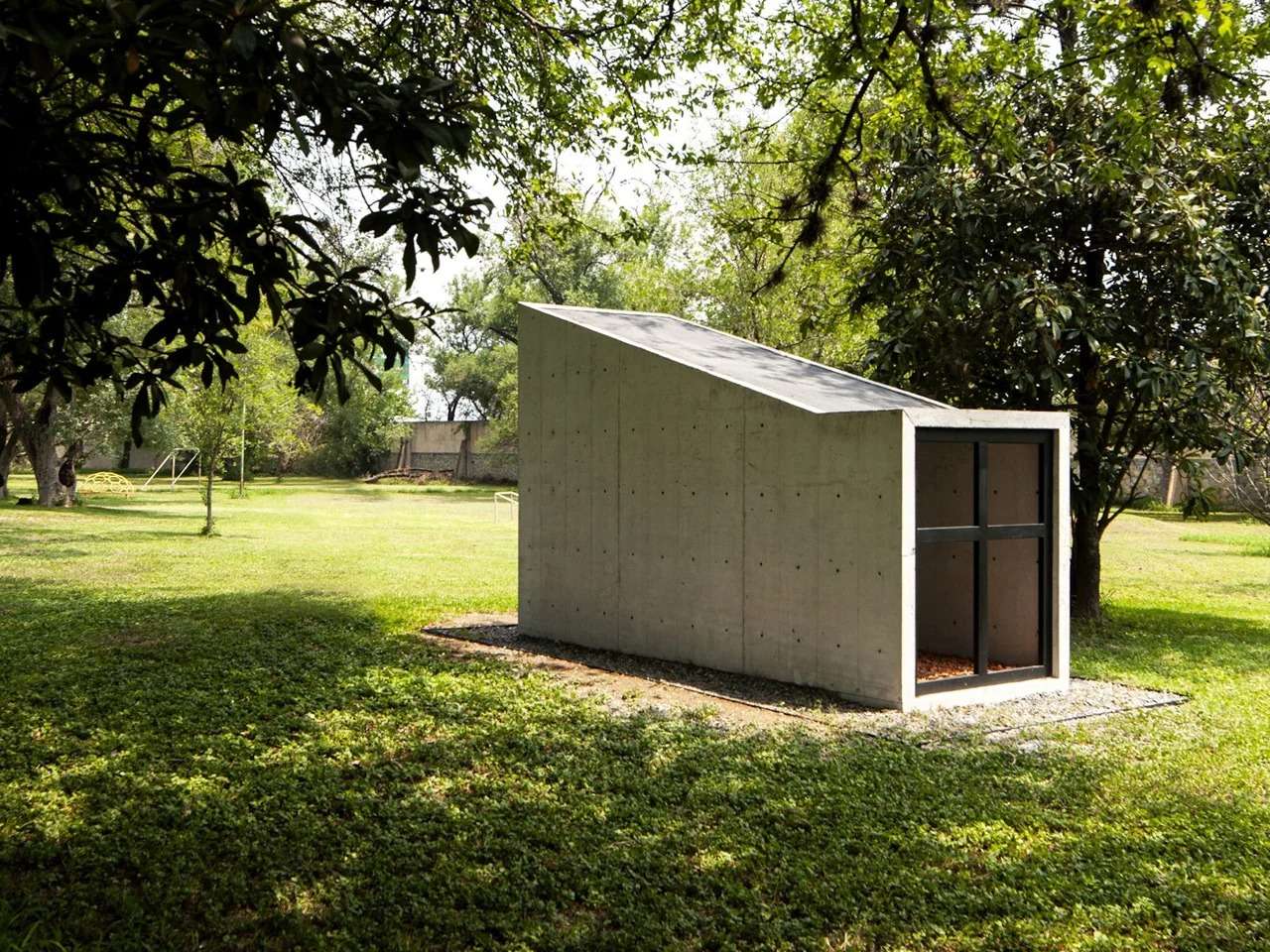
The Oratory Chapel in Santiago, Nuevo León is based on the idea of engaging with a previous building that once stood on the same site. Rather than completely removing it, remnants of its material were preserved and re-integrated into the new composition. In this way, the project becomes an extension of an existing condition rather than its replacement, where the relationship between old and new continues through reused material. This approach reflects a deep understanding of Architecture as a dialogue between past and present.
Structural System and Material Precision
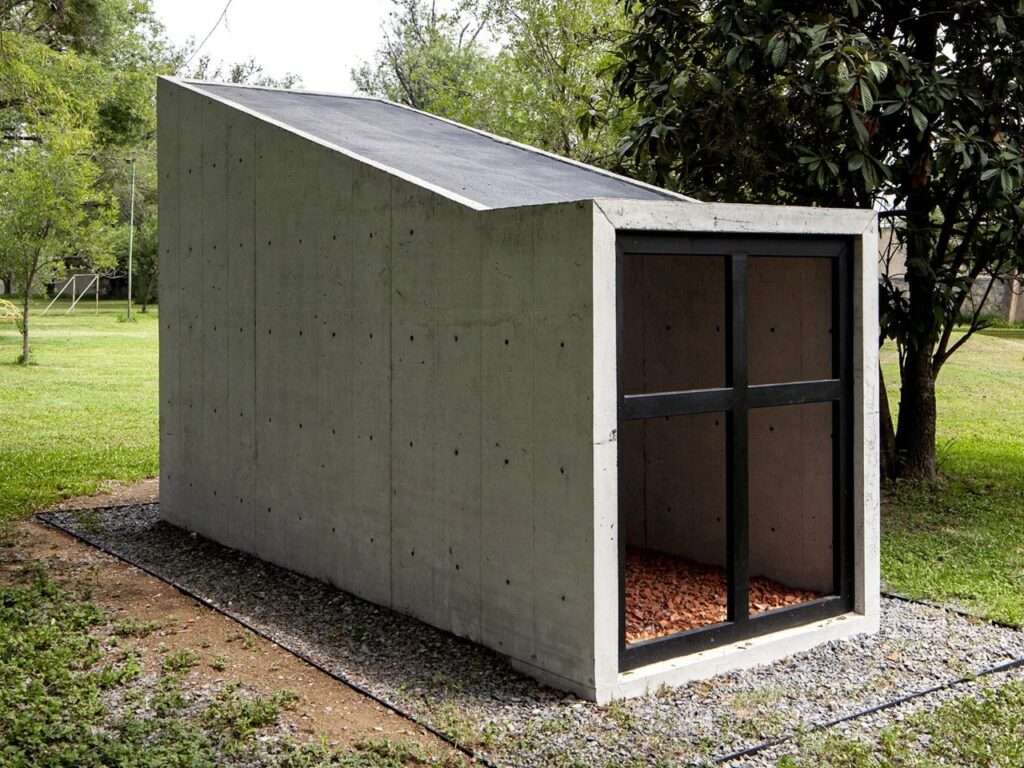
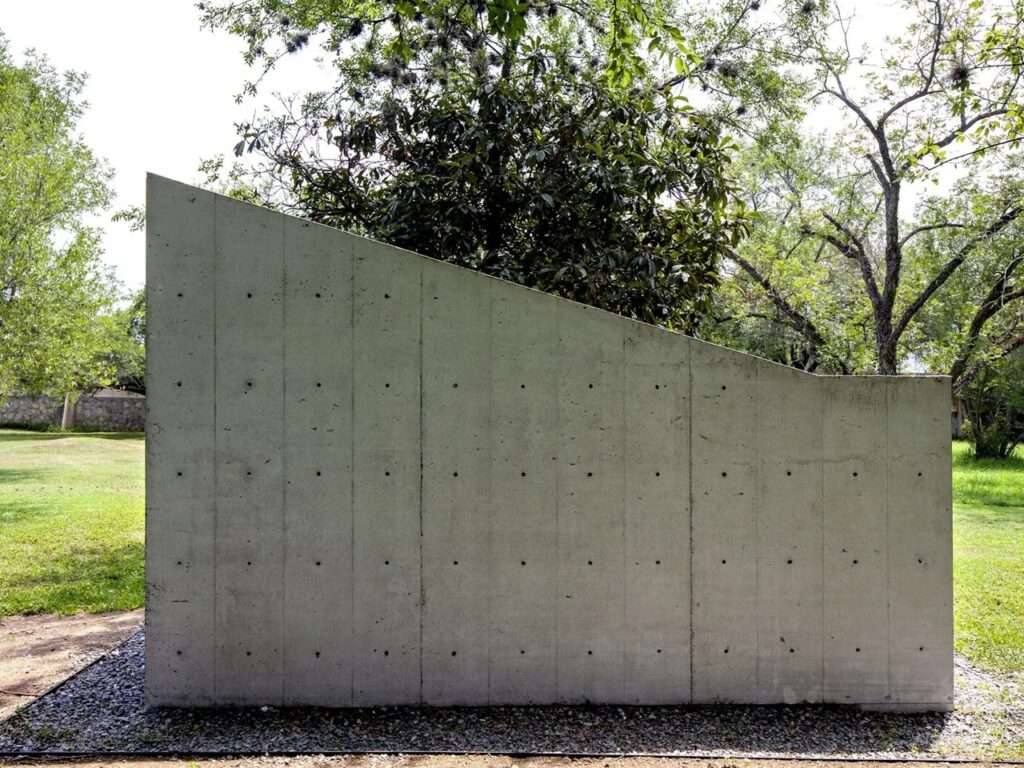
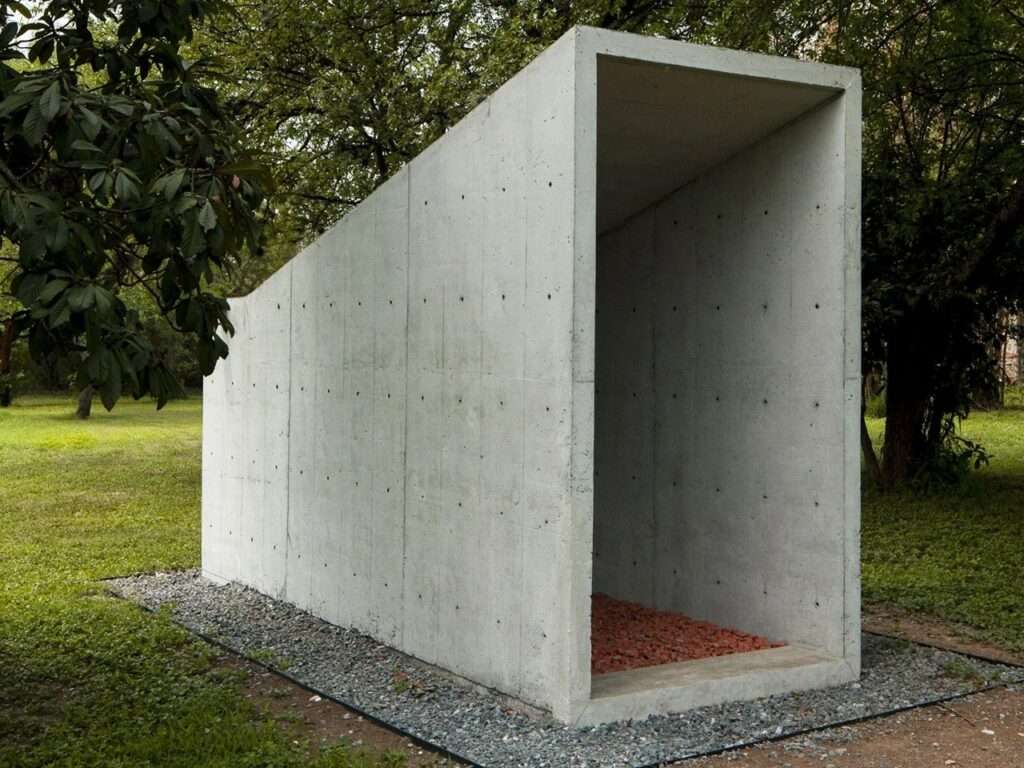
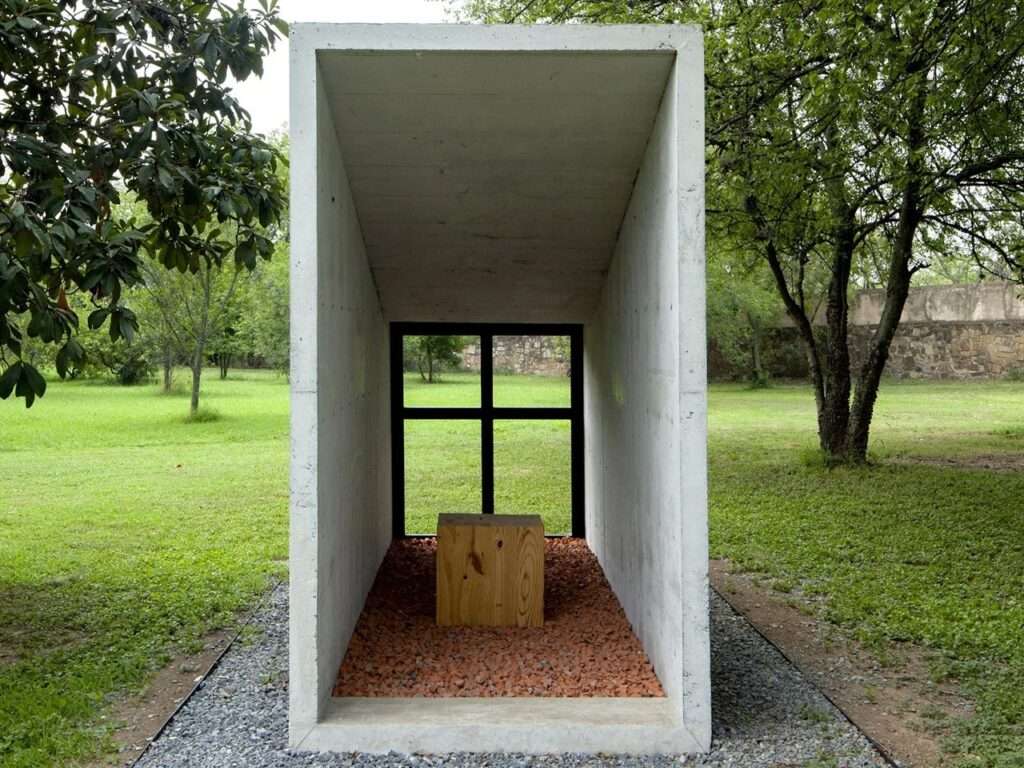
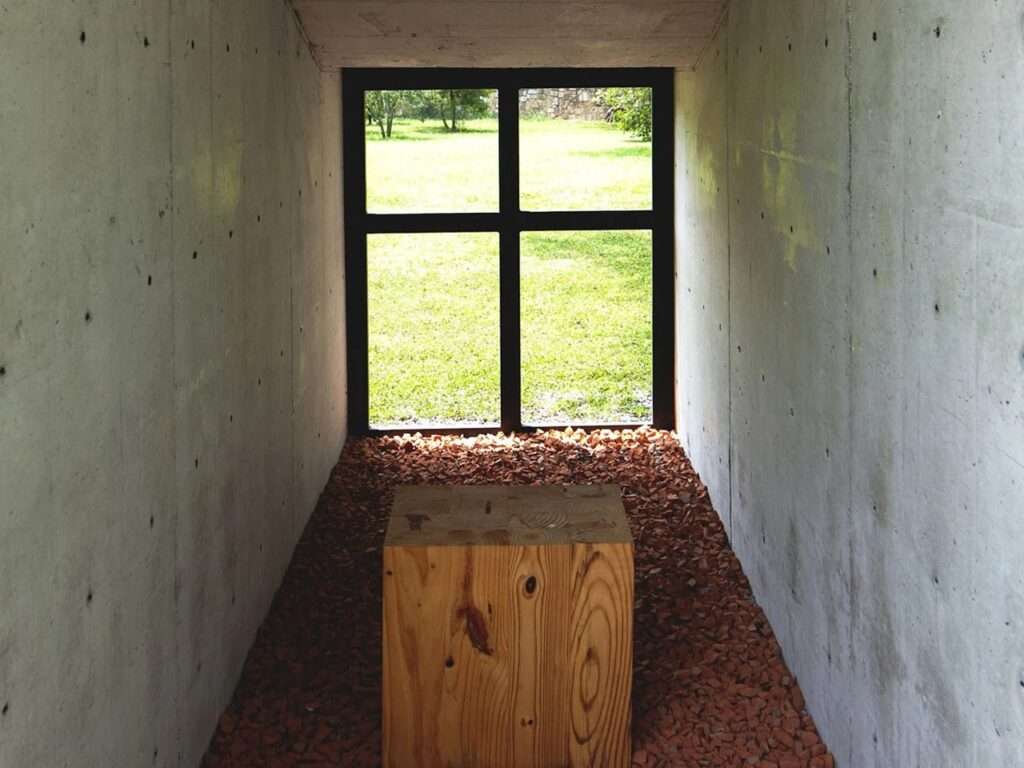
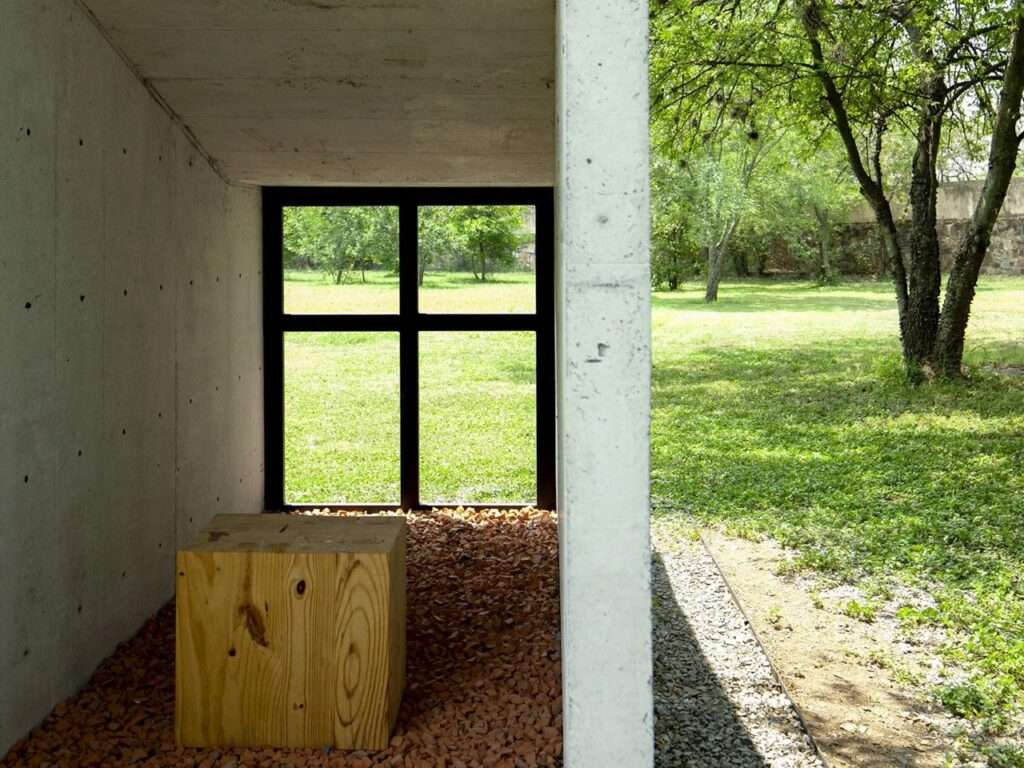
The architectural composition relies on two main elements of reinforced concrete, each wall being 8 cm thick, rising to unequal heights along a diagonal axis. This system supports a slab with a thickness of 6.5 cm, producing a tunnel-like void that defines the internal circulation path. The design also relies on a fixed modular unit of 30.5 cm, while the voids generated by the structural system are left unsealed, creating a direct overlap between mass and void. The careful selection of Building Materials ensures both structural integrity and visual harmony.
Light as an Organizing Element of Experience
Natural light plays the primary role in shaping the perception of space, as the building does not rely on any artificial lighting sources. Light filters through openings in the concrete and shifts in distribution according to time and seasonal changes. As a result, the experience within the space becomes tied to the natural temporal rhythm of the surrounding environment, whether in the garden or the sky. This integration of light and form is a recurring theme in Design practices that prioritize human experience.
Concrete and Spatial Contextuality
In the work of the Monterrey-based architectural studio S-AR, a consistent approach emerges that is grounded in material precision and a reading of contextual conditions. Within this framework, concrete is treated in a way that is closer to natural formations than to conventional structural elements. This logic continues in the Oratory Chapel, where the walls appear as if they belong to the site itself rather than being inserted into it, within a compact footprint that represents one of the most reduced projects in the studio’s production. The studio often relies on detailed Material Datasheets to guide their material choices.
Formal Reduction and Fundamental Elements of Composition
Within a context that often favors monumentality in religious architecture, this chapel moves toward reducing elements to a minimum. The space is composed of two thin walls and a simple roof slab, with light functioning as the primary element shaping the internal experience. Through this reduction, a limited spatial condition is constructed, relying more on the relationship between mass and void than on material or ornamental complexity. This kind of spatial thinking is frequently explored in Projects that challenge conventional religious typologies.
✦ ArchUp Editorial Insight
The project logic was activated through the condition of material reuse resulting from the partial demolition of the previous structure, where the building was not treated as a loss but as a remaining asset within the constraints of a low construction budget and land ownership continuity. The spatial program emerges as a direct outcome of compliance obligations related to structural safety and cost efficiency, alongside the complexities of material disposal and reintegration. Such strategies are often documented in the Archive of innovative architectural solutions.
Regulatory constraints requiring thin concrete walls and limited-thickness casting redefined the architectural envelope, producing a linear void that directs movement as a unidirectional path. The final composition operates as a spatial settlement between reused material remnants, structural load efficiency, and natural light control, where openings become a temporal mechanism for organizing perception within the space, while the role of the architect recedes in favor of a logic of mediation between construction waste, regulatory compliance, and spatial production. These themes are frequently discussed in Research on adaptive reuse and material conservation.
Similar approaches can be found in other Buildings that prioritize context and material honesty. Furthermore, the dialogue between old and new structures is a recurring subject in Discussion forums within the architectural community. The studio’s work also aligns with broader Construction methodologies that emphasize the reuse of existing building stock. For those interested in similar design philosophies, Interior Design strategies often draw from the same principles of light, material, and spatial reduction seen here.