Prince Mohammed bin Salman Project Renovates Al-Husn Al-Asfal Mosque in Asir


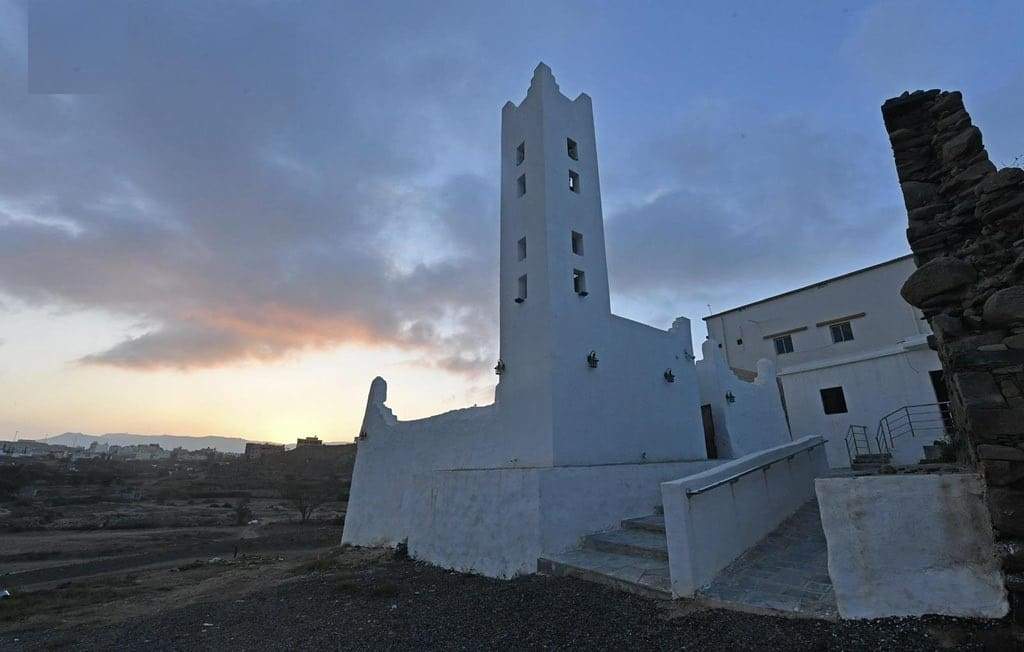
As part of the Kingdom of Saudi Arabia’s efforts to preserve heritage sites, the Prince Mohammed bin Salman Project for the Development of Historic Mosques announced the renovation of Al-Husn Al-Asfal Mosque in the Asir region, one of the oldest historic mosques in the Kingdom.
Its construction dates back 271 years, specifically in 1173 AH (1973 AD). This renovation is part of the second phase of the project, which aims to restore and rehabilitate historic mosques while preserving their original character.
Sarawee Style
The Al-Husn Al-Asfal Mosque is distinguished by its unique architectural style, reflecting the identity of the Sarawee style, the traditional style prevalent in the Asir region.
The mosque will be renovated to its original design, with an area of 134.18 square meters and a capacity of up to 32 worshippers.
The renovation project relies on the use of natural building materials extracted from the Sarawat Mountains, along with local wood used in the ceilings, columns, windows, and doors.

Sustainable Techniques to Conserve Natural Resources
The Lower Fort Mosque has long been distinguished by its integration of sustainable technologies that help conserve natural resources, most notably the rainwater harvesting system.
Rainwater is collected and stored in the mosque’s reservoir for later use in ablution facilities. This traditional system will be revived, enhancing the mosque’s sustainability and reducing water consumption.
Reviving Aesthetic and Historical Elements
The development project aims to restore the Lower Fort Mosque to its original state by restoring its aesthetic and historical elements, such as:
Rebuilding the walls using thick natural stone to ensure the durability of the structure.
Restoring the Manzala room, a space designated for hosting travelers.
Preserving the traditional urban fabric of the surrounding village, characterized by its interconnected passageways and closely packed buildings.
The use of white plaster cladding throughout the mosque gives it a distinctive character from its neighboring buildings.
Historic Mosques Development Project: Continuous Efforts to Preserve Heritage
This renovation is part of the second phase of Prince Mohammed bin Salman’s Historic Mosques Development Project, which includes 30 mosques across the Kingdom, distributed as follows:
6 mosques in the Riyadh region.
5 mosques in Makkah.
4 mosques in Madinah.
3 mosques in the Asir region, including the Lower Fortress Mosque.
2 mosques each in the Eastern Province, Al-Jouf, and Jazan.
1 mosque each in the Northern Borders, Tabuk, Al-Baha, Najran, Hail, and Al-Qassim.
This phase follows the success of the first phase, which saw the rehabilitation and restoration of 30 historic mosques in 10 regions, reflecting the Kingdom’s commitment to preserving its Islamic and historical heritage.
Conclusion
Prince Mohammed bin Salman’s Historic Mosques Development Project is a pivotal step in reviving the Kingdom’s architectural heritage and strengthening its cultural identity This is in line with the Kingdom’s Vision 2030.
The renovation of the Al-Husn Al-Asfal Mosque in Asir exemplifies these pioneering efforts, combining authenticity and heritage with modern technologies to ensure the sustainability of these landmarks for future generations.

The Prince Mohammed bin Salman Project for the Development of Historic Mosques is renovating the 271-year-old Al-Husn Al-Asfal Mosque in Asir. Featuring a traditional Sarawi style, the renovation includes the use of natural materials and the revival of the rainwater harvesting system. This project is part of the second phase of the restoration of 30 mosques across the Kingdom, with the goal of preserving historical heritage and rehabilitating mosques while maintaining a balance between authenticity and modernity to achieve sustainability.