

Project Shabtab: The Architecture of Balconies Redefining Urban Living in Tehran

Introduction: In the dense urban fabric of Tehran’s Qeytarieh neighborhood, where the private meets the public, Project “Shabtab” emerges not merely as a residential building, but as an architectural statement responding to a pressing human need. The project arrived at a moment in time when the need for in-between spaces—soft thresholds separating the home from the city—became more tangible than ever. Here, the balcony is no longer treated as a secondary void puncturing the façade, but has been transformed into the project’s pulsating heart and design soul.
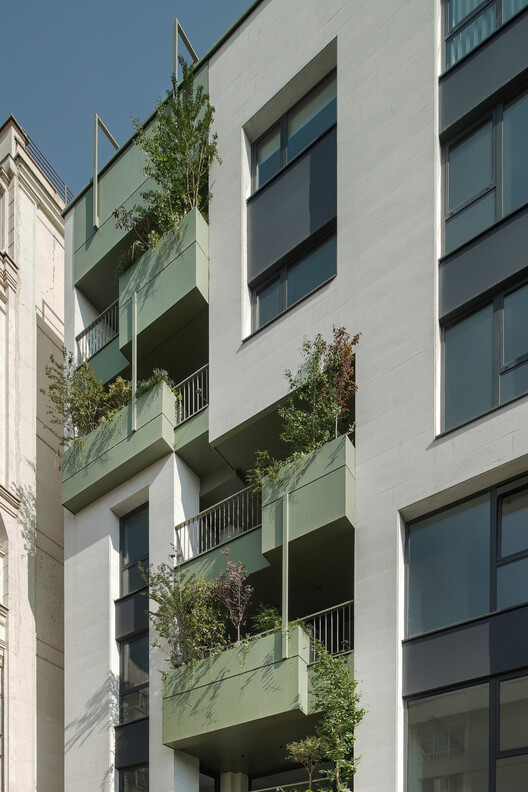
Design Philosophy: The Balcony as a Core Element, Not an Appendage
Balconies in traditional residential projects have long been treated as marginal elements, mere “voids” added after the main design was complete. Project Shabtab turns this equation on its head. The balcony was addressed from the outset as the central nucleus shaping the entire building’s identity. It is a continuous, powerful, and integrated mass, inseparable from the living experience but rather shaping it. This shift from the periphery to the center represents the core of the project’s innovation, where the threshold between inside and outside became the axis around which all design decisions revolve.
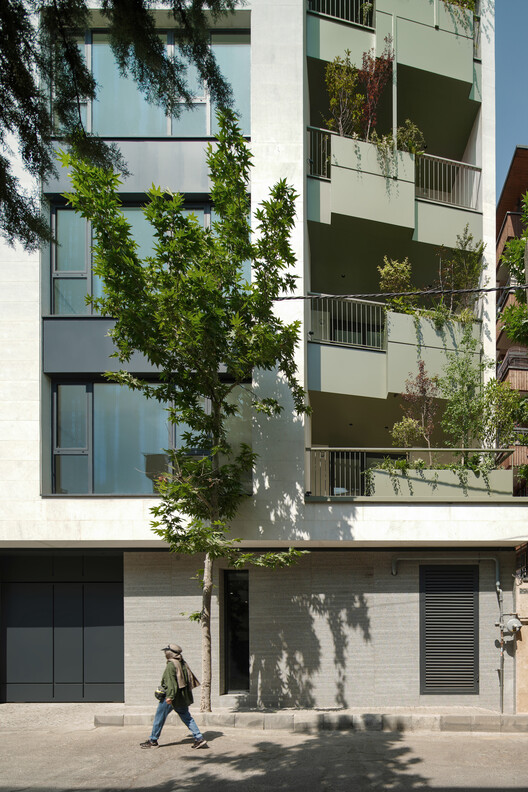
Layout and Residential Units: Privacy in the Heart of Density
The building comprises ten residential units, distributed over five floors with two apartments per level. Each unit is equipped with all modern amenities that support the requirements of contemporary urban life. However, the most prominent feature each apartment possesses is its own private balcony. These balconies were not designed as a symbolic aesthetic addition, but as a vital functional extension of the interior space. Their area was carefully considered to be spacious enough to accommodate seating areas for hosting guests, or even for dining outdoors, allowing residents to interact with the changing light and seasons from a comfortable and private vantage point.
Architectural Elements: The Balcony as an Intelligent “Prosthesis”
Structurally and in terms of materials, the balconies in Project Shabtab integrate robust elements with graceful ones. On one hand, there are the deep planters, engineered to withstand the roots and weight of mature trees, ensuring the long-term growth of a micro-ecosystem on the façade. On the other hand, there are the delicate metal railings, stitched together through horizontal and vertical steel profiles, providing safety without sacrificing views or the feeling of openness. This collective mass works as a “prosthesis” to the main building volume, transcending its primary function to become a living, renewing layer.
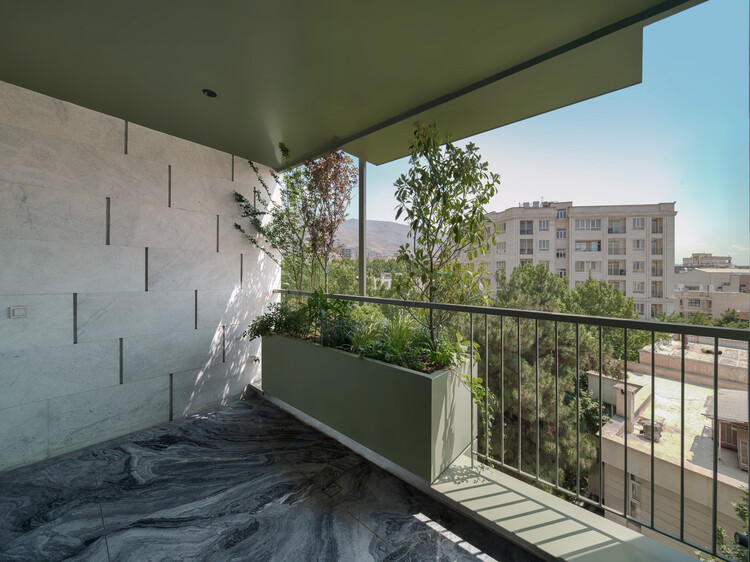
Aesthetic and Environmental Value: A Breathing, Interactive Façade
The final result is a dynamic façade whose appearance changes daily—a façade that “breathes.” Each flower box carries a distinct tree species, creating a rhythm of contrast and diversity across the building’s height. This diversity is not merely a decorative aesthetic choice but a profound conceptual decision. By assigning a unique living tree to each residential unit, the design reinforces the residents’ sense of identity and belonging. The tree becomes a distinctive marker of their home, a constant visual reminder that their dwelling has a unique presence within the collective whole.
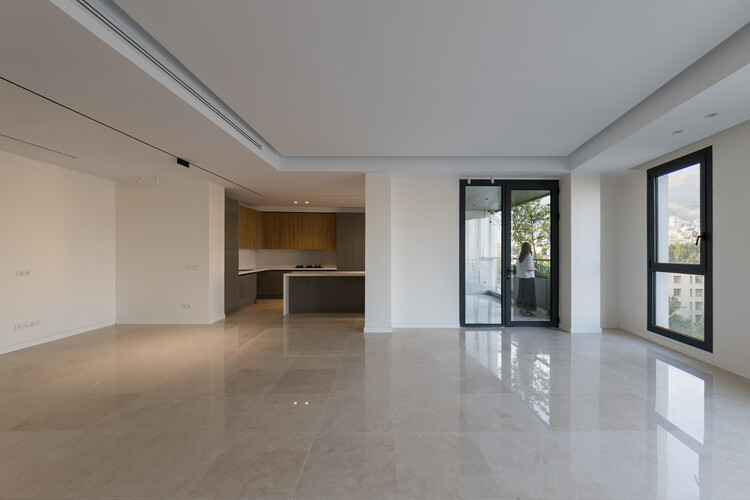
Color and Material: Reinforcing the Conceptual Shift
To reinforce this conceptual shift of the balcony from the periphery to the center, a deliberate contrast in colors and materials was used between the mass of the balconies and the main building mass. This contrast not only highlights the balconies visually but also symbolizes their different role as an active mediator. In this design, greenery is no longer just decoration; it becomes a vital mediator between the public and private realms. It grants residents a sense of protection and peace without complete isolation, while presenting the city with a vibrant, interactive façade that changes with every breeze and glows with each sunrise.
✦ ArchUp Editorial Insight
The article discusses the transformation of the balcony’s role from a marginal element to a formative and functional centerpiece in residential architecture, using Tehran’s “Shabtab” project as a model. It is observed that the significant volumetric projection of the balconies, while forming the visual identity, creates a recurring shaded footprint that may limit direct natural light in parts of the residential units during midday hours. Furthermore, the reliance on planters structurally connected to the façade raises questions regarding the sustained load on the structural system, challenges of waterproofing under freeze-thaw conditions, and the potential for root penetration in the long term. However, the design’s success in creating a reciprocal relationship between the resident and the façade, where the inhabitants become active participants in shaping the building’s visual landscape, establishes a new framework for shared aesthetic responsibility in residential architecture.
Brought to you by the ArchUp Editorial Team
Inspiration starts here. Dive deeper into Architecture, Interior Design, Research, Cities, Design, and cutting-edge Projectson ArchUp.


