Qapital Tower Introduces 32-Story Mixed-Use Architecture to Quito’s Skyline

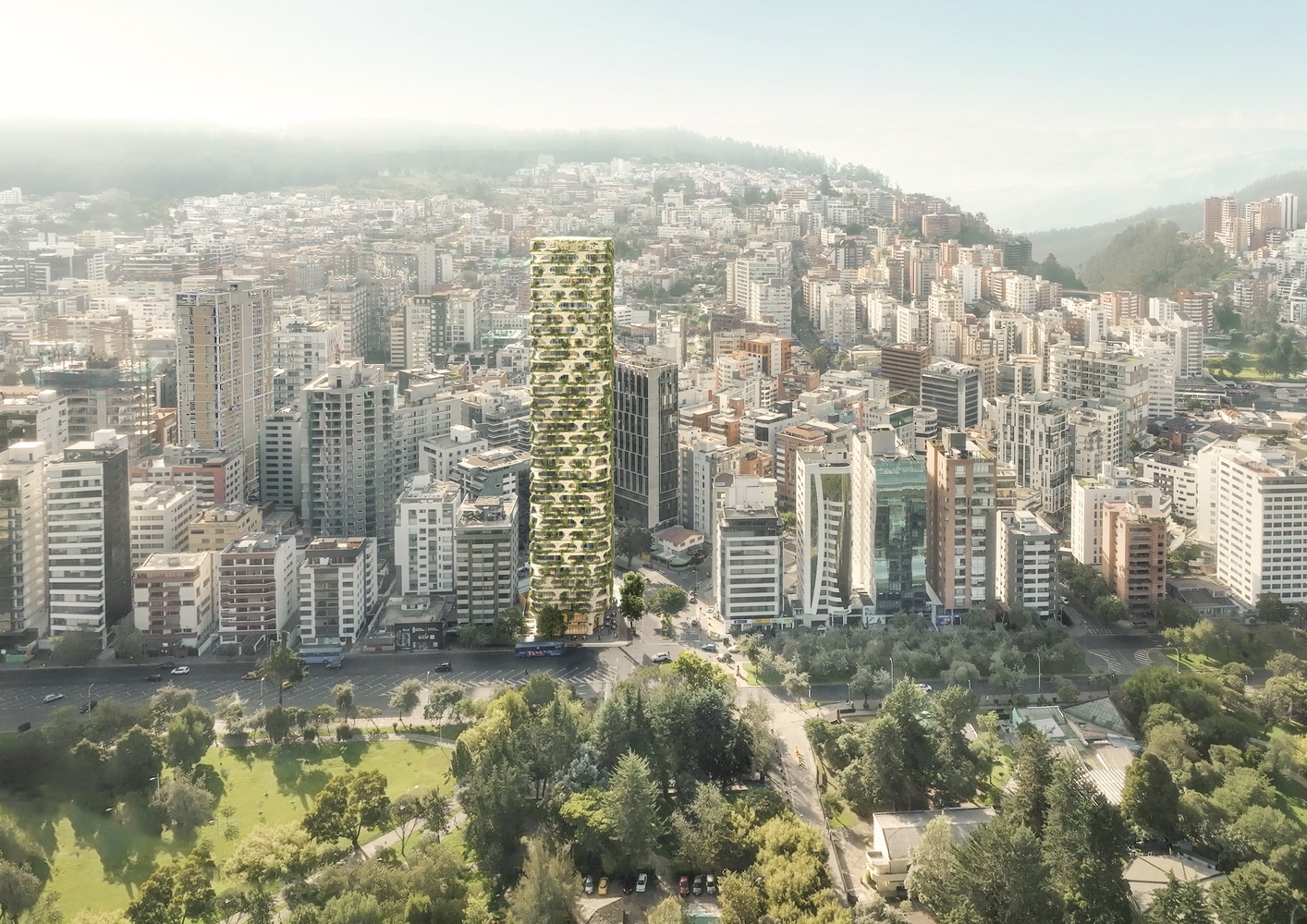
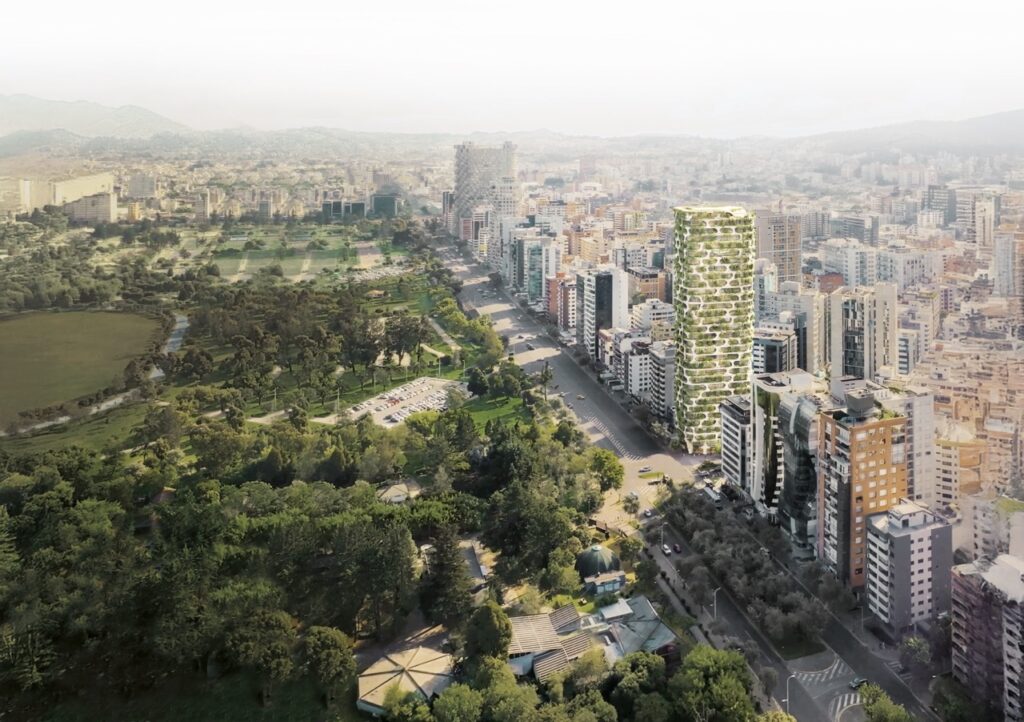
A new 32-story mixed-use tower will rise in Quito, Ecuador, opposite La Carolina Park. The project, titled Qapital Tower, will reach 125.8 meters and complete in 2029. The development combines residential, commercial, and shared amenities within a vertically organized structure in the city’s central business district.
A Vertical Addition to Quito’s Urban Core
Qapital Tower will stand within walking distance of La Carolina Metro Station. Therefore, it strengthens connectivity within Quito’s expanding public transport network. The project introduces 509 micro-apartments and three ground-floor commercial units into one of the city’s most active districts.
This addition reflects broader shifts in dense cities toward compact housing models. Moreover, the tower contributes to the growing portfolio of high-rise towers reshaping Quito’s skyline. The building integrates residential, retail, and shared spaces within a single vertical framework.
Facade Inspired by Andean Geology
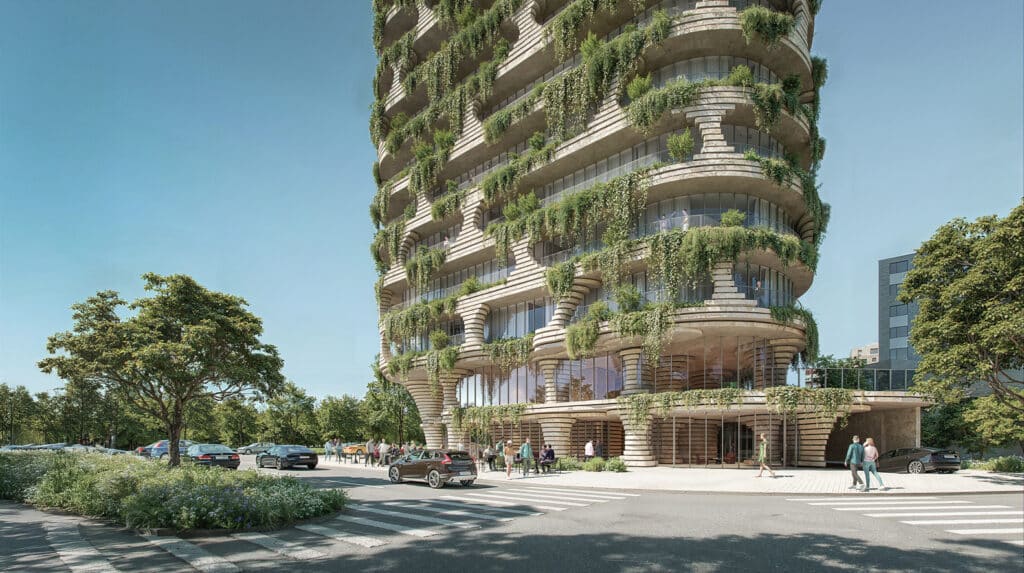
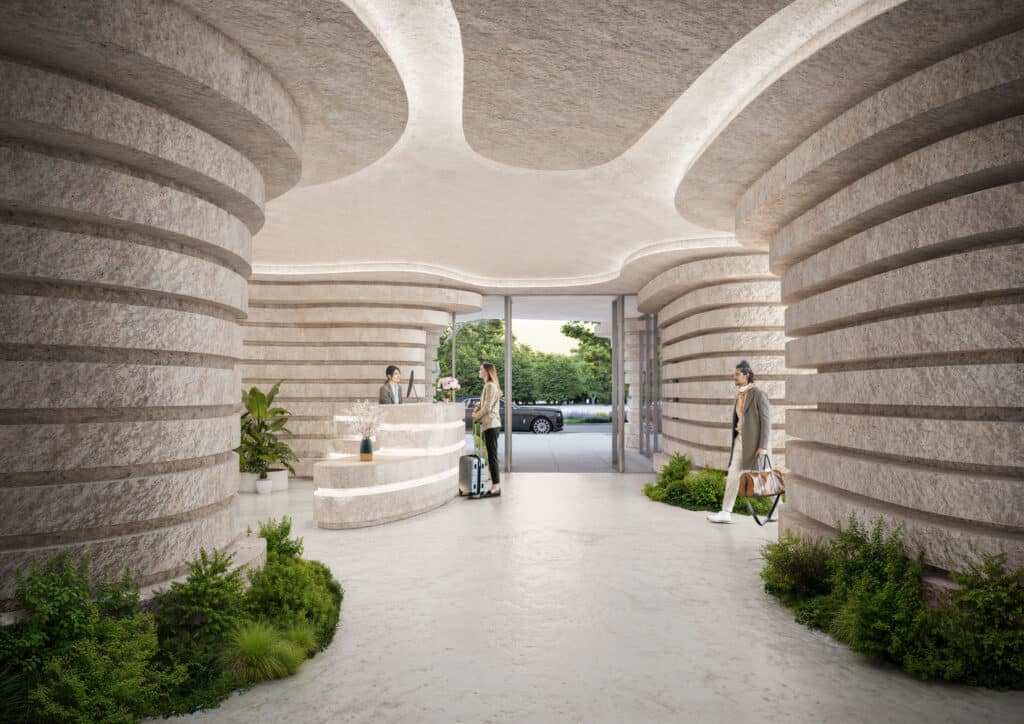
The facade draws from the geology of the Andes. Designers translated rock formations into a textured architectural language. Carved balconies create recessed niches across the elevation. Meanwhile, integrated greenery softens the mass and adds depth.
Vegetation appears at multiple levels, referencing plants growing within mountain crevices. Floor-to-ceiling glazing frames views toward the park and surrounding landscape. This strategy strengthens the relationship between interior spaces and the city. The approach highlights material expression within contemporary architecture and emphasizes natural building materials.
Compact Living and Shared Amenities
The tower includes 509 micro-apartment studios ranging from 21 to 36 square meters. These units address rising demand for flexible housing in central urban areas. As a result, the project aligns with evolving patterns in urban planning that prioritize density and accessibility.
Rooftop amenities include an outdoor swimming pool finished with a glass mosaic surface. Shared facilities also feature a wellness area, fitness center, private cinema, game room, and pet spa. Meanwhile, three commercial spaces activate the ground level. The mix of uses supports everyday life within a single structure and reflects ongoing trends in high-density buildings.
Market Response and Development Context
Most residential units sold before groundbreaking. This early demand signals strong market interest in compact living models. Therefore, the project mirrors global shifts toward smaller residential formats in central districts.
The tower forms part of a broader wave of international collaborations shaping Quito’s skyline. In parallel, Ecuador continues to attract attention within regional news covering large-scale construction and mixed-use development.
A Quick Architectural Snapshot
Location: Quito, Ecuador
Height: 125.8 meters
Floors: 32
Program: 509 micro-apartments, retail, amenities
Status: Completion expected in 2029
Concept: Andes-inspired facade with integrated greenery
✦ ArchUp Editorial Insight
The proliferation of micro-apartments in Quito reveals a significant shift in urban land valuation and demographic behavior. As central business districts face rising land costs, developers respond by shrinking private square footage to maximize unit yield per floor plate. This architectural strategy prioritizes high-density living over traditional residential formats to align with the financial realities of modern urban cores. The inclusion of extensive shared amenities such as pet spas and cinemas is not a luxury choice, but a functional necessity to compensate for the lack of internal living space. Consequently, the building serves as a vertical ecosystem designed for a transient workforce that values proximity to transit over domestic scale. This project is the logical outcome of escalating urban density, the commodification of vertical space, and the shrinking footprint of modern domestic life.