V&A East Museum Opens in Stratford as Landmark for London’s Olympic Legacy

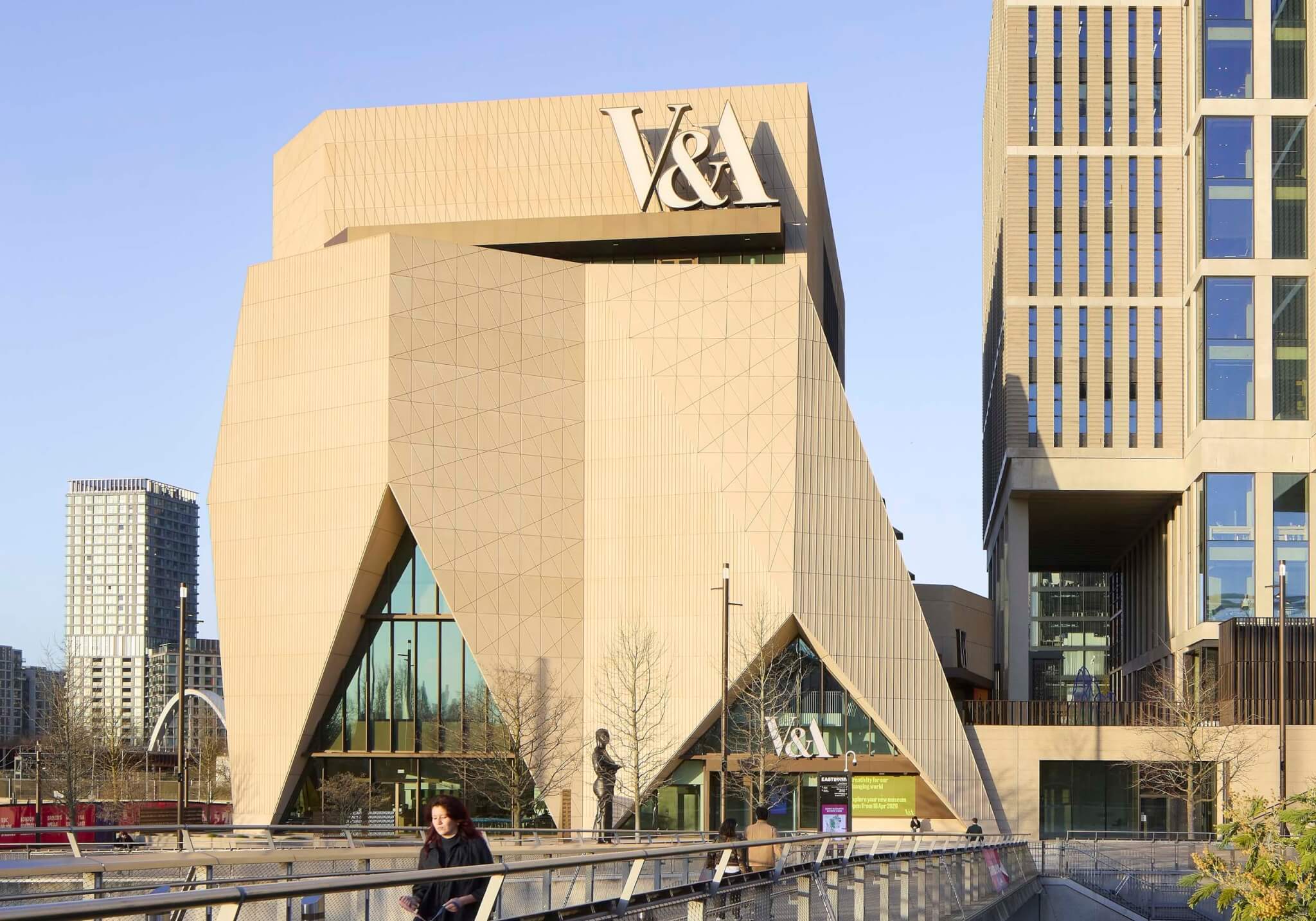
V&A East Museum has opened in Stratford, East London, as part of the East Bank cultural district. The project completes a post-Olympic vision for new public institutions in the area. It aims to engage local communities while redefining contemporary museum architecture in the UK.
A Cultural Anchor in Post-Olympic London
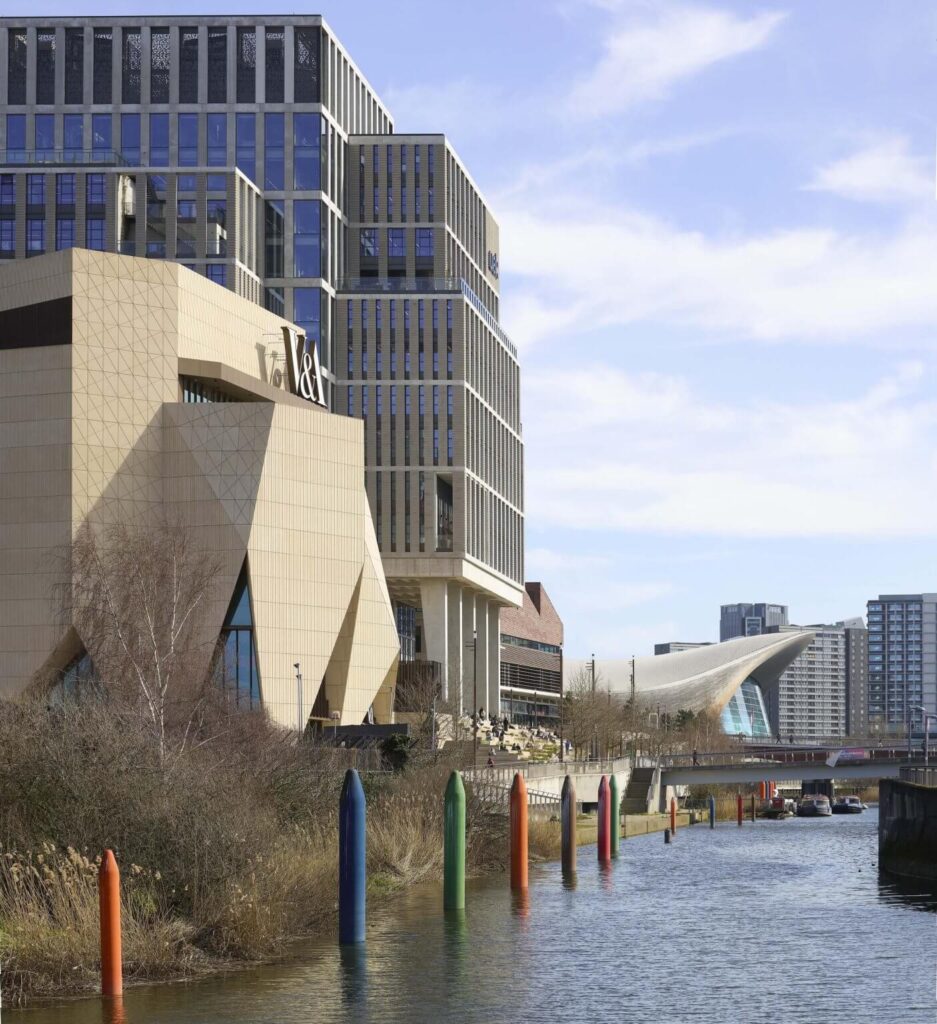
The museum stands within East Bank, a waterfront cluster of cultural and educational buildings developed after the 2012 Olympics. The district forms a key element of London’s long-term urban planning strategy for Stratford. However, the Olympic legacy has faced criticism over housing delivery and affordability.
Meanwhile, V&A East joins a wider group of public buildings designed to activate the former Olympic Park. The museum seeks to shift attention from retail-led development toward culture and civic life. Therefore, it positions itself as both a neighborhood resource and a metropolitan destination.
Folded Concrete Facade Defines the Architecture
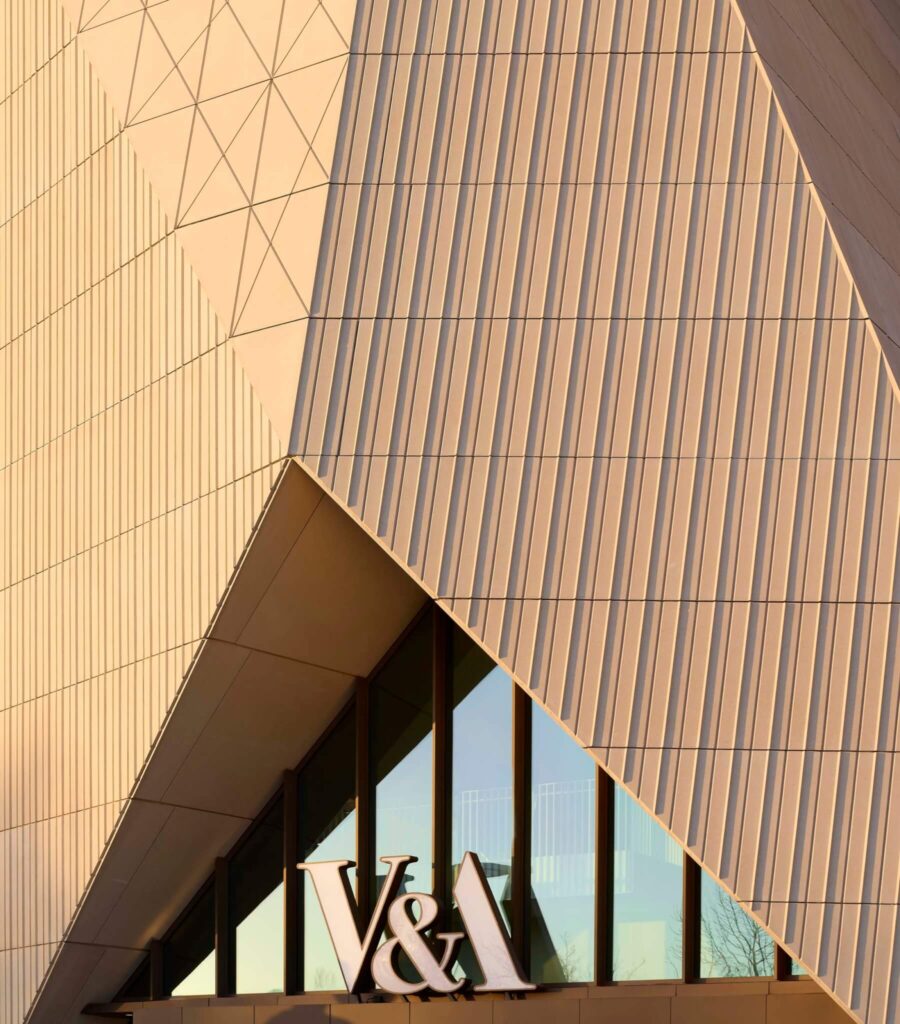
The museum features 479 unique precast concrete panels. These panels use natural sand and stone dust as primary building materials. Acid etching exposes the aggregate, creating a textured surface that resembles stone.
Deep folds shape the facade and reference the letters V and A. The panels span between columns, which reduces visible joints. As a result, the exterior reads as a continuous sculpted surface. The thickness of the walls allows integrated staircases and seating within the envelope.
This approach reflects a broader shift in civic architecture toward expressive yet durable forms. Moreover, the facade responds to adjacent institutional blocks along the curved waterfront.
Interior Circulation Inspired by the Street
The interior removes traditional entry barriers. Visitors encounter no ticket desks or security checkpoints at the threshold. Instead, a sweeping concrete staircase guides movement upward like an indoor street.
The staircase widens into seating platforms and connects gallery levels visually. This strategy supports openness while maintaining environmental control between exhibition zones. The permanent Why We Make galleries display over 500 objects across two floors.
The exhibition design draws from high streets and market displays familiar to local youth. Therefore, the project integrates spatial references from everyday life into its interior design. The museum emphasizes accessibility and public use over monumentality.
Redefining the Museum’s Civic Role
V&A East targets young residents in four East London boroughs. It prioritizes free access and flexible circulation. Meanwhile, the building responds to a city reshaped by Brexit, the pandemic, and economic pressure.
The project contributes to ongoing debates in architectural news about public investment after mega-events. It also reflects evolving expectations around inclusion and sustainability in cultural construction.
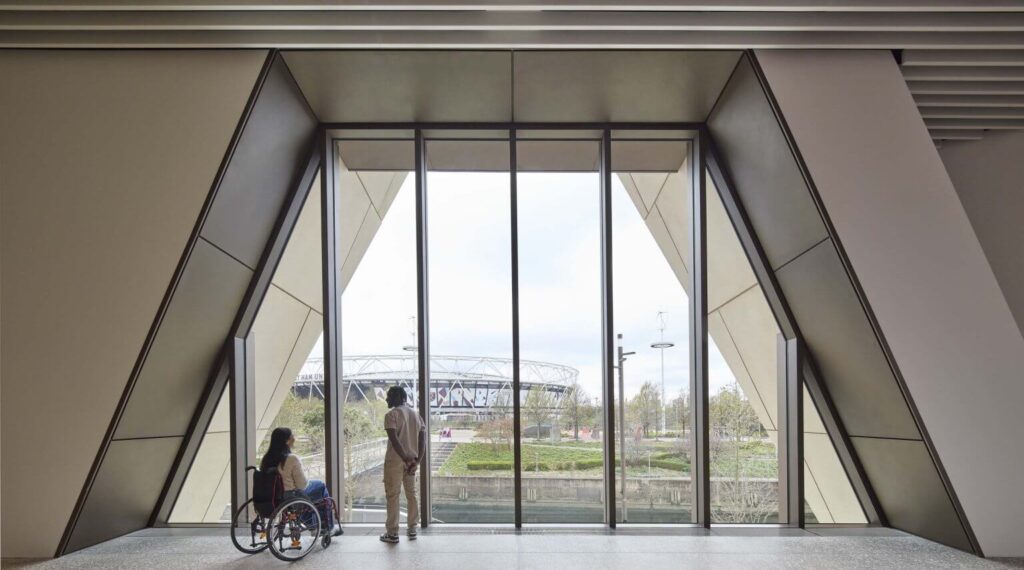
Rather than replicate classical imagery, the museum adopts a folded concrete language. Consequently, it signals a generational shift in how civic identity appears in contemporary London.
A Quick Architectural Snapshot
Location: Stratford, East London
Program: Public museum and cultural venue
Facade: 479 precast concrete panels
Concept: Folded envelope with integrated circulation
Focus: Accessibility, youth engagement, civic activation