
Queen Elizabeth II Memorial Approved for St James’s Park Despite Heritage Concerns

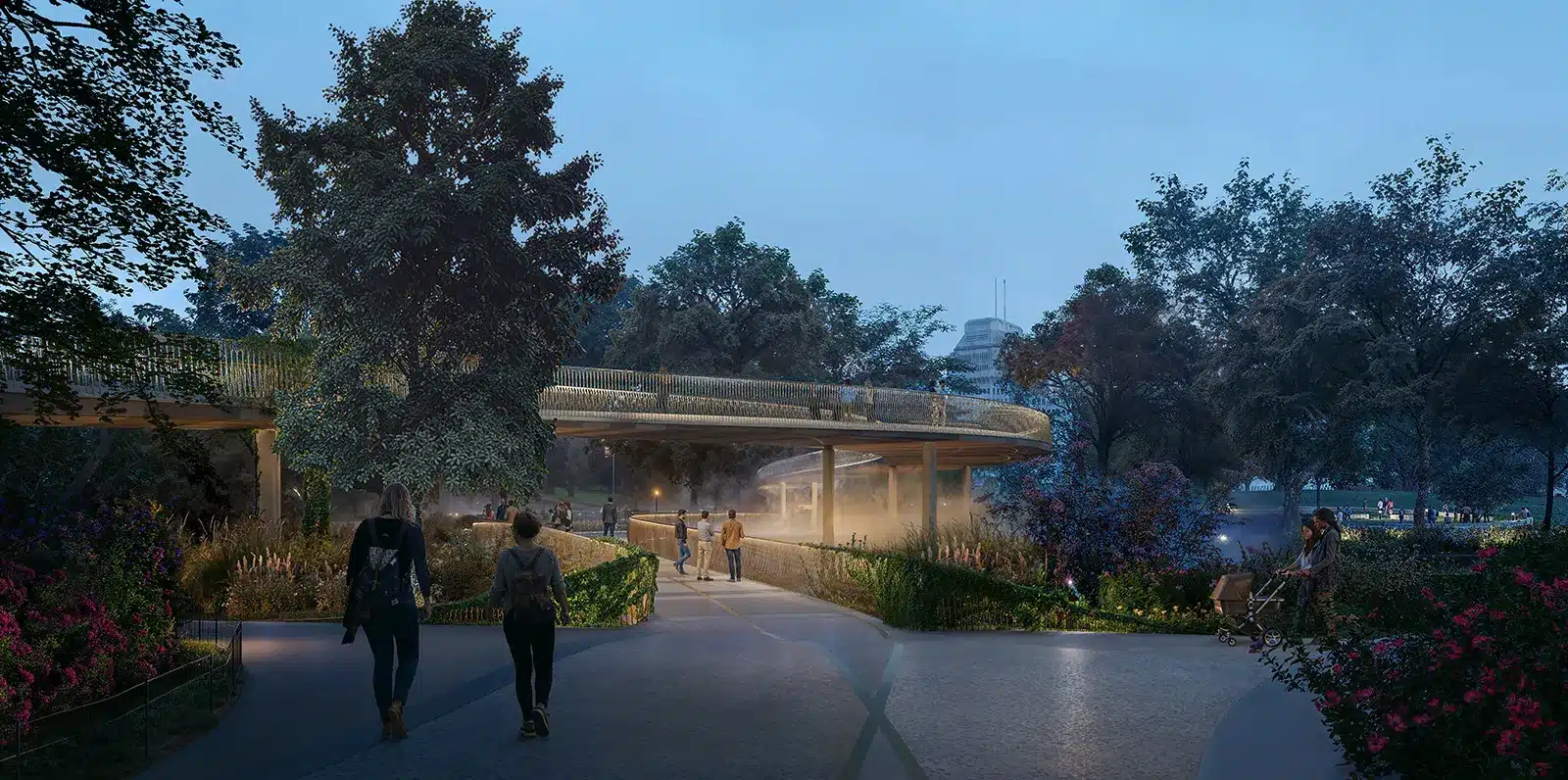
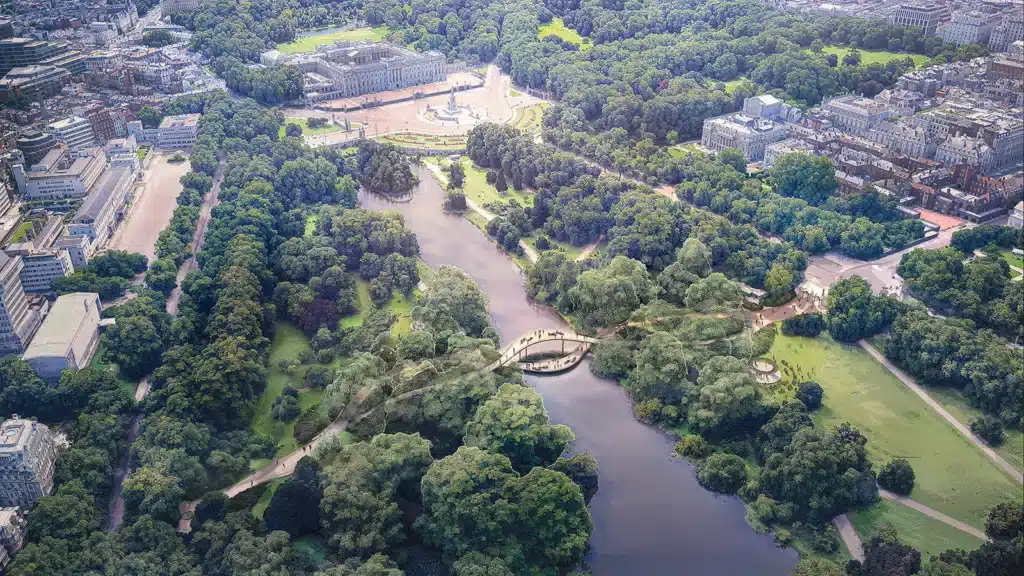
Westminster City Council has unanimously approved the national Queen Elizabeth II Memorial for St James’s Park in London. The architecture project includes a stainless-steel and cast-glass bridge, sculptures, and new landscaping. However, the April 7 decision came despite objections from local residents and heritage refinement requests from Historic England.
Memorial Design Sparks Heritage Debate
The memorial design evolved from the competition-winning scheme that initially featured an equestrian statue. The revised plans now show the late monarch standing on a plinth. Moreover, the project incorporates new building materials including stainless steel and cast glass for the bridge structure.
Historic England supported the proposal while raising concerns about integration with the Grade I-listed park. The heritage watchdog specifically questioned surface treatments and seating designs. Therefore, it recommended traditional-style benches to better harmonize with the existing landscape. The government body also suggested design simplification to ensure proper integration with the historic setting.
Local Opposition Highlights Urban Planning Tensions
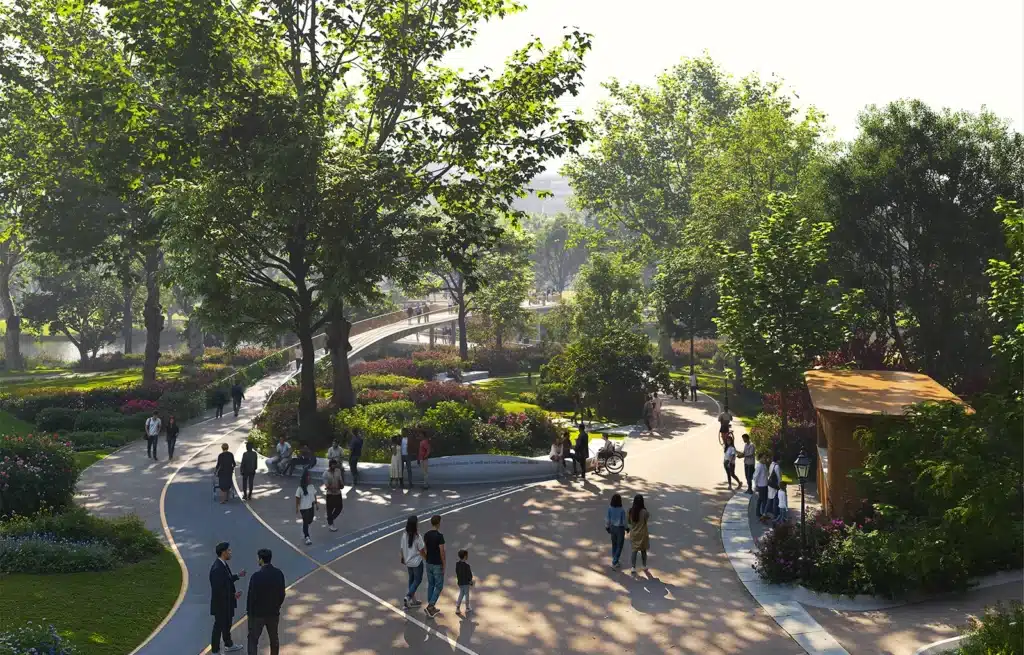
Residents groups opposed the scale and location of the memorial within the historic cities landscape. The Queen Anne’s Gate Residents Association warned the project would transform a tranquil green space into a tourist destination. Furthermore, opponents raised concerns about crowd management and potential anti-social behavior.
Committee members acknowledged these objections but cited national public benefit. They determined that improved accessibility and a wider bridge would outweigh heritage and biodiversity impacts. Meanwhile, the planning committee emphasized the memorial’s significance for the longest-serving British monarch.
Construction Details and Project Timeline
The collaborative team includes heritage specialists, landscape architects, and sculptors. Specific construction details remain pending, including final bench designs and bridge balustrades. The sculptures currently appear in figurative form at this planning stage.
The project emerged from a high-profile competition involving five shortlisted teams. Critics questioned the closed selection process that limited entries to established designers. However, analysts predicted this traditional approach would resonate with public expectations for memorial buildings.
The provisional budget ranges between £23 million and £46 million. The design references St James’s Park original principles, aiming to restore lost elements and create interconnected garden spaces. Therefore, the news signals a significant urban planning intervention in one of London’s most historic parks.
A Quick Architectural Snapshot
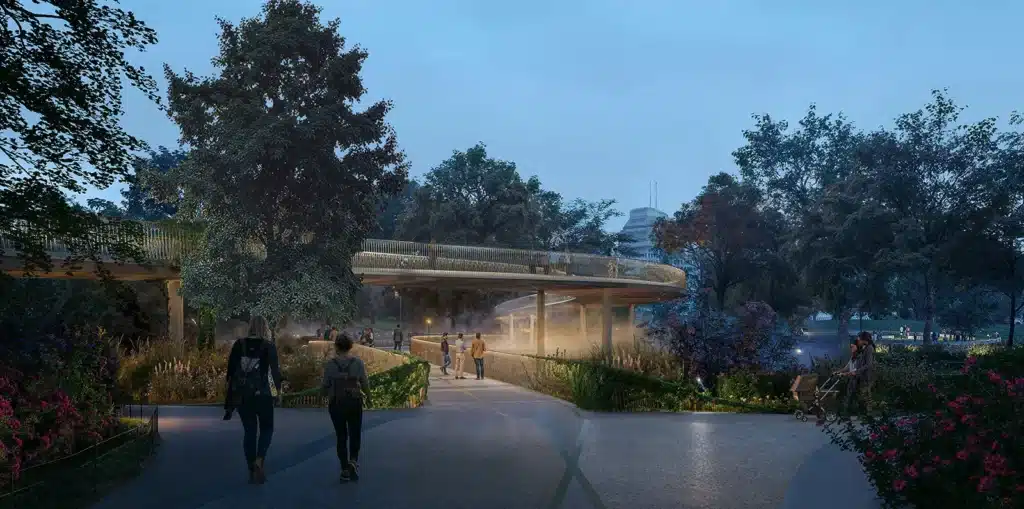
The Queen Elizabeth II Memorial represents a balancing act between contemporary architecture and historic preservation. Traditional memorial expectations meet modern accessibility requirements in a Grade I-listed setting. The project demonstrates ongoing tensions between heritage conservation and public infrastructure needs in historic cities.
✦ ArchUp Editorial Insight
The unanimous approval reveals a predictable pattern in national memorial commissions. Heritage bodies raise concerns then ultimately defer to political momentum. Local residents oppose large-scale interventions then watch committees prioritize symbolic value over neighborhood impact.
The closed competition structure guaranteed an establishment outcome. Limiting entries to proven firms eliminated risk but also excluded fresh perspectives. This approach reflects institutional anxiety about public criticism rather than genuine design exploration.
Budget ambiguity signals another familiar dynamic. A range between 23 and 46 million pounds suggests scope remains fluid despite planning approval. Final costs typically land at the higher end when national prestige becomes the justification.
The shift from equestrian statue to standing figure indicates committee influence over artistic vision. Memorial design increasingly responds to accessibility requirements and crowd management rather than commemorative intent.
This project is the logical outcome of institutional risk aversion, heritage compromise culture, and the perpetual tension between national symbolism and local livability.

★ ArchUp Technical Analysis
Technical and Documentary Analysis of the Queen Elizabeth II Memorial – St. James’s Park, London, United Kingdom:
This article presents an architectural analysis of the Queen Elizabeth II National Memorial as a case study in the tension between contemporary architecture and heritage conservation. To enhance its archival value, we would like to present the following key technical and design data.
Westminster City Council unanimously approved the project on April 7th, which includes a bridge made of stainless steel and cast glass, sculptures, and new landscape design within the Grade I listed St. James’s Park. The design evolved from the competition-winning scheme that featured a statue of the Queen on horseback, while the revised plans show the Queen standing on a plinth.
The initial budget ranges between £23 and £46 million, and the collaborative team includes heritage specialists, landscape architects, and sculptors. Historic England supported the proposal but expressed concerns about its integration with the park, recommending the adoption of traditional-style benches and a simplification of the design.
Local resident groups opposed the scale and location of the memorial, warning against transforming a quiet green space into a tourist destination, with additional concerns about crowd management. The design draws inspiration from the original principles of St. James’s Park, seeking to restore lost elements and create interconnected garden spaces, while improving accessibility and widening the bridge.
Related Insight: Please refer to this article to understand the context of modern architectural preservation:
Memorials in Historic Parks: Between Modernity and Heritage Conservation.



The original design of Queen Elizabeth on a horse would have been a fitting memorial to her majesty.
Regarding a glass bridge and all the gimmicky that goes with it is making the park into a Disney land fiasco just like the rill that was created for princess Diana.
✅ Official ArchUp Technical Review completed for this article.