Stella McCartney’s Scottish Highlands Home Nears Approval After Years of Controversy

A Remote Peninsula With Panoramic Views
The proposed home sits on a site known as Commando Rock. This private peninsula features a secluded beach and 270-degree coastal views. The architecture replaces a previous building permission granted in 2000 to a former owner.
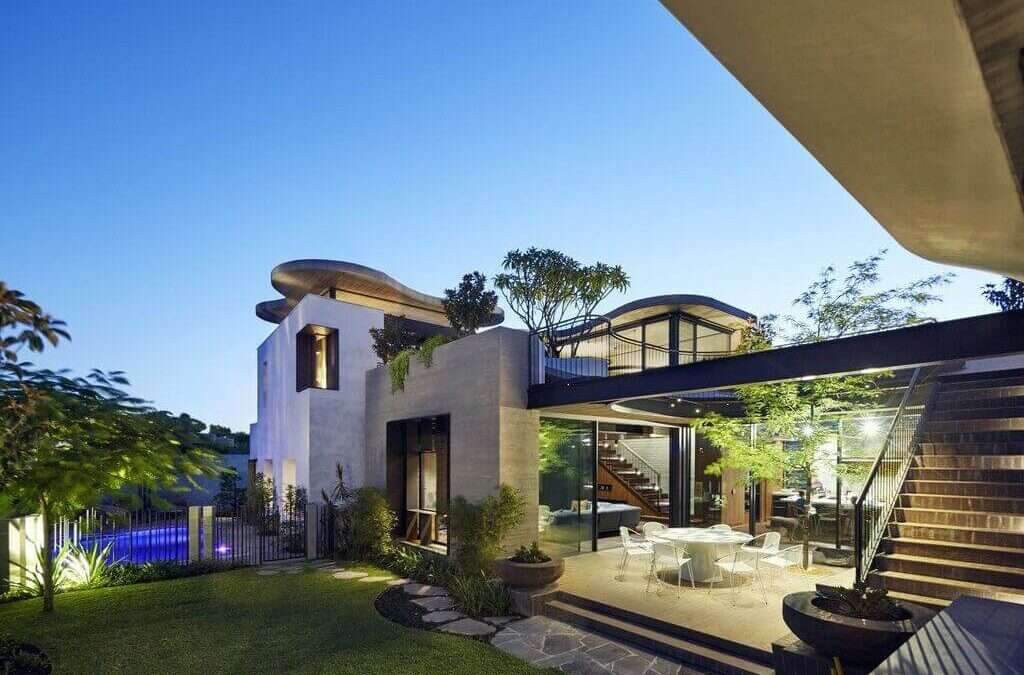
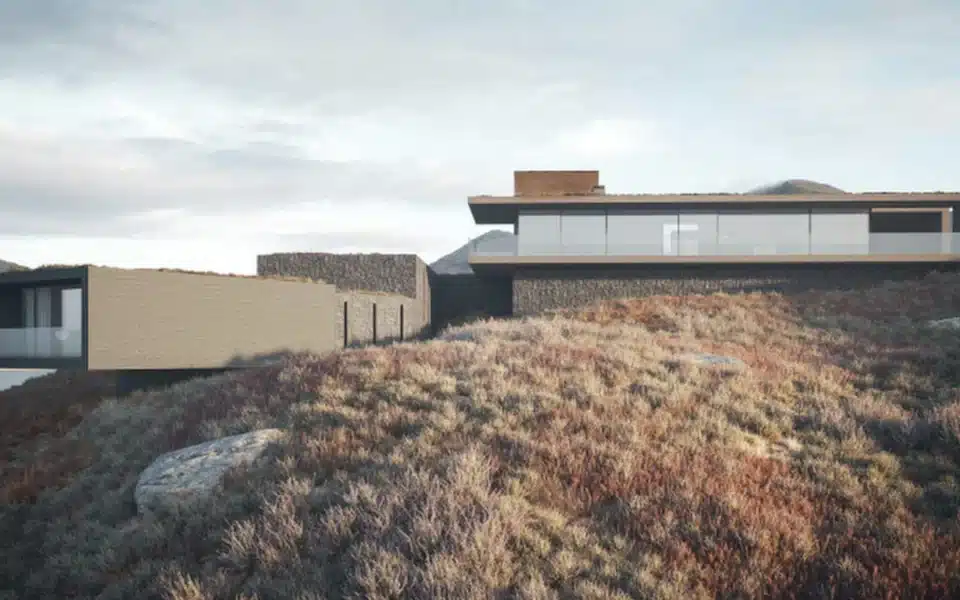
The contemporary design incorporates Scottish stone, concrete, stainless steel, and a green roof. These building materials aim to blend the structure with its natural surroundings. Designers intended the home to appear nearly invisible within the terrain. The application was submitted under the name of Alasdhair Willis. Reports estimate the project cost at approximately 5 million pounds.
Local Opposition Shapes the Design Process
The construction proposal has faced significant resistance since 2023. Highland Council received more than 50 objections from local residents. Critics described the initial design as a monstrous carbuncle on the landscape.
However, concerns extended beyond aesthetics. Residents questioned the large scale of the building. They argued that extensive glass and concrete conflicted with traditional Highland character. Moreover, objections highlighted potential impacts on beach access and local wildlife. Ancient trees and pine marten habitats drew particular attention.
Design Modifications Address Environmental Concerns
The project team revised plans to minimize ecological disruption. Updated designs now avoid damage to existing tree lines. EnviroCentre provided environmental reports supporting the modifications. Therefore, council officers shifted their position toward conditional approval in March 2026.
Meanwhile, local voices continue to demand stronger sustainability commitments. Community member Angus MacDonald called for more environmentally conscious approaches. This criticism carries particular weight given the homeowner’s public environmental campaigns. The news of potential approval has reignited discussions about celebrity developments in protected landscapes.
The final decision rests with Highland Council. Officers cite family use and sustainability features as supporting factors. Nevertheless, the approval remains conditional pending final review.
A Quick Architectural Snapshot
This remote Scottish home demonstrates how contemporary architecture navigates sensitive landscapes. The design balances modern aesthetics with environmental integration. Green roofs and local stone anchor the structure to its Highland context. Community input directly shaped the final approach to construction and site preservation.
✦ ArchUp Editorial Insight
This project reveals a recurring tension in rural development across protected landscapes. Wealthy individuals seek privacy and remoteness. Local communities demand preservation of traditional character and public access rights. Planning authorities attempt to balance economic investment against environmental protection.
The three-year approval process demonstrates how public objection mechanisms function in practice. Residents successfully pushed for design modifications. However, financial resources enabled the applicant to revise, consult, and persist through multiple review cycles. This dynamic favors well-funded applicants over local opposition.
The environmental credibility gap also emerges clearly here. Public sustainability advocacy creates heightened scrutiny for personal building choices. Community members expect alignment between stated values and construction decisions.
This project is the logical outcome of celebrity wealth seeking seclusion + planning systems that reward persistence and resources + public accountability for environmental messaging.