
Quintas do Lago: Architecture and Nature

Relationship between Architecture, Nature, and Urban Planning
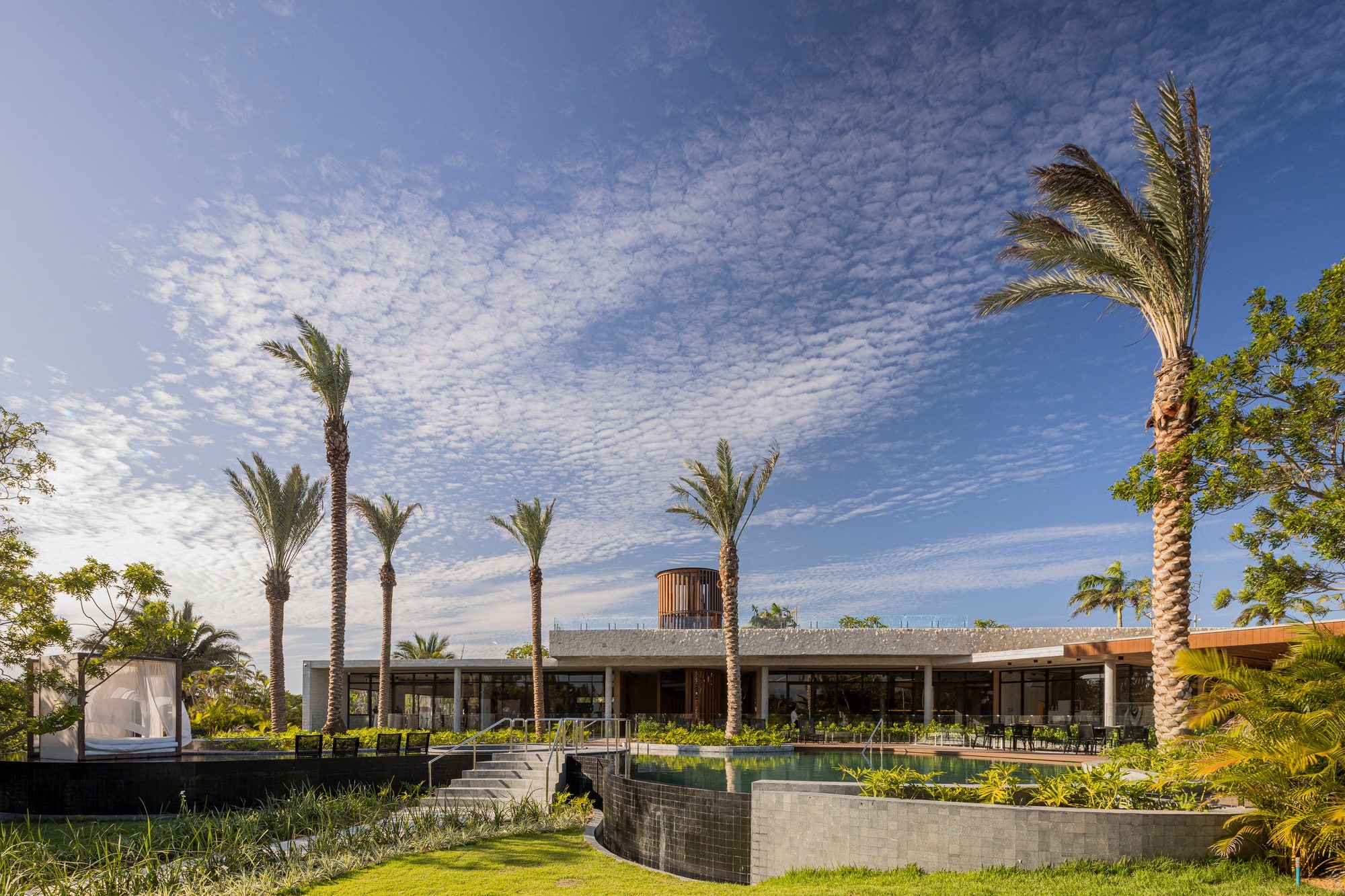
The Quintas do Lago Praia dos Coqueiros project is based on the study of the relationship between Architecture, the natural environment, and the urban context. The main challenge is to preserve the view toward the lake without the built mass blocking it or visually impacting it.
Spatial Organization on Two Levels
An architectural organization based on two levels was adopted to address this challenge. On the upper level, a linear plaza extends and ends at a viewing point toward the pier, directing both visual and functional movement toward the lake in a direct way.
Distribution of Spaces and Their Relationship with the Pool
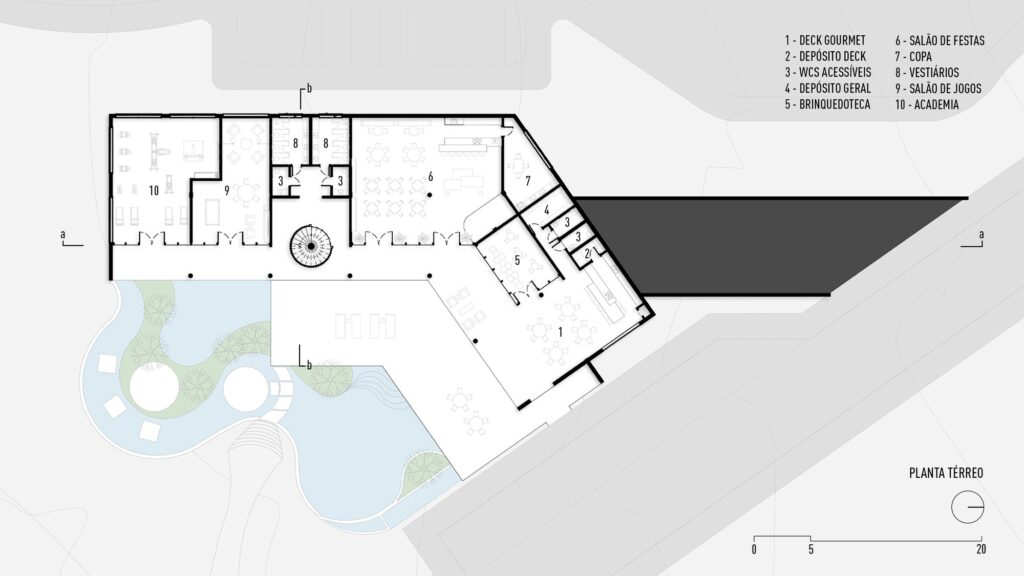
On the lower level, the shared spaces such as the barbecue deck, banquet hall, games room, gym, children’s room, storage, and restrooms are connected within a unified layout. These spaces are linked to a large organic-shaped infinity pool, enhancing the functional interconnection between the different activities.
| Category | Details |
|---|---|
| Architects | Estúdio Vinicius Macêdo, Novais Arquitetura |
| Area | 1185 m² |
| Year | 2025 |
| Photographs | Felipe Petrovsky |
| Manufacturers | Arkos Madeira Plástica, Equipe da Cor |
| Lead Architects | Vinicius Macêdo, Lucas Novais |
| Category | Hospitality Architecture |
| Coordination | Gabriel Napoleão |
| Technical Team | Lara Alves |
| Project Team | Amanda Sales |
| Landscape Design | Thiago Borges |
| Urban Planning | Plano Urb |
| Engineering & Consulting > Civil | Terrabrasilis |
| Engineering & Consulting > Structural | Qualitas Engenharia, Danúbio Costa Lagoa |
| Engineering & Consulting > Facilities | Ethos Engenharia |
| Engineering & Consulting > Lighting | Emanuel Cassiano |
| Engineering & Consulting > Other | Desconexo |
| City | Aquiraz |
| Country | Brazil |
Horizontal Massing and Building Materials in the Project Composition
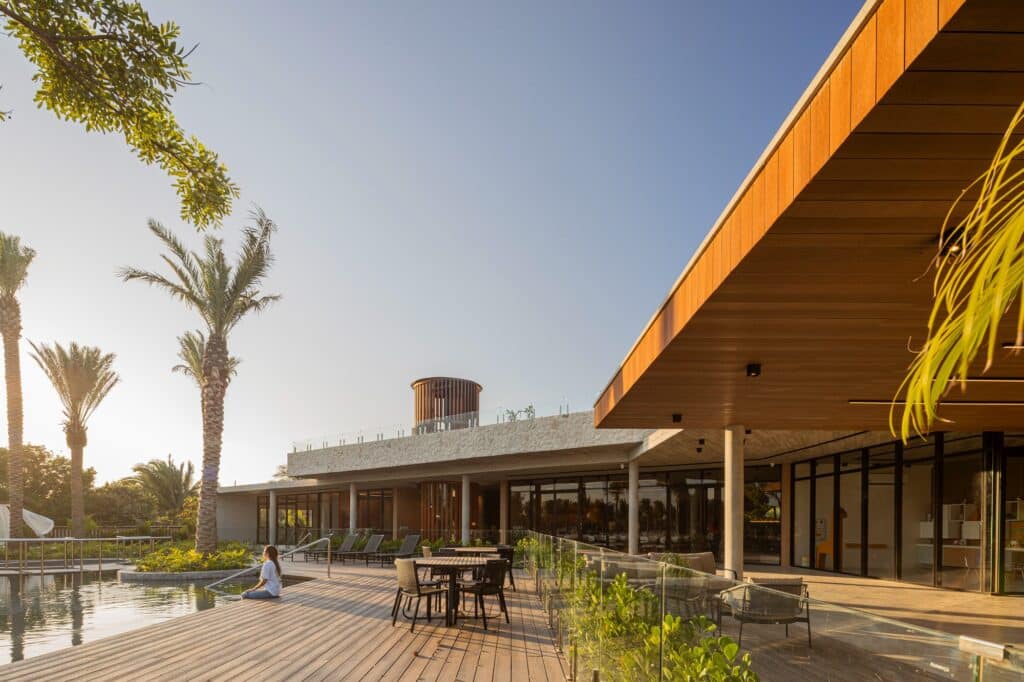
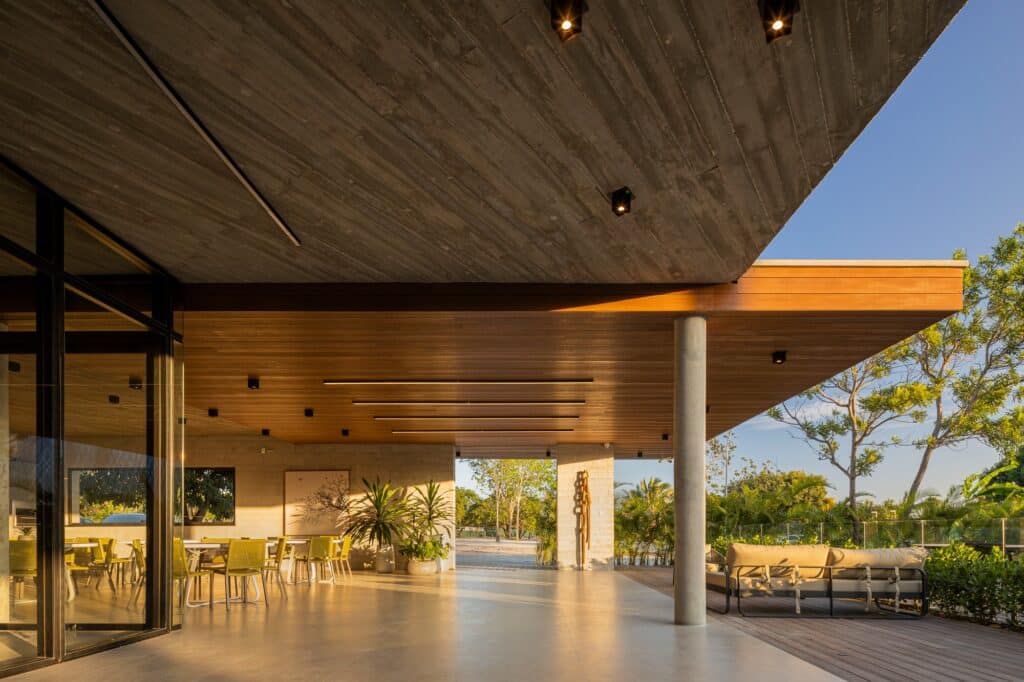
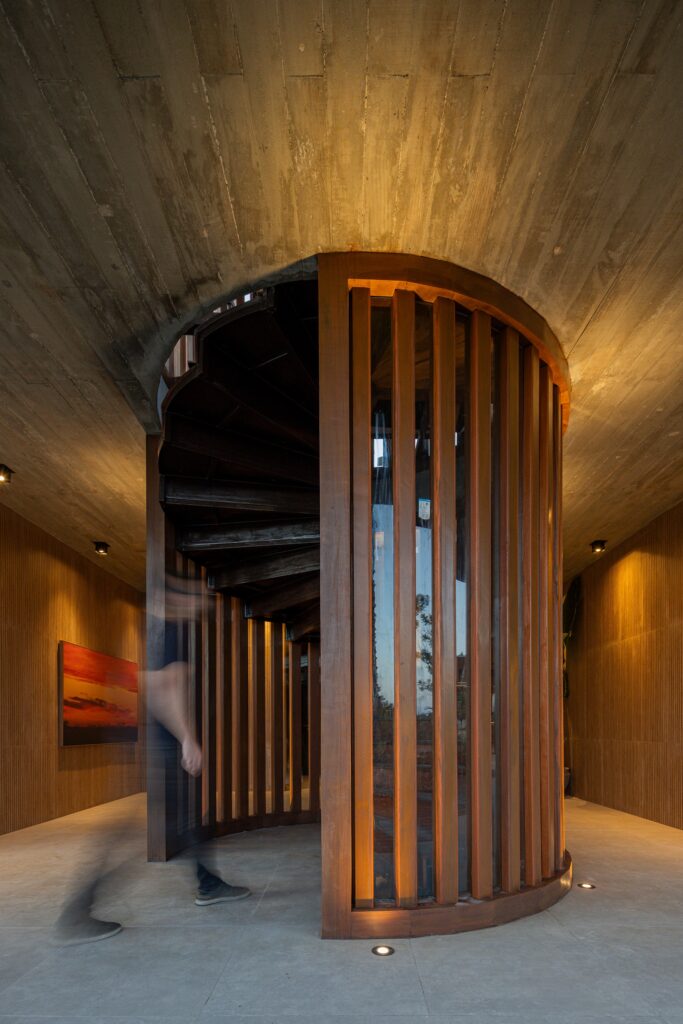
The identity of the project is defined by clear horizontal volumes and the use of natural raw materials. A concrete box forms the terrace, while stone walls help support the slope and connect the mass to its topographic context. A spiral staircase made of mesh wood and glass is also used as a connecting element between levels, playing both a visual and circulation role within the space.
Spatial Organization and Functional Relationships
The interior spaces are arranged according to an L-shaped layout, allowing functions to be defined while maintaining their interconnection. Within this framework, materials such as wood, stone, and concrete are used to define the character of each space and enhance the clarity of the overall organization without a sharp separation between uses. For more technical details, you can refer to Material Datasheets.
Quality of Interior Spaces and Natural Light
The banquet hall is dedicated as a gathering space, where warm materials and calm colors support the function of the place. Likewise, the games room is treated as a flexible, multi-use space, while the gym provides an open environment that relies on natural lighting, enhancing the integrated functional character of the interior spaces. This approach aligns with innovative Design strategies.
Visual Relationship Between Interior and Exterior Spaces
At the other end of the project, the children’s room, designed as a glass cube, is visually connected to the gourmet cooking deck, allowing adults to supervise children while using the space. The use of light colors and furniture with curved forms supports an environment oriented toward sensory play and free movement. At the same time, the deck extends toward the pool and the landscape view, enhancing the connection between interior spaces and external elements, while natural materials continue to visually link these environments. This integration is a key theme in many Projects.
Movement Organization and Connection to the Natural Landscape
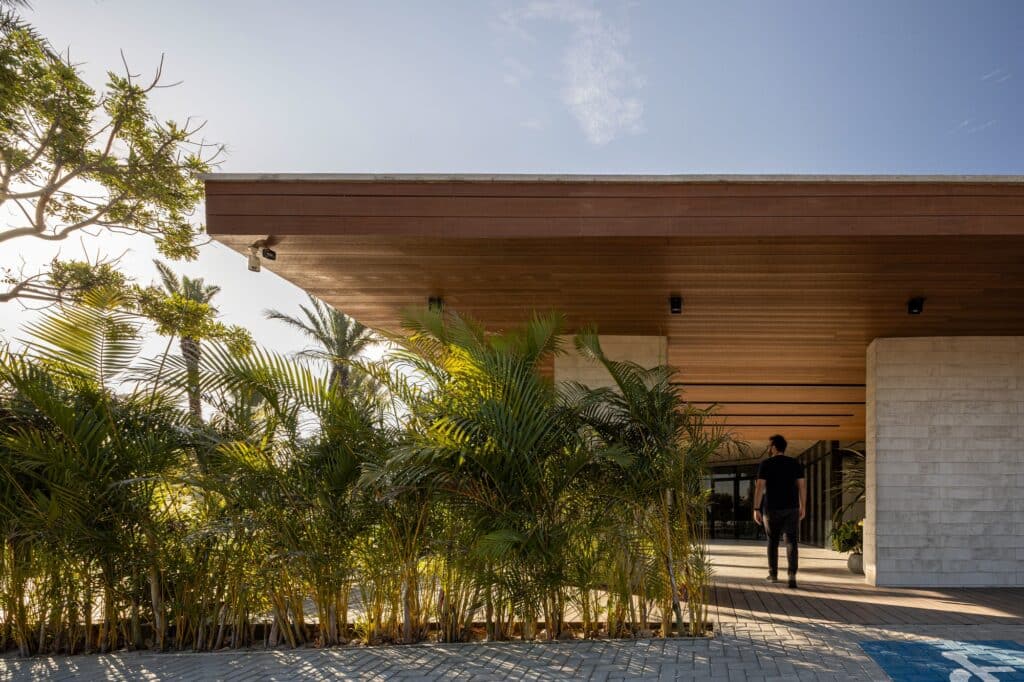
Access to the social level is based on a landscaped pathway that leads to meeting points connecting shared spaces, the pool, and the lake view. This organization links daily circulation with the surrounding natural elements, integrating the spaces into a single functional and visual sequence that defines the project’s relationship with the site. Understanding Cities and their landscapes is essential for such interventions.
✦ ArchUp Editorial Insight
The project results from a logic that transforms the waterfront into added real estate value, where regulations protecting sightlines toward the lake, along with constraints related to terrain leveling and risk management in water-adjacent areas, define the framework within which the spatial organization is formed. The two-level system operates as an organizational solution rather than a design decision: an upper linear platform directing movement toward a fixed viewing point, and a lower layer gathering shared programs around an organically shaped swimming pool. Materials, concrete, stone, and wood, are used as tools for distributing cost and reducing structural loads rather than as a purely aesthetic choice. The L-shaped layout and the glass volume dedicated to children regulate visual systems and daily operation, while pathways integrated with the topography become a structure of functional compliance, making the project a direct outcome of financing logic, regulations, and risk management. To explore similar case studies, visit the Archive or read the latest Architectural News. You may also find relevant insights in Research and Construction methodologies.

★ ArchUp Technical Analysis
Technical and Documentary Analysis of the Quintas do Lago Praia dos Coqueiros Project – Aquiraz, Brazil:
This article presents an architectural analysis of the Quintas do Lago project as a case study in exploring the relationship between architecture and nature in a coastal tourist context. To enhance its archival value, we would like to present the following key technical and design data.
The project has a total area of 1,185 square meters and was completed in 2025 in the city of Aquiraz, Brazil. The architectural organization is arranged across two levels: the upper level features a linear square leading to a viewpoint overlooking the lake, while the lower level houses the shared spaces (barbecue deck, events hall, game room, gym, kids’ room, storage, restrooms) connected to a large organic-shaped infinity pool.
The project’s identity is defined by clear horizontal volumes with a concrete box forming the balcony, stone retaining walls supporting the slope and anchoring the volume to its topographic context, and a spiral staircase made of laminated wood and glass serving as a connecting element between levels. The interior spaces are distributed in an L-shaped layout, with wood, stone, and concrete used to define the character of each space.
The kids’ room is designed as a glass cube visually connected to the gourmet cooking deck, featuring light colors and curved furniture. Access to the social level is via a pathway surrounded by dense tropical landscaping leading to meeting points that connect the shared spaces, the pool, and the lake view.
Related Insight: Please refer to this article to understand the context of modern architectural preservation:
Coastal Tourism Architecture: View Preservation Strategies and Integration with Nature.


✅ Official ArchUp Technical Review completed for this article.