

Redefining Architecture: How Portland Airport’s Design Prioritizes Human Wellbeing Over Aesthetics Alone

Architecture Between Form and Function: Evolving Toward Human Wellbeing
Architecture has never been free from duality. For over a century, designers have debated the tension between form and function between what a building should do and how it should look.
From Modernism to Postmodernism: Shifting Priorities
In the late 19th and early 20th centuries, the pendulum swung toward function with Modernism, stripping buildings of ornamentation in favor of logic and efficiency. The mantra “Form Follows Function” dominated, with neutral palettes and industrial materials defining the architectural landscape. Postmodernism pushed back, reasserting expression and identity, while High-Tech architecture celebrated systems and performance. In the digital age, advanced tools allowed architects to pursue pure form this time as spectacle.
Yet each phase revealed a paradox: when form dominates, users drown in visual noise; when function rules, spaces become sterile.
The New Shift: Architecture That Feels
In the last decade, a quieter approach has emerged neither strictly functional nor purely expressive. It prioritizes mood, rhythm, and human care. The question is no longer How does the building perform? or How does it look? but rather: How does it make people feel?
Portland International Airport: A Model of Architectural Wellbeing
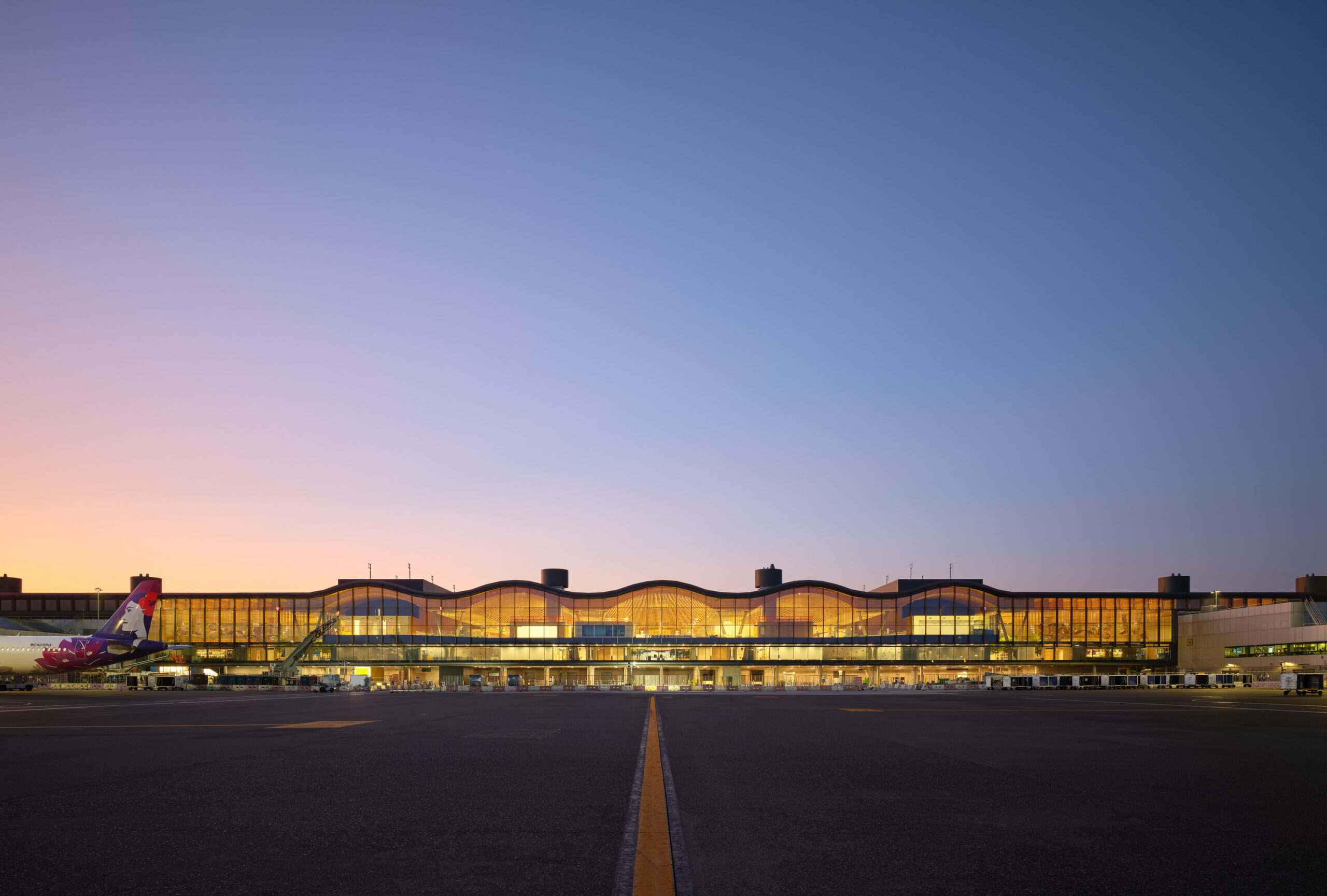
The expansion of Portland International Airport ldesigned by ZGF Architects exemplifies this shift. Here, form and function collaborate to serve human wellbeing without visual theatrics.
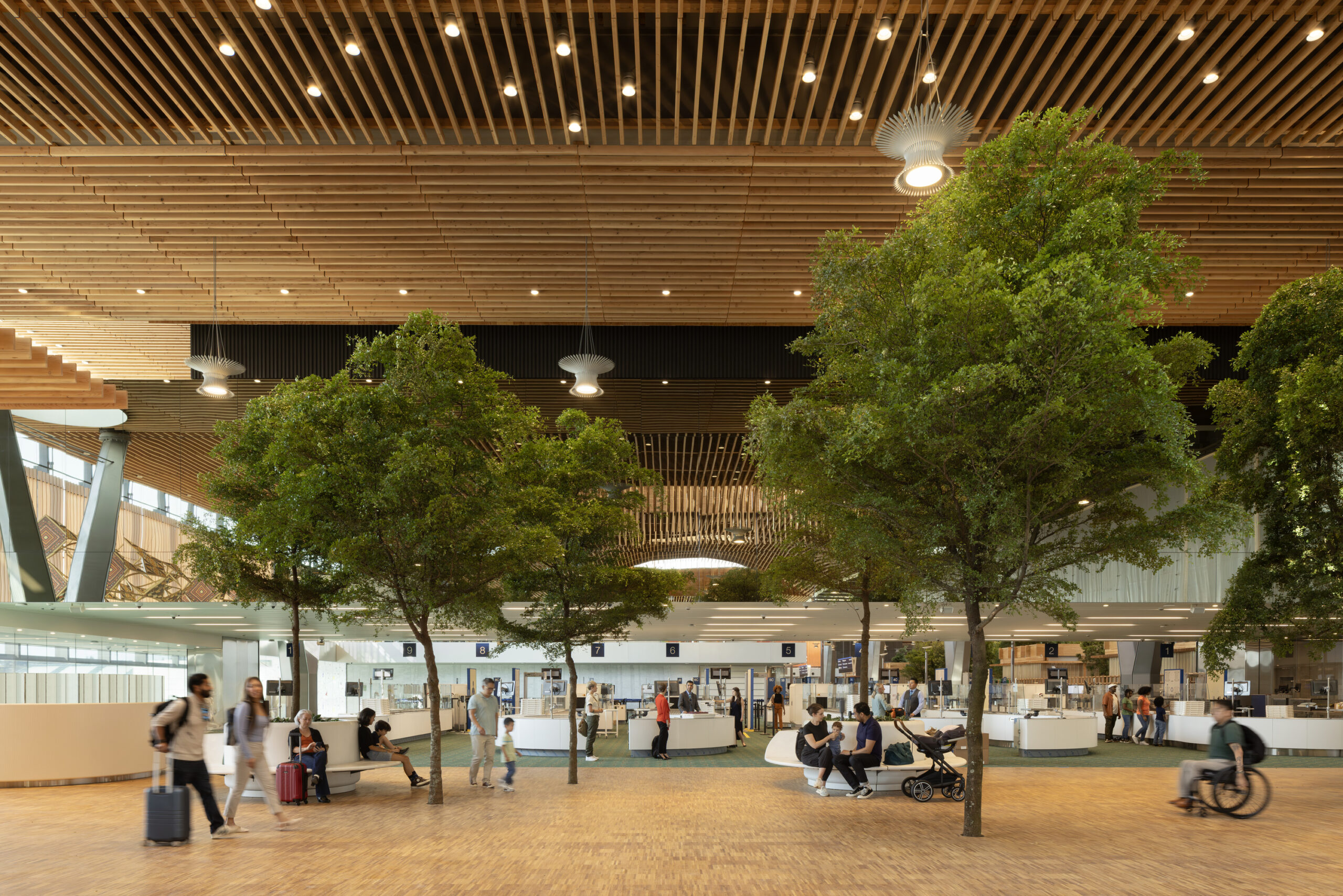
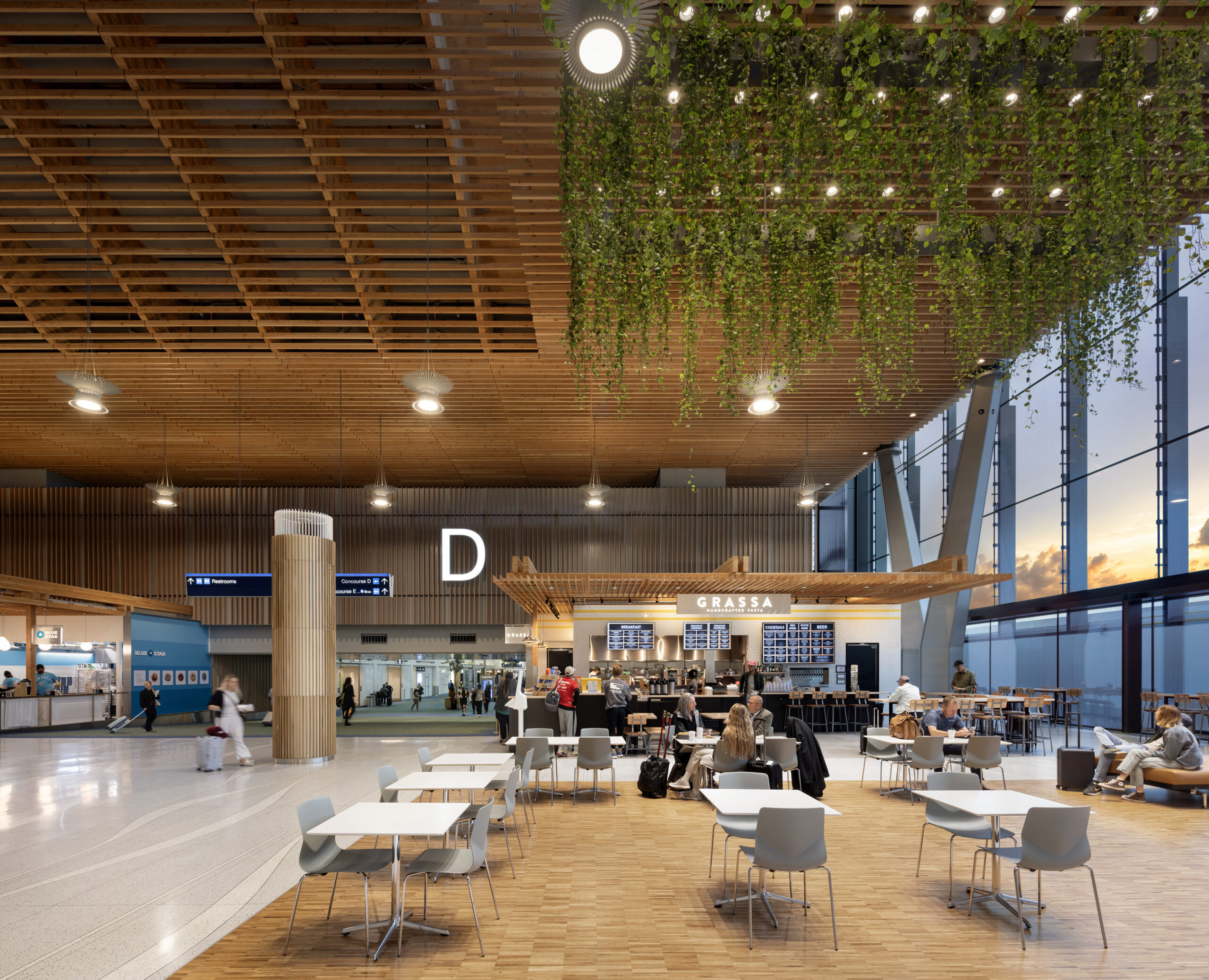
- Materials as Mood Regulators: A massive Glulam timber canopy softens noise, diffuses natural light, and adds visual warmth.
- Light as Wayfinding: Skylights between Y-shaped columns introduce gentle daylight, reducing visual clutter.
- Acoustics as Comfort: Wood and high ceilings dampen echoes, creating a serene soundscape.
- Layout as Human Experience: Open spaces with resting areas, inspired by public markets, ease congestion stress.
These choices don’t reinvent the airport they redefine its priorities. Efficiency is no longer the sole goal; clarity, calm, and mindful presence are equally vital.
Why This Shift Now?
Architecture mirrors how we live. Today, screens, notifications, and stress dominate spurring public spaces (like airports) to prioritize speed over presence. But designers now recognize that buildings directly impact our bodies and minds:
- Environments can lower stress or amplify it.
- Mental health and sensory fatigue are now part of the design brief.
- Public infrastructure where people can’t choose their surroundings demands empathy.
Redefining “Function”: From Performance to Restoration
“Function” no longer means mere efficiency it now includes comfort, clarity, and rejuvenation. Portland Airport illustrates this:
- Wood isn’t just aesthetic; it absorbs sound.
- Natural light guides, not just decorates.
- Open spaces allow breathing room, not just movement.
This approach turns architecture into a tool for healing, especially in high-stress spaces like airports.
✦ ArchUp Editorial Insight
In an era ruled by speed and digital overload, Portland Airport offers an architectural model that balances efficiency with wellbeing. The project succeeds in transforming a traditionally stressful environment into a sensory refuge, yet prompts a question: Can this approach scale without sacrificing operational efficacy? Still, it reminds us that architecture even in utilitarian spaces can speak a language of care, paving the way for a future where buildings are measured not just by what they do, but by how they feel.
Brought to you by the ArchUp Editorial Team
Inspiration starts here. Dive deeper into Architecture, Interior Design, Research, Cities, Design, and cutting-edge Projectson ArchUp.


