

Reichstag Dome in Berlin: A Comprehensive Architectural and Structural Study of the Parliament’s Transparent Symbol

Introduction
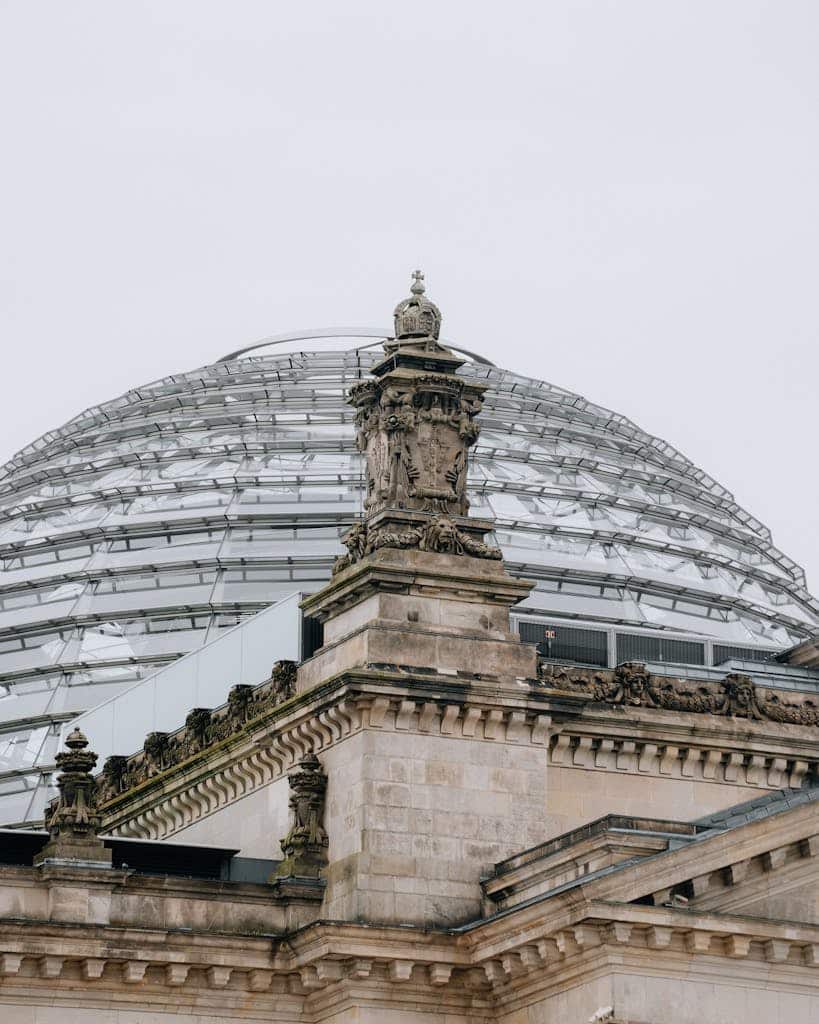
The Reichstag Dome in Berlin is an emblematic fusion of historic significance and modern Architecture. Designed by Sir Norman Foster, the glass dome connects the public with the parliamentary chamber, enhancing transparency and civic engagement. Its architectural design integrates advanced Construction systems and sustainable strategies, such as natural lighting and ventilation. This study examines the structural, functional, and historical aspects of the dome, highlighting material selection, environmental integration, and urban context, while considering the symbolic role of the dome in modern democratic governance.
Historical Background of the Building and Site
The Reichstag building, constructed in the 19th century, has witnessed political and structural transformations, including partial destruction during World War II and several restoration efforts. The dome, completed in 1999, represents a modern architectural intervention that respects the historic Buildings while providing new functional spaces for public interaction. Located in Berlin’s governmental district, the site influences circulation, visual connectivity, and integration with adjacent plazas, ensuring both urban context and accessibility considerations are met.
Core Design Vision of the Reichstag Dome
The design reflects transparency, Design clarity, and engagement. The spiral ramps inside the dome allow visitors to ascend above the parliamentary chamber, providing unobstructed views while symbolizing civic oversight. The dome acts as a mediator between historical architecture and contemporary engineering, employing a steel lattice and glass envelope that support structural integrity and aesthetic expression. The focus on public accessibility underscores the democratic function of the parliment.
Form and Spatial Function: Dome as a Functional Element
The dome’s parabolic geometry enables even distribution of structural loads while maintaining column-free spaces below. The central mirrored cone reflects daylight into the chamber, enhancing illumination and visitor experience. Visitors can circulate along ramps without obstructing each other, creating an efficient flow that merges functionality with symbolic transparency. The dome also serves as a landmark within Berlin’s urban landscape, establishing strong visual connections with surrounding Projects and civic spaces.

Circulation and Visual Flow: Principles of Sightlines and Security
The spiral ramp system establishes clear sightlines for visitors while adhering to strict safety regulations. Protective glazing and guardrails ensure secure movement, and advanced Construction planning allows controlled access during peak hours. Evacuation and emergency protocols were integrated into the design, ensuring safety without compromising the architectural experience. Digital simulation tools helped optimize circulation and visitor density, reflecting a holistic approach to Design efficiency.
Structural System and Techniques
The dome utilizes a combination of steel framing, laminated glass, and reinforced concrete. The lightweight lattice carries both dead and live loads efficiently while maintaining transparency. Digital modeling and modular prefabrication techniques ensured precision in assembly and integration with the existing historic structure. The mirrored cone at the center directs daylight into the chamber, demonstrating advanced understanding of Construction mechanics and structural behavior.
Materials and Facades
Material selection balances Sustainability, durability, and visual clarity. Laminated glass filters sunlight while providing thermal insulation, and steel components support the structure without heavy visual obstruction. Reflective surfaces maximize daylight use, reducing energy consumption. The interaction of materials with natural light enhances both functionality and aesthetic appeal, contributing to the dome’s role as an architectural and cultural icon.
Natural Lighting and Ventilation
Passive environmental strategies dominate the dome’s performance. The mirrored cone reflects sunlight into the chamber, reducing reliance on artificial lighting, while ventilation shafts allow natural airflow. These strategies optimize Building Materials performance, enhance visitor comfort, and ensure ecological efficiency. The integration of daylight and ventilation demonstrates Foster’s commitment to environmentally responsible Architecture.

Analytical Table: Dome Elements and Sustainable Design Comparison
| Element | Function | Material | Sustainability | Functional Performance |
|---|---|---|---|---|
| Central Cone | Reflect daylight | Mirrored Glass | Reduces artificial lighting | Excellent light distribution |
| Steel Structure | Dome support | Steel | Durable and recyclable | Provides stability and load-bearing capacity |
| Exterior Glass | Transparency and insulation | Laminated Glass | Thermal insulation and light filtering | Clear visibility, reduces excess heat |
| Spiral Ramps | Visitor circulation | Concrete & Steel | – | Ensures smooth and safe movement |
| Ventilation Shafts | Air exchange | Metal | Natural ventilation | Improves thermal comfort |
Interaction Between the Dome and Surrounding Public Space
The dome integrates with Berlin’s public plazas, streets, and civic pathways, encouraging pedestrian interaction. Its elevated ramps create visual and physical connections to surrounding Cities, facilitating public engagement. The architectural design maintains transparency and openness, establishing the Reichstag as a symbolic civic interface while respecting the historic urban fabric.
Environmental Considerations and Sustainability
The dome incorporates energy-efficient strategies, such as Sustainability-oriented glazing, passive ventilation, and daylight optimization. Material choices minimize maintenance while ensuring longevity. These sustainable strategies align with contemporary architectural standards and enhance the building’s environmental performance, demonstrating how historical Buildings can adapt to modern ecological requirements.

Modifications and Engineering Updates Over Time
Since its completion, the dome has undergone periodic technical updates, including improvements in glazing, ventilation systems, and lighting controls. These interventions maintain structural integrity and enhance Design performance. The integration of modern Construction technologies ensures the dome remains functional, safe, and sustainable, without compromising its historical context.
Architectural Evaluation Approaches
The dome is assessed through functional and aesthetic lenses. Functionally, it ensures efficient circulation, natural lighting, and ventilation. Aesthetically, the dome reinforces the symbolic openness of the Parliament. Evaluation metrics include structural stability, visitor experience, energy efficiency, and visual impact, confirming its significance in contemporary Architecture.
Engineering Challenges in Construction and Maintenance
Challenges included integrating a modern steel and glass dome onto a historic Building, ensuring safety, and maintaining visual transparency. Modular fabrication and precise assembly techniques minimized errors. Long-term maintenance strategies were embedded in the design, allowing easy access to structural and environmental systems.

The Dome’s Role in Enhancing Access and Transparency
By connecting visitors physically and visually with the parliamentary chamber, the dome embodies principles of transparency and democratic accessibility. Its design encourages public engagement while providing controlled Architectural Access to sensitive areas, symbolizing the openness of governmental processes.
Digital Techniques in Simulation and Architectural Analysis
Digital modeling tools, including BIM and parametric analysis, were utilized to simulate structural loads, daylight distribution, and circulation patterns. These tools ensured precise integration of new Construction elements with the historic structure, optimizing performance, safety, and visitor experience.
Thermal Comfort and Indoor Environmental Quality
The dome ensures thermal comfort through passive strategies and careful Building Materials selection. Reflective surfaces, ventilated spaces, and thermal mass properties contribute to maintaining stable indoor temperatures while optimizing energy efficiency.
Conclusion
The Reichstag Dome exemplifies the integration of historical and modern Architecture, engineering innovation, and sustainable strategies. It achieves transparency, civic engagement, and functional efficiency while respecting Berlin’s urban fabric. The project demonstrates how Design, Construction, and material selection converge to create an iconic, functional, and socially meaningful architectural intervention.
✦ ArchUp Editorial Insight
The Reichstag Dome in Berlin, with its spiraling glass structure, embodies the High-Tech Architecture style, acting as a Postmodern intervention aiming for transparency and democracy by creating a transparent Spatial Dynamics above the parliamentary chamber. The core Functional Innovation lies in the central mirrored cone, which reflects daylight down to the deliberation hall while serving as an essential part of the passive Natural Ventilation system. However, architectural criticism raises questions about the Contextual Relevance of this stark, modern glass Material Expression juxtaposed against the historic classical facade, alongside the operational challenge of ensuring constant cleanliness and thermal control under fluctuating weather conditions, despite the documented Sustainability features. Nonetheless, this Architectural Ambition succeeded in transforming a governmental rooftop into a unique landmark and a visual symbol of open access to the political process.
A deeper Architectural Discussion within modern Architecture explores how innovative Design and advanced Construction methods reshape global Projects in the pursuit of sustainability and human-centered environments.




ArchUp Editorial Management
The article provides a comprehensive analysis of the symbolic and technical dimensions of the Reichstag Dome, with exceptional focus on the relationship between architectural transparency and democratic participation. To enhance its archival value, we would like to add the following technical and structural data:
We would like to add that:
· Structural Data: 1,200-ton steel structure with 3,400 structural elements, 40-meter diameter and 23.5-meter high dome, with snow load capacity up to 750 tons
· Optical Systems: 360 movable mirrors in central cone, automated solar tracking system, achieving 80% natural lighting in parliamentary hall
· Advanced Materials: 24 mm thick double insulating glass with spectrally selective coating, and 0.7 W/m²·K thermal transmittance
· Environmental Systems: Natural stack ventilation with 3 air changes/hour, 92% heat recovery, and 65% reduction in energy consumption
Related Link:
Please review for a comparison of contemporary glass dome techniques:
[Transparent Dome Engineering: Designing Sustainable Light-Filled Spaces]
https://archup.net/guggenheim-bilbao-engineering-analysis/