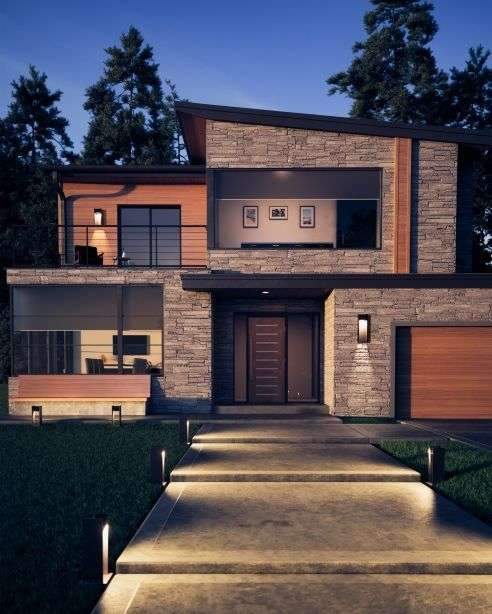
RENEWABLE ENERGY IS USED TO HEAT AND COOL BUILDINGS AND ECOPACT CONCRETE

IN WHAT MANNER DOES THERMAL CONCRETE ACTIVATION (TCA) OCCUR?
Utilizing renewable energy frequently entails relying on on the sun and wind. However, the sun doesn’t shine at night, and the wind doesn’t always blow, so they can’t always supply enough energy to keep structures running. Therefore, efficient energy storage will be needed to make the switch to 100% renewable energy. One of the best ways to do that is with thermal concrete activation (TCA) systems.
TCA systems are easy and inexpensive to set up. Concrete is already well-known as the preferred building material worldwide. It turns out that concrete is a superb heat conductor and store.
If concrete load-bearing components are cleverly built to store thermal energy, they can perform this additional function. Large-scale concrete components (such as ceilings and floor slabs) can have pipes installed throughout the building, via which warm or cool water can be directed as needed. To put it simply, the system pre-charges buildings with energy that may be kept and released as needed for heating and cooling, meeting their energy needs continuously. In reality, using cheap storage combined with renewable energy significantly lowers people’s energy expenses and consumption.
The best part is that this approach is very scalable because, in terms of building, handling, and supply chain, few materials are likely to be as affordable, accessible, and straightforward to utilize as concrete.
ECOPACT’S GREENING OF TCA
In various regions of the world, TCA is an established and booming technology. TCA can significantly contribute to the
decarbonization of cities when used in conjunction with smart design and the usage of Holcim’s line of green concrete, ECOPact. Which has a carbon footprint that is between 30% and 100% lower than ordinary concrete. It may successfully speed up the phase-out of fossil fuels in the built environment, lower household energy expenses, and help keep housing costs affordable. It is also cost-effective, energy-efficient, and environmentally beneficial.
More on INJ Architects: