Reuse better: this gadget utilizes infrared light to identify plastic parts

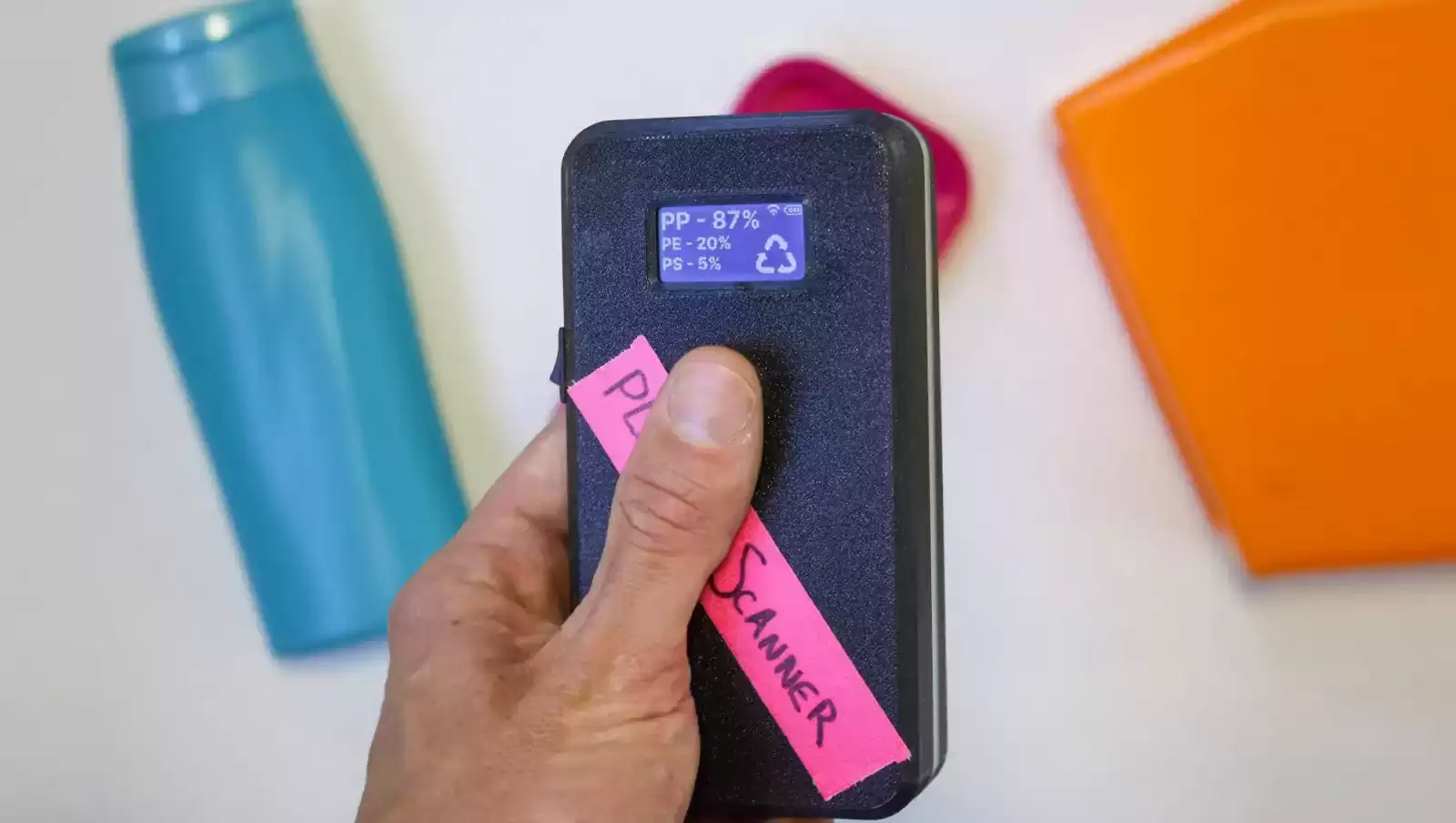
The Plastic Scanner is the current year’s Maintainability Champ of the James Dyson Grant.
Just 16% of plastic waste makes new plastics; with 40% in landfills, 25% to burning, and 19% in waste. Research has seen that 94% of Americans support reusing and 74% say it should be the first concern. However, just around 35% of individuals reuse.
Plastic is a lightweight, safe, and promptly accessible material that can make enduring, tough items. It has an awful standing since it is generally not recyclable. Thus, winds up in landfills, or more regrettable on the oceanfront or in our seas.
Nonetheless, with the right innovations, we can reuse plastics effectively at end of life and changed into new items. Which themselves are dependable and solid.
The test is recognizing we can reuse plastic in the right manner, rather than shipping it off landfills. The innovation that exists however is costly and intriguing. With more noteworthy accessibility of plastic distinguishing proof considerably we can reuse more plastic more successfully.
This Scanner is a handheld gadget that when held against plastic will let the client know what materials it’s produced using, utilizing infrared light to identify the plastic parts.
Jerry is an individual from Valuable Plastic, an association that expects to lessen plastic waste. Through his work for the association, he has seen the adverse consequence of plastic contamination direct and the bottlenecks caused when plastic isn’t distinguished and arranged in the reusing system. All over the planet, quite a bit of this cycle is by hand which requires some investment.

Features of Plastic Scanner
Jerry has seen fruitful innovation utilized in enormous industrial facilities in the Netherlands where infrared reflections help with arranging. This is a fundamental stage for guaranteeing the recycling process appropriately. Jerry’s central goal has been to make this innovation accessible for everybody all over the planet so they can reuse it better.
Jerry fostered the versatile plastic scanner utilizing close infrared spectroscopy, an innovation that can order over 75% of the plastics utilized in day-to-day existence. The gadget fills in as an open-source project, in which you can obtain and favricate its parts locally. The Plastic Scanner accordingly serves to accurately isolate plastics for better quality finished results for reuse.
The venture utilizes the open-source GPL-v3 permit, and that implies that outsiders can utilize the undertaking; given that this right is additionally given to other people and the author(s) are referenced. The Plastic Scanner expands upon Armin Straller’s ReReMeter project (the plan Jerry utilized as a beginning stage), by applying the innovation in a versatile structure. This plan was the reason for Jerry to ultimately make this Scanner into an unmistakable item by constantly creating and further developing it with. For instance, a scaled-down PC, battery, screen, button, and the lodging of the last model.
Jerry discovered that much plastic entering our seas comes from low and center pay nations. It’s his main goal to reuse drives in these countries with the minimal expense and convenience of this Scanner. During advancement, Jerry talked with recyclers from India, Indonesia, Kenya, and Curacao; in order to guarantee his model was reasonable for end clients.
The test is guaranteeing that we can reuse the plastic to keep away from it going to the landfill. Therefore, it could place this information into everybody’s hands.