Ricupaglia: Rural Farmhouse with Terracotta, Stone, and Concrete

Context and Location
Located in the small village of Montiano, central Italy, Ricupaglia sits on a hill overlooking a vineyard in the heart of the Tuscan countryside. Originally built in the 1950s using stone and volcanic tuff, the farmhouse retained many of its vernacular elements. Local architects Valeria Presicci and Carlo Pantanella D’Ettorre were commissioned to renovate the structure, blending traditional rural character with contemporary spatial solutions.
Respecting the Rural Heritage of the Farmhouse
The original layout adhered to traditional Tuscan farmhouse principles:
- Ground floor: stables and cellars
- Upper floor: farmer’s residence
- No internal connection between the two levels
The architects maintained this rural essence but reinterpreted it for modern living. They introduced an internal concrete staircase, improving functionality while preserving the external stair as a sculptural nod to the home’s history.
Material Palette and Architectural Language
Terracotta, stone, and concrete define the interior’s material language:
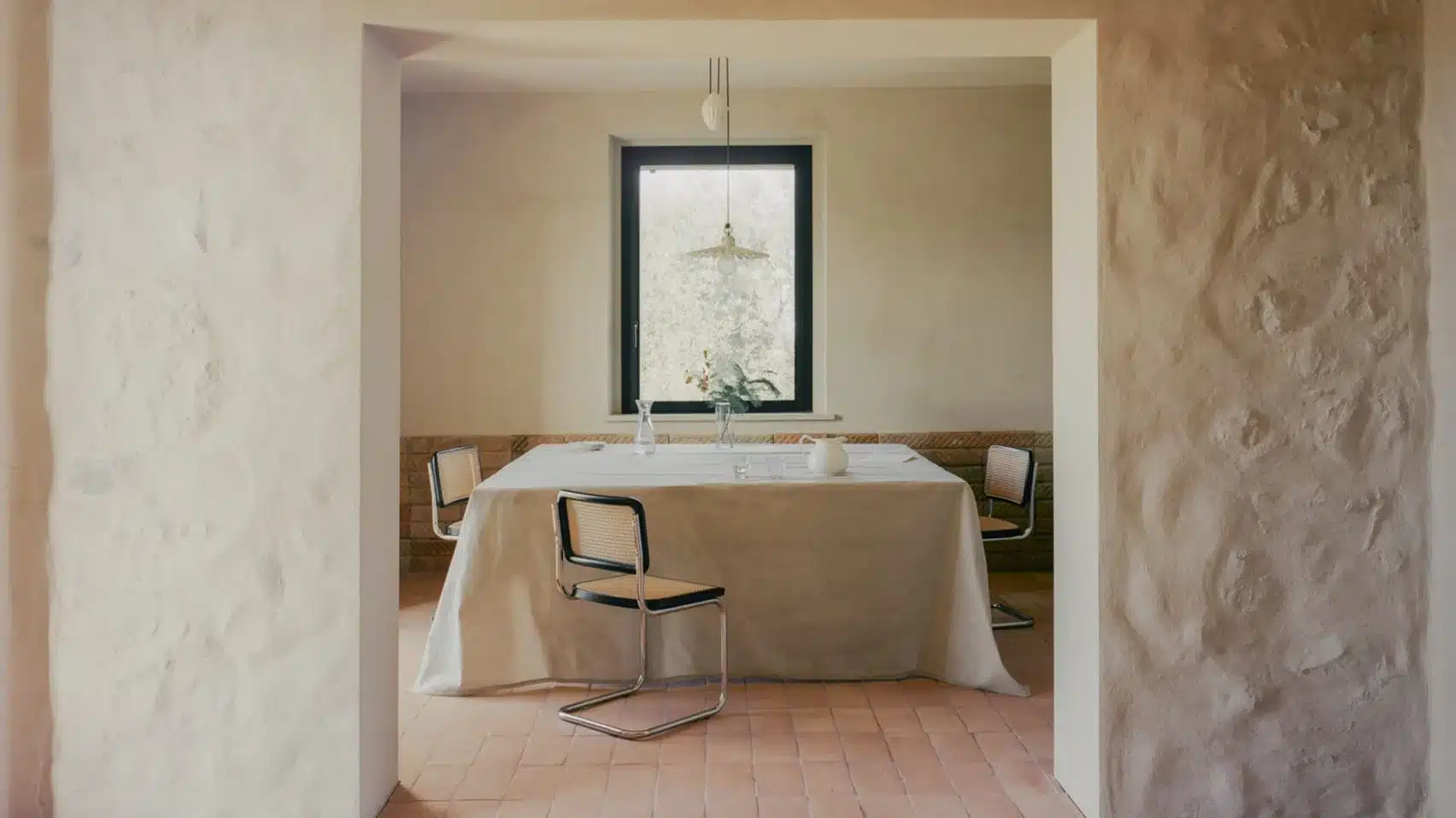
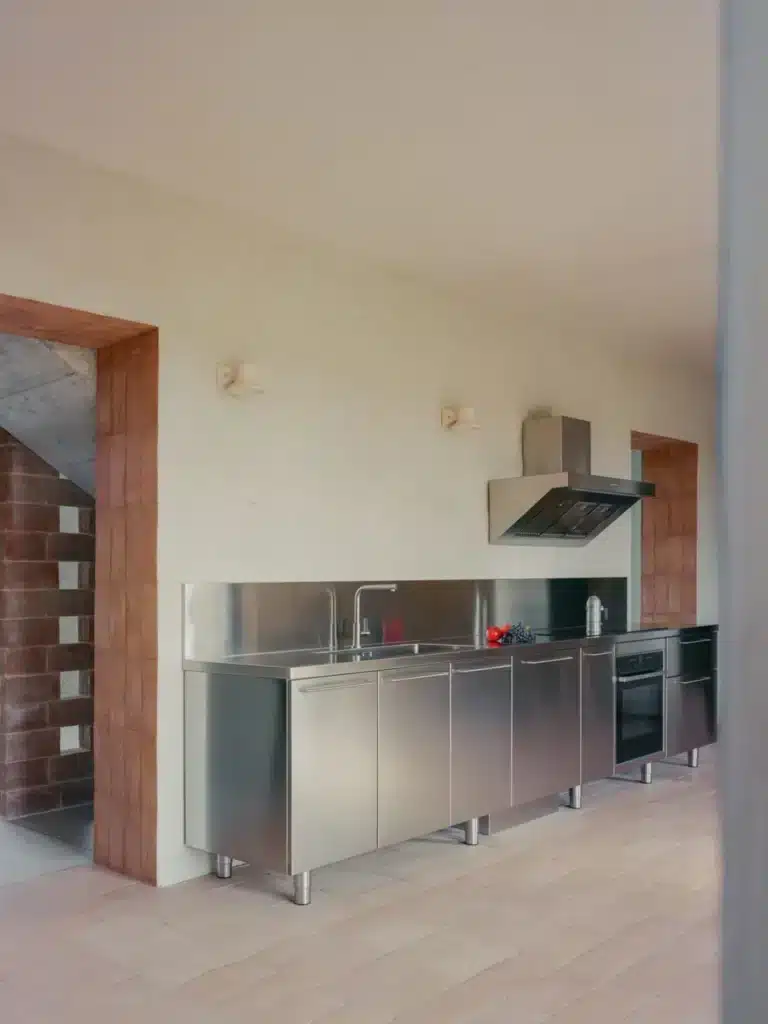
- Terracotta tiles pave the kitchen and dining room, referencing the original stable floors.
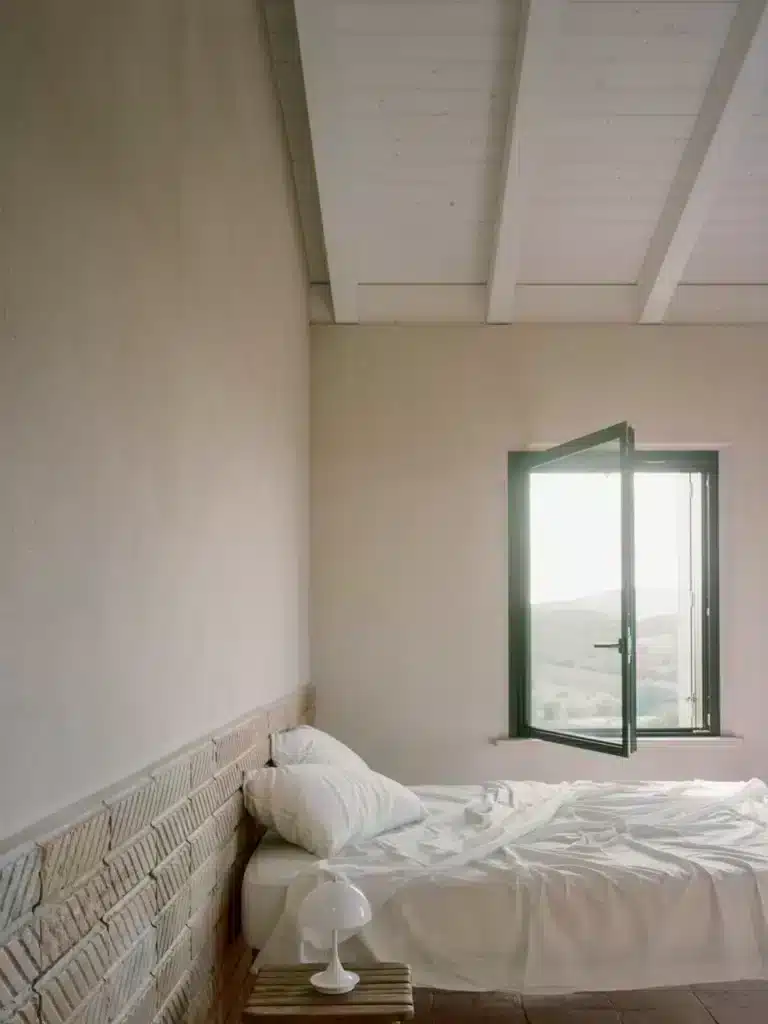
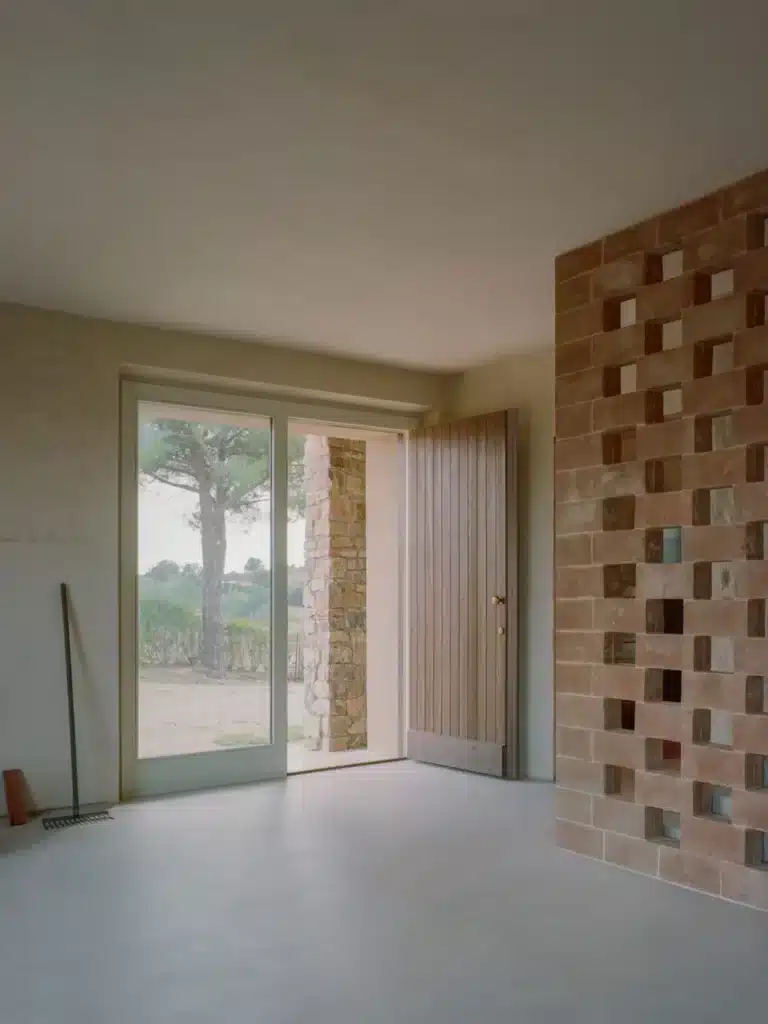
- Brickwork in carved terracotta creates textural feature walls.
- Smooth red bricks form a lattice wall around the staircase, evoking traditional rural ventilation techniques.
- Rough stone walls were exposed by removing plaster layers, emphasizing the building’s rustic authenticity.
- Poured concrete flooring in the living room and a sculptural concrete staircase add modernity and contrast.


Contrast Through Furniture and Fixtures
Contemporary furniture, including folding chairs, cantilevered seating, and stainless steel kitchen units, was selected to contrast with the earthy material palette. This deliberate juxtaposition between old and new avoids mimicry, allowing the new architecture to coexist honestly with the old.
Opening Up the Architecture
To create a stronger dialogue between inside and outside:
- Windows and doorways were enlarged to admit more natural light.
- Wooden shutters frame each opening, reinforcing the rustic aesthetic.
These changes enhance the connection with the surrounding landscape and allow the interior spaces to breathe and flow visually into the countryside beyond.
More on ArchUp:
Architectural Intent of the Farmhouse
The architects aimed to create a home that resonates with Maremma’s architectural traditions while embracing modern aesthetics. By celebrating the honesty of materials and refining spatial circulation, the intervention achieves a thoughtful balance between heritage and innovation.
Photos: Lorenzo Zandri