Sagrada Família Central Tower Reaches Historic Completion After 140 Years

Final Piece Installed on Barcelona’s Tallest Church
The Sagrada Família has reached a historic milestone. After more than 140 years of construction, the final piece of the central tower now sits atop Barcelona’s most iconic landmark. This moment marks a significant achievement in architectural history.
At 566 feet tall, the structure now holds the title of the world’s tallest church. Additionally, it stands as the tallest building in Barcelona. The completion represents a major step toward finishing one of the most ambitious projects ever undertaken.
Tower of Jesus Christ Completes Skyline
The central Tower of Jesus Christ is the tallest among 18 towers designed for the cathedral. The tower’s completion will be celebrated during a ceremony scheduled for June 10th. This date marks the centenary of the original architect’s death.
The ceremony will include significant religious representation. Meanwhile, construction teams continue working toward the final completion target. According to project news, all work should finish by the end of the decade with the south-facing facade.
Cross Installation Features Innovative Geometry
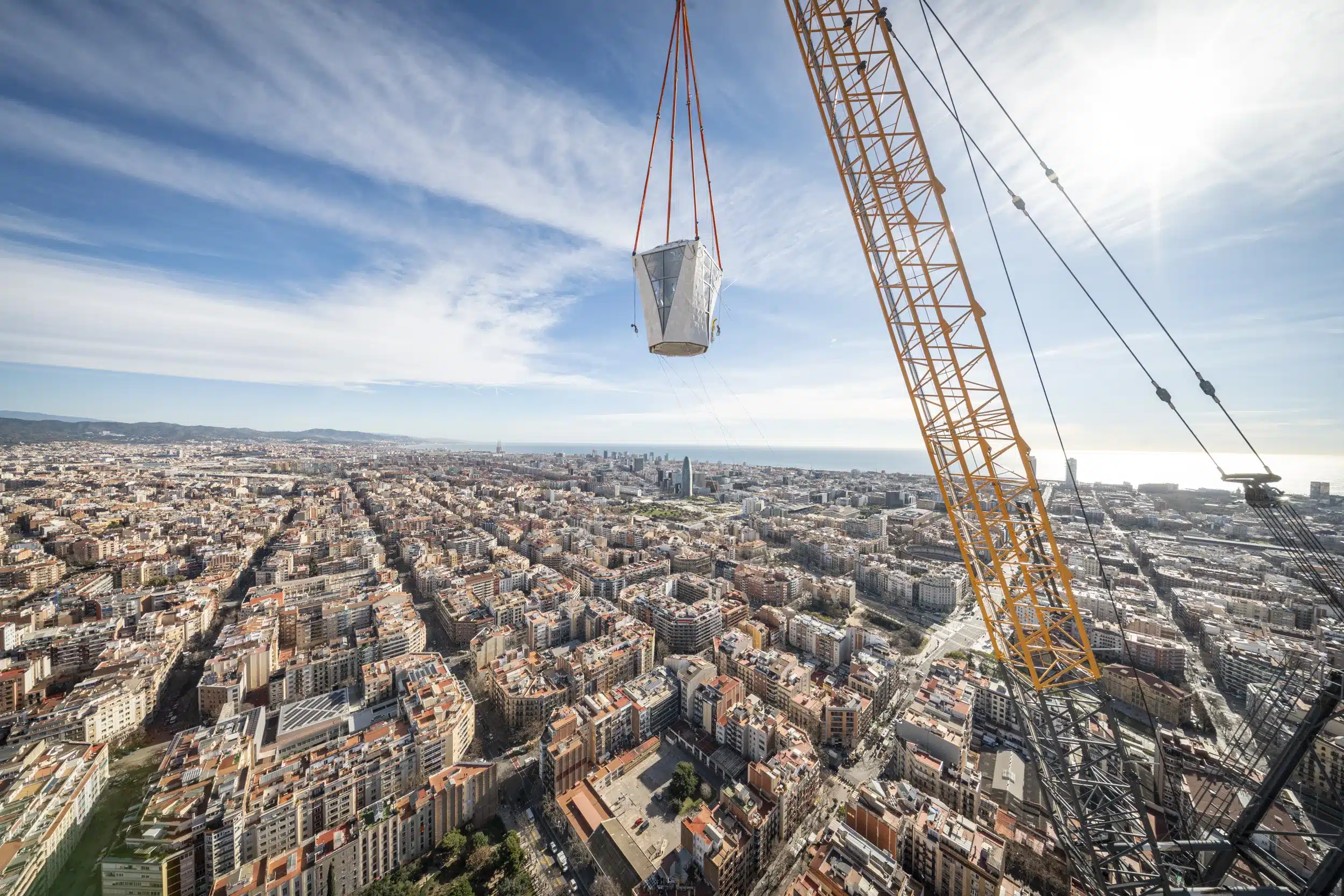
Late last year, an update emerged about a large cross being installed atop the central tower. The cross features a unique double-twist geometry concept. This design transitions from a square base to an octagonal upper section.
The exterior showcases white glazed ceramic and glass materials. These elements create a striking visual visible across Barcelona. The cross represents both spiritual symbolism and innovative architectural design.

Construction Progress Continues
The ongoing engineering demonstrates remarkable achievement. Teams have worked continuously to realize the original vision while incorporating modern techniques. The combination of historical design principles and contemporary methods makes this project unique.
The Barcelona landmark attracts millions of visitors annually. However, the completion of the central tower adds new significance. Urban planning around the structure has evolved significantly since work began in the 1880s.
Legacy Project Nears Final Phase
The cathedral represents one of history’s longest-running construction projects. The dedication required to complete such an undertaking spans multiple generations. Therefore, this milestone carries profound cultural significance.
The structure’s completion will fulfill a vision that has shaped Barcelona’s skyline for over a century. Moreover, it demonstrates how sustained commitment can achieve extraordinary results.
What impact will the completed Sagrada Família have on future cathedral architecture worldwide?
A Quick Architectural Snapshot
The central tower reaches 566 feet, making it the world’s tallest church. It features 18 towers total, with the Tower of Jesus Christ being the tallest. The cross atop uses white glazed ceramic and glass, transitioning from square to octagonal geometry. Construction began in the 1880s, with completion targeted by decade’s end.
✦ ArchUp Editorial Insight
The 140-year construction timeline reveals a financing model incompatible with modern development logic. Contemporary projects operate under 18-to-36-month capital recovery expectations. This structure survived because it predates CAPEX-driven procurement systems.
The decision to complete the tower during a papal centenary ceremony indicates heritage projects require external legitimacy frameworks. Religious and cultural institutions provide what municipal planning cannot: indefinite patience.
The cross geometry, transitioning from square to octagon, demonstrates how symbolic requirements override structural efficiency. Spiritual architecture tolerates complexity that commercial construction systematically eliminates.
Visitor-funded models bypass traditional debt instruments. This creates buildings immune to market-cycle pressures that produce repetitive commercial architecture elsewhere.
The Sagrada Família is the logical outcome of pre-industrial patronage plus tourist-economy financing plus institutional continuity across political regimes.