Former Power Plant Site Transforms Into 125-Acre Coastal Park in Connecticut

Historic Industrial Site Opens to Public After Decades of Closure
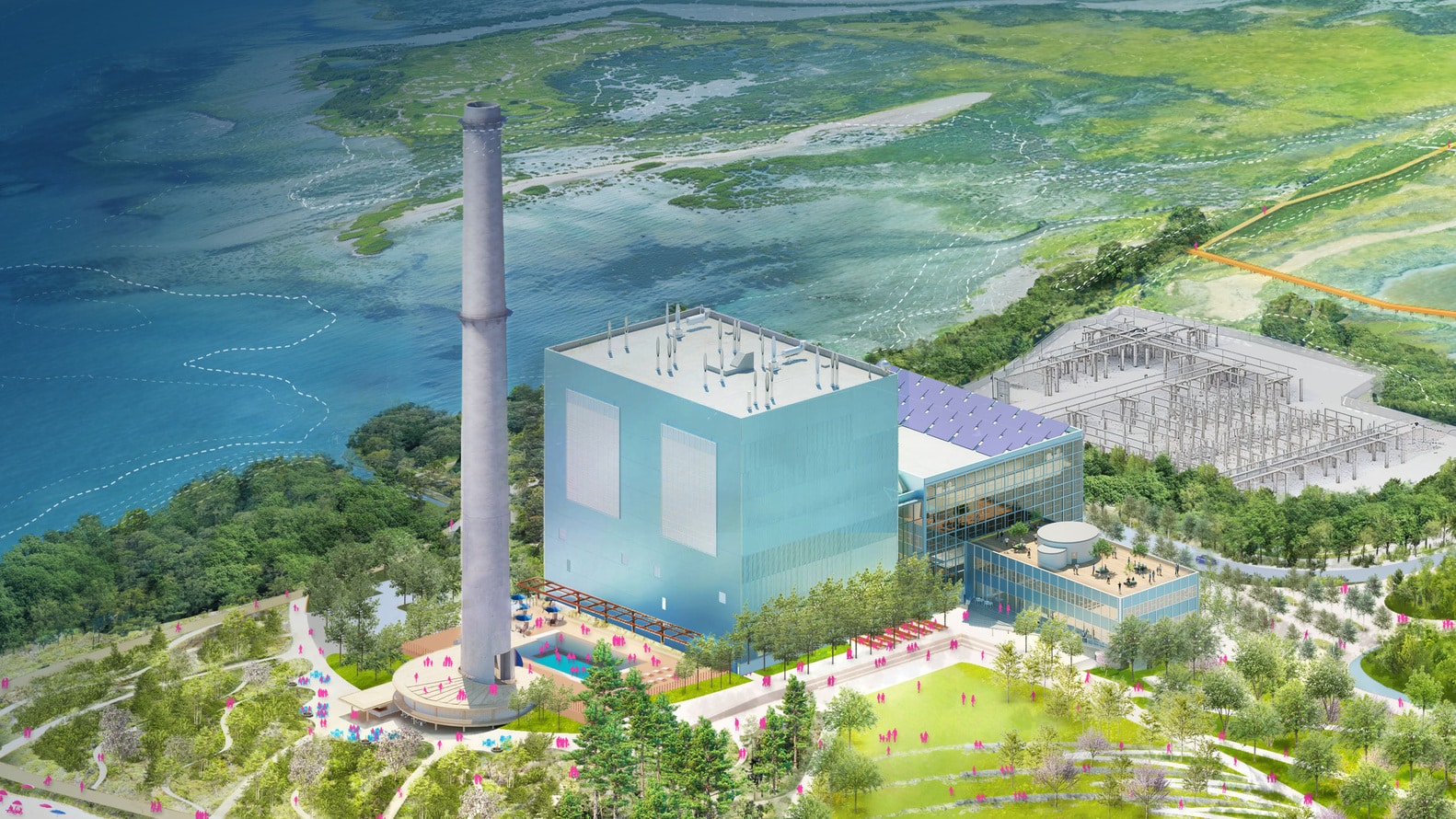
A polluted industrial peninsula in Norwalk, Connecticut, will transform into a 125-acre waterfront park through an ambitious adaptive reuse project. The initiative will convert a decommissioned 1960s power plant into a coastal landscape accessible to the public for the first time in decades.
Manresa Island Corp. received a stewardship permit in December 2025 from Connecticut’s Department of Energy and Environmental Protection. Consequently, the project will proceed in phases starting spring 2027 with a 28-acre Northern Forest opening. Additional phases will continue into the early 2030s, ultimately opening nearly two miles of previously inaccessible coastline along Long Island Sound.
Community Feedback Shapes Final Design
More than 3,000 residents participated in public meetings, surveys, and site tours since October 2024. Their input directly influenced the final plans, which now prioritize natural landscapes over intensive programming. Natural areas expanded by 30 percent while hardscape features decreased by half.
The urban planning strategy consolidates active amenities toward the southern portion. This approach minimizes impacts on adjacent residential areas and wildlife habitats. Moreover, transit infrastructure improvements support multiple arrival modes including bus connections and distributed parking.
Coastal Ecology and Flood Resilience
The landscape design restores diverse ecosystems including birch forests, native meadows, and salt marshes. Thirteen acres of native wetlands will undergo preservation and revitalization. Additionally, planners removed previous boardwalk interventions, favoring grounded trails through sensitive marsh areas instead.
A network exceeding 15 miles of paths will connect forest clearings, gathering spaces, and waterfront overlooks. The western edge features an undisturbed forest buffer providing visual and acoustic screening for neighboring communities.
Public waterfront access includes a beach, harbor with kayak facilities, tidal pools, and eastern shoreline overlooks. The sustainability approach integrates preserved marshes, terraces, and protective jetties to address flooding and erosion.
Industrial Infrastructure Becomes Social Hub
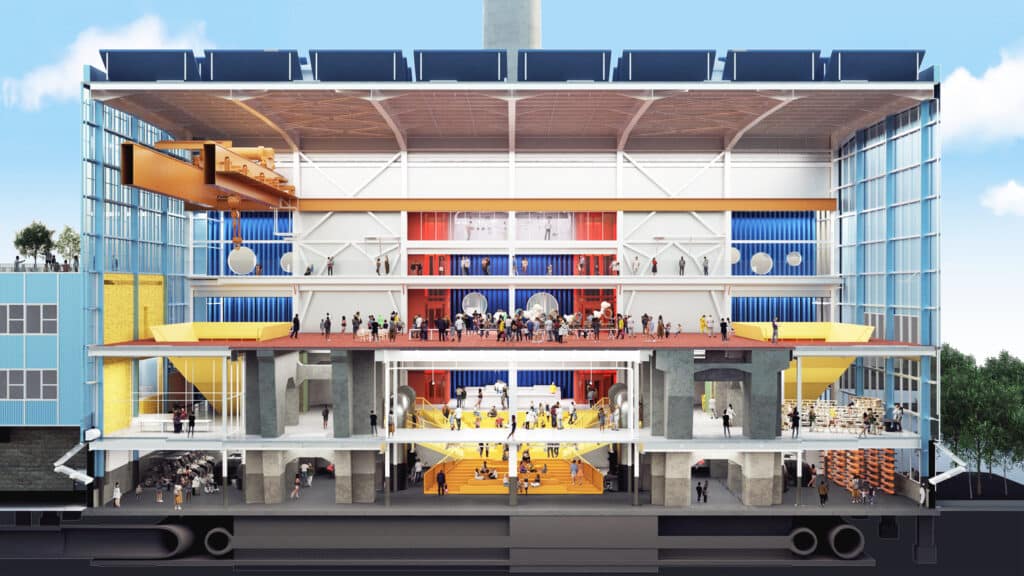
The former power plant’s adaptive reuse repositions fossil fuel infrastructure as civic amenities engineered to withstand 100-year flood events. The Turbine Hall will function as a flexible gathering space with mezzanines and exhibition areas. Meanwhile, the Administrative Building accommodates dining venues overlooking a central lawn.
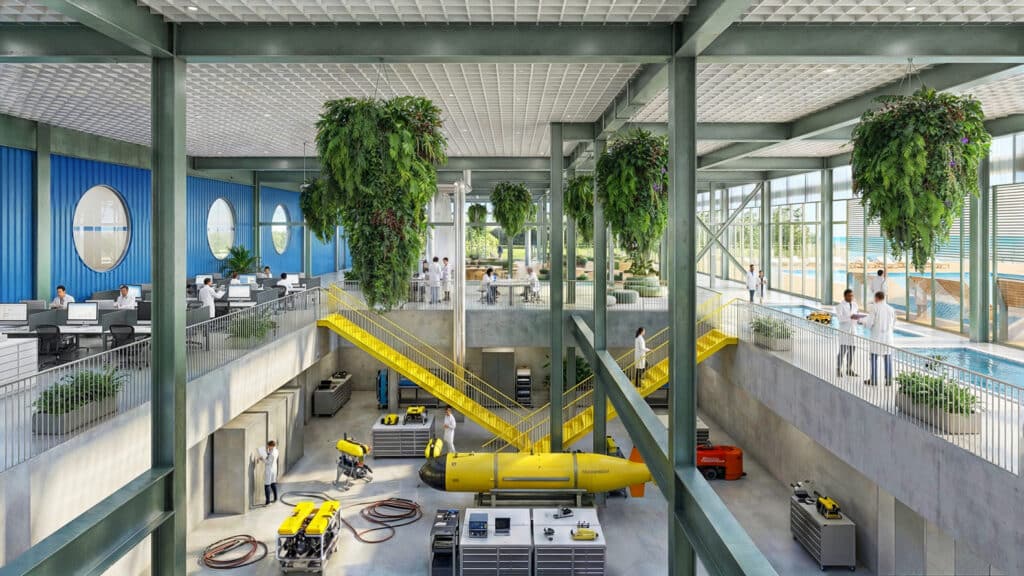
A new pavilion at the smokestack base supports a community pool and public beach with amenities. The Boiler Building reserves space for future educational programming. Original machinery remains throughout as interpretive elements acknowledging the site’s industrial legacy.
The phased construction integrates environmental remediation with coastal restoration. Early works focus on soil cleanup and habitat restoration, enabling incremental public access as development progresses.
Similar adaptive reuse projects worldwide continue transforming industrial sites into cultural destinations. How will this Connecticut waterfront park influence regional approaches to industrial site conversion?
A Quick Architectural Snapshot
The 125-acre peninsula features a restored 1960s power plant complex along Long Island Sound. The project includes 13 acres of wetlands, 15 miles of trails, and nearly two miles of public coastline. Construction materials emphasize native plantings and natural shoreline stabilization systems with flood-resistant civic structures.
✦ ArchUp Editorial Insight
A decommissioned power plant on a polluted peninsula sits inaccessible for decades. No market actor intervenes. Land with no extractable ROI attracts no capital. Only when a nonprofit secures a stewardship permit does transformation begin.
Three thousand community members push back against intensive programming. The result: 30 percent more natural area, 50 percent less hardscape. This is not design sensitivity. This is risk recalibration. Institutions reduce amenities when liability and opposition costs exceed activation benefits.
The phased timeline extending into the early 2030s reveals a financing structure dependent on incremental permitting and remediation sequencing. Soil cleanup dictates spatial access before any architectural gesture can occur. Environmental regulation, not design vision, controls the project schedule.
The preserved industrial machinery functions as interpretive heritage. This pattern repeats globally wherever remediation costs exceed demolition budgets. Adaptive reuse here is partly economic inevitability disguised as curatorial choice.
The 125-acre park is the logical outcome of market abandonment plus nonprofit intervention plus regulatory sequencing plus community resistance to intensity.