

Riyadh Home Price Growth Slows as Demand Holds Elsewhere

JLL reported that residential property price growth has slowed and begun to ease following a period of strong expansion, particularly in Riyadh. However, other major Saudi cities continue to record robust demand and rising prices, reflecting diverging market dynamics across key urban centers.
Population Growth and Investment Support Demand
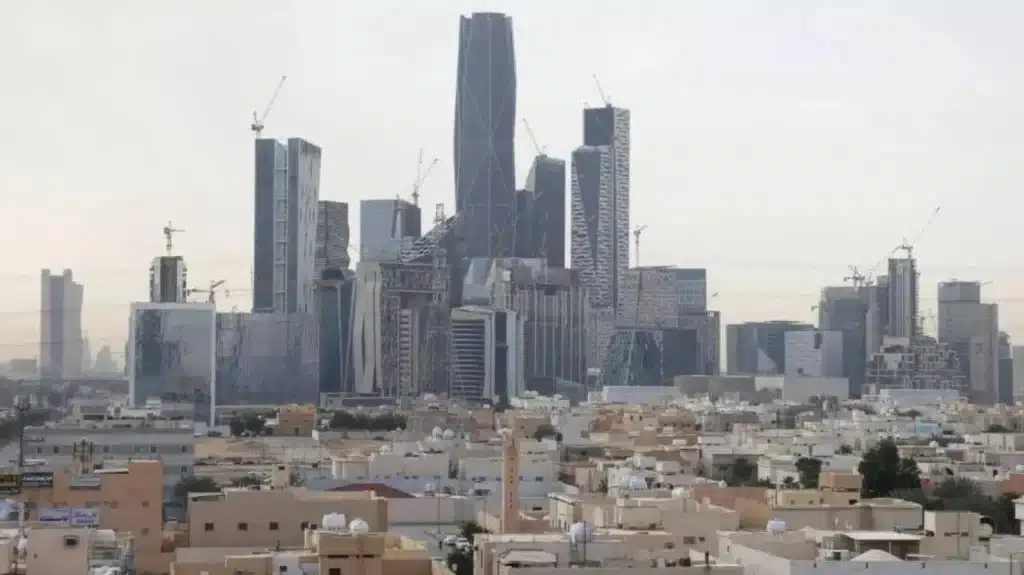
According to the report, demand for housing remains strong in Saudi Arabia’s main cities, driven by population growth and large-scale investments, especially in Riyadh, where ongoing development activity continues to underpin market momentum.
Stable Conditions in Jeddah and the Dammam Metro
Jeddah and the Dammam Metropolitan Area—which includes Dammam, Khobar, and Dhahran—have shown steady demand, supported by economic diversification initiatives and continued infrastructure development.
Housing Supply and Market Stock
JLL noted that Riyadh’s total residential stock reached approximately 2.18 million units by the end of Q3 2025, with around 9,468 units expected to be delivered during the remainder of the year.
In Jeddah, supply stood at about 1.23 million units, following the completion of 4,320 units in Q3.
The Dammam Metro added 428 units during the quarter, raising total stock to roughly 725,800 units, with an additional 400 units anticipated before year-end.
City-Level Price Performance
In Riyadh, sale prices continued to rise through Q3 2025, with apartment prices increasing 10.3% year-on-year to SAR 6,501 per square meter, while villa prices rose 9.6% to SAR 6,810 per square meter. Luxury villa prices averaged SAR 10,223 per square meter.
In Jeddah, performance was mixed, as apartment prices declined 2.8% year-on-year to SAR 4,477 per square meter, while villa prices increased 3.1% to SAR 6,668 per square meter.

Dammam recorded relatively subdued performance, with apartment prices edging up 0.3% to SAR 3,578 per square meter, and villa prices rising by around 1% to SAR 4,917 per square meter.
In Khobar, apartment prices increased 5% year-on-year to SAR 3,956 per square meter, while villa prices rose 1.6% to SAR 6,104 per square meter.
Buyer Preferences and Rent Freeze Impact
JLL highlighted that rising costs are encouraging buyers to favor apartments, while a growing interest in townhouses has emerged, offering a middle ground between apartments and traditional villas in terms of space, privacy, and affordability.
The firm also expects the five-year rent freeze on residential and commercial leases—new, renewed, and vacant—to support cost-of-living stability and curb speculative rent increases, potentially redirecting investment toward long-term prime real estate assets and development projects.
ArchUp Editorial Insight
The slowdown in residential property price growth in Riyadh suggests the Construction market is entering a new phase requiring more balanced Urban Planning. The divergence in performance across major Saudi cities (e.g., the slowdown in Riyadh versus the strength in Jeddah and Khobar) reflects the necessity of adopting flexible Architectural Strategies that respond to varying local needs. The buyer preference for Apartments and Townhouses emerges as an opportunity for developers to increase focus on medium-density Affordable Architecture, supporting the Kingdom’s vision for housing provision without excessively saturating the market with Luxury Real Estate. Furthermore, the rent freeze encourages investment in long-term Construction Projects, potentially leading to improved design quality and commitment to Sustainability standards in residential developments.


ArchUp: Economic & Geographic Analysis of the Saudi Arabian Housing Market 2025
This article examines trends in the Saudi Arabian housing market as a case study in regional urban real estate dynamics. To enhance its archival value, we present the following key economic and geographic data:
Riyadh’s market recorded the highest annual growth in apartment prices at 10.3% (SAR 6,501/m²) and villa prices at 9.6% (SAR 6,810/m²), while Jeddah saw a 2.8% decline in apartment prices (SAR 4,477/m²). Current housing unit inventories stand at: Riyadh 2.18 million units, Jeddah 1.23 million units, and the Dammam metropolitan area 725,800 units, with anticipated additions of 9,468 units in Riyadh and 4,320 units in Jeddah during 2025.
The market is characterized by a growing preference for townhouses, which constitute 35% of new sales, driven by a 22% increase in traditional villa costs since 2023. A five-year rent freeze is influencing rental market stability, with an expected shift of 40% of investors towards long-term assets and qualitative development.
In terms of geographic distribution, Al Khobar shows a 5% growth in apartment prices (SAR 3,956/m²), while Dammam exhibits minimal growth at 0.3% (SAR 3,578/m²). Luxury villas in Riyadh maintain an average price of SAR 10,223/m², supported by major projects such as King Abdullah Financial District (KAFD) and Qiddiya.
Related Link: Please refer to this article for a comparison of real estate development strategies in major cities:
The Economics of Residential Architecture: The Relationship Between Design and Market Value in Emerging Markets
https://archup.net/sustainable-student-housing-princeton-meadows/