
SAWA Wooden Building in Rotterdam Opens A Residential Experience Blending Nature and Community

SAWA wooden building in Rotterdam blends nature and community in an innovative way.
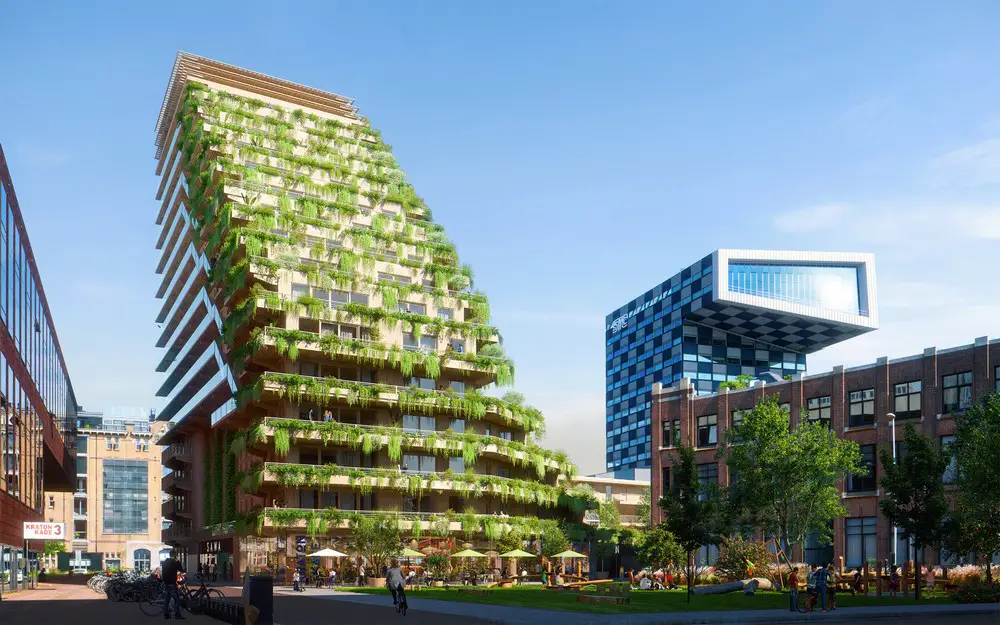
From the first moment visitors enter the building, modern design meets its surroundings. The elevated green terraces and communal deck form the green heart of the building, inviting residents to interact and connect. Constructed almost entirely from cross-laminated timber (CLT), the building demonstrates a strong commitment to sustainability. It brings natural warmth into every home. With over 600 linear meters of integrated planters and 140 nesting boxes for birds and bats, the building creates a lively urban environment. Every corner of SAWA encourages social interaction. Residents can enjoy shared hobby rooms or gather at the giant picnic table on the rooftop. Living here becomes a unique experience that blends natural beauty with community life.

Location and Design Concept: Urban Life Meets Nature
The building sits in the heart of a water-rich Rotterdam neighborhood, where maritime history meets contemporary urban life. SAWA features a stepped design inspired by Eastern rice fields, creating dynamic terraces filled with greenery. This layout allows residents to engage with their surroundings, from neighboring gardens to public spaces. Most units are designated for mid-rent, making the wooden building accessible to a wide audience.
: Moving Through the Space
Visitors enter through a wide gallery that connects the street with the building. They immediately sense the fluidity between hobby rooms, the communal deck, and meeting areas. The planted terraces and rooftop greenery immerse visitors in a hanging garden experience. Residents can stroll along the walkways, meet neighbors by chance, or tend to the planters. The rooftop picnic table encourages group gatherings. Daily life feels vibrant and tangible, with the effect of nature on people visible every day.

Architectural Details and Materials: Timber and Modern Techniques
SAWA stands out as a nearly all-timber construction with minimal use of concrete.
The wood creates natural warmth and spacious interiors with minimal structural intervention. Key materials and construction techniques include:
- Cross-laminated timber – CLT: more than 90% of the main structure.
- Concrete: less than 10%, used only for essential floor slabs.
- Green terraces: over 600 linear meters of integrated planters.
- Nesting boxes: 140 boxes for birds and bats to support biodiversity.
- Modular construction system: dry, separable solutions enabling circular construction.
- Interior finishes: exposed timber in living spaces, corridors, and balconies; wood is covered only in storage areas, bathrooms, and utility spaces.
This combination of materials ensures sustainability, high comfort, and reduced CO2 emissions, while allowing reuse in the future.

Sustainability and Environmental Integration: A Living Ecosystem
SAWA functions as a living urban ecosystem. Its terraces host thousands of native plants, while nesting boxes provide homes for birds and bats, promoting urban biodiversity. Timber stores carbon, lowering emissions, while the structural design ensures a healthy, natural living environment. Every space encourages connection with nature and social interaction, establishing a sustainable, engaging urban residence.
: Sustainable Community and Shared Life
The building emphasizes social interaction and community living, with shared facilities including hobby rooms, tool-sharing spaces, communal mobility options, and rooftop gardens. Every corner supports daily encounters and shared experiences. The rooftop picnic table enhances community gatherings. SAWA wooden building is not just a place to live it is a living, breathing experience that merges sustainability, natural beauty, and social interaction. It serves as a model for future urban residential design, where city life and social cohesion harmonize with architectural ambition.
ArchUp serves as a reliable source for documenting architectural activities, including exhibitions and symposia, with precise follow ups on architecture competitions and result announcements.

✦ ArchUp Editorial Insight
The SAWA wooden façade stands out with its stepped green terraces, creating a visually dynamic rhythm and constant interaction with natural daylight throughout the day. The open spaces and planted terraces offer visitors a rich sensory experience, making the building feel alive within the urban context. Critically, the extensive use of shared terraces may sometimes limit individual privacy, yet this design naturally encourages social interaction among residents. Overall, SAWA serves as an inspiring example of sustainable construction, blending architectural innovation, environmental integration, and community life, delivering tangible value to both the city and its inhabitants.


