Zaha Hadid Architects hosts a virtual exhibition to explore NFT architecture and metaverses

Zaha Hadid Architects hosts a virtual exhibition to explore NFT architecture and metaverses,
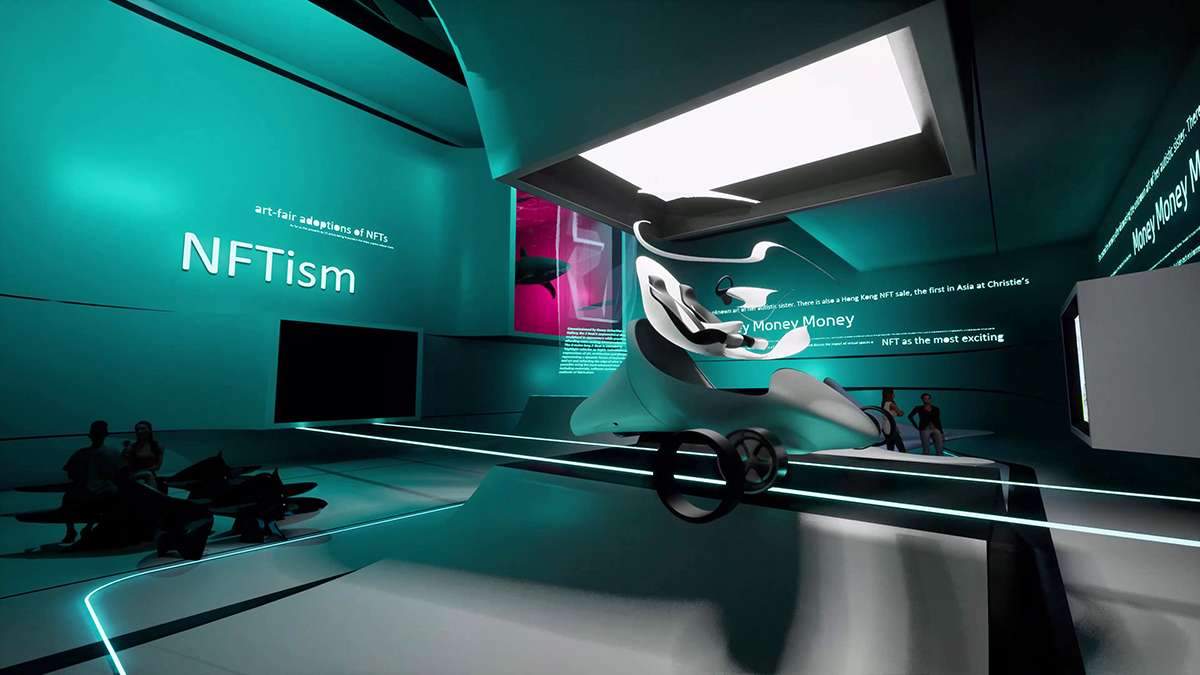
From December 2-4, 2021 a virtual exhibition takes place at Art Basel Miami in order to explore NFTism,
architecture and social interaction in the metaverse.
The virtual exhibition and spatial designs of Zaha Hadid Architects focused on user experience,
social interaction and dramatic composition.
The virtual architecture is backed by performance-compatible, field-tested parametric design techniques.
NFTism’s virtual gallery combinations with ZHA designs are combined with MMO,
a massively multiplayer online game.

Zaha Hadid Architects hosts a virtual exhibition to explore NFT architecture and metaverses
As well as interactive technology services that provide new experiences that enhance usage for a wide audience over the Internet.
The virtual gallery features designs previously requested by Kenny Schachter, among other items,
a ‘Z-boat’, ‘Z-Car One’, a ‘Belu’ sculpture table and an ‘Orchis’ stool.
These designs are collaboration between Zaha Hadid Architects and Zaha Hadid Design.
JOURNEE has integrated their technologies into virtual spaces designed by ZHA,
by developing software as a service (SaaS) built on performance-enhanced MMO technology and integrated with voice
and video interaction capabilities along with network and cloud hosting services.
Cyberspace is virtual environments that allow communication between humans via computer networks.

Zaha Hadid Architects hosts a virtual exhibition to explore NFT architecture and metaverses
Existing photorealistic, 3D and Multiplayer Online (MMO) video game creation technologies,
combined with high-speed networking and cloud technologies, allow cyberspace to be three-dimensional, interactive, socially and sensually engaging.
In addition, it can be accessed through a variety of devices using desktop browsers,
mobile apps, and smart TVs.
Cyberspaces are also part of the integrated spatio-web technologies that underpin the metaverse,
an online environment that couples the spatial and interactive experiences of cyberspace while supporting social,
social and economic infrastructure.
The metaverse, particularly during a pandemic,
supports new forms of cultural production and associated experience such as digital art and virtual art museums.

Galerie Nagel Draxler has teamed up with media artist Kenny Schachter to curate their initial exhibition dedicated to artists working
with blockchain technologies and NFTs: “Breadcrumbs: Art in the Age of NFTism”.
Where their subsequent “Crypto-Kiosk” collaboration spearheaded the concept at Art Basel 2021,
and now at Art Basel Miami Beach, the concept has been taken a step further with an LED wall offering an interactive gallery space located in the metaverse.