
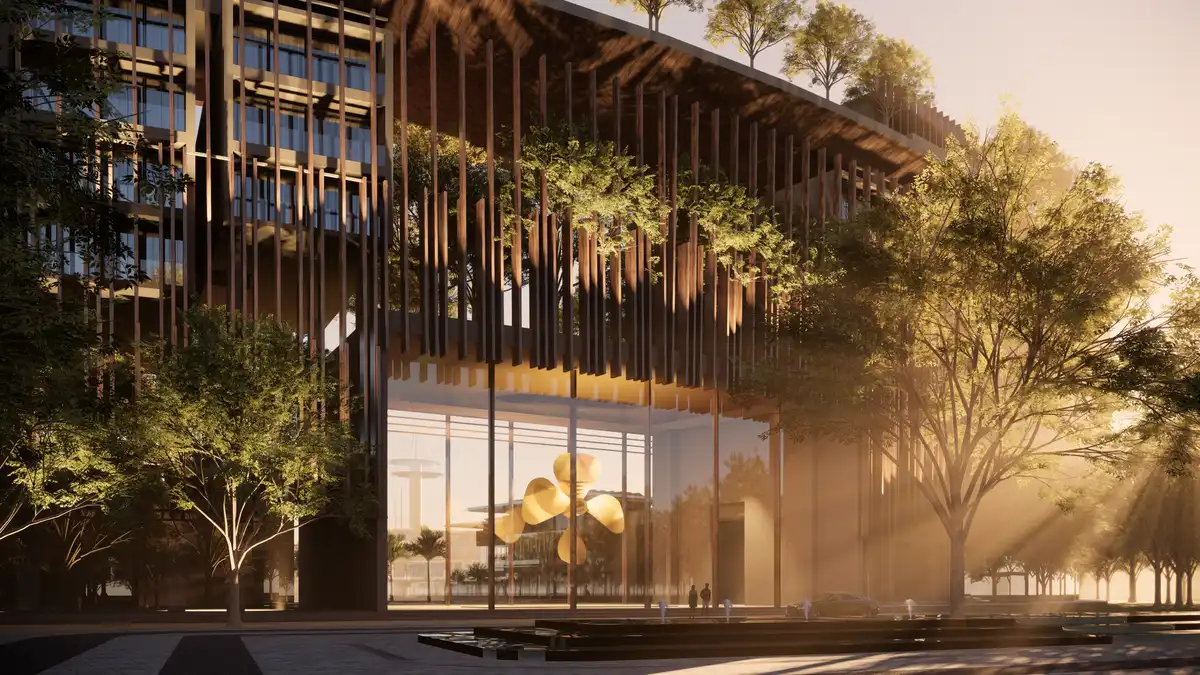
Completion of the New Masterplan for Shanghai Meifan Sailing Port

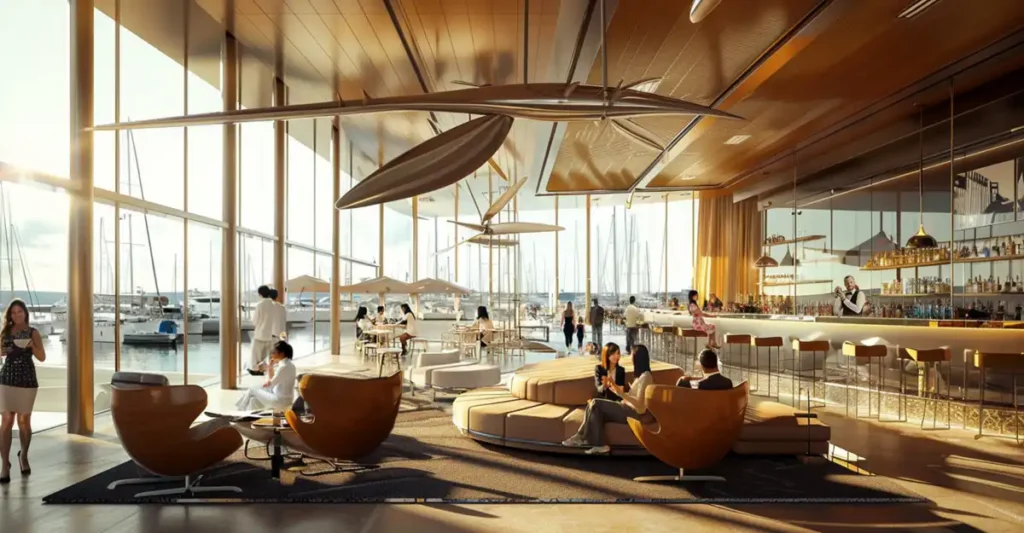
Shanghai Meifan Sailing Port has been selected for a new waterfront development in the Yangtze River Delta Green Demonstration Zone. The project emerged from an international design competition and integrates hospitality, sports, and ecological planning. It aligns with regional strategies for low carbon tourism and cities scale sustainability.
Design Concept
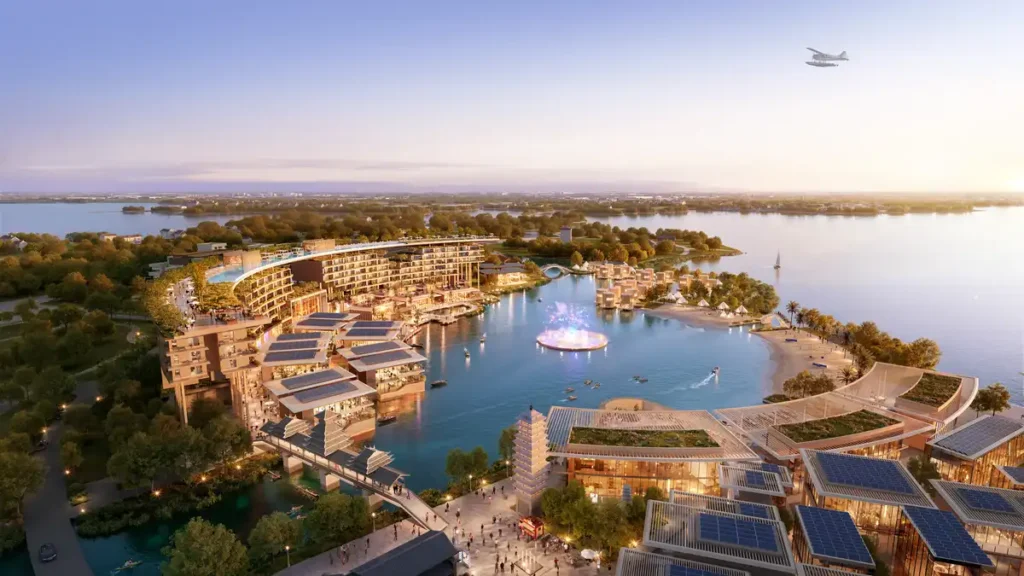
The masterplan uses the sextant an historic navigation tool to guide building orientation and public space sequencing. This geometric logic organizes the hotel cluster, commercial village, and training campus without symbolic gestures. The approach reflects evolving norms in architectural design, where spatial experience outweighs formal spectacle. Shanghai Meifan Sailing Port thus tests how narrative devices can structure large-scale leisure environments.
Materials & Construction
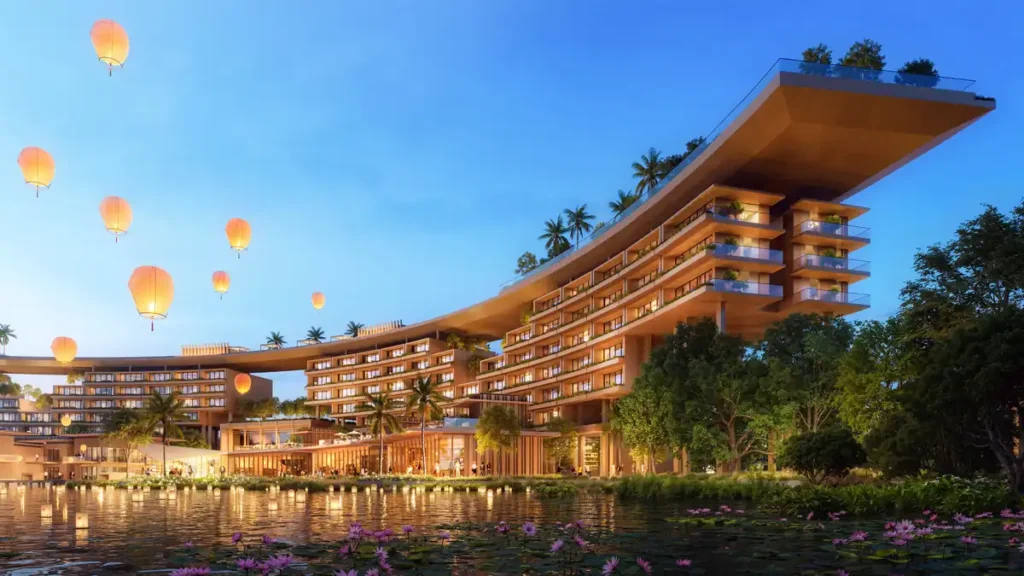
Terraced forms enhance natural ventilation and daylight access. High performance envelopes reduce reliance on mechanical systems. Structural choices prioritize climate resilience, consistent with current construction protocols for mixed use waterfront sites. Though material specifics are not public, the focus on passive performance suggests use of low carbon building materials. An on-site R&D center for new energy foiling vessels links applied engineering to maritime research.
Sustainability
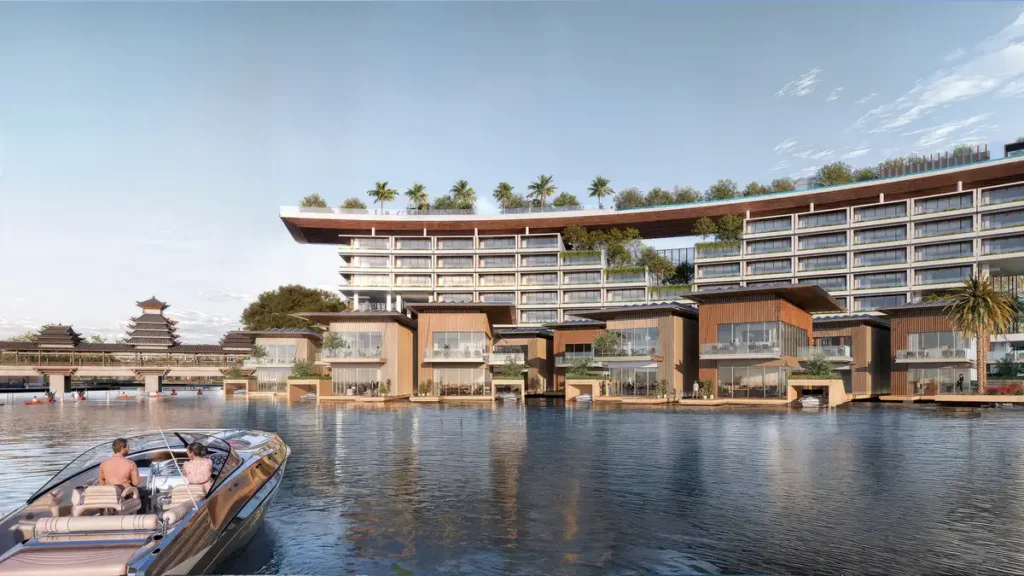
The project targets zero carbon operations through renewables, water sensitive landscaping, and stormwater management. These measures respond to Green Demonstration Zone mandates. Shanghai Meifan Sailing Port adapts Robinson Club’s For All model to active tourism while respecting ecological limits a balance central to global sustainability debates.
Urban Impact
TUI’s inclusion in the Green Demonstration Zone Developers Alliance marks a rare international role in China’s eco tourism planning. Completion is scheduled for January 2029. Shanghai Meifan Sailing Port may influence how future waterfront projects reconcile visitor demand with environmental accountability.
Can this low-impact resort model be replicated across other deltas?
Architectural Snapshot:
A sextant inspired masterplan integrates zero carbon hospitality, water sports, and ecological infrastructure along Shanghai’s Meifan waterfront.
ArchUp Editorial Insight
The announcement of Shanghai Meifan Sailing Port frames ecological tourism through the lens of branded hospitality and international collaboration. Broadway Malyan’s sextant inspired masterplan offers a legible spatial logic but risks reducing maritime heritage to a geometric motif. While the zero carbon ambition aligns with regional policy, the integration of a global hotel chain raises questions about cultural specificity versus replicable luxury. Credit is due for embedding stormwater management and passive design at the core of the resort’s structure. Yet, such developments may soon face scrutiny if they prioritize experiential consumption over genuine ecological reciprocity.


🔴 Editorial Warning:
The ✦ ArchUp Editorial Insight section presented here does not meet ArchUp’s required editorial standard and is missing its official icon “✦” and symbol. Publishing the analytical insight without its designated visual marker constitutes a direct violation, as this formatting is a core part of ArchUp’s editorial identity and must be applied consistently across all articles without exception.
ArchUp: Technical Analysis of the New Shanghai Meifan Sailing Port Master Plan
This article provides a technical analysis of the new Shanghai Meifan Sailing Port master plan as a case study in the development of sustainable, multifunctional waterfronts. To enhance its archival value, we present the following key technical and design data:
The master plan is based on the concept of the sextant, a historic maritime navigation instrument, which guides the orientation of buildings and the sequence of spaces. The project accommodates a hotel complex, a coastal commercial village, and a water sports educational campus around a central lagoon, with the goal of achieving carbon-neutral operations. The total development area is approximately 50 hectares, with 40% allocated to public green spaces and waterways.
The environmental design is characterized by passive climate efficiency strategies. The terraced architectural forms are designed to enhance natural ventilation through directional openings and increase daylighting, reducing reliance on mechanical systems by up to 30%. Sustainable measures include the installation of solar panels on all building rooftops, a comprehensive rainwater management system for irrigation and groundwater recharge, and landscaping using local, salt-tolerant native plants.
In terms of functional and investment performance, the project integrates hospitality tourism with technological innovation. It includes a research and development center for ships equipped with new energy propulsion systems (such as electric and hydrogen), linking recreational activities with industrial advancement. The project is scheduled for completion in January 2029 and is part of the Yangtze River Delta Green Demonstration Zone, reflecting China’s policy direction toward low-carbon ecotourism.
Related Link: Please refer to this article to explore other projects addressing the integration of urban development with aquatic environments: Sudah Development Entrusts Major Electrical Infrastructure to a Mountain Resort Destination.
https://archup.net/aquapraca-floating-architecture/