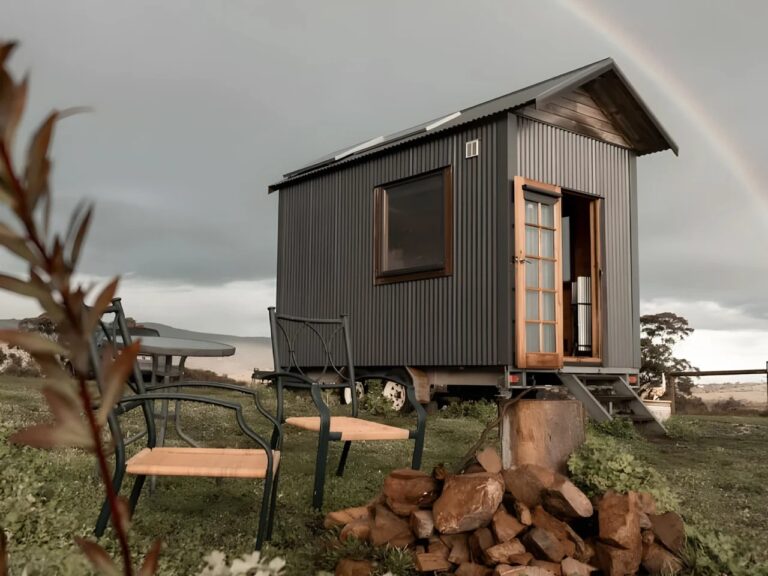
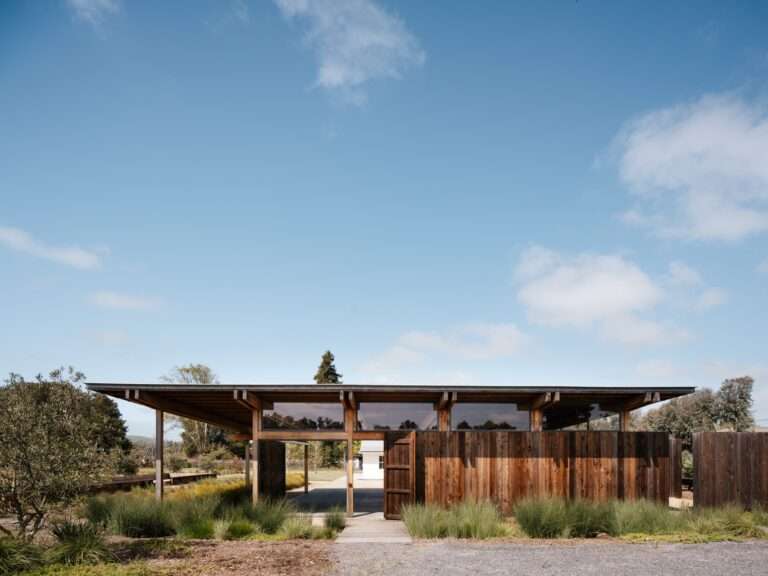
Shoreline Glass House: Light and Space in Tiny Homes

The Fundamental Tension in the Tiny House World
Over the years, the concept of tiny houses has remained closely tied to a clear tension between two conflicting demands: the need for light, openness, and visual spaciousness versus the strict constraints of a limited building footprint. This contradiction has always posed a direct challenge for designers, often resulting in compact spaces that sacrifice comfort in favor of efficiency.
Shoreline Glass House Model as a Case Study
In this context, the Shoreline Glass House model presents a somewhat different case within the Park Model tiny house category. Instead of attempting a partial reconciliation between these contradictions, the design addresses the issue at its root by redefining the relationship between space and light.
As a result, the project does not remain a conventional response to spatial limitations, but rather becomes a spatial experience that rethinks the very concept of the “tiny house” itself.
Spatial Organization on a Single Level
One of the most distinctive organizational features of this model is its complete reliance on a single-level horizontal layout without any upper floors. The unit measures approximately 47 feet (14.3 meters) in length, with an expanded width of 12 feet (3.6 meters), granting it a more generous interior space compared to conventional models within the same category. This approach to spatial efficiency reflects broader conversations in the field of architecture regarding how to maximize limited footprints.
This lateral expansion directly transforms spatial perception, where the interior is no longer read as a narrow linear corridor, but rather as a more balanced volume that allows for a better distribution of interior elements.
Reshaping the Sense of Space
In most tiny houses, limited width creates a constant sense of compression, forcing users to visually adapt to the confined space. Here, however, the increased width recalibrates this perception, making the rooms feel closer to a fully integrated small apartment rather than a constrained living unit.
Thus, it is not merely about increasing the physical area, but about transforming how it is perceived and experienced in daily life.


The Presence of Light as a Core Architectural Element
The name Shoreline Glass House carries a direct meaning that is clearly reflected in the architectural composition. The interior design relies fundamentally on natural light flowing through a glass façade extending approximately 30 feet (9 meters) along one side of the building. This extensive glazing does not function merely as an aesthetic feature, but rather creates a continuous condition of natural illumination that floods the interior space throughout the day.
Accordingly, light is no longer treated as an additional element, but becomes a structural component in shaping the spatial experience within the house.
Reducing the Boundaries Between Interior and Exterior
Through this extensive use of glass, the traditional boundary between inside and outside is significantly reduced. The house maintains a constant visual connection with its surroundings, rather than existing as an enclosed and isolated volume. Such strategies are increasingly explored in contemporary projects that seek to blur the lines between built space and nature.
Within this framework, the enclosed entry porch serves as an important transitional element. It functions as a buffer zone between the exterior environment and the interior space, while simultaneously expanding the functional range of the dwelling. It also introduces a semi-outdoor layer that is often omitted in compact designs in favor of reducing footprint.
Internal Spatial Flow
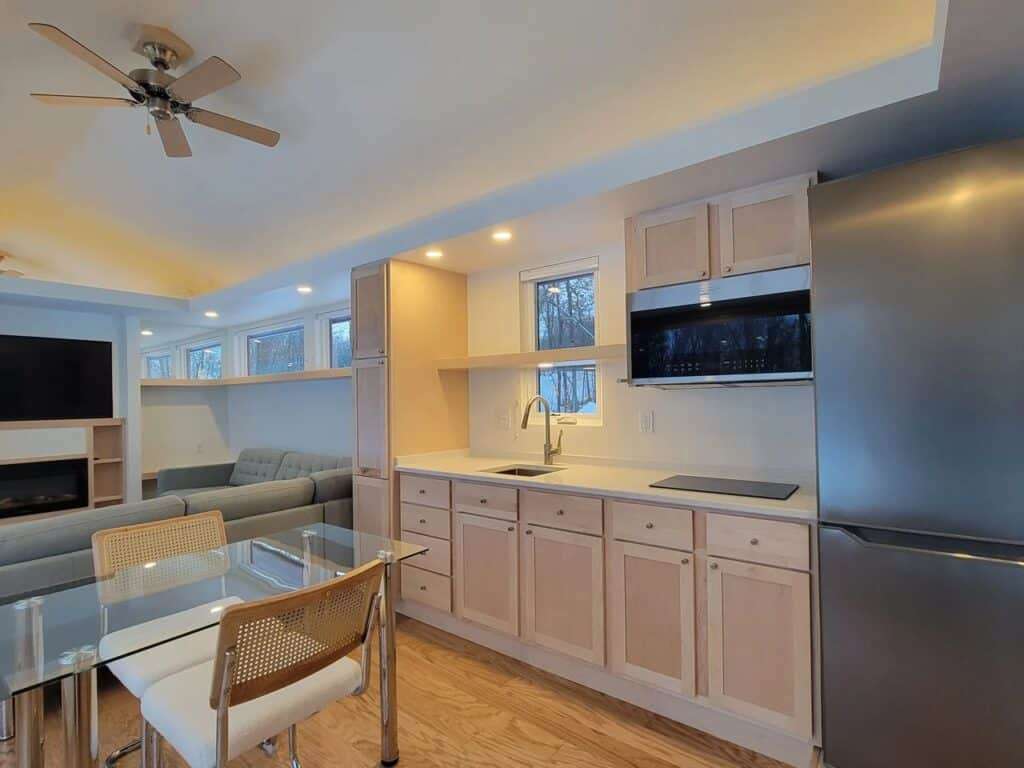
Inside, the design is based on an open-plan layout that allows seamless movement between the living area and the kitchen without rigid partitions. This type of organization enhances the sense of relative spaciousness and reduces visual fragmentation within the space.
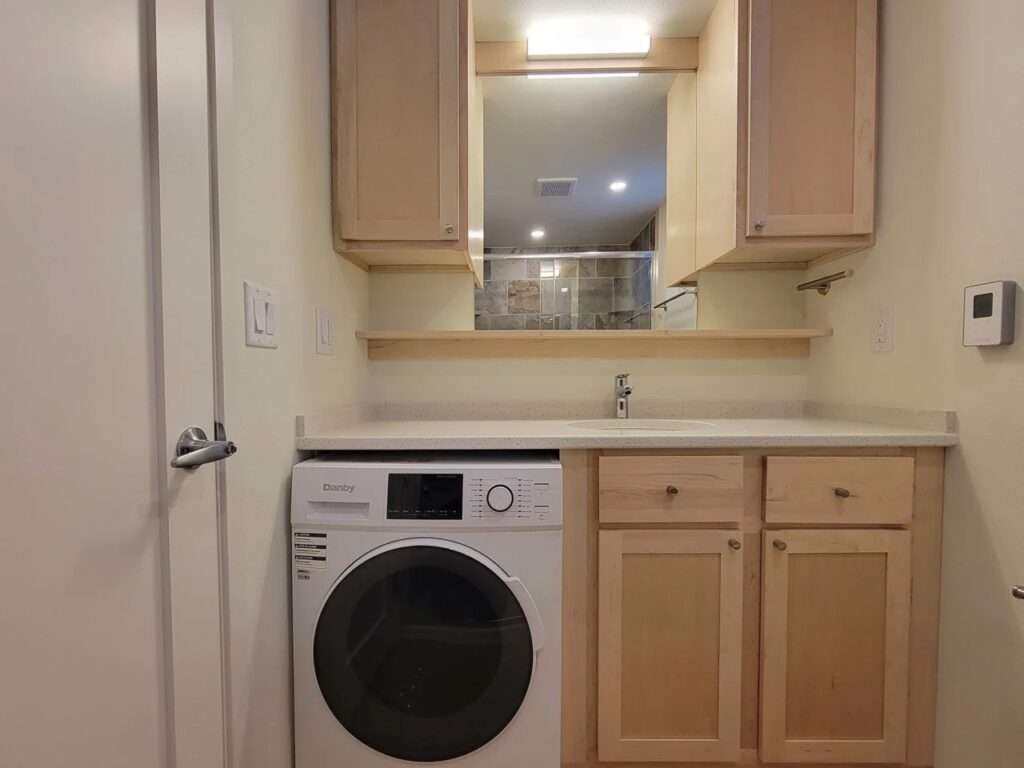
On another level, the design details extend into everyday functional elements, such as the bathroom featuring a 5-foot (1.5-meter) wide glass shower, reflecting a clear departure from the traditionally narrow solutions typical of this type of residential unit. The careful selection of building materials in these details plays a crucial role in achieving both durability and visual lightness.
Furnishings Reflecting Intent for Long-Term Living
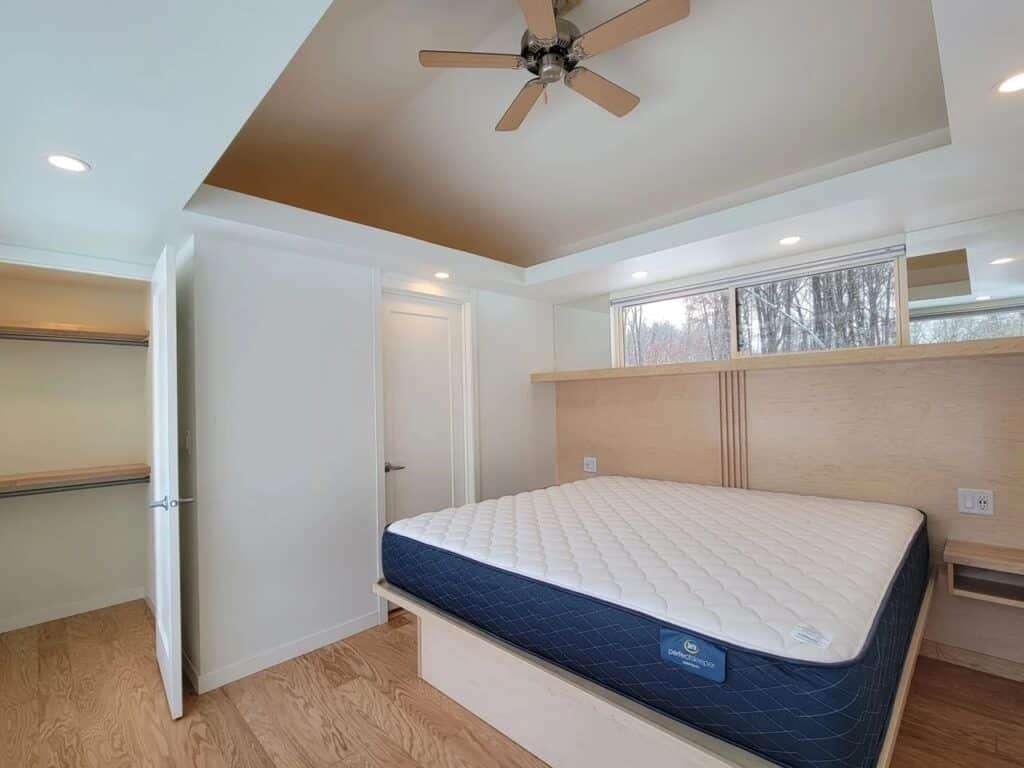
Furthermore, the design includes a walk-in closet and a full-sized sofa, elements that indicate a clear orientation toward long-term occupancy rather than temporary living.
Thus, the project can be read as an attempt to redefine the nature of tiny houses, not only in terms of size, but also in terms of comfort level and the nature of daily use. This redefinition aligns with ongoing research into how small-scale dwellings can support permanent residency without compromising quality of life.

A Fixed Model Redefining the Idea of the “Tiny House”
As a fixed model within the non-towable Park Model category, the Shoreline Glass House moves away from the dominant trend in much of the tiny house market, which is often associated with a nomadic lifestyle. Instead, the design clearly shifts toward the idea of permanence or long-term residence.
Livability Prioritized Over Mobility
This orientation is not merely a theoretical choice, but is directly reflected in both architectural decisions and detailed spatial treatments. From the floor-to-ceiling glazed façades to the full-width bathroom, it becomes evident that the primary objective is to enhance the quality of everyday spatial use.
In this context, livability is positioned as a higher priority than mobility or transportability, thereby restructuring the traditional hierarchy of design considerations in this type of housing unit.
Rethinking the Limits of Space
Furthermore, this model proposes a different perspective on the relationship between size and comfort. Rather than treating reduced space as something that inevitably requires compromising essential qualities, the design demonstrates the possibility of maintaining a fully functional living standard within a relatively compact footprint.
Thus, the Shoreline Glass House reopens the discussion around whether “small” truly means “less,” or whether it can instead represent a more intelligent reorganization of space without losing core elements of comfort.

✦ ArchUp Editorial Insight
Shoreline Glass House can be analyzed as an outcome of a structural shift within the Park Model category, moving from a market of transportable units toward a semi-fixed housing model shaped by the intersection of land-use regulations, transport legislation, and insurance risk frameworks. The primary driver lies in the pressures of temporary housing classifications and the physical constraints of highway transport width limits, which collectively pushed the unit toward a non-towable condition and effectively transformed it into a quasi-real-estate asset. Such shifts in housing typologies are frequently examined in architectural research that explores how external forces shape built form.
Regulatory and logistical constraints, particularly the 12-foot width limitation and insurance safety codes, have reshaped the architectural envelope into a kind of operational workaround designed to amplify perceived spatial volume without increasing actual floor area. The glass façade operates as a value-augmentation mechanism, enhancing perceived luminosity while reducing the perceived necessity for physical expansion. This strategic use of building materials demonstrates how material choices can respond to external constraints while maintaining spatial quality.
The result is less a formal design decision and more a negotiated settlement between financing structures, regulatory frameworks, and long-term occupancy patterns, where individual design agency is diminished in favor of market logic.