

Canada’s Tallest Residential Tower Reshapes Toronto’s Waterfront Skyline

Toronto’s SkyTower at Pinnacle One Yonge has reached 106 storeys, claiming the title of Canada’s tallest residential building. The 352-meter tower marks a significant shift in the city’s vertical expansion and urban planning approach.
Mixed-Use Development Transforms Former Industrial Site
The SkyTower forms part of the larger Pinnacle One Yonge development at Toronto’s waterfront edge. This multi-phase project occupies the former Toronto Star property site. The development integrates residential units, hotel space, offices, retail areas, and community facilities into one cohesive neighborhood.
Moreover, this approach reflects current trends in architecture that prioritize mixed-use districts. The integration allows residents to live, work, and access amenities within a single urban complex. Therefore, the project addresses housing demand while reducing dependence on commuting infrastructure.
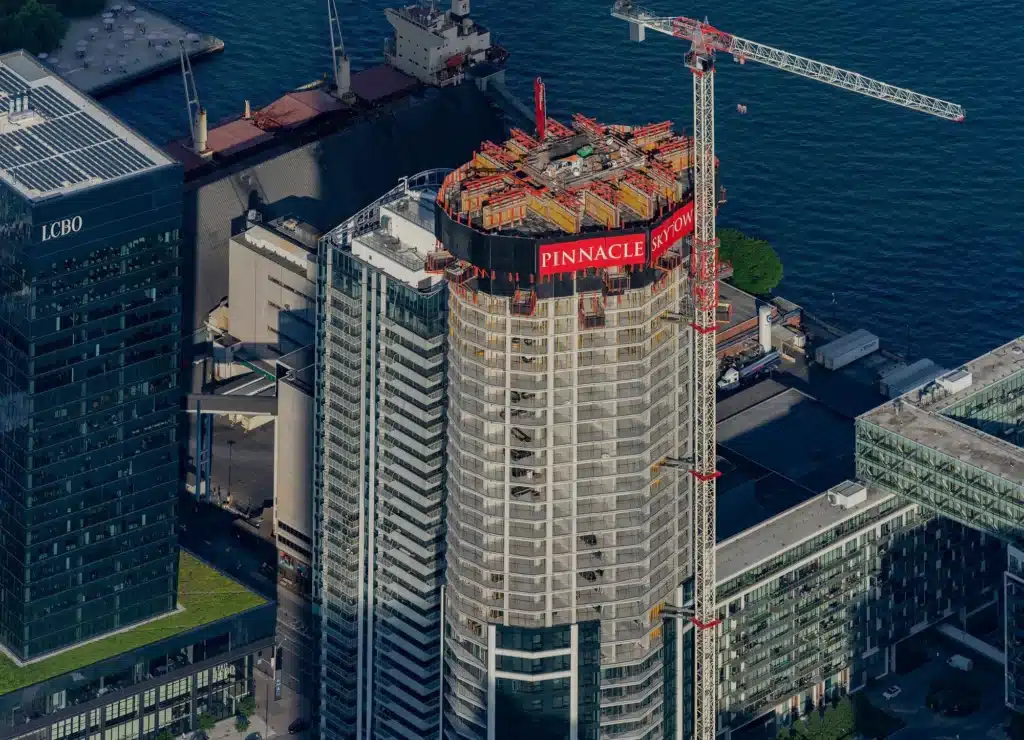
Distinctive 12-Sided Form Defines Vertical Profile
The tower features a tapered, 12-sided design that gradually narrows toward its peak. This geometric approach creates a sculpted profile distinct from Toronto’s growing cluster of supertall buildings. The structure transitions from a street-level podium into a slender vertical form.
Meanwhile, the 351-352 meter height places SkyTower above all other occupied structures in Canada. However, the nearby CN Tower maintains its position as the country’s tallest structure overall due to its broadcast function.
Interior Program Accommodates Over 900 Units
The tower will house more than 900 residential units across its 106 floors. Amenity spaces include fitness facilities, pools, and entertainment areas distributed throughout the building. Additionally, lower levels incorporate hotel functions, reinforcing the mixed-use programming strategy.
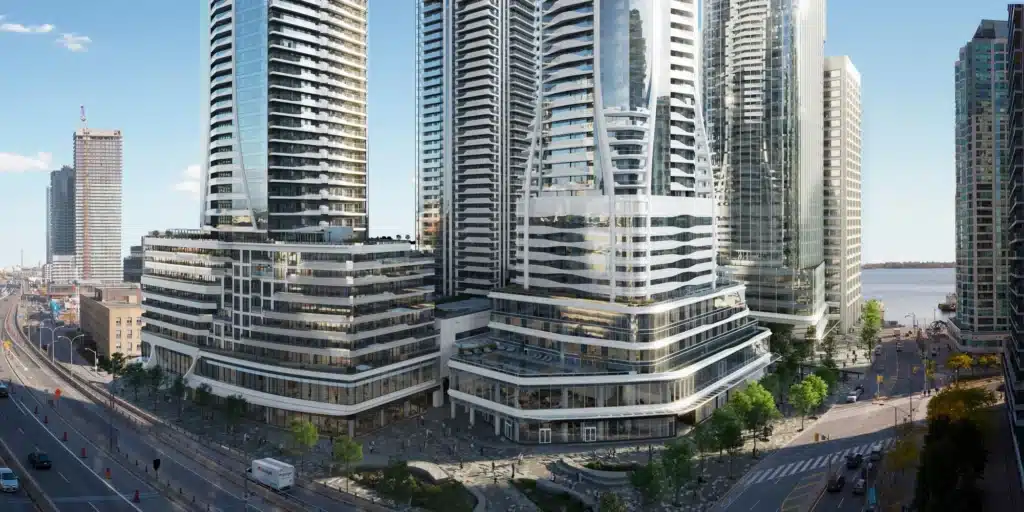
Construction began in 2018 as part of the phased redevelopment plan. The first tower, a 65-storey residential structure called Prestige, reached completion in 2022. Furthermore, additional towers planned for the site will continue transforming Toronto’s waterfront over coming years.
Vertical Growth Responds to Urban Density Pressures
The project exemplifies broader patterns in Toronto’s development landscape. Population growth and housing demand have pushed developers toward vertical construction solutions in the downtown core. Projects like SkyTower aim to deliver thousands of new homes while strengthening connections between waterfront areas and established city districts.
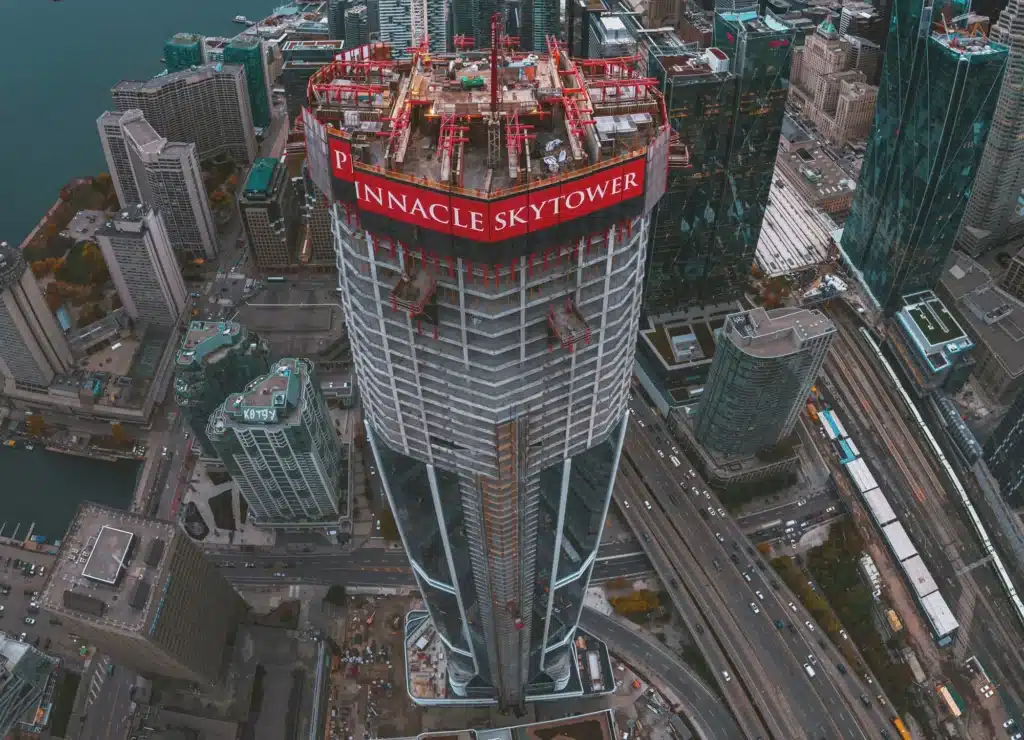
Therefore, the 106-storey tower represents how Toronto is redefining its urban form. The city’s skyline continues becoming denser and more vertical as sustainability considerations and land constraints shape development patterns.
A Quick Architectural Snapshot
SkyTower at Pinnacle One Yonge stands approximately 352 meters tall across 106 storeys. The development includes around 950 residential units within a mixed-use supertall tower. Hariri Pontarini Architects designed the 12-sided tapered structure currently under construction at Toronto’s waterfront.
✦ ArchUp Editorial Insight
Toronto’s vertical expansion reflects a collision of demographic pressure, land scarcity, and investment capital seeking stable returns. The city added over 400,000 residents in the past decade while maintaining restrictive zoning in low-density neighborhoods. Developers responded predictably by concentrating density on available waterfront parcels.
The mixed-use programming serves dual purposes. It satisfies municipal requirements for community amenities while maximizing revenue per square meter of land. Hotel and retail components generate cash flow during the lengthy residential sales cycle. This financial structure has become standard for supertall projects across North American cities.
The 106-storey height is not an architectural ambition but an economic calculation. Taller buildings spread fixed land costs across more sellable units. The tapered form reduces wind load requirements, lowering structural costs while creating marketable premium units at upper floors.
This project is the logical outcome of population growth plus restrictive suburban zoning plus global capital flows into Canadian real estate.



