Snøhetta Transforms Traditional Finance Office into Open Urban Plaza in Taichung

A new office design in Taichung reimagines the traditional financial workplace through transparency and collaboration. The 800-square-meter space breaks from conventional layouts to prioritize dialogue over hierarchy. Snøhetta won an invited competition in 2022 to design the facility.
Competition Win Leads to Radical Office Redesign
The project emerged from a 2022 competition that challenged conventional financial office architecture. The brief called for a complete departure from closed-door consultancy spaces. Therefore, the design team focused on creating an environment that balances openness with professional functionality. The resulting workplace demonstrates how buildings can reflect organizational culture through spatial planning.
Central Forum Anchors Flexible Workplace
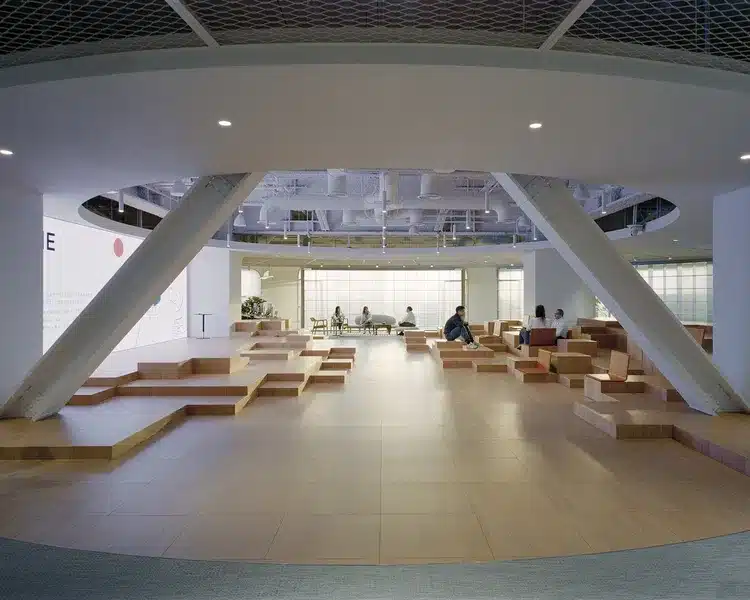
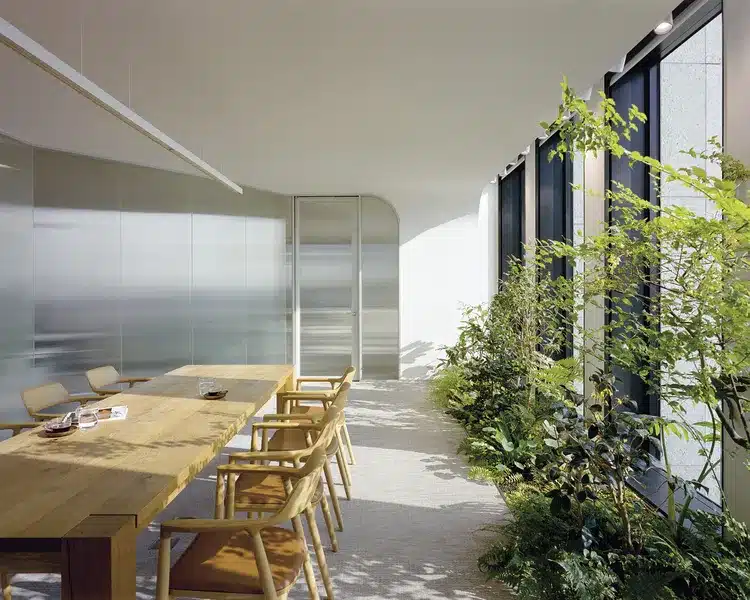
The office layout centers around a multifunctional forum space designed for learning and gathering. Visitors experience a carefully planned entry sequence through a linear corridor. This pathway guides people toward the central hub, which functions similarly to an urban plaza. Moreover, the forum space serves as both a social anchor and functional core. The surrounding flexible workplace zones radiate from this central gathering point, creating visual and spatial connectivity throughout the facility.
Balancing Transparency with Privacy Needs
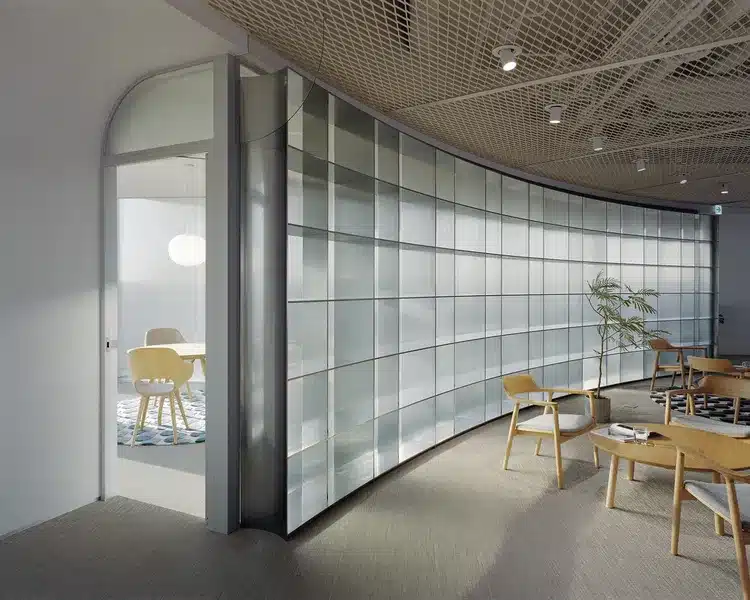
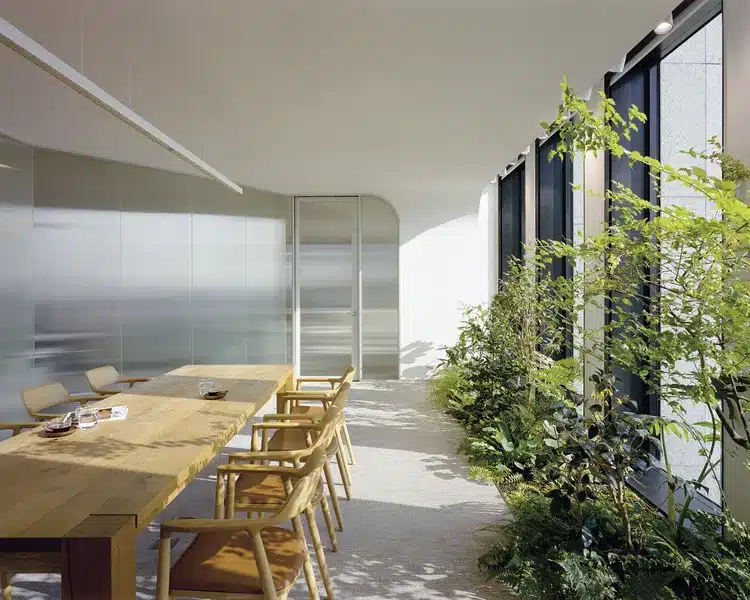
The 800-square-meter layout addresses the dual requirements of interior design in financial services. The space must support free exchange while maintaining professional discipline. Therefore, the design incorporates varying degrees of openness across different zones. Transparent elements encourage collaboration in shared areas. Meanwhile, privacy remains available where client consultations require discretion. This approach challenges the traditional closed-office model prevalent in financial construction.
Design Evokes Urban Public Spaces
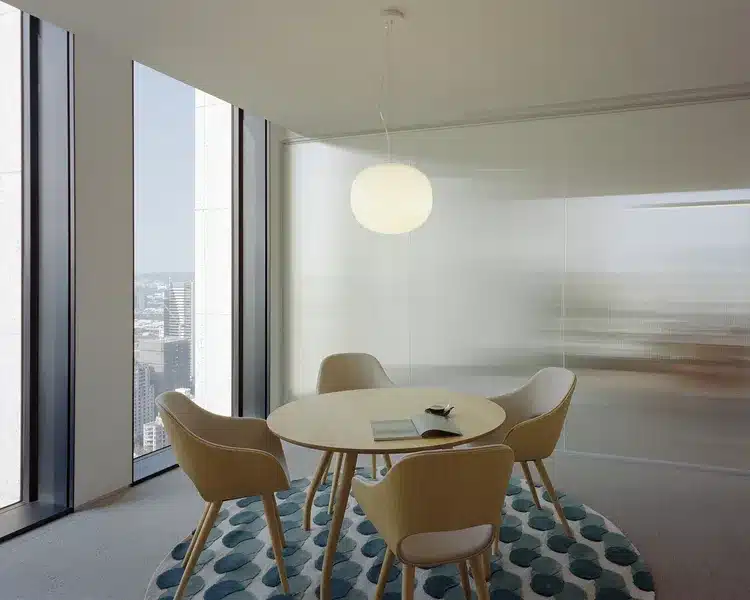
The spatial concept draws inspiration from cities and neighborhood parks rather than corporate precedents. This strategy creates an inviting atmosphere uncommon in financial workplaces. The central forum particularly reflects this urban planning influence through its role as a gathering space. However, the design maintains the professionalism essential to the industry. The project sets new benchmarks for how financial offices can function as people-centered environments while serving business requirements.
A Quick Architectural Snapshot
The Taichung office spans 800 square meters across a flexible layout centered on a multifunctional forum. The design prioritizes collaboration through spatial transparency while maintaining necessary privacy zones. A linear entry corridor creates a deliberate sequence leading to the central gathering space, which anchors the surrounding workplace.
✦ ArchUp Editorial Insight
Financial institutions face mounting pressure to shed their intimidating image. Younger clients increasingly avoid traditional banks, preferring digital alternatives that feel less hierarchical. This office redesign responds directly to that behavioral shift. The open forum concept reduces psychological barriers between advisors and clients. Meanwhile, the rejection of private offices signals a deliberate move away from power dynamics that defined previous generations of financial spaces. The competition brief itself reveals institutional anxiety about relevance in a changing market. Transparency becomes a spatial tool for rebuilding trust eroded by economic crises. The flexible layout also addresses practical concerns about real estate costs and evolving work patterns.
This project is the logical outcome of declining client trust in traditional finance plus generational shifts in workplace expectations plus the economic pressure to maximize usable square footage.