Standard Concrete Block

Overview:
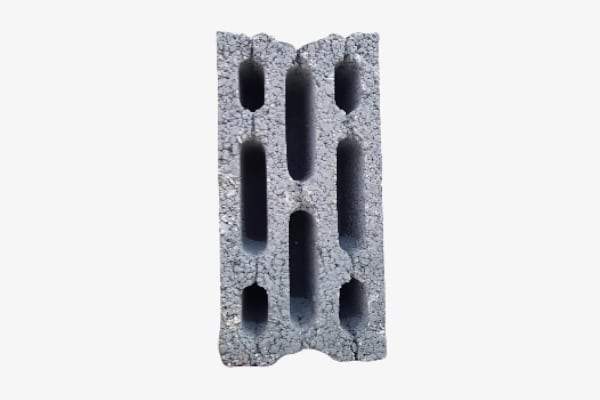
A standard concrete block is a fundamental construction material used in a variety of building applications. It is widely utilized due to its durability, affordability, and versatility. Standard blocks can be solid or hollow and are commonly used in walls, partitions, and structural components.
Why You Should Use It:
- Versatile Construction Material: Suitable for walls, foundations, and partitions.
- Durable and Weather-Resistant: Provides long-term structural stability.
- Cost-Effective: Offers an affordable solution for large-scale construction.
- Fire-Resistant: Reduces the risk of fire spread in buildings.
- Easy to Install: Simplifies the construction process with modular design.
Key Features:
| Property | Description |
|---|---|
| Density | 1700–2400 kg/m³ |
| Compressive Strength | 3.5–7.5 MPa |
| Fire Resistance | High due to concrete composition |
| Water Absorption | 5–10% |
| Thermal Conductivity | 0.6–1.2 W/m·K |
| Lifespan | 50+ years |
Uses:
- Structural Walls: Used in residential and commercial buildings.
- Partition Walls: Ideal for non-load-bearing internal divisions.
- Retaining Walls: Provides stability in landscaping and road construction.
- Boundary Walls: Commonly used for fencing and security barriers.
- Industrial and Commercial Applications: Used in warehouses and factories.
Dimensions:
| Dimension | Size Range |
|---|---|
| Length | 400 mm – 600 mm |
| Width | 100 mm – 200 mm |
| Height | 150 mm – 250 mm |
Density:
- Standard Density: 1700–2400 kg/m³
- High-Density Variant: Up to 2500 kg/m³
Case Studies:
- Residential Construction: Used in homes for load-bearing walls.
- Commercial Buildings: Applied in office buildings and retail spaces.
- Road Infrastructure: Supports pavement and retaining wall structures.
Applications in Practice:
Standard concrete blocks offer an effective balance between cost and performance, making them a popular choice in construction projects of all scales.
Installation Recommendations:
- Ensure Proper Alignment: Blocks should be laid evenly for structural integrity.
- Use Quality Mortar: High-strength mortar improves bonding and durability.
- Apply Waterproofing: Reduces moisture absorption and enhances longevity.