Sinusoidal Steel Footbridge Cantilevers From Historic 19th-Century Viaduct in Albi, France

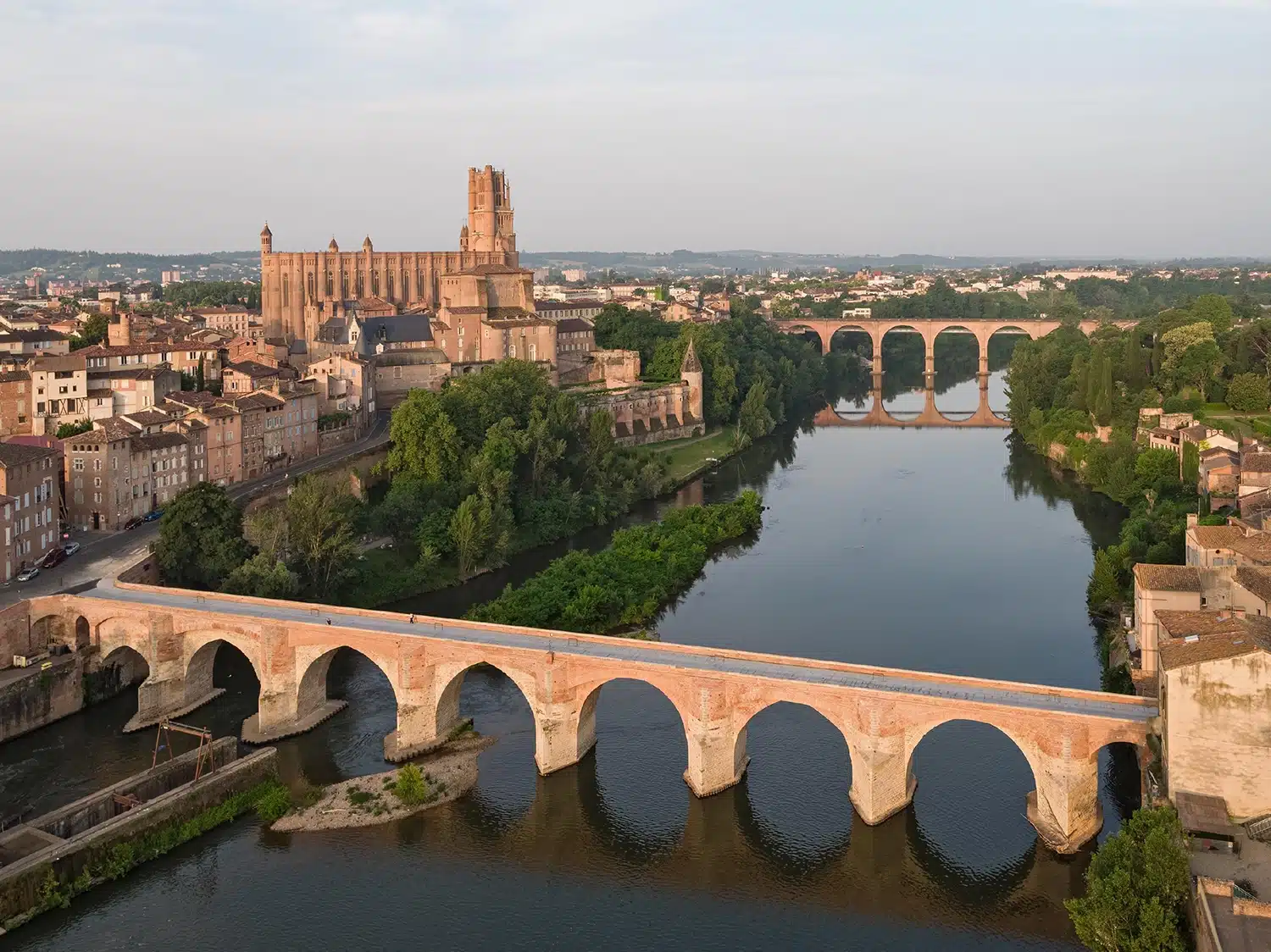
A new 180-meter steel footbridge now cantilevers from a historic railway viaduct in Albi, France. The architecture project connects the UNESCO-protected city center with the Pratgraussals district. It restores a pedestrian link severed during construction of the original 1865 viaduct.
Historic Viaduct Meets Contemporary Steel Structure
The existing railway viaduct stands as a seven-span masonry arch bridge. It rises 30 meters above the Tarn River. The structure features rose-colored bricks characteristic of Albi’s historic skyline. However, the new footbridge takes a different approach to building materials. The design team selected steel to create visual contrast with the textured brickwork. Moreover, the cantilever system preserves the integrity of the original arches. The lightweight profile avoids competing with the monumental masonry buildings nearby.
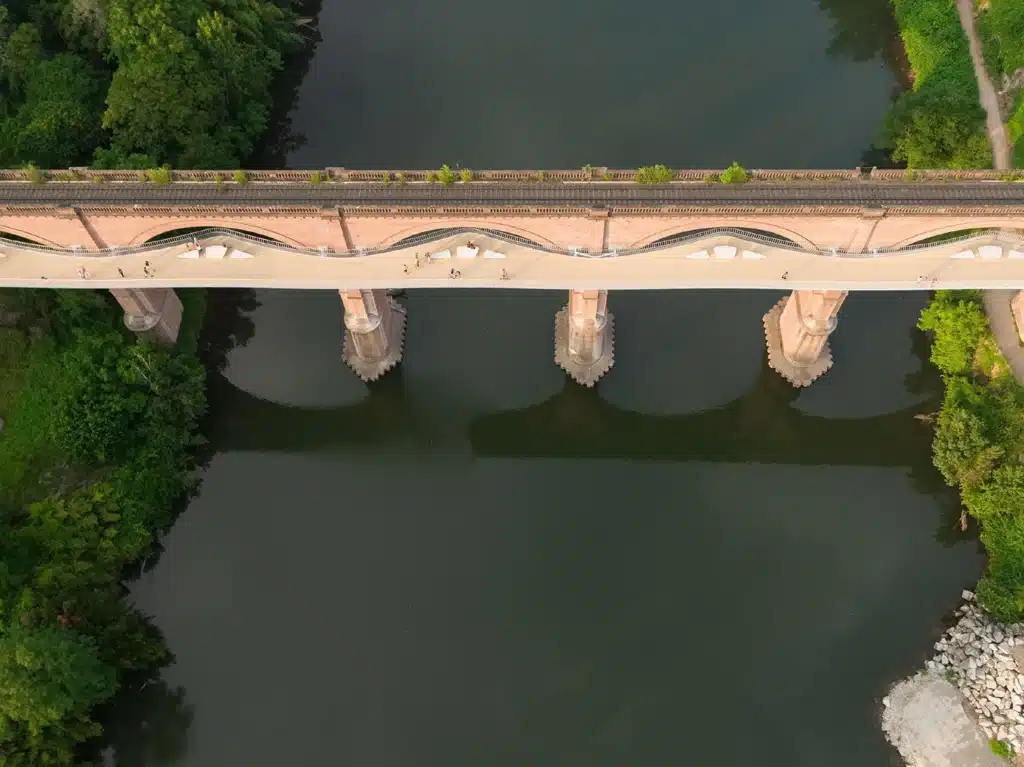
Sinusoidal Geometry Creates Dynamic Pedestrian Experience
The bridge deck follows a waving pattern in both plan and elevation. This sinusoidal geometry echoes the 29-meter rhythm of the viaduct arches. Therefore, the crossing becomes a curated journey rather than a utilitarian path. The width varies from 3.5 meters to 7.5 meters at strategic points. Generous balconies appear at the center of each arch span. These spaces include integrated seating beneath the shade of historic masonry. Meanwhile, pedestrians enjoy unobstructed views of Palais de la Berbie and Sainte-Cécile Cathedral. The positioning on the downstream side keeps the viaduct as the dominant visual anchor from the cities center.
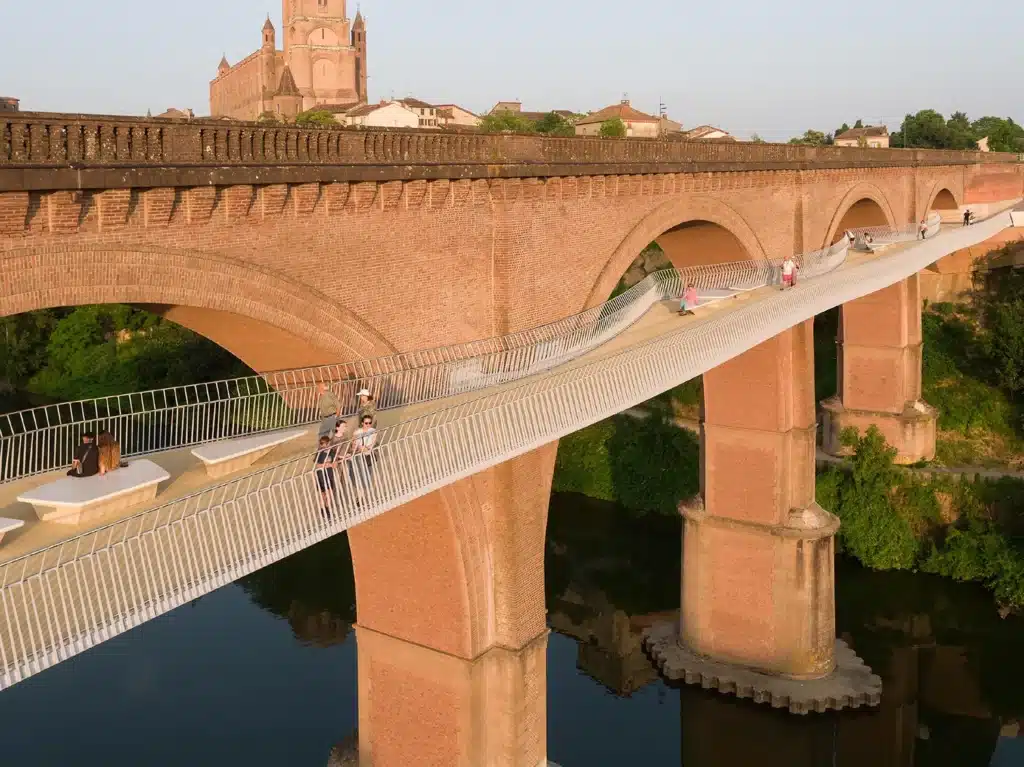
Engineering Solutions Enable Lightweight Profile
The footbridge functions as a seven-span continuous steel beam with double supports. This structural approach reduced the effective span of each steel section. Consequently, the design achieves a slimmer profile than conventional solutions would allow. A closed box girder cross-section provides the torsional stiffness required for cantilever forces. The construction method protects the heritage masonry from structural compromise. Custom-engineered steel connections attach directly to the viaduct piers.
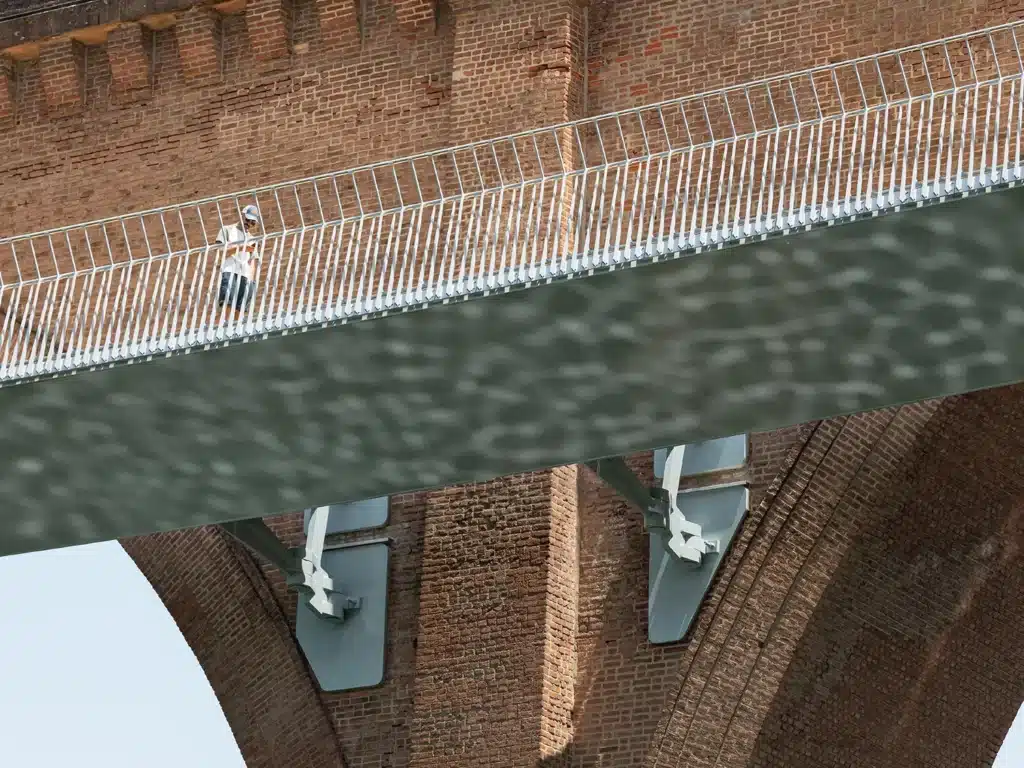
Urban Connectivity Restored After 150 Years
The original viaduct construction severed connections between Castle Square and Calvary Square. This new architecture intervention heals that urban wound. The project also revitalized adjacent public spaces at both entry points. The bridge now serves as an artery for sustainability-focused mobility solutions. It links the La Madeleine neighborhood to the historic core. Cyclists and pedestrians share the route across the Tarn River. The latest news in infrastructure design shows growing interest in such heritage-sensitive interventions.
A Quick Architectural Snapshot
This project transforms infrastructure into spatial storytelling. The sinusoidal steel footbridge respects Albi’s UNESCO status while introducing contemporary design language. Seven balconies offer shaded rest points with river views. The 180-meter crossing reconnects neighborhoods separated for over 150 years. Heritage and modernity now share one coherent landmark above the Tarn.