International Design Competition: Protective Shelter at Tell es-Sultan/Ancient Jericho, State of Palestine

Competition overview
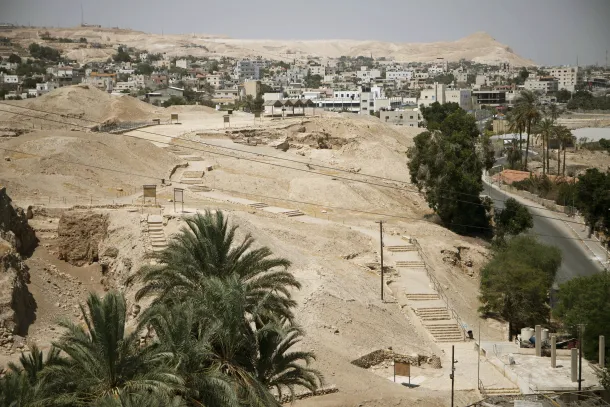
UNESCO’s International Design Competition: Protective Shelter at Tell es-Sultan/Ancient Jericho, State of Palestine seeks a protective structure for Trench I. The open, single-stage competition is organised with the Palestinian Ministry of Tourism and Antiquities, supported by Italy through AICS, and endorsed by the UIA.
The challenge combines archaeological conservation, structural design and visitor interpretation. The shelter must protect vulnerable remains while maintaining a legible relationship between the excavation, the landscape and public access. This is a project-oriented professional competition, with a stated design-development and supervision appointment for the winner.
Eligibility and submission
Entrants must be authorised practitioners. The lead architect needs eight years of architectural-design experience; the team must include a structural engineer with ten years of practice. UN eligibility requirements apply. One registration and one proposal are permitted; alternatives are not accepted.
Submit anonymously in English: four A1 PDF panels, up to 40 MB each and 300 dpi, plus an A4 report of no more than 1,000 words. Use the assigned UIN at the top right, without names or logos. Registration provides a dedicated upload folder.
The FAQ permits individual architects, but the eligibility section still requires structural-engineering expertise. An individual entry should not be read as an exemption from that requirement.
Awards and professional appointment
| Award | USD |
|---|---|
| First | $30,000 |
| Second | $20,000 |
| Third | $10,000 |
| Total | $60,000 |
The announced winning appointment covers detailed design and supervision, with a Palestinian professional, practice or educational institution as local partner. The prize figures should not be treated as the fee for those services or as a construction budget. The public announcement does not itemise the appointment’s remuneration, tax deductions or prize-payment timetable.
No entry charge is stated on the official announcement reviewed. Confirm registration conditions and the complete contractual brief before committing professional resources.
Dates
| Stage | Date |
|---|---|
| Launch | 24 July 2026 |
| Questions closed | 25 August 2026 |
| Answers expected, updated schedule | 14 October 2026 |
| Registration and submission | 15 December 2026, 17:00 GMT+2 |
| Jury | January 2027 |
| Results | January–February 2027; exact day pending |
The deadline equals 15:00 UTC or 18:00 Riyadh time. The countdown below uses that verified instant. UNESCO’s 25 September update postpones answers to 14 October; entrants should use the updated organiser page.
Jury
Architects Yara Saifi, Abderrahim Kassou, Gabriela Carrillo, João Luís Carrilho da Graça and Marina Tabassum form the main panel. Ueli Brauen, an architect and civil engineer, and architect Filippo Lambertucci are alternates. Archaeology and engineering advisors complement the architectural jury. These roles are identified by the organiser; they do not replace the published assessment criteria.
✦ ArchUp Competition Review
The central design decision is where the new structure touches the ground. A visually light roof can still require foundations, temporary works and drainage that impose a heavy burden on an excavation. A convincing proposal should therefore make the construction sequence as readable as the finished form: access for assembly, support locations, water discharge and future maintenance deserve explicit drawings.
Protection also needs to be tested at more than one scale. Excluding direct rainfall is only the first question. Roof edges, wind-driven rain, reflected heat and visitor movement can shift the location of risk. Sections that connect environmental behaviour to the archaeological surfaces would provide a stronger argument than a detached aerial rendering.
The professional experience requirements and local-partner obligation make early team formation important. Conservation knowledge, structural feasibility and the ability to supervise work must support the same proposal. The published route to an appointment gives this opportunity practical relevance, but bidders still need to understand how scope, liability and fees would be agreed.
ArchUp verified the public announcement, not the complete downloadable contractual package, which was inaccessible during review. Detailed evaluation weights, reproduction rights and appointment conditions remain to be checked against the brief and forthcoming answers.
Reviewed 2 October 2026 under ArchUp’s competition transparency policy. Image: UNESCO’s official site photograph used in the announcement; no separate poster was identified. Explore other architecture competitions.