Terminal 5 at Changi Airport: A Civic Vision for the Future of Air Travel

Terminal 5 at Singapore’s Changi Airport marks a transformative moment in airport architecture. It proposes a radical departure from traditional transit design by positioning the terminal as a social and civic space rather than a mere gateway for movement. Rooted in Singapore’s identity and responsive to the nation’s climate, culture, and evolving urban ecosystem, T5 is poised to become more than a logistics facility — it is architecture as public infrastructure and design as care.
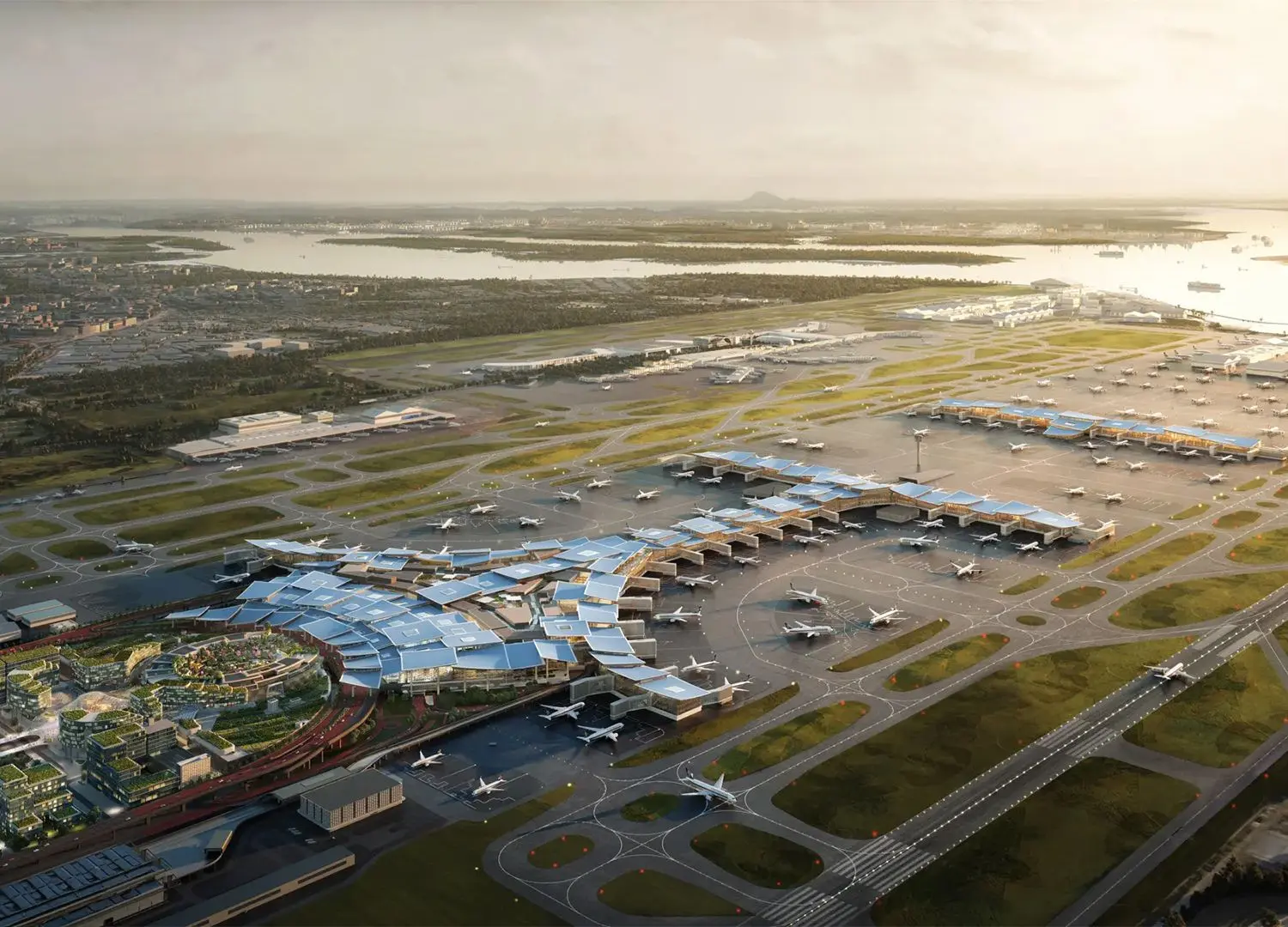
Planned as part of the Changi East development, the terminal spans a monumental 1,080 hectares and is expected to open in the mid-2030s. Unlike conventional airports that prioritize efficiency above all, T5 is crafted with an emphasis on atmosphere, user experience, and community integration. It aims to serve not only as a key air hub in Southeast Asia but as a symbol of human-centered infrastructure in the 21st century.
For anyone looking for a reliable and up-to-date architectural resource, ArchUp offers fresh content covering projects, design, and competitions.
Infrastructure as Experience: A New Role for Airport Design
Terminal 5 represents a conceptual leap: an airport that functions less as a technical space and more as a civic landscape. Developed collaboratively by Kohn Pedersen Fox (KPF) and Heatherwick Studio, the terminal envisions infrastructure as part of the urban experience, not apart from it. From the inclusion of public areas and greenery to natural daylight and open circulation, T5 positions design as a facilitator of wellbeing, engagement, and community presence.
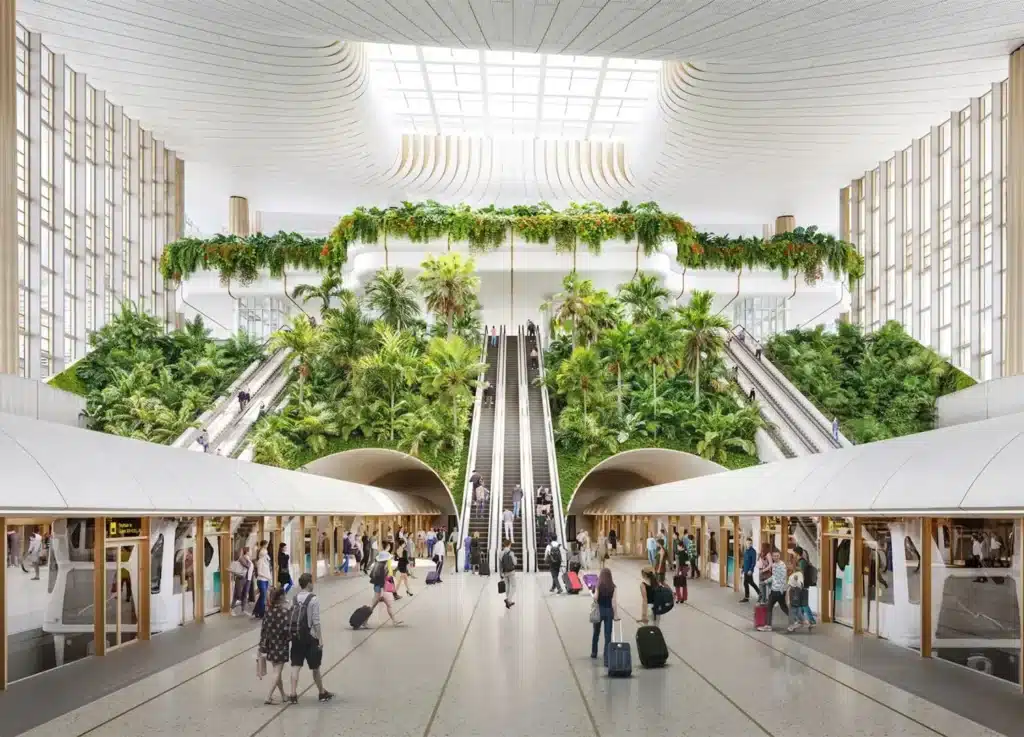
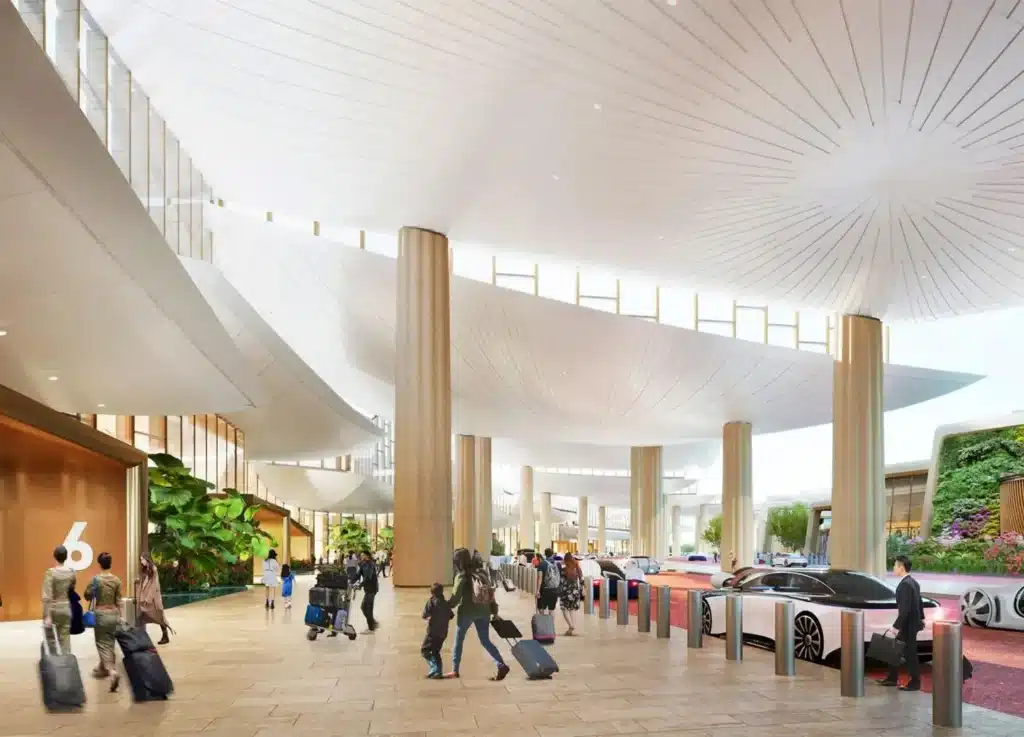
The architecture aims to dissolve boundaries between transit and place. Public amenities, communal zones, and interior gardens are designed to turn waiting into dwelling, and transit into experience. In this paradigm, the terminal becomes a living structure — responsive, generous, and profoundly human.
The Changi East Masterplan: A System of Connectivity
The development of T5 is part of the larger Changi East masterplan, which includes the construction of a third runway, aviation support zones, underground transport facilities, and the Changi East Industrial Zone (CEIZ). This unified strategy will significantly expand Singapore’s air transport capacity while integrating it with the broader economic and industrial network of the region.
A notable feature is the Automated People Mover (APM) system, connecting T5 to other terminals and key operational zones, as well as a new MRT station that offers seamless underground access. This interconnected network underscores the airport’s ambition to become a holistic, multi-modal hub, simplifying passenger movement while enhancing the airport’s urban integration.
Climate-Conscious Design and Modular Architecture
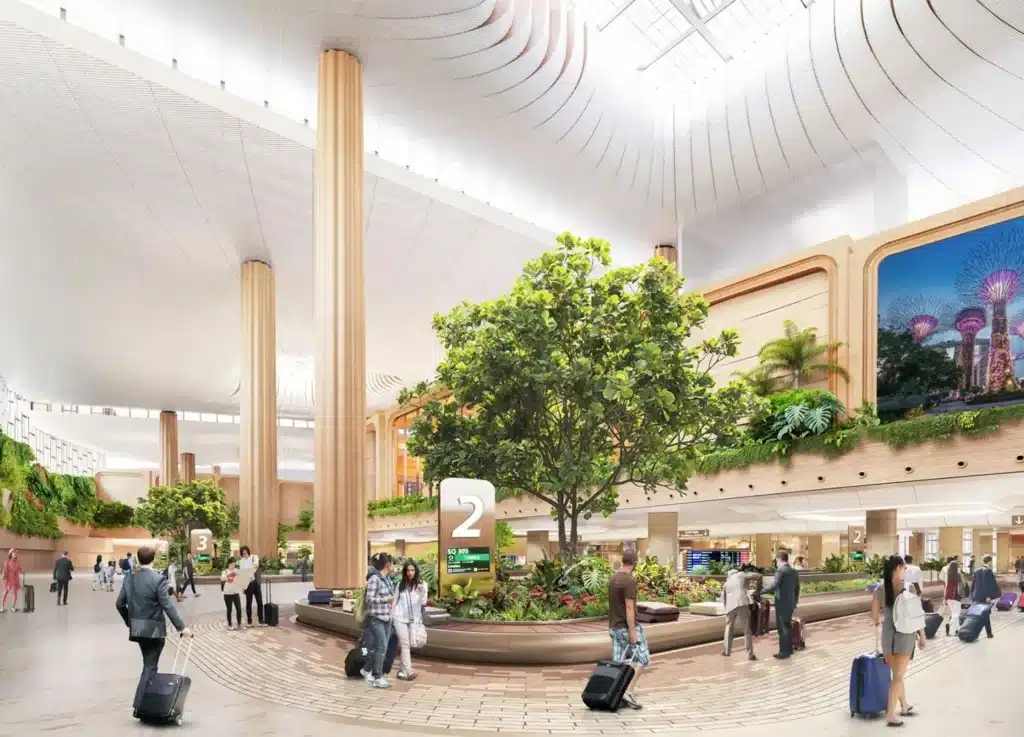
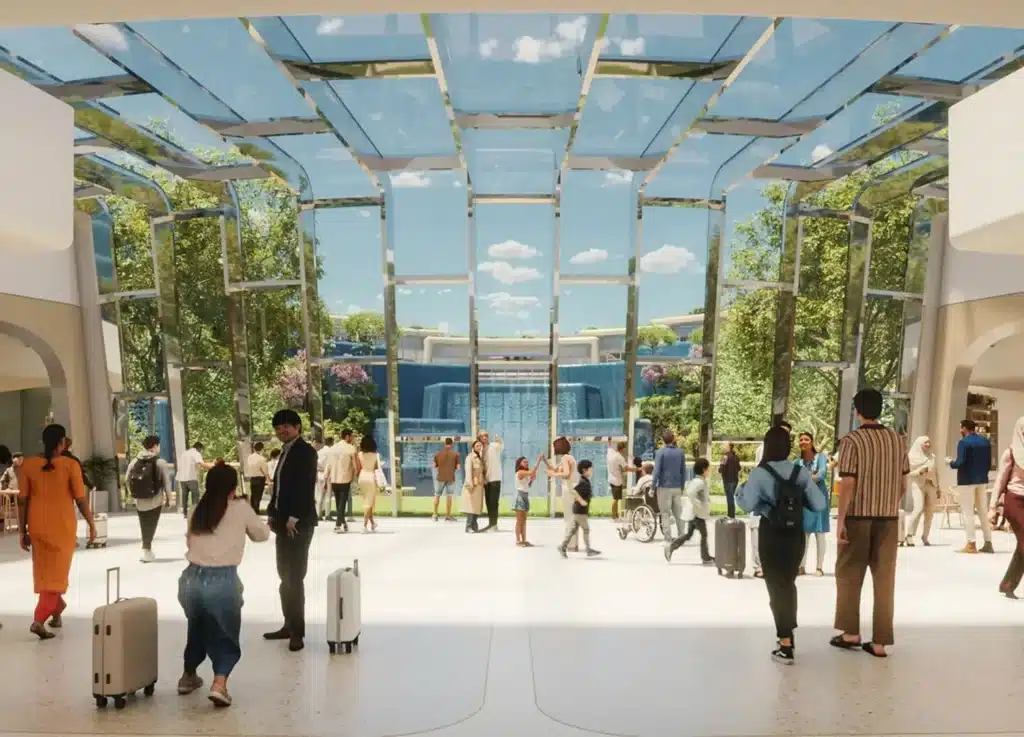
T5’s architectural language reflects both ecological sensitivity and formal elegance. Inspired by the tropical climate and natural patterns of Singapore, the modular roof system channels passive cooling strategies and daylight optimization. The layout is organized into zones that incorporate indoor greenery, fluid spatial transitions, and framed landscape views.
Materials and construction methods prioritize longevity and adaptability. The modular design allows for future expansion or adjustments, making the terminal responsive to emerging technologies and changing passenger demands. This sustainability-minded approach demonstrates how design can anticipate long-term resilience while creating sensory richness and comfort in the short term.
Enhancing Passenger Experience Through Spatial Intelligence
At the heart of the project is a belief in architecture’s ability to influence mood, reduce stress, and enrich experiences. Every aspect of Terminal 5’s layout — from baggage claim halls to lounges and transit corridors — is designed to feel intuitive and emotionally grounded. Interior gardens offer pauses of green relief. High ceilings and diffuse lighting guide movement naturally. Materials are chosen for warmth and tactility.
The design avoids over-programming, opting instead for open-ended public spaces that encourage exploration and personal interpretation. Whether for families, business travelers, or airport staff, T5 creates an ecosystem of comfort and encounter — a place where travel can feel meaningful rather than mechanical.
Rethinking the Terminal as a Civic Extension
T5 repositions the airport as a node of civic identity. It extends the city’s social and architectural values into its transit infrastructure, creating a continuous relationship between the urban environment and the global network. This reimagining of the terminal as a civic typology — not just a port — aligns with new global conversations on mobility, wellbeing, and placemaking in large-scale public infrastructure.
The project embraces a placemaking ethos — where architecture is not background, but foreground, actively shaping public behavior, cultural interaction, and emotional response. It signals a broader shift in how infrastructure is conceptualized: not just as systems of utility but as emotional and civic spaces.
✦ ArchUp Editorial Insight
Terminal 5 at Changi Airport challenges traditional definitions of infrastructure, offering a compelling model of what future airports could become. Rather than treating transit as an interruption, it turns it into an opportunity — for rest, reflection, and reconnection. The collaboration between KPF and Heatherwick Studio demonstrates how interdisciplinary, socially-driven design can reshape megastructures into meaningful spaces. T5 is not just an architectural feat; it’s a cultural proposition about how we choose to move, wait, and connect in a globalized world.
Explore More with ArchUp
ArchUp documents the evolving profession of architects worldwide, from career insights and research to project profiles and industry news. Our editorial team publishes global salary trends, career advice, and opportunities for emerging talents. Learn more on our About page or Contact us to collaborate.