

The Benedictine Monastery of San Nicolò l’Arena: A Timeless Transformation by Giancarlo De Carlo

The Benedictine Monastery of San Nicolò l’Arena in Catania, Sicily, stands as a testament to resilience, bearing the scars and splendor of five centuries of history. Shaped by volcanic fury, devastating earthquakes, and the ever-shifting hands of human purpose, its walls whisper tales of destruction and rebirth. Yet, among all its transformations, none was as harmonious or visionary as the one led by Italian architect Giancarlo De Carlo in the late 20th century. Beginning in 1980, De Carlo embarked on a 30-year journey to restore and repurpose the monastery into a university—not through forceful imposition, but through a revelation of its hidden layers.
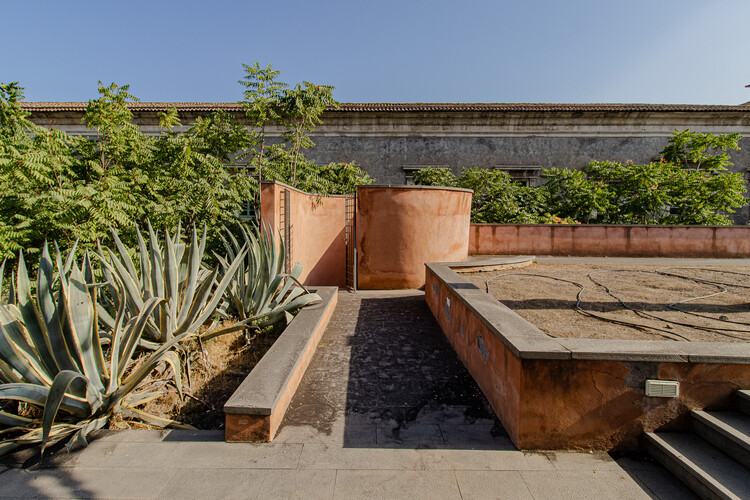
A Monument Forged by Fire and Time
Now a UNESCO World Heritage Site, the monastery was founded in 1558 and is celebrated as a masterpiece of Sicilian Baroque architecture. Its original design featured a square layout centered around the “Marble Cloister”, named for its opulent use of Carrara marble. Yet, its grandeur was repeatedly tested by catastrophe.
- 1669: Mount Etna erupted, sending rivers of lava that engulfed the monastery’s northern and western sides, leaving behind a surreal, hardened landscape.
- 1693: A massive earthquake (7.7 magnitude) reduced much of Catania to rubble. The monastery’s cloister was nearly destroyed—only 14 of its original columns remained.
By 1702, reconstruction began, expanding the complex with Baroque flourishes, a second cloister, and lush gardens planted atop the cooled lava. For over a century, it thrived as one of Europe’s largest monasteries until 1866, when the Italian state seized it under secularization laws.
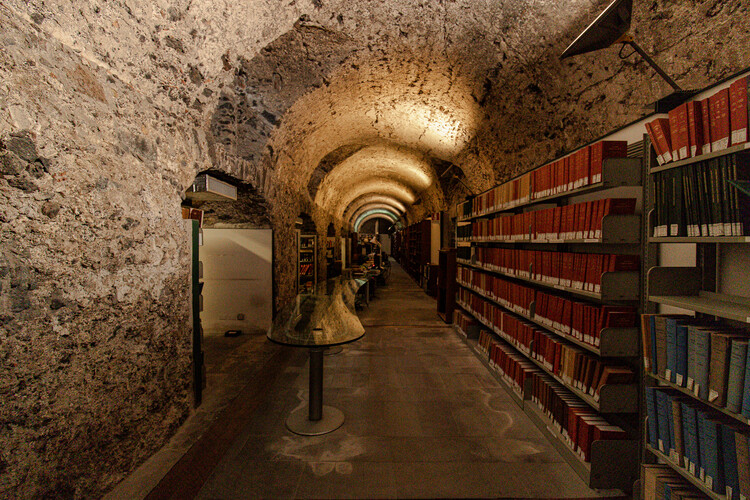
From Sacred to Secular: A Building Reinvented
Over the next century, the monastery served as:
- A public school
- Military barracks
- A hospital (built over its former botanical gardens)
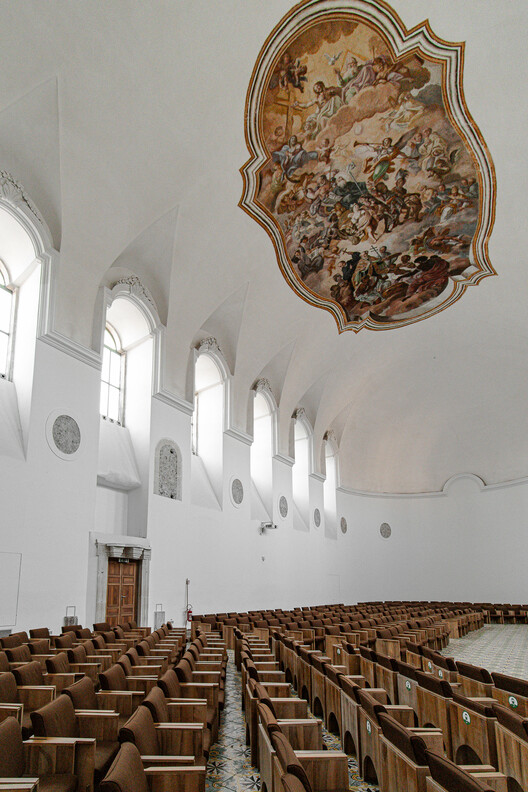
Each new function left its mark: frescoes were stripped, corridors divided, and modern additions clashed with historic fabric. By the 1970s, the building stood nearly abandoned—a fading relic awaiting renewal.
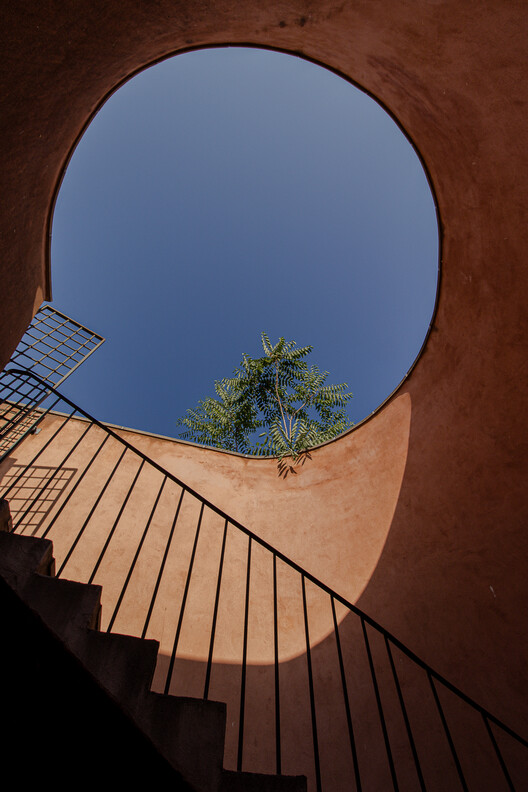
De Carlo’s Vision: A Dialogue Between Past and Present
In 1977, the monastery was gifted to the University of Catania to house its Faculty of Humanities. When Giancarlo De Carlo was invited in 1980, he faced an extraordinary challenge: how to adapt a sacred, earthquake-scarred Baroque monument into a modern university without erasing its soul.
Rejecting conventional restoration, De Carlo proposed a “Progetto Guida” (Design Guidelines)—a framework that respected the past while embracing contemporary needs. His approach:
✔ Remove rather than add
✔ Restore rather than replace
✔ Create connections rather than divisions
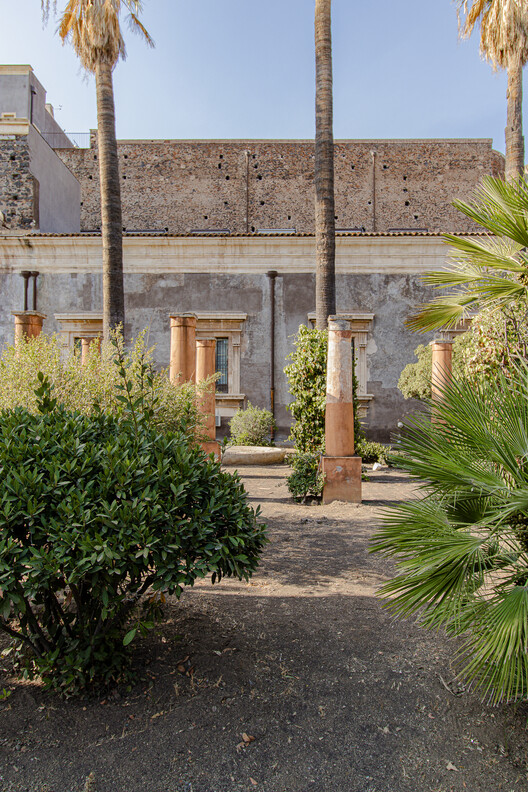
A Living Archive of History
Walking through the transformed monastery today is an architectural pilgrimage. Key interventions include:
- The University Library: Suspended walkways overlook a preserved Roman domus, blending ancient ruins with modern academia.
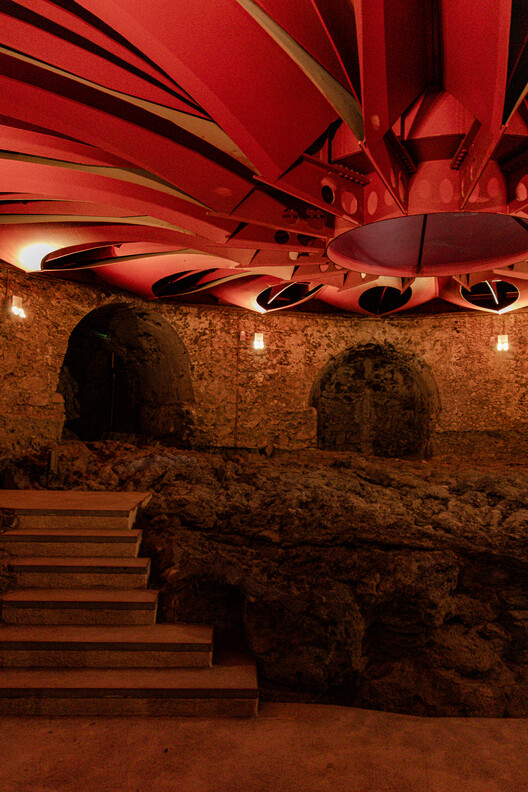
- The “Sala Rossa”: A volcanic-red ceiling doubles as structural support for the damaged refectory above, mirroring Etna’s fiery presence.
- The Thermal Center: Encased in glass atop solidified lava, its sculptural chimney symbolizes resilience and rebirth.
De Carlo’s genius lay in making history visible—whether through exposed ruins, layered materials, or subtle contemporary insertions. The monastery is no longer frozen in time; it breathes anew, serving students while honoring its past.
Legacy: Architecture as Revelation
De Carlo once said, “It is rare for an architect to engage with such a complex blend of architectural emotions.” His work at San Nicolò l’Arena proves that great restoration is not about dominance, but dialogue—a lesson timeless for heritage conservation today.
✦ ArchUp Editorial Insight
The transformation of San Nicolò l’Arena by Giancarlo De Carlo is a masterclass in architectural sensitivity, where history and modernity coexist without compromise. His approach—prioritizing subtraction over addition—allowed the monastery’s layered past to shine while meeting contemporary needs. However, one might critique whether such slow, deliberate restoration (spanning 30 years) is feasible in today’s fast-paced urban development, where funding and political will often demand quicker solutions. Yet, the project’s brilliance lies in its unwavering respect for context, proving that the best adaptations arise not from erasure, but from thoughtful revelation. De Carlo’s work reminds us that architecture, at its finest, is a conversation across centuries.
Explore the Latest Architecture Exhibitions & Conferences
ArchUp offers daily updates on top global architectural exhibitions, design conferences, and professional art and design forums.
Follow key architecture competitions, check official results, and stay informed through the latest architectural newsworldwide.
ArchUp is your encyclopedic hub for discovering events and design-driven


