The Contemporary Garden Pavilion: A Refined Fusion of Heritage and Modernity by Clare Cousins

Introduction: A Design Challenge Balancing Heritage and Modernity
In an architectural project that embodies the integration of old and new, Australian firm Clare Cousins Architects has designed an innovative garden pavilion that forms a natural extension to a historic Edwardian cottage. The design challenge centered on creating a space that enhances connectivity with an integrated sculpture garden while maintaining architectural continuity with the original home. The brief was simple yet complex: design an extension that amplifies the presence of the sculpted garden without clashing with the historical value of the original cottage.
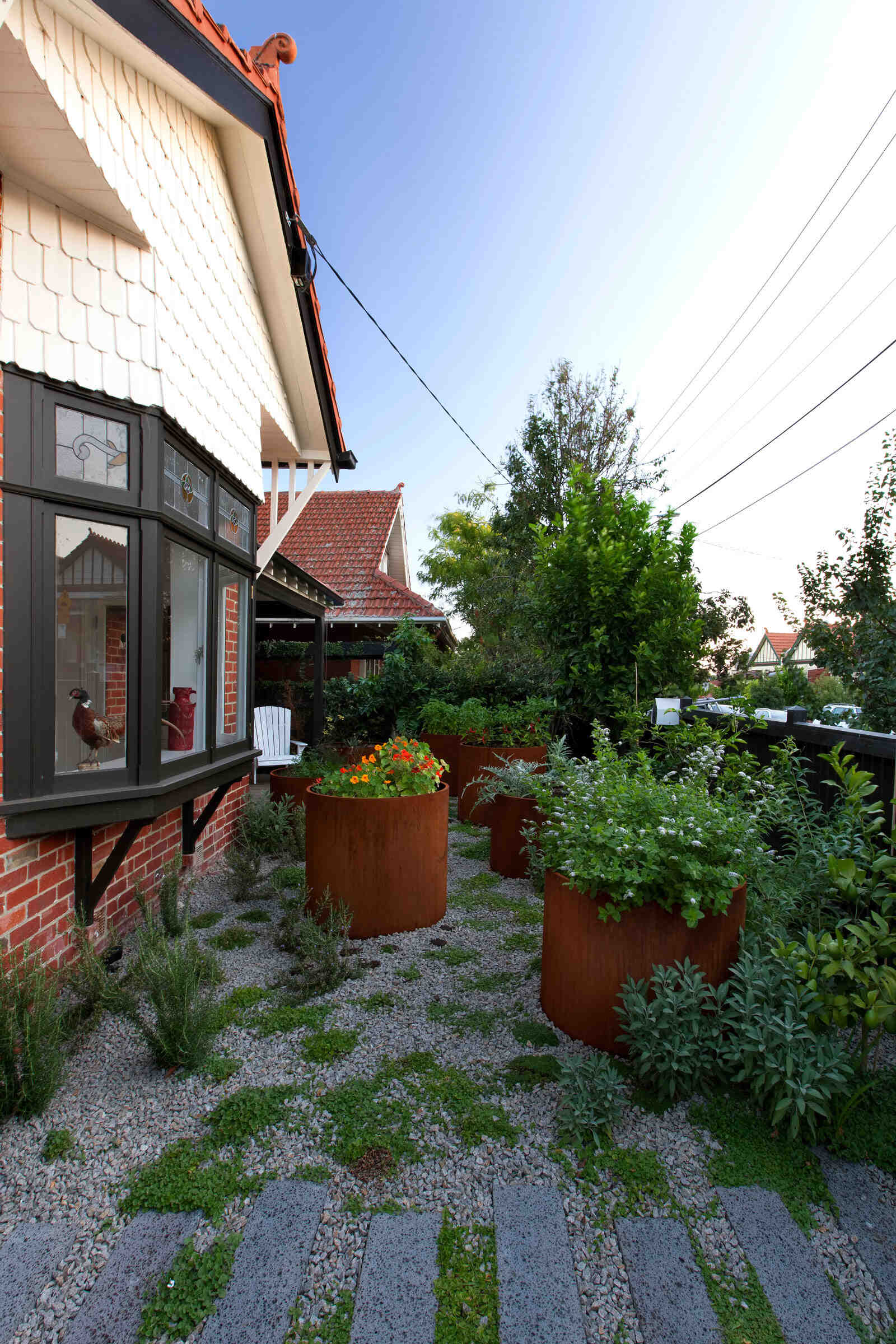
The Arrival Journey: A Garden Path Creating Visual Anticipation
The journey to the pavilion begins with a quiet, meandering garden path, carefully designed to guide visitors along the side of the Edwardian cottage. This path creates a deliberate sense of visual progression and architectural anticipation, acting as a mediator between the outside world and the private space. This access design is a model for using natural elements to create a rich spatial experience, psychologically preparing the visitor for the new space.
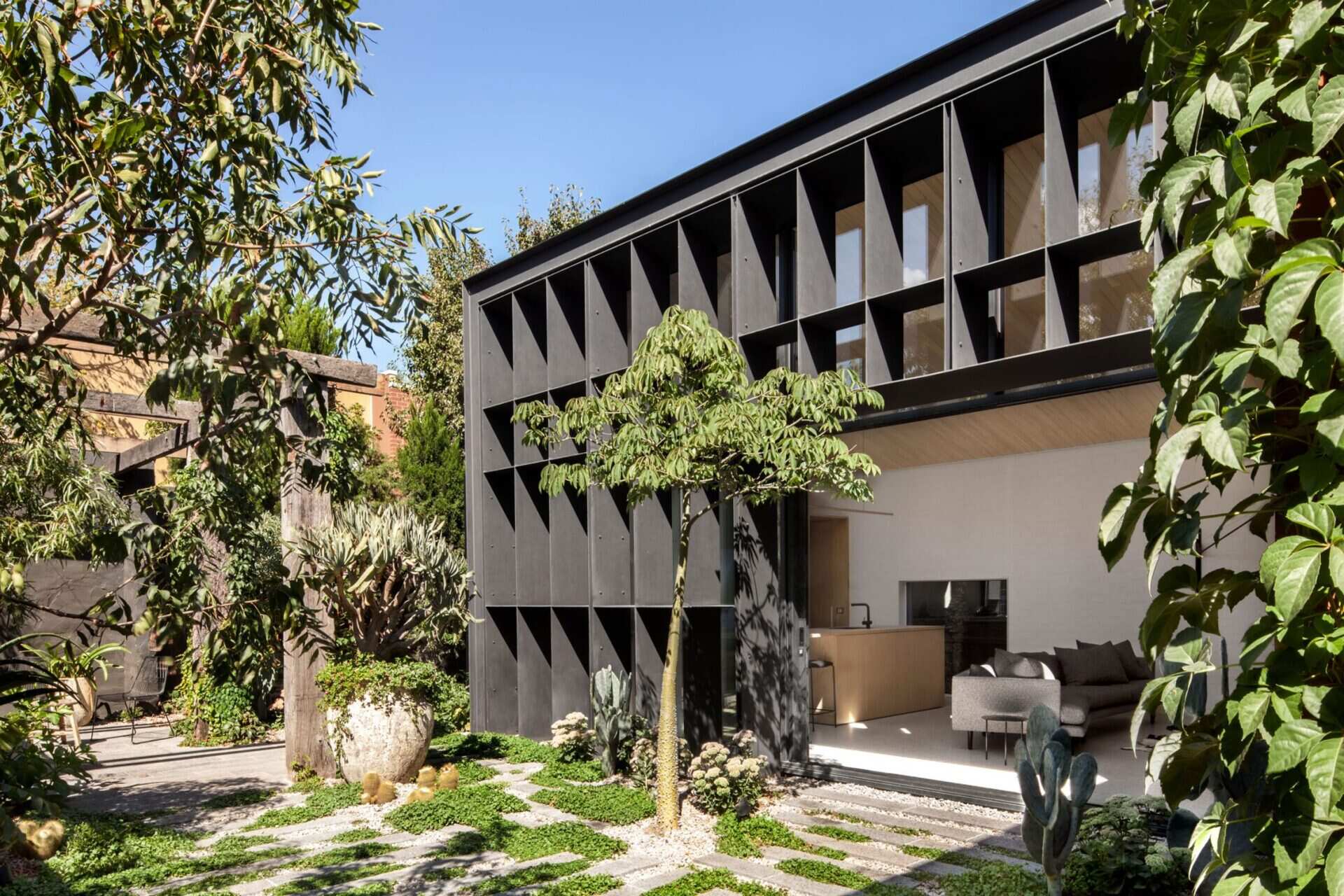
The Pergola: A Transitional Threshold Between Inside and Outside
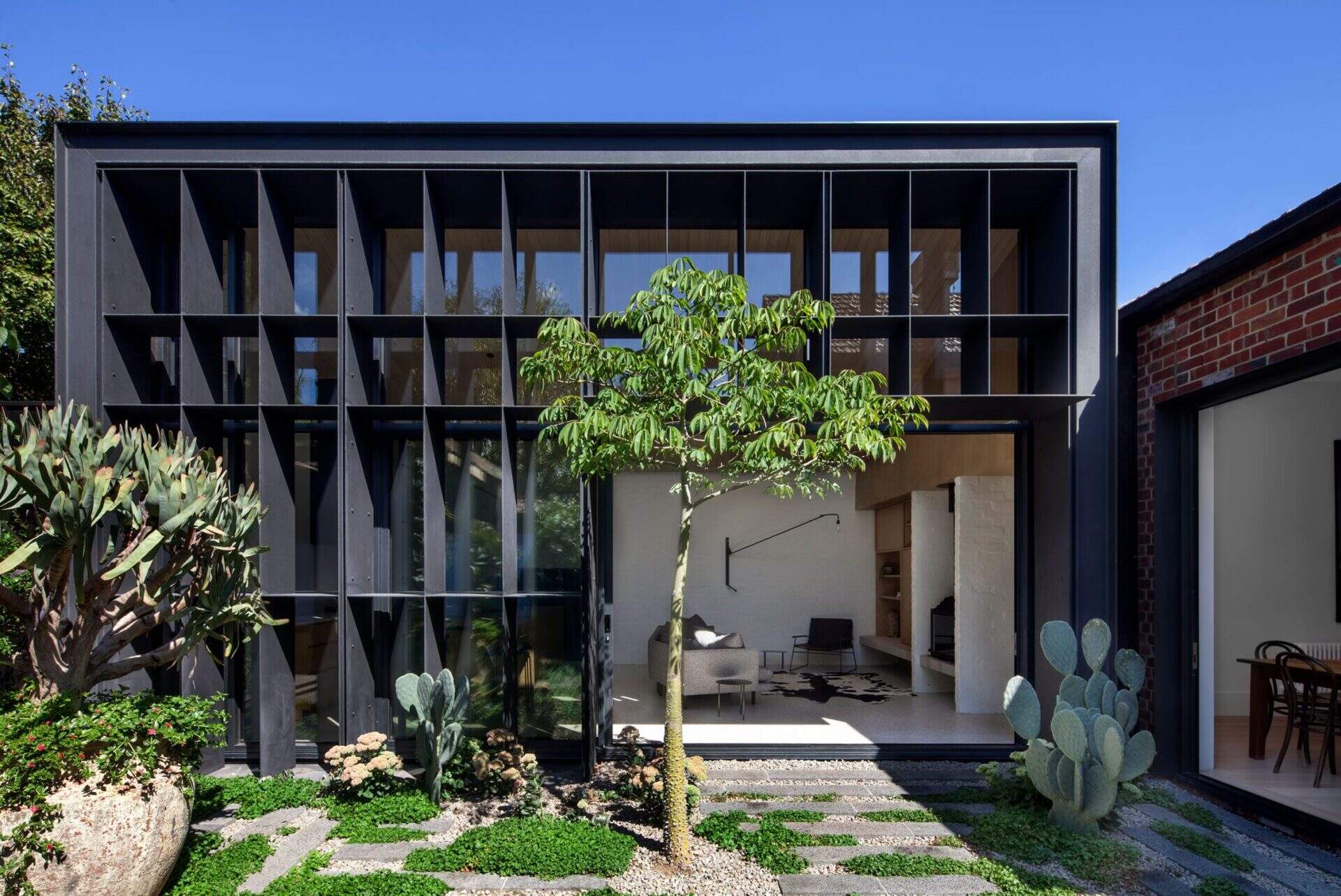
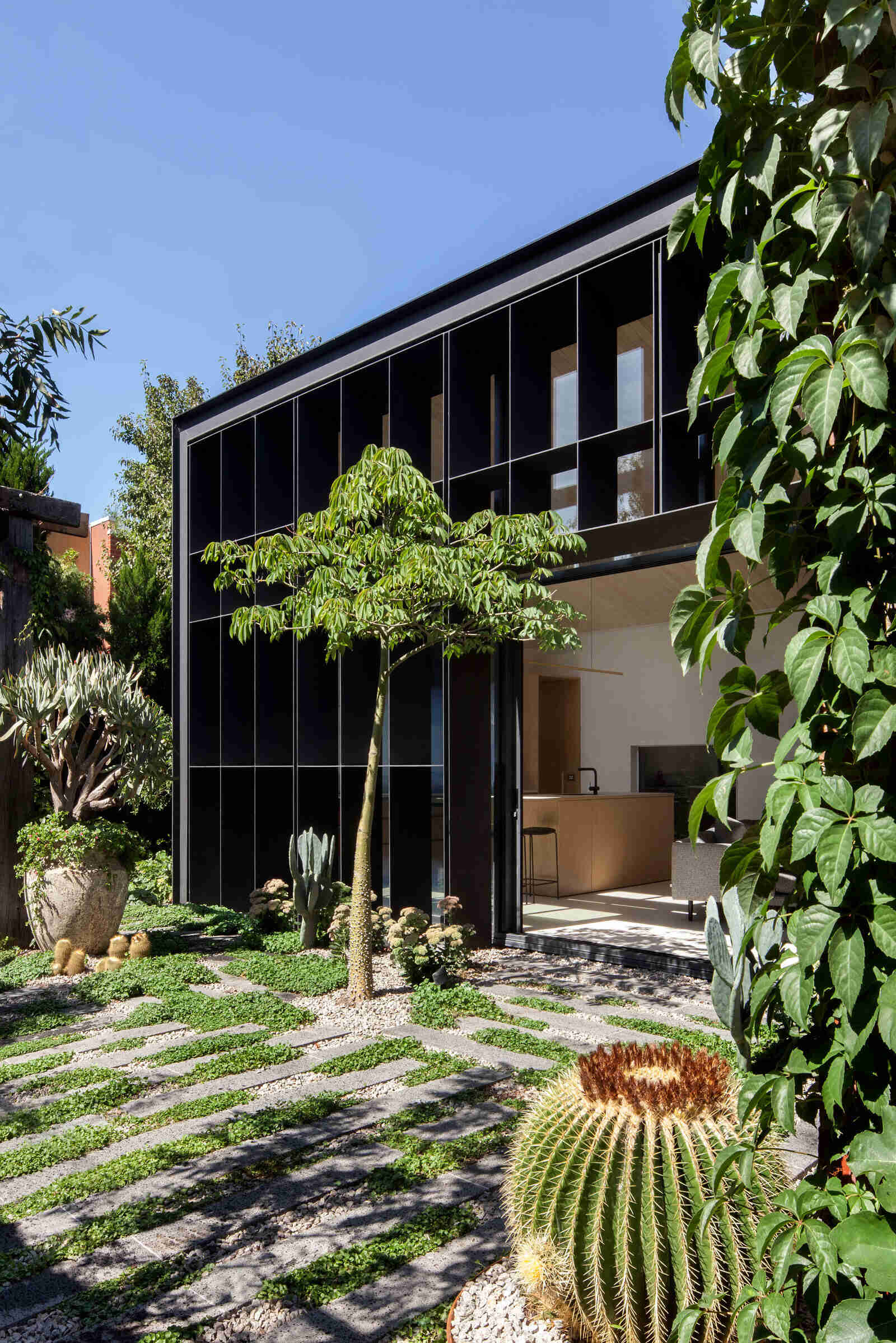
The path finally opens onto a welcoming pergola, meticulously designed with an open courtyard and a comfortable seating area. This pergola forms an outdoor threshold, visually and functionally connecting the home’s garden and the new architectural extension. This intimate outdoor space is designed to serve as an intermediate zone, softening the transition between the historic home and the contemporary pavilion, thereby creating a natural flow between spaces.
The New Pavilion: The Structural Steel Screen – Where Function Meets Aesthetics
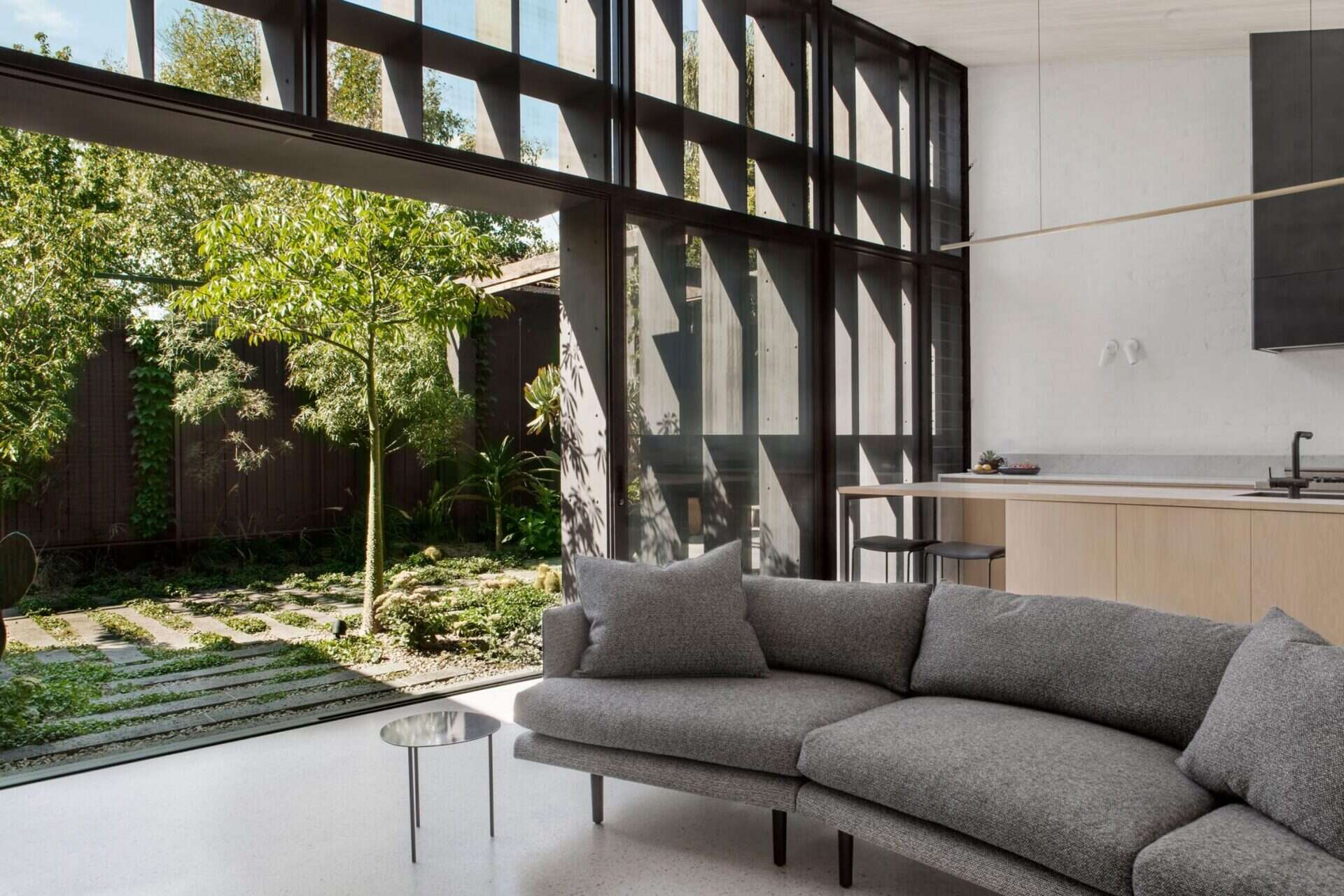
The new pavilion stands out as an independent yet connected architectural volume, constructed entirely from a structural steel screen. This design element represents the heart of the project, combining practical function with aesthetic expression. The metal screen acts as an intelligent environmental mediator, dynamically regulating sunlight and protecting the interior spaces from direct summer glare, while casting shifting and dramatic shadows throughout the day, adding a dimensional drama to the space.
Interior Design: A Visual Connection with the Surroundings
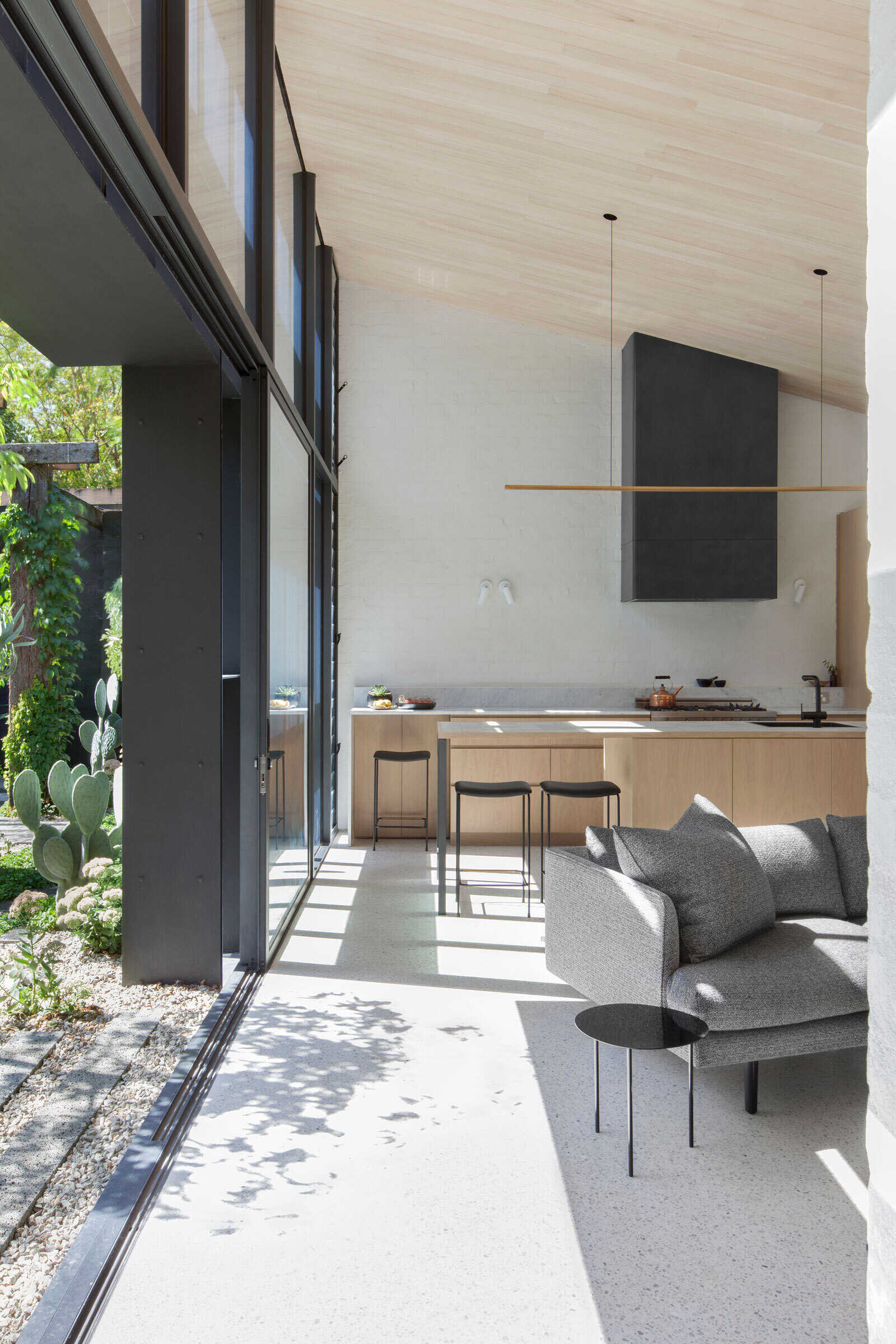
Through large sliding glass doors, the pavilion’s interior unfolds, combining a pitched timber ceiling with abundant natural light. The interior design is characterized by visual spaciousness and warmth, maintaining a feeling of openness to the surrounding garden. The internal layout is based on simplicity and functionality, using natural materials that enhance the connection to nature.
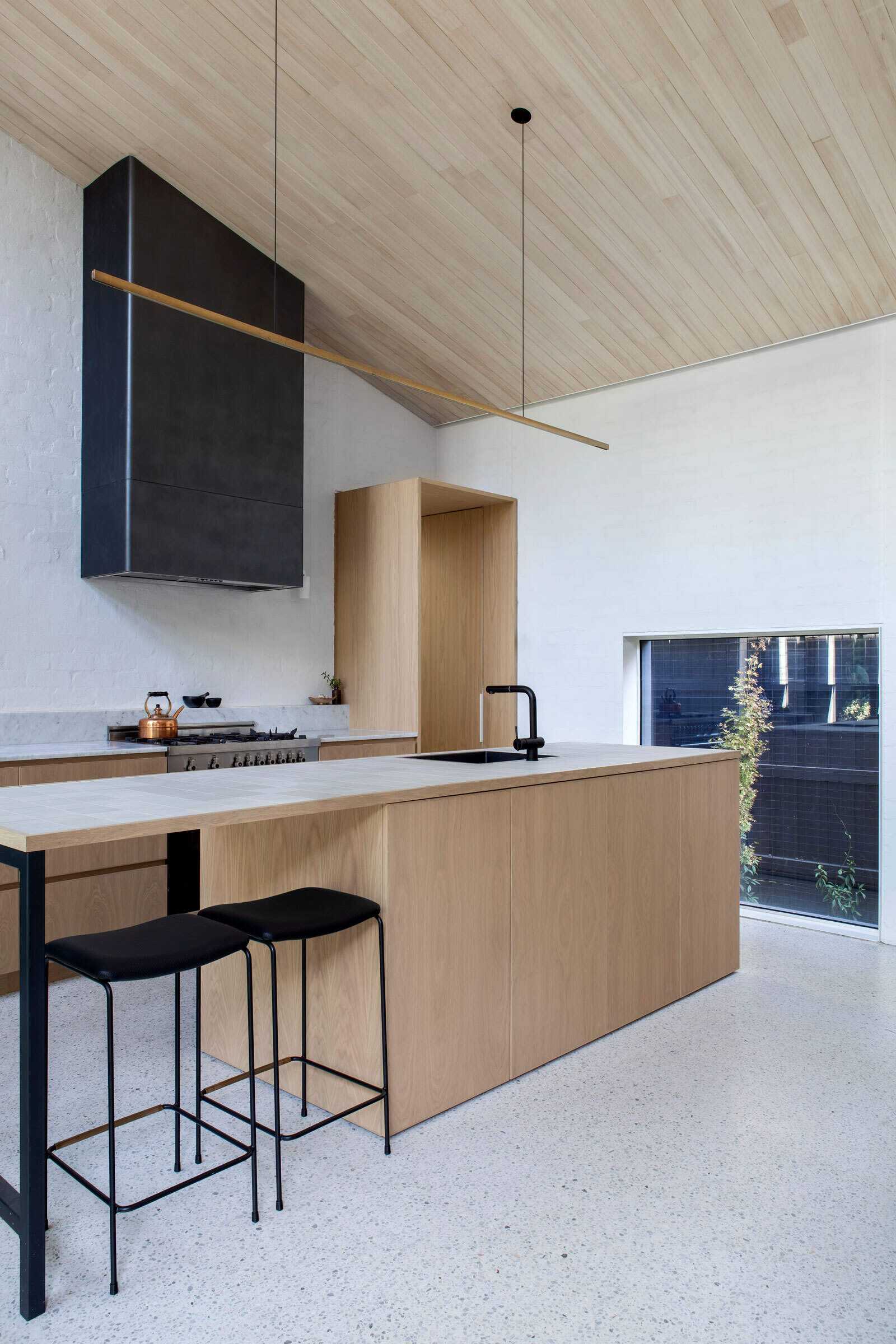
The Kitchen: Balancing Contemporary Aesthetics and Functional Efficiency
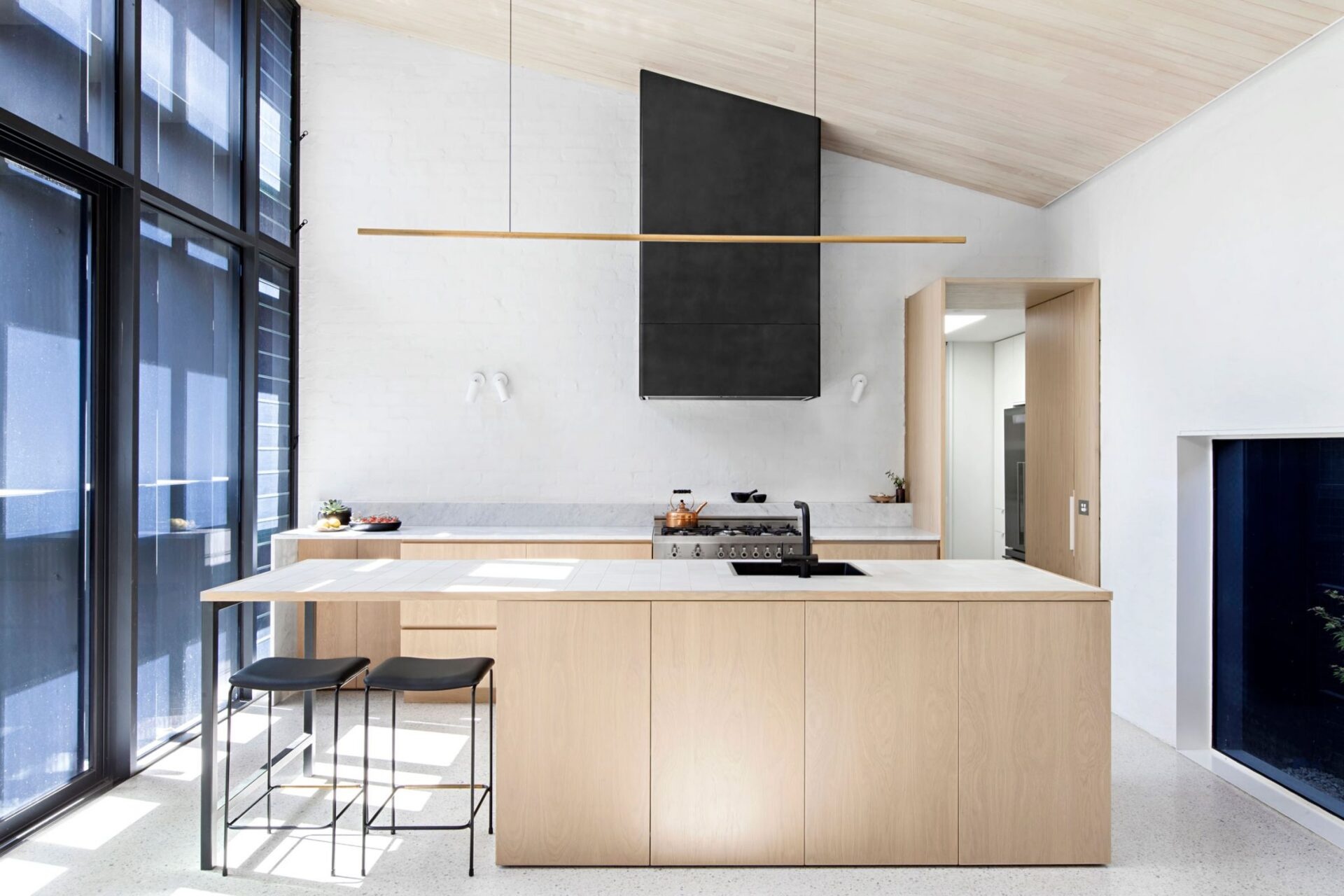
The pavilion includes a contemporary kitchen designed with light timber cabinetry and light-colored countertops, accented by black details that add a modern touch. The cabinetry is installed to ensure visual line continuity, while the black details provide the necessary contrast to invigorate the space. Behind the kitchen, a built-in pantry with open shelving and an integrated oven offers a practical storage solution, maintaining the clean aesthetic that defines the overall design.
The Living Area: Harmony Between Comfort and Practicality
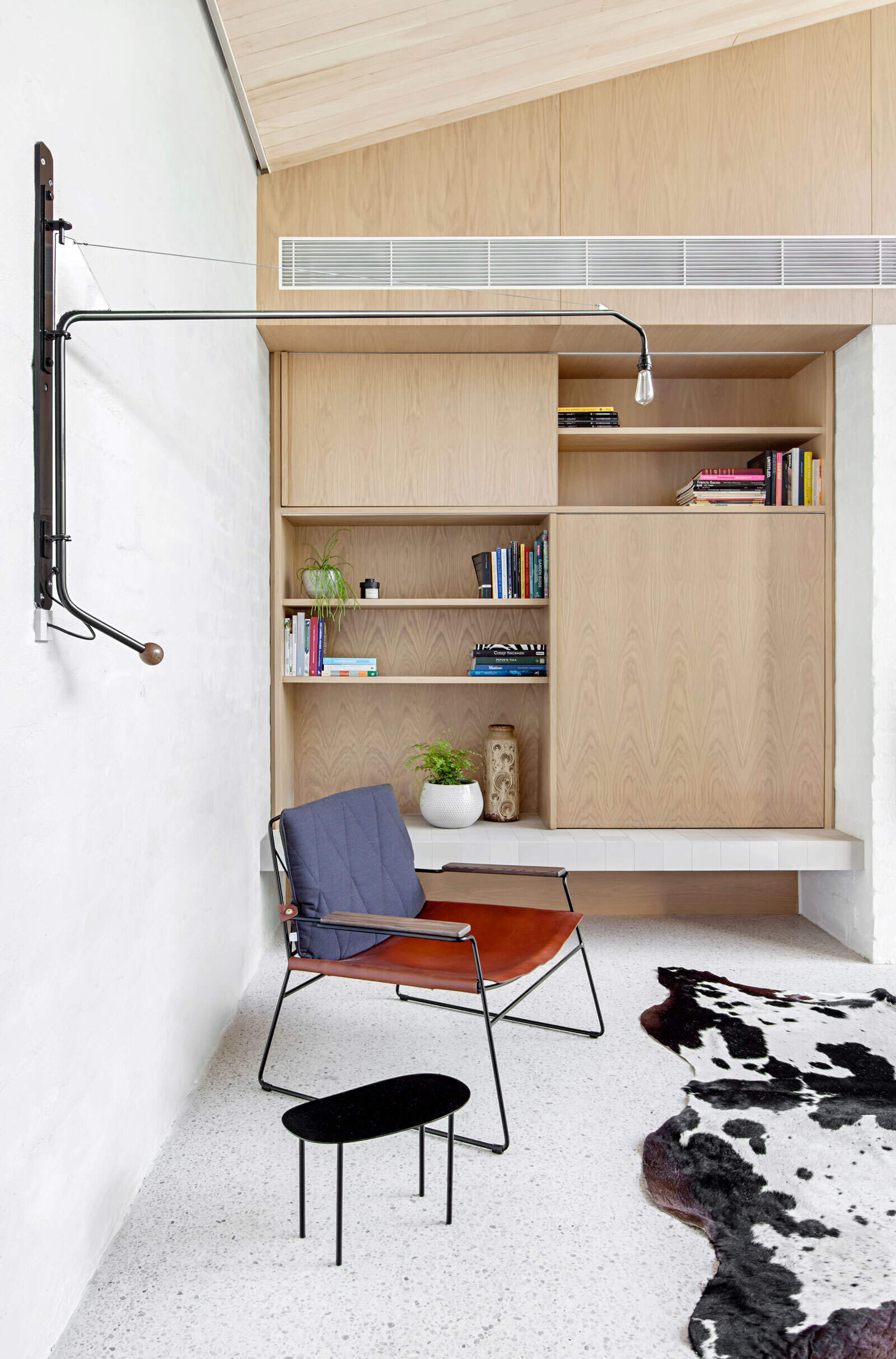
A comfortable living space extends opposite the kitchen, featuring a curved gray sofa oriented towards a central black fireplace. The scene is complemented by a built-in timber bookshelf that runs along the wall, with a metallic swing-arm wall light adding a deliberate industrial touch. This space is designed as a central relaxation area, combining functional comfort with aesthetic expression consistent with the project’s overall identity.
Architectural Linkage: A Seamless Connection Between Old and New
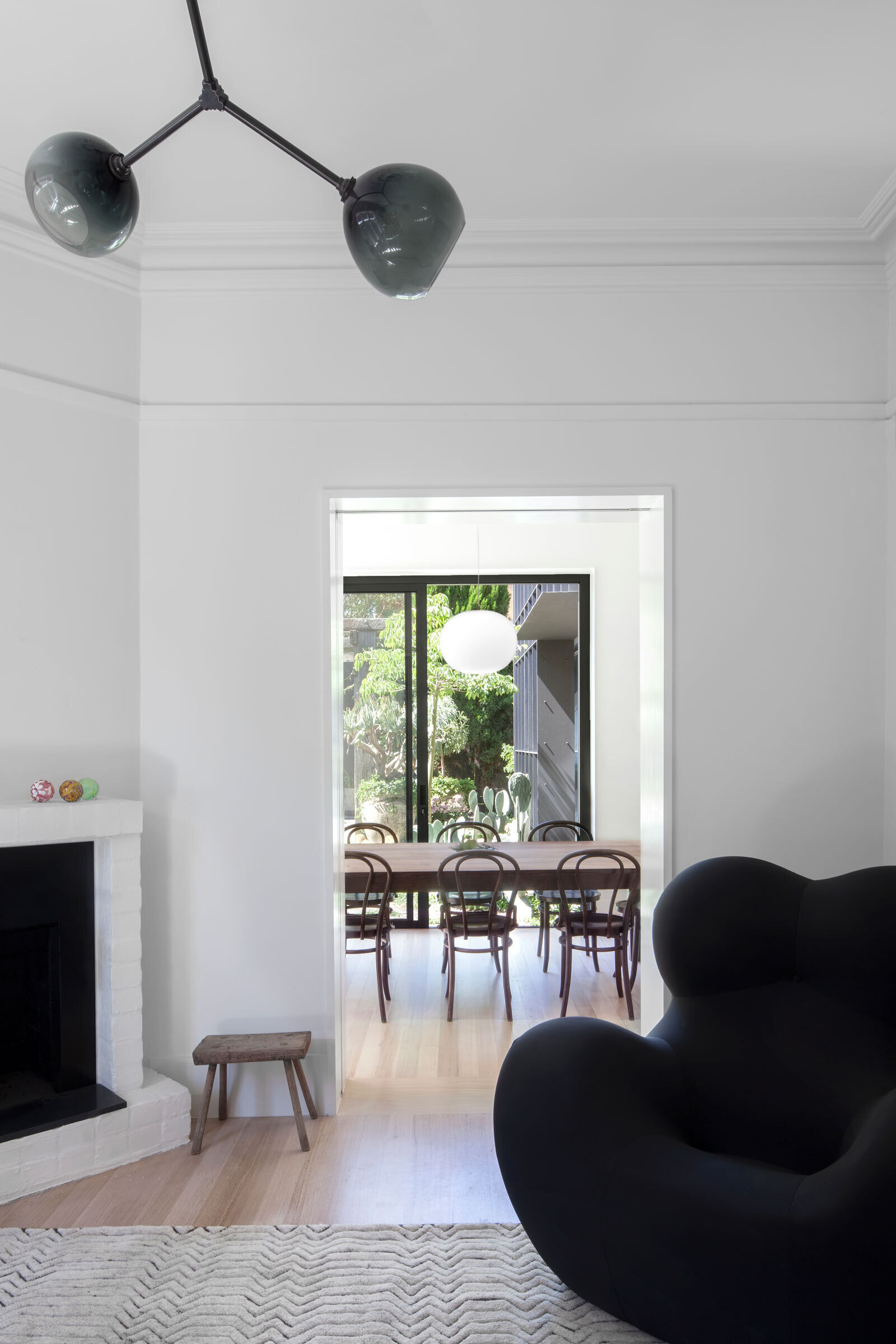
A swift and carefully calculated entrance connects the new pavilion to the historic main house. This entrance leads to the dining room and a secondary living space in the original cottage, achieving a seamless connection between the two architectural volumes. This design element is crucial in achieving the desired spatial continuity, maintaining natural movement flow between the old and new spaces without creating visual or functional disruption.
Final Touches: Continuity of Aesthetics Throughout the Home
The bedrooms located within the original Edwardian structure continue to adopt the same restrained aesthetic, combining white walls with natural timber elements in bed frames and chairs. This design maintains the tranquility and simplicity of the private spaces. In the bathroom, considered contrast is highlighted through the use of white wall tiles of varying sizes to create a visual rhythm, while dark floor tiles calm the space with depth.
Conclusion: An Architectural Harmony Between Past and Future
The floor plan reveals how the new design openings are precisely positioned to the right of the original house, complementing the architectural transformation the property has undergone. This pavilion is no longer just a physical extension of the home; it has become an architectural tool that redefines the relationship between the house, garden, and light. Through the thoughtful interplay of materials like steel, glass, and timber, Clare Cousins Architects has created an architectural addition that not only expands the space but also reprograms how the inhabitants live and connect with their natural surroundings.
✦ ArchUp Editorial Insight
This project presents an attempt to integrate a contemporary extension with a heritage Edwardian-era building, focusing on enhancing the relationship between the dwelling and the garden. A clear separation is evident between the new volume and the original structure through the use of a completely different architectural language, creating a visual break in the building’s historical context. The solution relies on adding a separate element rather than fostering an organic dialogue with the existing heritage details. The connection between the two volumes is limited to a transitional passageway that may not achieve the desired spatial continuity. Furthermore, the heavy reliance on extensive glazing raises questions about thermal efficiency in variable climates. However, the pavilion’s structural unit succeeds in fulfilling its functional purpose as an intermediate space between inside and outside, providing a practical solution for controlling natural light and shadows.
Brought to you by the ArchUp Editorial Team
Inspiration starts here. Dive deeper into Architecture, Interior Design, Research, Cities, Design, and cutting-edge Projectson ArchUp.