The Lake House Pavilion: A Zero-Carbon Marvel of Adaptive Reuse and Rapid Construction

Project Overview: From Concept to Completion in 50 Days
On February 28, Chief Architect YU Ting surveyed three potential sites within the park for the new Life Experience Pavilion, ultimately selecting the former water base by the bay. The project’s ambitious goal to deliver a fully realized design (architecture, interior, landscape, soft furnishings, and exhibition) by April 18 demanded innovation under strict constraints:
- Preservation Mandate: Two existing structures and adjacent greenery (including two trees) could not be altered.
- Material Reuse: The client requested integrating ceramic curtain wall panels from past residential projects.
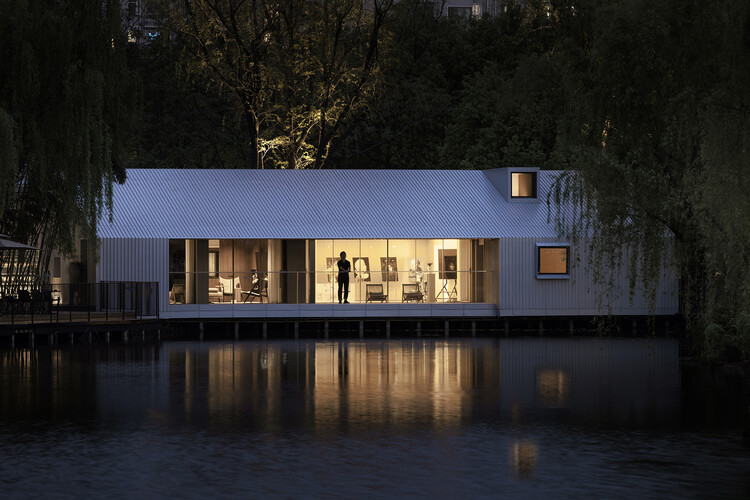
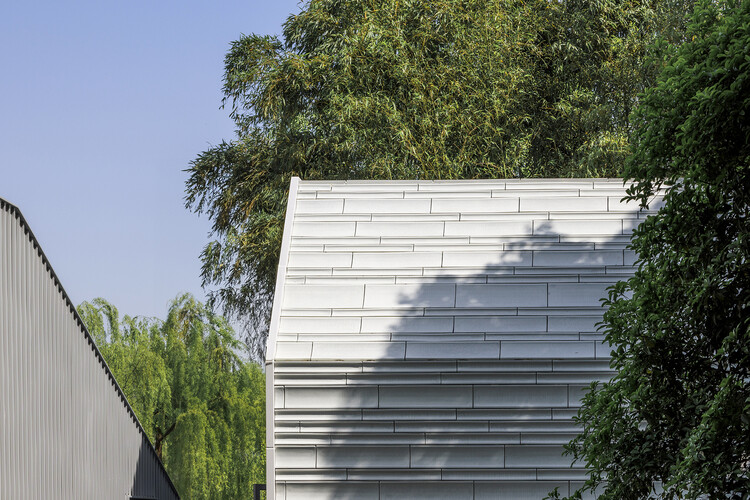
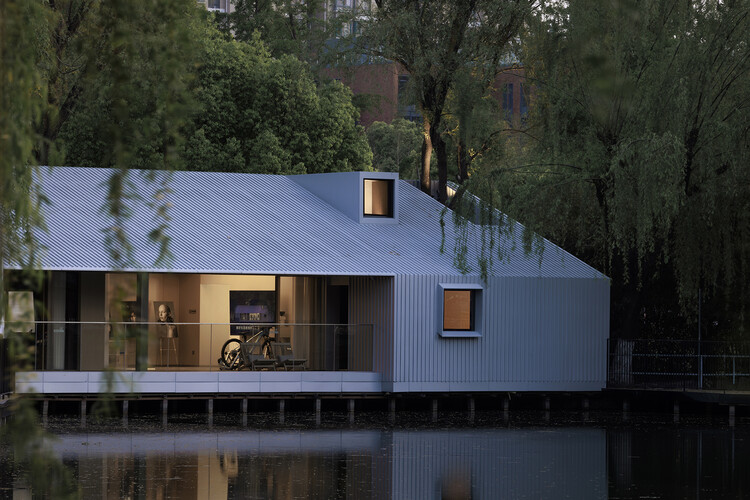
YU’s solution? A “house within a house” approach: encasing the original buildings in a dual skin of metal (climate barrier) and ceramic (visual layer), preserving their insulation and waterproofing. By March 5, the concept was approved, setting the stage for a record-breaking 50-day construction timeline.
Fast-Build Design Strategy: Efficiency Without Compromise
Wutopia Lab’s rapid-build methodology ensured success:
- Pre-Decided Materials: Standardized steel profiles (150×150 mm), aluminum plates, and recycled tiles eliminated custom fabrication delays.
- Prefabrication Focus: 90% off-site construction minimized on-site wet work.
- Integrated Systems: Unified design for structure, façade, lighting, and signage reduced coordination gaps.
Key Innovations:
- Cantilevered Foundations: Elevated platforms accelerated assembly, especially on the waterfront.
- Façade-Structure Fusion: Steel columns doubled as part of the envelope, incorporating vertical greenery and sliding glass.
- Material Swaps: Aluminum plates replaced less waterproof metals; decorative trims added rhythm (20×20 mm at 100-mm intervals).
Zero-Carbon Narrative: Sustainability as Spatial Poetry
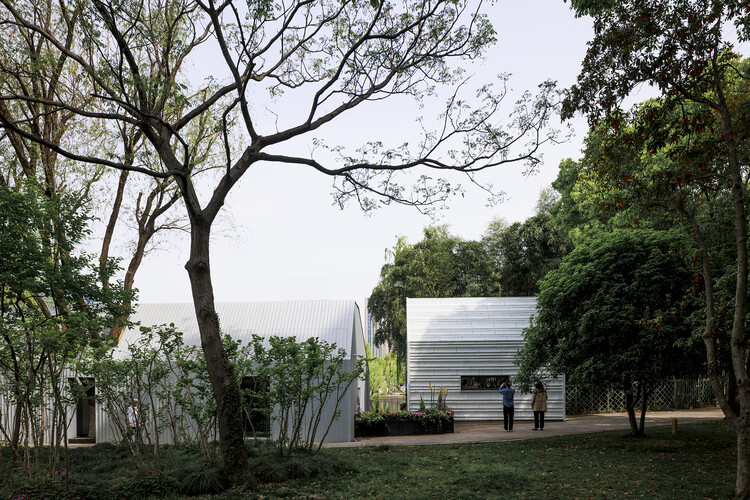
The pavilion’s “undercurrent” theme wove eco-conscious materials marine plastic plaster, mushroom leather, recycled tiles into a sensory journey. Horizontal light layers guided visitors through:
- A lobby and exhibition hall flanked by preserved trees.
- Three VIP rooms, each a vignette (e.g., Room 1’s “living painting” window).
- A willow-lined colonnade and café blurring indoor-outdoor boundaries.
Improvised Moments:
- A skylight (initially meant for a staircase) became a nod to Shanghai’s tiger windows, contrasting with a nearby tree hollow.
- On opening day, an elderly visitor’s silent interaction with the pearlescent ceramic wall epitomized the design’s emotional resonance.
Timeline Breakdown: Precision Under Pressure
- March 12: Coordination meeting locked workflows.
- March 20: Signage finalized.
- April 11: YU’s final review.
- April 18: Pavilion opens—on schedule.
✦ ArchUp Editorial Insight
The Lake House Pavilion exemplifies how constraints can fuel creativity, marrying adaptive reuse with zero-carbon ambitions in a breathtakingly short timeline. While the project brilliantly showcases rapid-build techniques, a deeper exploration of the marine plastic and mushroom leather applications could have strengthened its sustainability narrative. That said, the pavilion’s true triumph lies in its emotional impact—proof that speed need not sacrifice poetry, and that even the briefest touch of a ceramic wall can leave a lasting imprint.
Explore More with ArchUp
ArchUp documents the evolving profession of architects worldwide, from career insights and research to project profilesand industry news. Our editorial team publishes global salary trends, career advice, and opportunities for emerging talents. Learn more on our About